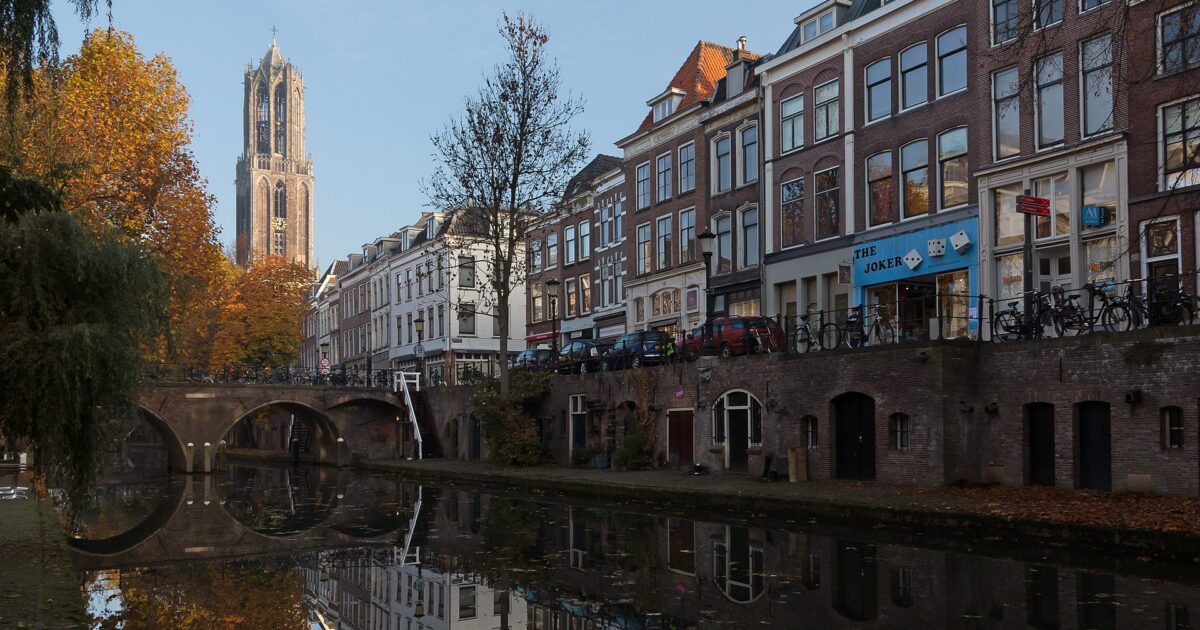
Utrecht is thirty-five minutes and about €9–10 from Amsterdam Centraal, it has an old centre that a good number of Dutch people will quietly tell you is lovelier than the capital’s, and most visitors to the Netherlands never go. This guide covers the Utrecht things to do that actually justify the trip — the wharf cellars, the Dom Tower, the museums worth your afternoon — and is honest about the ones that do not.
Utrecht is not a spectacle. It has no Anne Frank House, no Van Gogh Museum, no single unmissable thing that would make a stranger book a flight. What it has is a canal system unlike anywhere else in the world, a very large student population, a food and café culture that operates for residents rather than for tourists, and about a tenth of Amsterdam’s visitor pressure. It is a city to be in rather than a city to tick off, and if that sounds like a criticism you should probably stay in Amsterdam.
| Detail | |
|---|---|
| Getting there | Amsterdam Centraal to Utrecht Centraal, about 35 min, roughly €9–10 second class |
| From Schiphol | Just over 30 min direct, roughly €11–12 second class |
| Frequency | Several intercity trains an hour |
| Dom Tower | €13.50 adult · €8.50 child 4–12, student, CJP, 65+ · free under 4 |
| Dom Tower combi | €20 adult / €11.50 child with Museum Speelklok |
| The climb | 465 steps to 112 m, timed staircase tour, no bags allowed (free lockers) |
| Centraal Museum | Tue–Sun 11:00–17:00 |
| Miffy Museum | Tue–Sun 10:00–17:00, online booking only, no door sales |
| Museumkaart | €75/year covers 500+ museums nationwide; check museumkaart.nl for the Utrecht venues it includes |
| How long you need | A full day comfortably, a weekend happily |
The wharf cellars, which are the whole point
Start here, because this is the thing Utrecht has that nothing else does. The Oudegracht — the Old Canal, dug in the twelfth century — is built on two levels. The street runs along the top as you would expect. But a full storey below, at the water’s edge, runs a continuous quayside with vaulted brick cellars cut back into the bank beneath the houses.
These are the werfkelders, the wharf cellars. They were built as storage: goods came in by boat, went straight into the cellar, and were hoisted up into the merchant’s house above without ever touching the street. Nowhere else in the world adopted this arrangement at scale, which is why Utrecht’s canals do not look like Amsterdam’s despite being older.
Today the cellars hold restaurants, bars and cafés, and the quayside in front of them is lined with terraces at water level. On a warm evening it is one of the most pleasant places to sit in the Netherlands — you are below the traffic, beside the water, with the town going on above your head. Walk the length of the Oudegracht at street level once, then come down the stairs and walk it back along the water. It is a different city from down there.
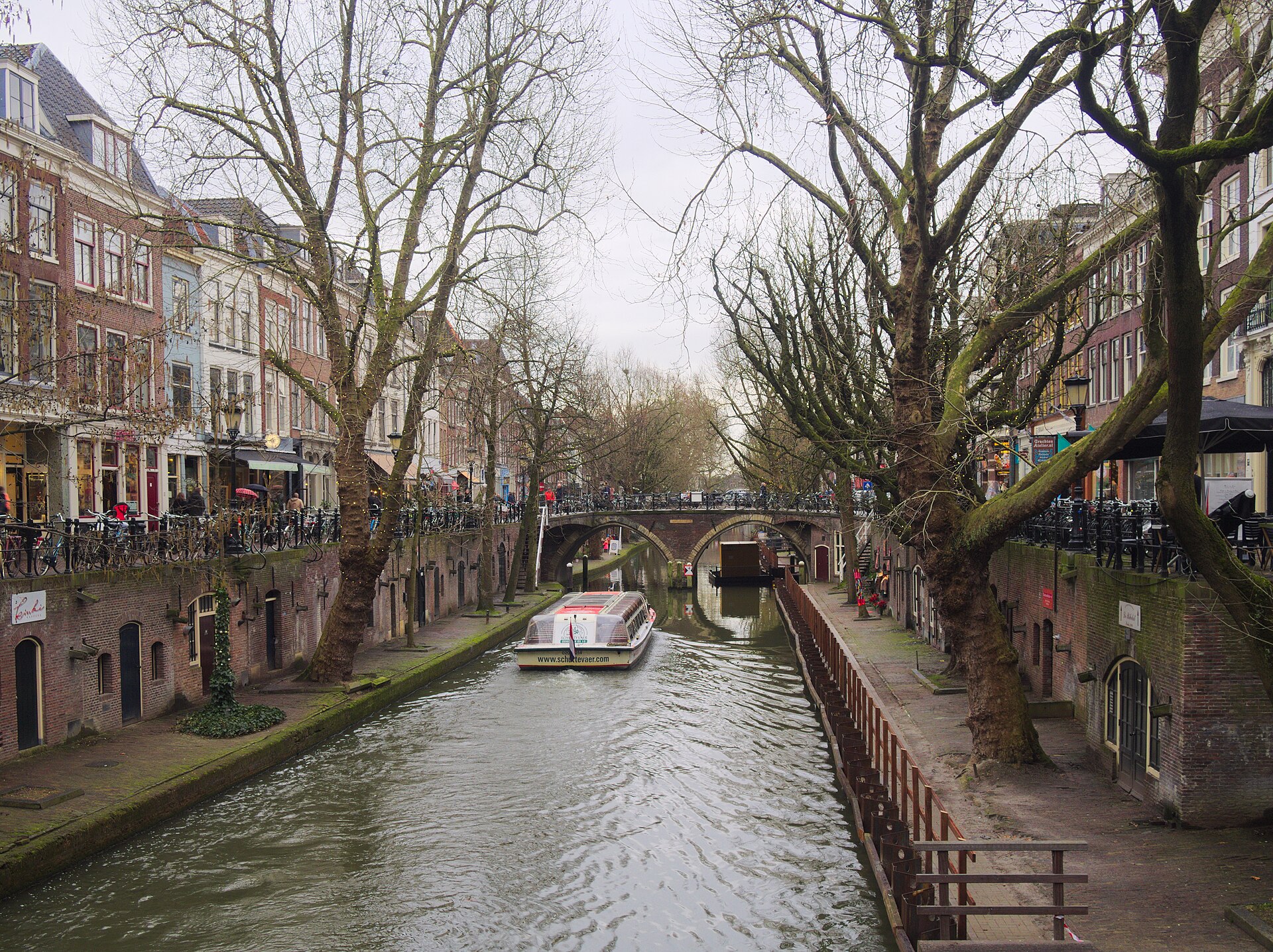
The wharf cellars along the canal hold plenty of terraces and restaurants. Further south towards the Twijnstraat it thins out and gets quieter, which some people prefer.
The Dom Tower
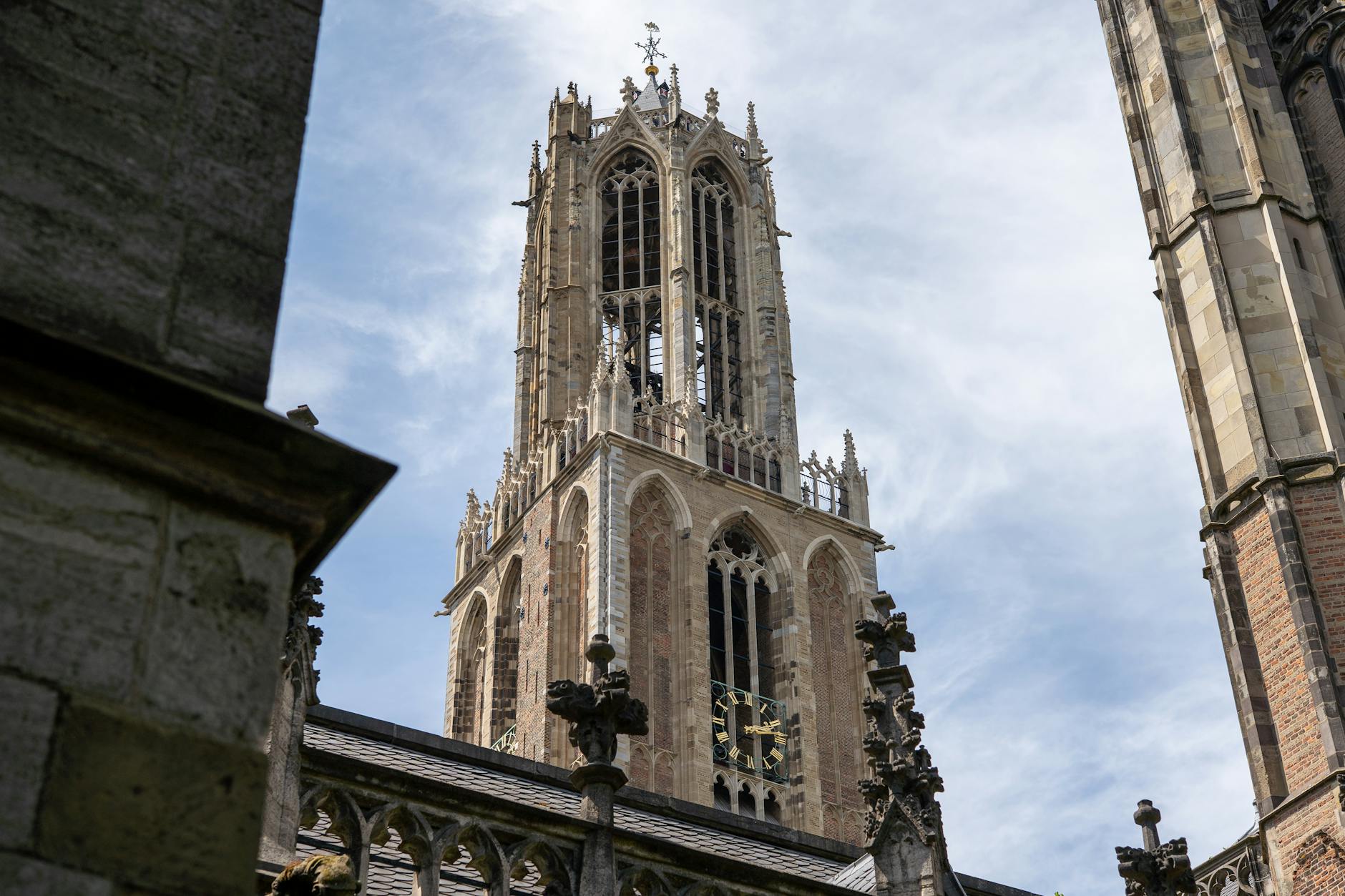
At 112 metres the Domtoren is the tallest church tower in the Netherlands, and it stands alone — separated from its cathedral by an open square. That gap is not a design decision. A tornado tore through Utrecht in 1674 and brought down the nave that joined the two, and the city never rebuilt it. What is left is a tower on one side of Domplein, a choir on the other, and eight hundred years of ambition sitting in the space between.
You can climb it. Adult tickets are €13.50, €8.50 for children aged 4 to 12 and for students, CJP holders and over-65s, free for under-4s. There is a combination ticket with Museum Speelklok at €20 adult and €11.50 child. Access is by timed staircase tour — book online, because walk-up places are limited — and it is 465 steps to the top. Bags are not permitted inside; free lockers are provided at the base.
Is it worth it? Yes, with a caveat. The stairs are narrow, spiral and relentless, and if you are unhappy on a tight staircase this is not the tower to test yourself on. If you are fine with it, the view runs across the whole of Utrecht and out over the flat country beyond, and the guided element genuinely adds — you stop at the bell chamber and the guides know their material. Allow an hour.
Note that Domplein below has its own story running underneath it. This is where the Romans built a fort, Traiectum, that gave the city its name, and there is an underground archaeological site beneath the square. The “Under & Up de Dom” combined experience at €17.50–20 covers both, but at the time of writing it runs in Dutch only — worth knowing before you book.
The museums
Centraal Museum
Open Tuesday to Sunday, 11:00 to 17:00, with the shop from 10:00 and the café from 10:30 to 18:00. The oldest municipal museum in the Netherlands, and a genuinely good one: Utrecht Caravaggists, a substantial Dutch art collection, applied arts, and one of the largest collections of work by Gerrit Rietveld — the De Stijl architect and designer whose red-blue chair is in every design textbook ever printed.
The museum also manages the Rietveld Schröder House, a UNESCO World Heritage Site on the eastern edge of the city and widely described as the best-known built expression of De Stijl. It is small, it must be booked separately and well ahead, and for anyone with an interest in twentieth-century design it is one of the most significant buildings in Europe. Visits are guided and numbers are tightly limited.
Miffy Museum
Nijntje — Miffy in English — was created by Utrecht’s own Dick Bruna, and the museum devoted to her is directly across the street from the Centraal Museum. It is aimed squarely at children under six and is superbly done for that audience: ten themed rooms, everything touchable, nothing behind glass.
Open Tuesday to Sunday 10:00 to 17:00, closed Christmas Day, New Year’s Day and King’s Day. Crucially, there are no tickets sold at the door at all — you must book a timed slot online in advance. Turning up hopefully will not work. With a small child in tow it is the best hour in Utrecht; without one there is nothing here for you.
Museum Speelklok
A museum of self-playing musical instruments — street organs, musical clocks, automated orchestrions — housed in a former church, and far more entertaining than that description suggests. The guided demonstrations, in which enormous mechanical machines are switched on and fill the room with noise, are the reason to go. It works for adults and children equally, which is rare. The combination ticket with the Dom Tower at €20 is good value if you are doing both.
Railway Museum (Spoorwegmuseum)
In a beautiful old station building slightly out of the centre, and among the best railway museums anywhere: real locomotives, four themed show areas, and enough interactive material to hold children for hours. Given that Utrecht is the hub of the entire Dutch rail network, it belongs here.
Where to walk
Utrecht’s old centre is compact — you can cross it in twenty minutes — and it is enclosed by a ring canal, the Singel, which was the medieval moat and is now a park. A loop of the Singel takes about an hour and is the single best orientation walk in the city.
- Oudegracht — the main event. Do it at both levels, as described above.
- Nieuwegracht — the quieter parallel canal, also with wharf cellars, largely residential and much prettier for it. If the Oudegracht feels busy, come here.
- Domplein and Pandhof — the cathedral square, and behind it the Pandhof, a walled Gothic cloister garden that is free, open to the public and almost always empty. One of the most peaceful spots in any Dutch city.
- Twijnstraat — a short street of independent food shops, delicatessens and grocers south of the centre, and where Utrecht residents actually shop.
- Neude and Vredenburg — the two main squares. The Neude’s converted post office is now the city library and is worth stepping into.
- Griftpark and Wilhelminapark — where the city goes on a warm day.
Utrecht Centraal is attached to Hoog Catharijne, an enormous shopping centre that you have to pass through to reach the old town. It is not attractive and it makes a poor first impression. Keep walking; it is five minutes and then you are in the medieval city.
Eating and drinking
The student population — Utrecht University is one of the largest in the country — means the food is better value than Amsterdam’s and less oriented towards visitors. Prices run noticeably lower for comparable quality, which is worth knowing if you have been eating in the capital.
The wharf cellar terraces along the Oudegracht are the obvious move and they are genuinely good rather than a tourist trap, though the ones closest to the Stadhuisbrug are the busiest and the least distinguished. Walk a few hundred metres in either direction for better. The Twijnstraat and the streets around the Neude hold most of the independent kitchens.
Dutch specialities are the same as anywhere in the country — our guide to must-try Dutch foods covers the canon — but Utrecht does the café side of it particularly well. Order a koffie verkeerd and something with apple in it and sit by the water; that is the local activity and it is a good one.
A little history, because it explains the shape of the place
Utrecht is older than Amsterdam by a long way, and it spent most of the medieval period being far more important. The Romans built a fort here around AD 50 at the point where the Rhine could be forded — Traiectum, the crossing — and the name survives in the modern one. Willibrord established a bishopric here in 695, and for centuries afterwards Utrecht was the religious centre of the northern Netherlands, with a bishop who ruled a substantial territory as a secular prince.
That is why the city has several great medieval churches for its size, why the Dom was built on the scale it was, and why the street plan radiates from a cathedral square rather than a harbour. Amsterdam, at the time the Dom was rising, was a fishing settlement on a dam.
The reversal came with trade. As the Zuiderzee ports boomed in the sixteenth and seventeenth centuries, Utrecht — inland, ecclesiastical, and increasingly Protestant after the Reformation stripped the bishopric of its power — was left behind. The Union of Utrecht was signed here in 1579 and the Treaty of Utrecht in 1713, so the city stayed diplomatically significant while Amsterdam took the money. Then the railways arrived in the nineteenth century, every line in the country was routed through Utrecht, and the city became the hub it remains.
You can read all of this off the buildings in an afternoon: the Roman layer under Domplein, the Gothic churches, the merchant houses over the wharf cellars, the nineteenth-century station quarter, and the Rietveld modernism on the eastern edge. For the Amsterdam side of the same story, our Amsterdam history timeline and Dutch Golden Age pages cover what happened while Utrecht was being overtaken.
When to go
Utrecht has no single season that transforms it, which is quietly one of its advantages — there is no equivalent of the Keukenhof window that makes half the year the wrong half.
Late spring and early autumn are best. May, June and September give you the wharf terraces in use, long light and manageable weather. The city is at its most characteristic when people are eating outside beside the water, and that needs warmth.
Summer works and is busier, though “busier” here means Dutch families and students rather than international crowds. Utrecht never approaches Amsterdam’s density.
Winter is cold, wet and dark, and the terraces close — but the cellar bars are indoors, warm and full, which is arguably the more atmospheric version. Utrecht’s Christmas market is modest by German standards; do not travel for it.
Two dates worth knowing. King’s Day on 27 April is celebrated hard here, with the canals full of boats and the whole city on the street — a genuinely good place to experience it, and less overwhelming than Amsterdam. And the Nederlands Film Festival takes over the city for ten days in late September, which is charming if you like film and inconvenient if you need a hotel room. Our King’s Day guide and weather by month page cover the timing questions in more detail.
A day in Utrecht, in order
If you have one day and want it to work, this sequence does:
- 09:00 — Train from Amsterdam Centraal. Half an hour, no booking needed, tap in with OVpay.
- 09:45 — Out of Hoog Catharijne, straight to Domplein. Pandhof cloister garden first, while it is empty.
- 10:30 — Dom Tower climb on a pre-booked slot. An hour including the tour.
- 11:45 — Walk the Oudegracht at street level as far as the Twijnstraat, looking down at the cellars.
- 12:30 — Down the steps and lunch on a quayside terrace.
- 14:00 — Centraal Museum, or Museum Speelklok if you took the combination ticket, or the Miffy Museum if there is a small child involved.
- 16:00 — The Nieuwegracht at a slow pace, then a loop of the Singel.
- 17:30 — A drink in a cellar bar. This is the part everyone remembers.
- 19:30 — Train back, or stay. Utrecht at night is better than Utrecht in the afternoon.
Rent a bike if you would rather not walk. Almost every Dutch station has OV-fiets hire for a few euros a day, and Utrecht Centraal has the largest bicycle parking facility in the world beneath it — around 12,500 spaces — which tells you something about how the city moves.
Getting around once you arrive
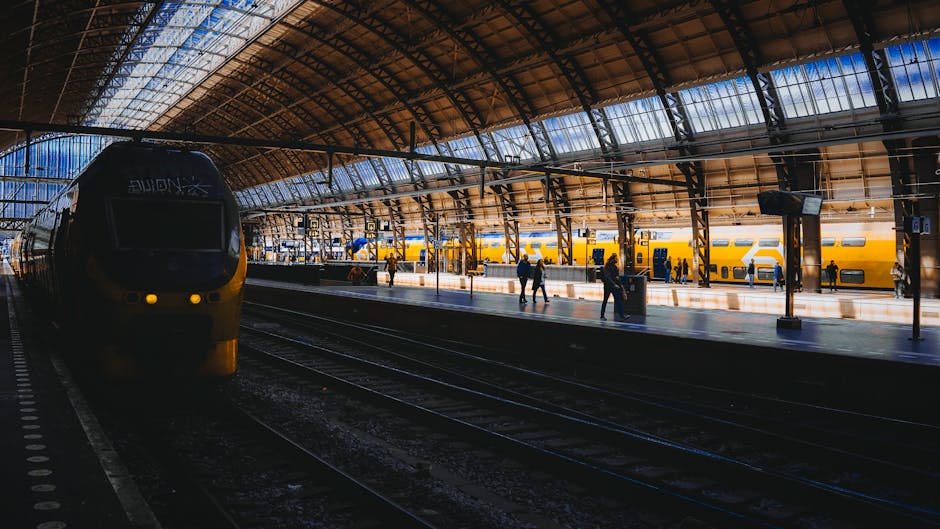
Walk, mostly. The old centre inside the Singel is about a kilometre across and everything in this guide except the Rietveld Schröder House and the Railway Museum sits inside it. There is no metro and you will not need a tram.
If you want to cover more ground, take a bike. OV-fiets hire operates from Utrecht Centraal for a few euros a day and is the standard local solution — you will be sharing the road with a very large number of confident cyclists, which is either exhilarating or alarming depending on your experience. Utrecht built the world’s largest bicycle parking garage under its station, with around 12,500 spaces, and the city’s cycling infrastructure is among the best anywhere. If you have been nervous about cycling in Amsterdam’s tourist crush, Utrecht is a gentler place to try it. Our bike rental guide covers the etiquette, which transfers directly.
Canal boat tours run along the Oudegracht and are a decent way to see the wharf cellars from the water — the angle you cannot get on foot. They are shorter and cheaper than the Amsterdam equivalents; our canal cruises compared page gives you the benchmark for what a fair price looks like.
Buses and regional trams exist and are covered by OVpay, but a day visitor will almost certainly not touch them.
Should you stay the night?
A serious question, and for some trips the answer is yes. Hotel rates in Utrecht are often lower than Amsterdam’s, which is the main financial argument for staying. You are thirty-five minutes from Amsterdam and thirty minutes from Schiphol, so using Utrecht as a base and day-tripping into Amsterdam is entirely practical and a good deal cheaper.
The trade-off is obvious: Amsterdam has more to do, and if you are there for four days you will spend an hour a day on trains. Our verdict is that Utrecht as a base makes sense for trips of a week or more, for people returning to the Netherlands who have already done the Amsterdam museums, and for anyone travelling in peak season when Amsterdam rates go silly. For a first three-day visit, stay in Amsterdam and come here for a day. Our where to stay in Amsterdam guide covers the other side of that decision, and hotel prices by month shows when the arithmetic tips.
What Utrecht is not
Two honest cautions.
It is not a substitute for Amsterdam if what you want is world-class museums. The Centraal Museum is good; it is not the Rijksmuseum. Anyone whose trip is built around art should treat Utrecht as an addition rather than a replacement — see our Amsterdam museums guide for what the capital holds.
And it is not a hidden gem, whatever the phrase gets used for. Utrecht is a city of over 370,000 people, it is the fourth largest in the Netherlands, and Dutch people go there constantly. It is simply not on the international coach circuit. That means no queues and no crowd management, but it also means fewer English-language tours and a city that is not organised around your visit. Most people find that an improvement.
Utrecht is one of several places worth leaving the capital for — our pillar on the Netherlands beyond Amsterdam sets it against Rotterdam, Maastricht, Delft and the rest, with times and fares for each.
Keep Exploring
- The Netherlands Beyond Amsterdam
- Day Trips from Amsterdam
- Rotterdam Day Trip
- Delft Day Trip
- Haarlem Day Trip
- OV-chipkaart & OVpay Guide
- Amsterdam City Passes Compared
- Amsterdam Museums Guide
- Must-Try Dutch Foods
- Where to Stay in Amsterdam
- Amsterdam Hotel Prices by Month
- Dutch Culture & Etiquette
Frequently Asked Questions
How do you get from Amsterdam to Utrecht?
Direct intercity trains from Amsterdam Centraal take about 35 minutes and cost roughly €9–10 second class, with several trains an hour. From Schiphol it is just over 30 minutes at roughly €11–12 second class. No advance booking is needed — fares are fixed, so just tap in and out with OVpay.
What are the wharf cellars in Utrecht?
The werfkelders are vaulted brick storage cellars cut into the canal bank a full storey below street level along the Oudegracht, with a continuous quayside in front of them. Built so goods could go straight from boat to cellar, they now hold restaurants and bars with terraces at water level. No other city is built this way.
How much does it cost to climb the Dom Tower?
€13.50 for adults, €8.50 for children aged 4–12 and for students, CJP holders and over-65s, free for under-4s. A combination ticket with Museum Speelklok is €20 adult and €11.50 child. Access is by timed staircase tour, so book online — walk-up spaces are limited.
How many steps is the Dom Tower?
465 steps to the top, at 112 metres — the tallest church tower in the Netherlands. The staircase is narrow and spiral throughout. Bags are not allowed inside and free lockers are provided at the base. Allow an hour for the tour.
Why is the Dom Tower separate from the cathedral?
A tornado struck Utrecht in 1674 and destroyed the cathedral’s nave, which had joined the tower to the choir. It was never rebuilt, leaving the tower standing alone across the open square of Domplein from what remains of the church.
Is Utrecht worth visiting instead of Amsterdam?
As a day trip, absolutely — the old centre is arguably prettier and there is a fraction of the crowding. As a replacement, only if you are returning to the Netherlands or staying a week or more; Amsterdam has far more to do, and Utrecht’s museums are good rather than world-class.
Do I need to book the Miffy Museum in advance?
Yes, always. The Miffy Museum sells no tickets at the door — you must book a timed slot online. It opens Tuesday to Sunday 10:00 to 17:00 and closes on Christmas Day, New Year’s Day and King’s Day. It is aimed at young children.
How long do you need in Utrecht?
A full day covers the Dom Tower, one museum, both levels of the Oudegracht and a proper lunch. A weekend lets you add the Rietveld Schröder House and the Railway Museum and see the city at night, which is when it is at its best.