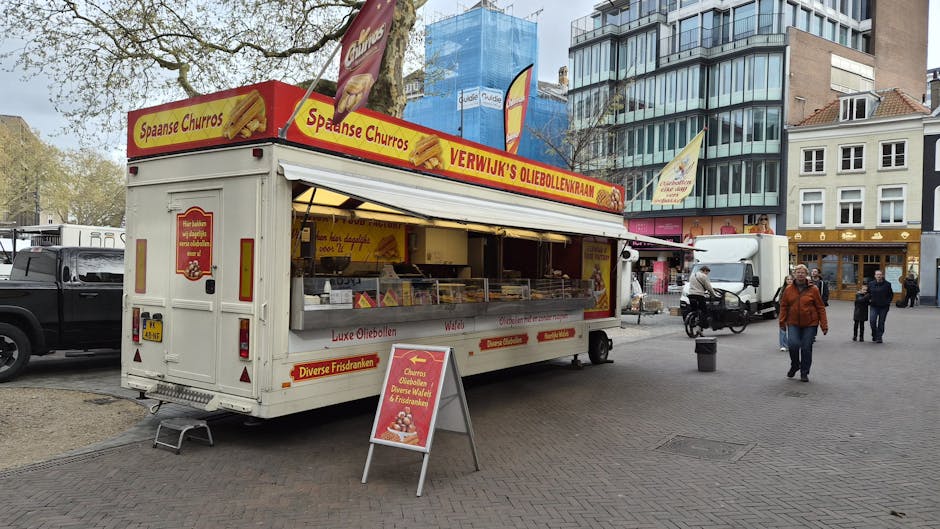
Amsterdam’s street food scene is the city’s secret weapon: cheap, traditional, instantly recognisable, and the most direct route to understanding why Dutch culture is the way it is. From hand-pressed stroopwafels at Albert Cuyp Market to raw herring eaten by the tail at the Singel, FEBO croquettes pulled hot from a wall to bitterballen at every brown cafe, this complete guide covers the 15 must-try Amsterdam street food dishes — what they are, where to find them, what to pay, and how to eat them like a local.
What is Amsterdam street food? It is cheap, traditional snacks eaten standing up — raw herring with onion, fresh stroopwafels, crisp bitterballen, fries with mayo, battered kibbeling, and hot croquettes pulled straight from the FEBO wall. Most cost €2–6 and need no reservation, no table and no plan. The best of it clusters around markets and fish stalls; the worst is whatever sits on a tourist square charging double. Prices below are 2026 estimates — always check before you buy.
| Street food | What it is | Rough price |
|---|---|---|
| Haring | Raw cured herring with onion | €4–5 |
| Stroopwafel | Warm caramel-filled waffle | €2–3 |
| Bitterballen | Crumbed beef-ragout balls | €6–8 for 6–8 |
| Kibbeling | Battered fried cod with sauce | €5–8 |
| Friet | Thick fries with mayo or satay | €3–5 |
| FEBO kroket | Croquette from the wall | €2–3 |
| Poffertjes | Mini puffed pancakes | €5–7 |
This is the on-your-feet chapter of my Amsterdam food and drink guide. For the sit-down classics, see must-try Dutch foods; for where to find the cheapest versions of everything below, the cheap eats guide has you covered.
How to Spot the Good Stalls
Before the dishes, a quick filter that will save you from most bad meals. Follow the queues — a stall with a line of locals on their lunch break is turning over fresh product; an empty one near a famous sight is not. Watch the prices: anything charging double the figures below because of the view is a tourist trap, and you will eat better one street back. Check the fish stalls for high turnover, the stroopwafel stands for an iron actually in use, and trust your nose over any photo menu. Cash or a Dutch debit card (PIN) is handy, since some of the best stalls take nothing else.
1. Haring (Raw Herring)
Start here. Raw herring is the most Dutch thing you can eat and, at a few euros from a busy stand, the best-value bite in the city. If eating a whole fish by the tail feels like a stretch, order it chopped with onion or as a broodje haring in a soft roll — milder, sweeter and less fishy than first-timers expect.
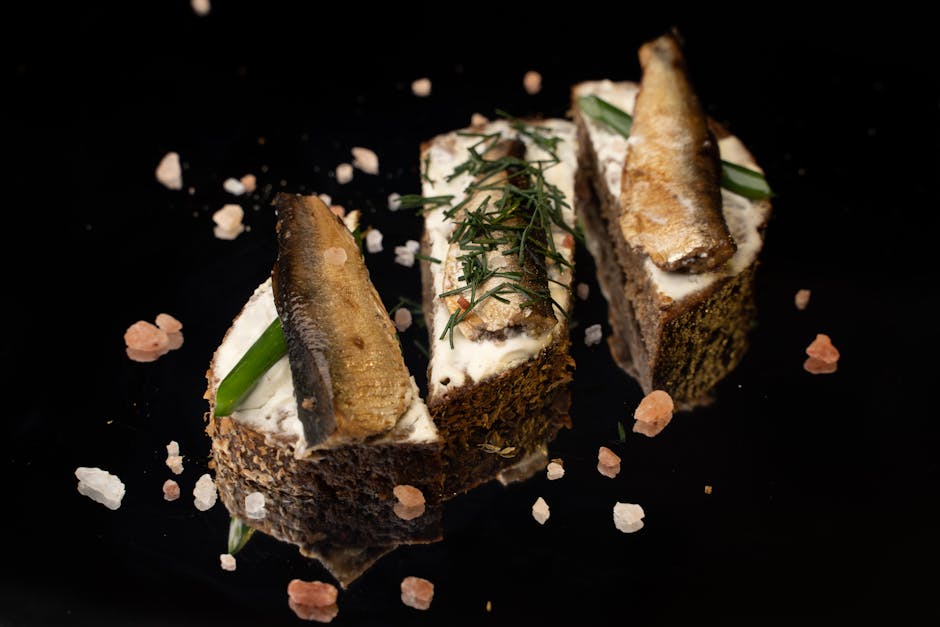
- What: raw fresh North Sea herring, lightly cured in salt brine.
- How to eat: pick up by the tail, dip in chopped onion and pickle, lower into your mouth. Or order broodje haring (in a soft bun).
- Price: €4-5 per fish.
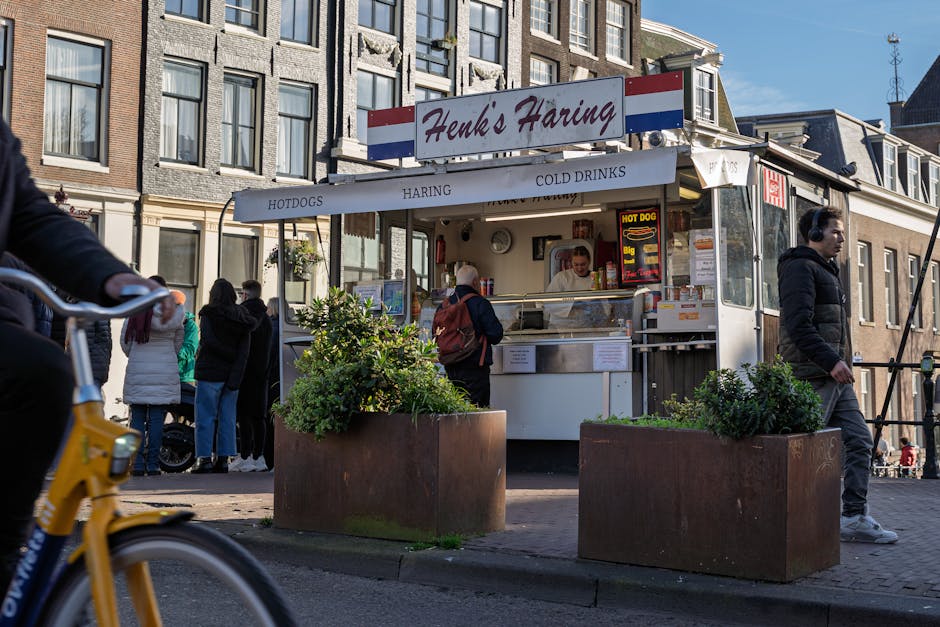
- Where: Stubbe’s Haring (Singel near Centraal), Frens Haringhandel (Koningsplein), Volendammer Vishandel (multiple).
- Season: best mid-June through August (Hollandse Nieuwe). Saltier preserved version year-round.
2. Stroopwafel
The smell gives it away before you see the stall: caramel and hot iron. Buy one freshly pressed rather than packaged, eat it on the spot while the syrup is still molten, and accept that supermarket versions will never be the same again.
- What: two thin waffle wafers sandwiching warm caramel syrup.
- How to eat: place on top of hot coffee for 30 seconds to soften, then bite.
- Price: €2.50 each at the market; €4-6 for a packaged tin.
- Best fresh: Original Stroopwafels at Albert Cuypmarkt stand 144. Van Wonderen Stroopwafels (Kalverstraat 132) for the chocolate-dipped variants.
- Best packaged: Daelmans (yellow tins) or Lotus Bakeries from Albert Heijn — €1.50-3 a pack.
3. Bitterballen
The undisputed king of the brown-café snack. Crisp on the outside, molten beef ragout within, always served with mustard and almost always with a beer. Order a portion to share and you have the most sociable few euros in Amsterdam.
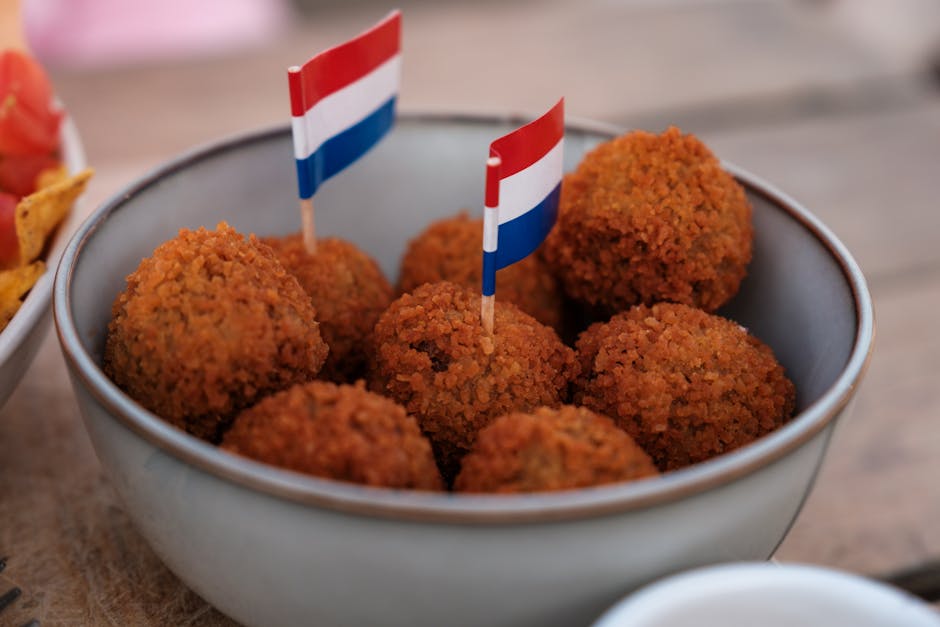
- What: deep-fried crispy spheres with a soft beef-ragout filling.
- How to eat: dip in mustard. Best with a small beer.
- Price: €5-9 for 6-8 balls at most brown cafes.
- Where: every brown cafe in Amsterdam. The standard pairing with afternoon beer.
- Top picks: Cafe ‘t Smalle, Cafe Hoppe, Cafe Berkhout, Cafe Chris.
4. Kibbeling
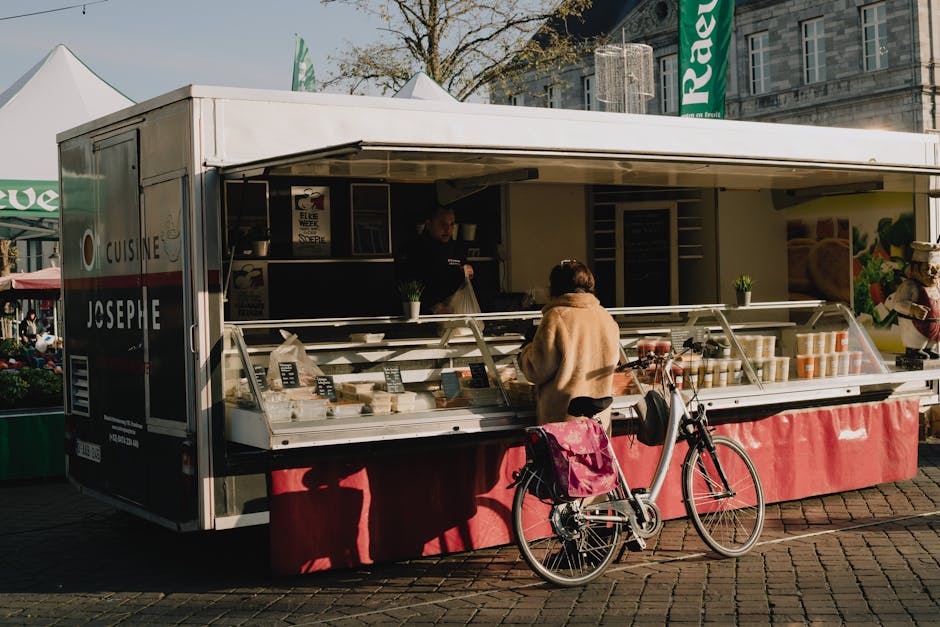
Battered, deep-fried chunks of cod with a garlicky or tartare-style sauce — the gateway fish for anyone not ready for raw herring. Best from a market fish stall where the turnover is high and the batter is fresh.
- What: battered and deep-fried cod chunks.
- How to eat: with garlic mayo (knoflooksaus) or tartare sauce. Eat with a fork from the cone.
- Price: €5-7 a portion.
- Where: fish stands at Albert Cuyp Market, Noordermarkt, any harbour fish-stall.
5. Friet (Dutch Fries)
Not just chips. Dutch friet is thick-cut, double-fried and served in a paper cone with your choice of a dozen sauces. Order them met mayo, or go full local with oorlog — mayo, peanut satay sauce and raw onion piled on together.
- What: thick-cut fries with extensive toppings.
- How to eat: in a cone with mayo, ketchup, peanut sauce (satésaus), or the "oorlog" combo (mayo + peanut + onion).
- Price: €4-7.
- Best: Vleminckx Sausmeesters (Voetboogstraat 33) — the city’s most famous; cash and Maestro only. Manneken Pis (Damrak 41) — second-best.
6. FEBO Croquettes
An only-in-the-Netherlands experience: a wall of little glass doors, each hiding a hot croquette or burger. Feed in coins, pop the door, pull out your snack. It is fast food as performance art, and a rite of passage at 2am.
- What: Dutch automat (vending machine) restaurant chain. Insert €2-3, the small door opens, you get a hot croquette or hamburger.
- Try: kroket (beef ragout), frikandel (skinless sausage), kaassoufflé (deep-fried cheese parcel), bamihap (Indonesian noodle croquette).
- Price: €2-3 per snack.
- Where: multiple locations. Damrak, Kalverstraat, Leidseplein, Reguliersbreestraat.
- Open until 4am at most locations — the official late-night Amsterdam snack.
7. Poffertjes
Tiny, fluffy pancakes cooked in a dimpled pan and served by the dozen under a snowfall of icing sugar and a knob of butter. A market and fairground staple, and the easiest way to win over travelling kids.
- What: tiny puffy pancakes with butter and powdered sugar.
- How to eat: 12-16 puffs in a small paper plate, eaten warm with a small fork.
- Price: €5-7 per portion.
- Where: poffertjes trucks at Vondelpark, Albert Cuyp Market, Dam Square, Bloemenmarkt.
- Tradition: poffertjes pans use 19 small wells; the cook flips each with a fork at the perfect moment.
8. Pannenkoeken (Dutch Pancakes)
The full-size cousin of poffertjes — large, thin Dutch pancakes served sweet or savoury, often big enough to be a meal. Less a grab-and-go snack than a sit-down treat, but a beloved part of the street-food landscape all the same.
- What: plate-sized thin pancakes, sweet or savoury.
- How to eat: sit-down at a pancake restaurant.
- Price: €10-15 per pancake.
- Best: The Pancake Bakery (Prinsengracht 191) — 70+ varieties; Pancakes Amsterdam (multiple locations).
- Try: bacon & cheese (zoutig), apple & cinnamon (zoet), or the famous "poffertjes-style" pancake.
9. Broodje Kroket
Take the ragout from a bitterbal, shape it into a log, crumb and fry it, then tuck it into a soft white roll with mustard. The broodje kroket is the Dutch lunch sandwich at its most unapologetic, and a HEMA or snack-bar version costs next to nothing.
- What: a deep-fried croquette (beef-ragout filling) on a soft white bun with mustard.
- How to eat: as a lunch sandwich; expect grease-mark on your shirt.
- Price: €3-5 each.
- Where: Van Dobben (Korte Reguliersdwarsstraat) — Amsterdam’s most famous kroket shop, since 1945. Also at HEMA, Albert Heijn deli counters.
10. Frikandel
A smooth, skinless minced-meat sausage, deep-fried and usually ordered speciaal: split open and loaded with curry ketchup, mayo and chopped onion. It is pure snack-bar comfort food and a Dutch childhood staple.
- What: a long, skinless, deep-fried sausage of indeterminate composition (officially: pork, chicken and seasoning).
- How to eat: as "frikandel speciaal" — cut lengthwise, filled with curry sauce, mayo and chopped onion.
- Price: €2-4 each.
- Where: FEBO, every Dutch friet shop, Albert Heijn freezer aisle.
- Considered a national institution; almost every Dutch person has a strong opinion about it.
11. Broodje Haring
If raw herring by the tail is a bridge too far, this is your way in: the same cured fish, chopped with onion and pickle, served in a soft bun. All the flavour, none of the head-tilting theatre.
- What: a fresh herring fillet on a soft white bun with onion and pickle.
- Price: €5-7.
- Where: every fish stall, especially Stubbe’s Haring (Singel) and the fish stand at Albert Cuyp Market.
12. Smoked Eel (Gerookte Paling)
Smoked eel is the old-school Amsterdam delicacy, rich and buttery, traditionally eaten on bread or with a squeeze of lemon. It is pricier and harder to find than the fried-fish standards, but worth seeking at a proper fishmonger if you like oily fish.
- What: regional speciality from the IJsselmeer (Volendam-Marken area).
- How to eat: on a soft white bun (palingbroodje) or as a slice with lemon.
- Price: €5-9.
- Where: Volendammer Vishandel (Albert Cuyp Market, also a Singel branch); best fresh in Volendam itself.
13. Tompouce
A wildly pink, two-layer pastry filled with custard cream — the Dutch answer to the mille-feuille and a national obsession. There is an ongoing, only-half-joking debate about how to eat one without wearing it. Around King’s Day, you will see them dyed orange.
- What: layered puff pastry with custard and bright pink icing on top.
- How to eat: with a small fork, ideally with coffee.
- Price: €2-3 each.
- Where: every HEMA across the country; bakeries throughout Amsterdam.
- Pink icing only on regular days; orange icing on King’s Day.
14. Appeltaart (Dutch Apple Pie)
Dutch apple pie is denser, chunkier and more cinnamon-forward than the American kind, with a thick crumbly crust and a mountain of cream (slagroom) on the side. Winkel 43 near the Noordermarkt is the cult address, but most cafés do a respectable slice.
- What: tall, thick-crusted apple pie with cinnamon, raisins, and lattice top — far from the American or British version.
- How to eat: with a large dollop of unsweetened whipped cream (slagroom).
- Price: €6-9 a slice.
- Best: Winkel43 (Noordermarkt 43) — the city’s most famous apple pie; queues on Saturdays. Cafe Papeneiland (Prinsengracht 2) also superb.
15. Oliebollen (Seasonal)
The seasonal one: deep-fried dough balls, sometimes studded with raisins or apple, rolled in icing sugar and sold from stalls around New Year. If you are in town in late December, join the queue — they are a once-a-year treat for a reason.
- What: deep-fried dough balls dusted with powdered sugar; sometimes filled with raisins or apple.
- Season: late October through early January.
- Price: €1.50-3 each.
- Where: street stalls (oliebollenkraam) appear all over the city; the best is at Olibollenkraam de Wit (Westerstraat).
- New Year’s Eve tradition: every Dutch household eats oliebollen on December 31.
Best Markets for Street Food
Markets are street food’s natural habitat in Amsterdam — you get the widest spread of stalls, the freshest turnover and the fairest prices, all in one walk. The Albert Cuyp in De Pijp is the obvious headliner, but the smaller neighbourhood markets are often more local and just as good. For opening days, the standout stalls and how to plan a market crawl, see my full guide to Amsterdam’s food markets.
- Albert Cuypmarkt (Mon-Sat 9-5) — the biggest. Stroopwafel stand 144, fish stalls, kibbeling, herring, poffertjes.
- Noordermarkt (Saturday only) — artisan farmers’ market; less touristy.
- De Foodhallen (daily, Bellamyplein 51) — indoor food hall with 20+ stalls.
- Westergasterras — festival-style food terraces in Westerpark.
- Pllek & NDSM — Amsterdam Noord food trucks.
- Rolling Kitchens festival (mid-May) — 5-day food-truck event.
- De Hallen Sunday Market — seasonal designer-and-food event.
Best Street-Food Tours
A guided food tour is a smart move on your first day: a local walks you to the good stalls, orders the things you would not, and explains what you are eating, which saves you a few mediocre tourist-trap meals later. Most run three to four hours and roll lunch into the price. If you would rather build your own foodie day around other sights, the things to do in Amsterdam guide helps you slot eating between museums and canals.
- Hungry Birds Street Food Tour — 4-hour walking tour with 8+ tasting stops. €65 per person.
- Eating Europe Amsterdam Food Tour — Jordaan focus, 4 hours. €99.
- Wide Open Amsterdam Tours — independent local guides.
- Bites & Bikes Tour — 4-hour cycling food tour. €75.
- Self-guided: hit Albert Cuyp + Foodhallen + a Jordaan brown cafe in 4 hours for €25 in food.
An Indonesian Note
Strictly speaking, most Indonesian food in Amsterdam is sit-down rather than street — but its influence leaks into the snack scene everywhere, from the satay sauce on your fries to the loempia (spring rolls) and bami at toko counters. A warm loempia from a market stall or a Surinamese-Javanese toko is one of the most satisfying few euros you can spend, and a gentle introduction to the flavours behind a full rijsttafel.
Indonesia was a Dutch colony for 350 years; rijsttafel (rice table) and Indonesian small plates are woven into Amsterdam food culture. Try Soo Khao Indonesian street food at Zeedijk, Cafe Toko Anda in De Pijp, Toko Bandoeng in Centrum, and the rijsttafel at Tempo Doeloe (sit-down rather than street). See our Best Restaurants by Budget.
Late-Night Street Food
Once the kitchens close, street food becomes the only game in town — and Amsterdam handles late-night snacking better than most cities. The FEBO wall never lets you down, and the kebab and falafel shops around the nightlife squares run into the small hours. It is chaotic and cheap and exactly what you want after a night out. For more after-dark budget options, see the late-night section of my cheap eats guide.
- FEBO — open until 4am; the only reliable late-night option.
- Manneken Pis — open until 1am.
- Pasha (Reguliersdwarsstraat) — Turkish until 4am.
- Maoz Falafel — falafel until 1-3am.
- Wok to Walk (Damrak) — stir-fry until 3am Friday/Saturday.
Etiquette & Customs
Street-food etiquette in Amsterdam is refreshingly relaxed — nobody will look twice at you eating on the move — but a few small things mark you out as someone who knows the ropes. Have a little cash on hand, because some stalls are cash- or PIN-only. Know roughly what you want before you reach the front; queues move fast and the person behind you is hungry. And do not hover for a table — the whole point is to eat standing, walking, or perched on the nearest bridge.
- Eating on the street is fine — no Dutch judgement.
- Use the small forks provided; eating fries with fingers is also fine.
- Carry napkins: most stalls give you only one.
- Tipping: not expected at street stalls; round up if you want.
- Cash works everywhere; cards mostly work but bring €20-30 in coins.
- Cones of food: never throw the cone in the canal — public-shaming territory.
- Photograph before eating — most stalls are happy to oblige.
Amsterdam Street Food: FAQ
What is the most famous Amsterdam street food?
Stroopwafels (sweet) and raw herring (savoury) are the two iconic Dutch street foods.
Where do locals eat street food in Amsterdam?
Albert Cuyp Market, the Foodhallen, fish stalls along the canals (Stubbe’s Haring, Frens), Vleminckx for frites, and any brown cafe for bitterballen.
How much does street food cost in Amsterdam?
€2-9 per item. A full street-food meal sweep with 4-5 items: €15-25 per person.
Is Amsterdam street food vegetarian-friendly?
Some yes — stroopwafels, poffertjes, kaassoufflé (cheese parcel), frites, falafel, fruit. Most savoury Dutch street foods (kroket, frikandel, bitterballen, kibbeling) are meat or fish.
What’s the best late-night Amsterdam street food?
FEBO automat hot snacks (€2-3, open until 4am) — the official Amsterdam after-bar food.
Should I eat raw herring?
Yes — at least once. Hollandse Nieuwe in June-August is the freshest; year-round preserved version is saltier. Order at any fish stall.
Final Thoughts
If you do one thing in Amsterdam, eat its street food. It is cheaper than a restaurant, more honest than a guidebook, and the fastest way to feel like you belong here — a herring at the Singel, a stroopwafel at the Albert Cuyp, a midnight kroket from a wall. Buy from the busy stalls, eat it where you stand, and do not save it all for one day. Prices and seasons move, so check before you make a special trip, then just follow the queues.
Eating Amsterdam street food is one of the cheapest, most fun ways to understand the city. Block out one half-day for an Albert Cuyp Market + Foodhallen + Vleminckx + FEBO sweep, hit a brown cafe for bitterballen at 5pm, and you’ve covered 10+ dishes for under €30 and 5 hours of pure culinary tourism.
Keep exploring: the Amsterdam food and drink guide for the full overview, must-try Dutch foods for the wider list, cheap eats for budget meals, food markets for the best stalls, and the neighborhoods guide to find the tastiest corners of the city.
Related Amsterdam guides
- Indonesian rijsttafel guide — where to eat Amsterdam’s signature feast.
Fries deserve their own page and now have one — our guide to the best fries in Amsterdam ranks the shops, decodes the sauce board and names the award-winning stall in Oost that nobody queues for.