
Amsterdam’s World War II history is one of the most consequential and tragic chapters in modern European history. Five years of Nazi occupation (1940-1945) saw 75,000 of Amsterdam’s 80,000 Jews murdered in the Holocaust, the February Strike, the hiding and betrayal of Anne Frank, the Hunger Winter, and finally liberation in May 1945. This guide covers the full timeline, the most important sites to visit, the resistance, and how to plan a respectful WWII history visit in 2026 — the city’s 80th anniversary year of liberation.
Timeline of WWII in Amsterdam
- 10 May 1940: Nazi Germany invades the Netherlands. Bombing of Rotterdam.
- 14 May 1940: Netherlands surrenders.
- 1940-1941: First persecution measures against Jews; expulsion from public spaces.
- February 1941: First mass arrests of Jewish men.
- 25-26 February 1941: February Strike — Dutch dockworkers and tram drivers protest deportation of Jews; only mass civilian protest against the Holocaust anywhere in Nazi-occupied Europe.
- 1942: Yellow Star mandatory; transport bans; mass deportations to Westerbork transit camp begin.
- 6 July 1942: Anne Frank and family go into hiding at Prinsengracht 263.
- 1942-1945: ~107,000 Dutch Jews deported; only 5,200 survive.
- 4 August 1944: Anne Frank and 7 others arrested in the Secret Annex.
- 3 September 1944: Last train from Westerbork to Auschwitz — included Anne Frank.
- 1944-1945 Hunger Winter (Hongerwinter): Western Netherlands cut off; 20,000-22,000 died of starvation.
- 5 May 1945: Netherlands liberated by Allied forces.
- 1947: Anne Frank’s diary published.
Must-Visit WWII Sites in Amsterdam
1. Anne Frank House
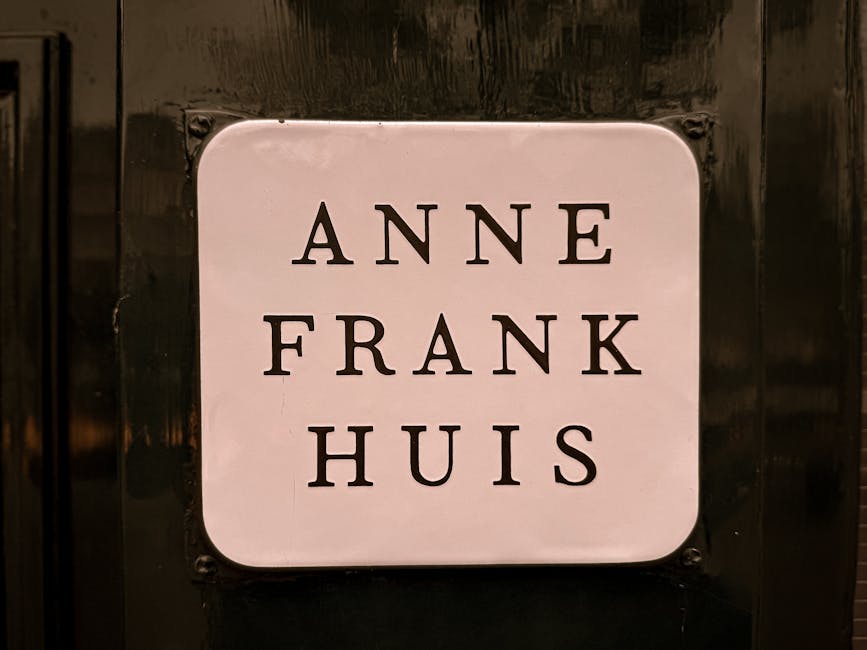
- Where: Prinsengracht 263-267.
- What: The Secret Annex where Anne Frank, her family, and four others hid for 25 months from July 1942.
- Entry: €16; tickets release exactly 6 weeks ahead; sell out within hours.
- Allow: 90 minutes.
- Restrictions: no photography inside; narrow staircases; not wheelchair-accessible.
- Why it matters: world’s most-visited Holocaust memorial; Anne’s diary is the most translated Dutch book ever (70+ languages).
See our Anne Frank House guide.
2. National Holocaust Museum
- Where: Plantage Middenlaan 27.
- Opened: 2024 — the Netherlands’ first national Holocaust museum.
- What: Personal stories of the 102,000 Dutch Holocaust victims; permanent exhibition + special exhibitions.
- Entry: €15.
- Allow: 2 hours.
- Site: former Jewish Teachers’ College, used by the Nazis as a deportation staging point.
3. Hollandsche Schouwburg Memorial

- Where: Plantage Middenlaan 24.
- What: Former Jewish theatre used as deportation staging point — 46,000 Jews assembled here before being transported.
- Memorial: roofless ruin with eternal flame; 6,700 family names of deported.
- Entry: free (included in Jewish Cultural Quarter combined ticket €20).
- Allow: 30-45 minutes.
4. Verzetsmuseum (Resistance Museum)
- Where: Plantage Kerklaan 61.
- What: Comprehensive museum about the Dutch resistance during Nazi occupation.
- Highlights: forgery cells, underground newspapers, hidden weapons, resistance personalities.
- Entry: €17.
- Allow: 2 hours.
- One of Europe’s best WWII resistance museums.
5. Jewish Cultural Quarter

- Where: around Mr. Visserplein and Plantage Middenlaan.
- 5 sites covered by combined ticket (€20): Portuguese Synagogue, Jewish Museum, National Holocaust Museum, Hollandsche Schouwburg, Children’s Museum.
- Why visit: 400 years of Dutch Jewish life; central to WWII history.
See our Jewish heritage guide.
6. The Dockworker Statue (De Dokwerker)
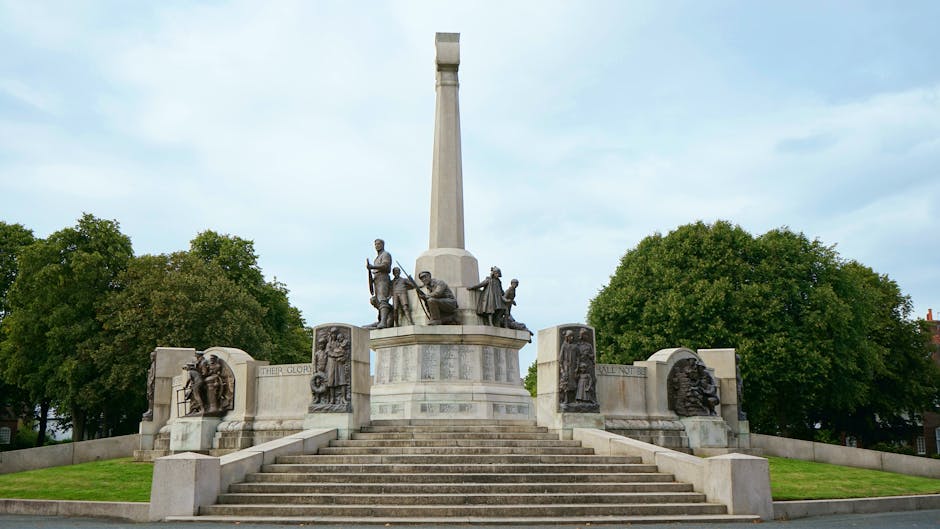
- Where: Jonas Daniël Meijerplein.
- What: Statue (1952) by Mari Andriessen commemorating the 25-26 February 1941 strike.
- Annual ceremony: 25 February, thousands gather.
- Free to visit.
7. Auschwitz Monument (Wertheimpark)
- Where: Wertheimpark, Plantage.
- What: Broken mirror by Jan Wolkers (1977) representing the broken sky over Auschwitz.
- Annual ceremony: last Sunday in January.
8. National Monument on Dam Square
- Where: Dam Square (in front of Royal Palace).
- What: White obelisk (1956) commemorating all WWII victims.
- Annual ceremony: 4 May Remembrance Day — King + nation observe 2-minute silence at 20:00.
- Free.
9. Homomonument
- Where: Westermarkt (next to Westerkerk + Anne Frank House).
- What: 1987 monument to LGBTQ+ victims of Nazi persecution — world’s first.
- Free.
10. Stolpersteine (Stumbling Stones)
- What: Brass plaques set into pavement outside homes of Holocaust victims, naming them.
- Where: 4,000+ throughout Amsterdam.
- Concentrations: Jodenbreestraat, Plantage, Old South.
- Free; look down as you walk.
The Hunger Winter (1944-45)
- Western Netherlands cut off by Allied advance + German embargo.
- Calorie rations dropped to 400-500/day.
- 20,000-22,000 Dutch people starved.
- Amsterdammers ate tulip bulbs, sugar-beet pulp, paper.
- Allied food drops in late April 1945 ("Operation Manna") saved many.
- Lessons in epigenetics: famine effects on unborn children studied to this day.
Liberation Day (5 May)
- 4 May: National Remembrance Day. Solemn 2-minute silence at 20:00.
- 5 May: Bevrijdingsdag — Liberation Day. Free concerts and festivities citywide.
- Major venues: Museumplein, Vondelpark, Westerpark.
- 2026 anniversary: 81 years since liberation; expect expanded events.
Dutch Resistance
- Underground newspapers: Het Parool, Trouw, Vrij Nederland (some survive as mainstream papers today).
- Forgery network: Resistance forged ID cards, ration books, German documents.
- Hidden Jews: ~25,000 Jews went into hiding; ~16,000 survived.
- Spider’s web: women-led courier networks moving documents and people.
- Liquidations: targeted assassinations of Dutch collaborators.
- Notable resisters: Hannie Schaft (executed 1945), Walraven van Hall (banker behind resistance finance), Gerrit van der Veen.
A Walking Route Through WWII Amsterdam
- Start: Anne Frank House (book months ahead).
- Visit Homomonument at Westermarkt.
- Walk to Dam Square; National Monument.
- Tram or walk east to Jonas Daniël Meijerplein for the Dockworker statue.
- Walk into the Jewish Cultural Quarter:
- Portuguese Synagogue.
- Jewish Museum.
- National Holocaust Museum.
- Hollandsche Schouwburg.
- Continue south to Wertheimpark for Auschwitz Monument.
- Finish at Verzetsmuseum (Resistance Museum).
Annual WWII Events
- 27 January: International Holocaust Remembrance Day (UN designated).
- Last Sunday January: Auschwitz Monument ceremony, Wertheimpark.
- 25 February: February Strike commemoration, Dockworker Statue.
- 4 May: National Remembrance Day; 2-minute silence at 20:00.
- 5 May: Liberation Day — concerts citywide.
- Throughout year: Stumble Stones (Stolpersteine) installations on victim anniversaries.
WWII Day Trips from Amsterdam
- Camp Westerbork (2 hours by train + bus): the transit camp from which Dutch Jews were deported.
- Camp Vught (Herzogenbusch) (1.5 hours): only SS concentration camp on Dutch soil.
- Arnhem and the Bridge Too Far area: 1944 Battle of Arnhem; Airborne Museum.
- Nuenen (van Gogh’s home): also has resistance museum.
Books & Films to Read/Watch Before Visiting
- Diary of a Young Girl by Anne Frank.
- The Hiding Place by Corrie ten Boom (Haarlem-based).
- The Stranger in My Country by Eric Larsen.
- Black Book (Paul Verhoeven film, 2006) — Dutch resistance drama.
- The Resistance Banker (2018 film) — Walraven van Hall biopic.
- Bandits by Eric Hobsbawm — bigger context.
- Etty Hillesum’s diaries: another remarkable Dutch Holocaust diary.
Visitor Etiquette
- Silence in museums and at memorial sites.
- No photos inside Anne Frank House.
- Respectful behaviour: dress conservatively at synagogues and memorials.
- Children: 10+ recommended for Anne Frank and Resistance Museum.
- 4 May silence: stop wherever you are at 20:00 for 2 minutes.
- Photography of Stolpersteine: encouraged — helps documentation.
Practical Tips
- Book Anne Frank 6 weeks ahead.
- Combined Jewish Cultural Quarter ticket (€20): covers 5 sites — great value.
- Allow 2-3 days for a thorough WWII tour.
- Audioguide: included with most major museums.
- Walking tours: WWII-themed walking tours run daily.
- Anne Frank House workshops: for kids/teens; book ahead.
- Wear comfortable shoes: a full WWII walking route is 6-8 km.
- Emotional pacing: don’t try to do all sites in one day.
The National Monument on Dam holds earth from execution sites in every province — our Dam Square guide covers it and the 4 May silence.
Berlin tells the twentieth century at a scale Amsterdam does not attempt — our Amsterdam vs Berlin comparison is honest about that difference.
Frequently Asked Questions
What’s the most important WWII site in Amsterdam?
Anne Frank House is the most-visited; the National Holocaust Museum (opened 2024) is the most comprehensive.
How long do I need for WWII history?
Minimum half-day for Anne Frank House. 2-3 days for the full picture: Anne Frank, Jewish Cultural Quarter, Resistance Museum, National Holocaust Museum.
Are these sites kid-friendly?
Anne Frank House and Resistance Museum: 10+. Holocaust Museum: 12+. Memorials: any age with adult guidance.
Can I visit Anne Frank House walk-up?
No — strictly timed tickets only; release 6 weeks ahead; sell out within hours.
What was the February Strike?
25-26 February 1941 protest by Dutch workers against the first deportations of Jews — only mass civilian protest against the Holocaust anywhere in Nazi-occupied Europe.
How many Dutch Jews survived?
About 27,000 of the pre-war population of 140,000 — among the worst survival rates in Western Europe.
Final Thoughts
Amsterdam’s WWII history is not just background — it’s woven into every street, every Stolperstein, every quiet memorial. A respectful 2-day exploration of Anne Frank House, the Jewish Cultural Quarter, the Resistance Museum, and the National Holocaust Museum tells the most important Dutch story of the 20th century. Book Anne Frank 6 weeks ahead, walk the Stumbling Stones with care, and pause for the 4 May silence if you’re in town. The city remembers.
Related Amsterdam guides
- Amsterdam Culture & History — museums, heritage and the Golden Age.
- Jewish heritage guide — history, museums and memorials.
- Amsterdam history timeline — from medieval dam to modern capital.
- Architecture walking guide — gables, canal houses and modern Noord on foot.
- Anne Frank House visitor guide — how the timed-ticket system works and when to book.
- Amsterdam museums guide — the Rijksmuseum, Van Gogh and 25 more, with ticket tips.