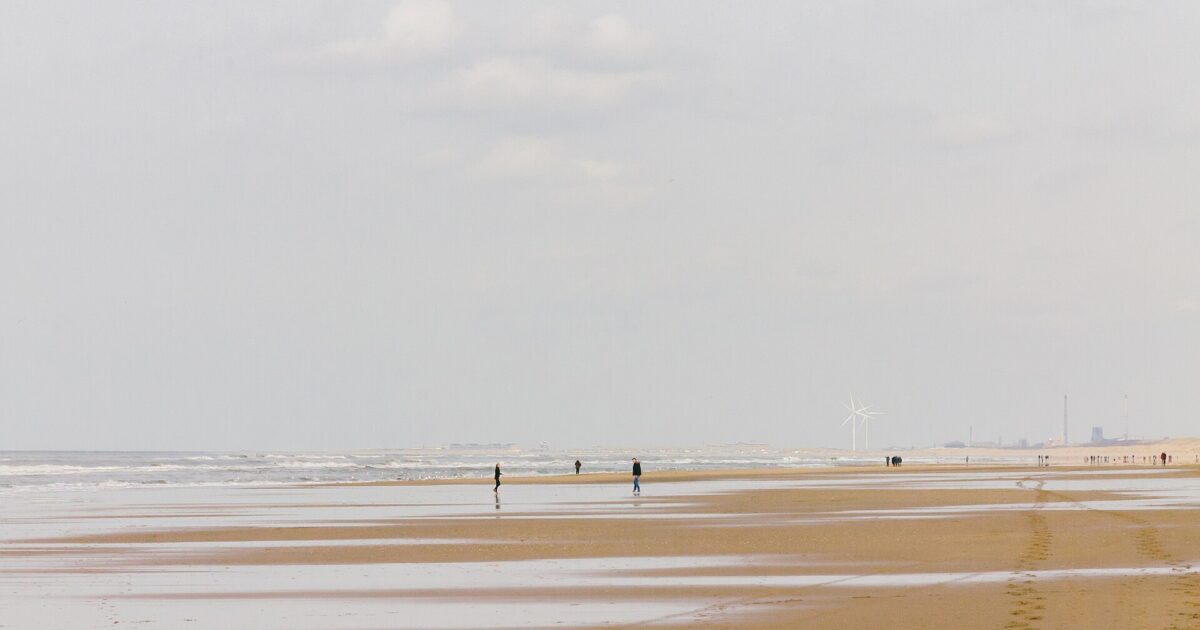
Amsterdam is half an hour from the North Sea, which surprises a great many visitors who spend a week in the city without realising the coast is closer than the airport. Direct trains run to a station a few minutes’ walk from the sand. This guide covers Zandvoort and the best Dutch beaches — how to get there, what the coast is actually like, and which stretch suits which kind of day.
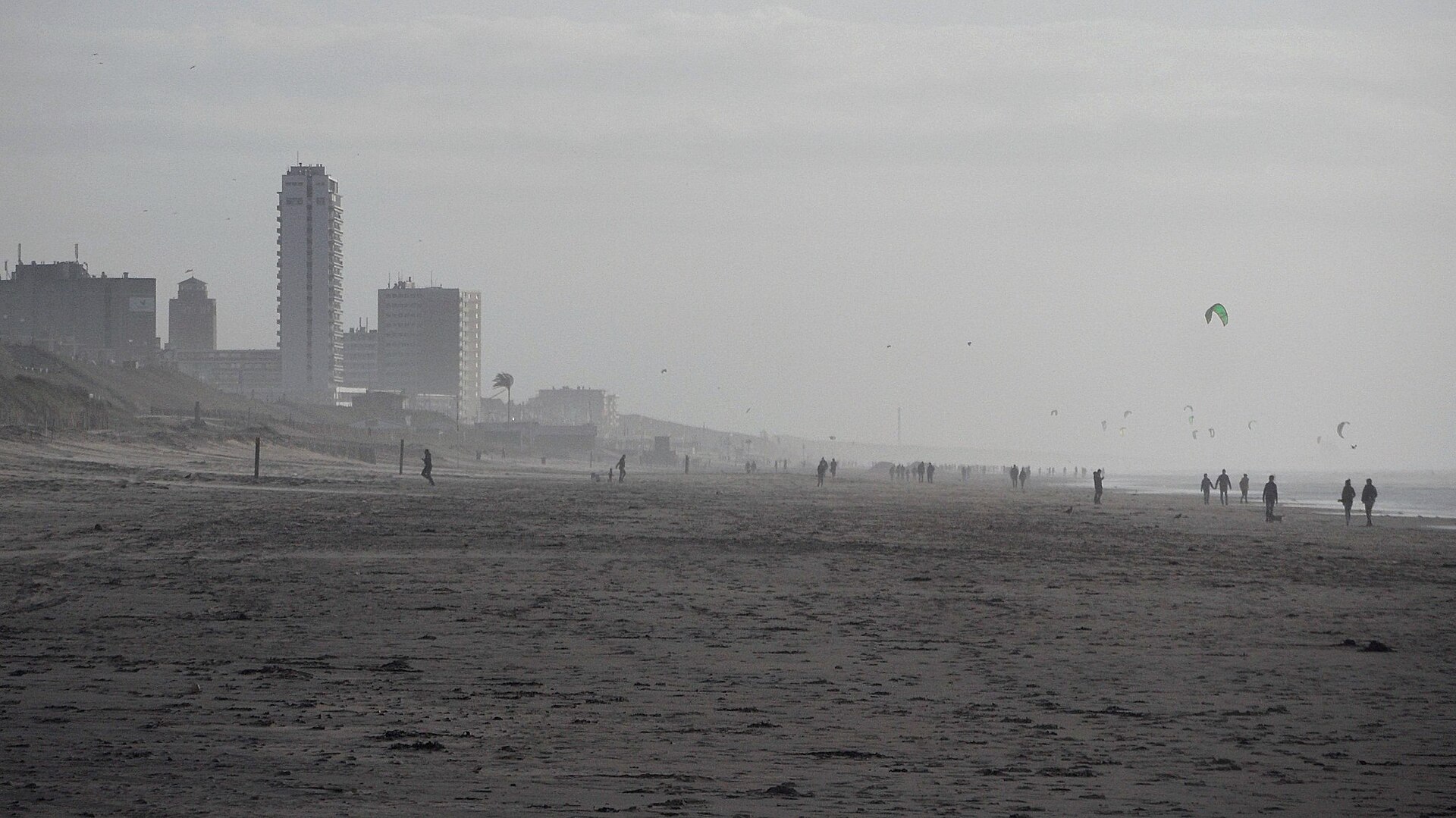
Zandvoort itself is not a pretty town. The seafront is dominated by 1960s and 1970s apartment blocks, and nobody comes here for the architecture. What it has is an enormous, clean, properly maintained beach with a dune reserve behind it, a row of beach pavilions serving decent food and cold beer, and a train station essentially on the sand. On a warm day that is a very good deal indeed. On a grey November afternoon it is bleak in a way some people find wonderful and most find bleak. Set your expectations for a working Dutch beach resort rather than a Mediterranean one and you will have a good day.
| Beach | From Amsterdam | Character |
|---|---|---|
| Zandvoort aan Zee | ~30 min direct train, about €6.90 | The default. Family, accessible, station on the beach |
| Bloemendaal aan Zee | Via Zandvoort or Overveen, a few km north | Beach clubs, younger, more exclusive, summer party scene |
| Scheveningen | Under an hour to The Hague, then a tram | The big resort: pier, boulevard, funfair energy |
| Wijk aan Zee | Via Beverwijk, bus | Smaller, windsurfing, steelworks on the horizon |
| IJmuiden | Bus or ferry via Velsen | Working port, wide beach, few visitors |
| Texel and the Wadden | Train to Den Helder, then a ferry of about 20 minutes | The wild version. Needs an overnight |
| Renesse / Domburg | A long trip, in Zeeland | The Dutch summer-holiday coast. Not a day trip |
Getting to Zandvoort
This is the easiest coastal access in the Netherlands and possibly in Europe. Direct trains run from Amsterdam Centraal to Zandvoort aan Zee in about thirty minutes, with up to 38 services a day. A single is around €6.90, plus a €1.60 surcharge for a disposable card if you buy from a machine — avoided entirely by tapping OVpay with a bank card or phone, which is what you should be doing anyway. Our OV-chipkaart and OVpay guide covers the mechanics.
Zandvoort aan Zee station sits a few minutes’ walk from the sand. You come out of the building, walk down a short street, and there is the North Sea. No bus, no transfer, no taxi. This is the single reason Zandvoort beats every other Dutch beach as a day trip regardless of its other merits.
Some services run direct; others require a change at Haarlem, which adds a few minutes and no difficulty. On hot summer days the trains can fill up, so go early or travel back later; the NS timetable shows the options.
Cycling there is also feasible for the reasonably fit, and it is one of the better rides in the country. Our bike rental guide covers hiring something suitable — a city bike will do it, but an e-bike into a headwind is money well spent.
What Zandvoort is actually like
A wide, flat, hard-packed sand beach running for kilometres in both directions, backed by a dune ridge that is a protected nature reserve. The sand is clean and the water quality is regularly tested and generally good. Behind the beach, a town of about 17,000 people that swells enormously in summer.
The pavilions are the thing that makes a Dutch beach different from a British one. These are substantial timber structures on the sand, serving proper food and drink, with terraces and loungers. A handful stay open all year round; many more appear for the season and are dismantled in autumn. Strandpaviljoen Thalassa is a classic, right by the station and strong on seafood. Meijer aan Zee is another long-standing option. Tijn Akersloot runs a summer operation with wood-fired pizza and cocktails.
You do not have to buy anything to use the beach — it is entirely free and public — but a lounger and a drink at a pavilion for an afternoon is the local way to do it and it is not expensive by Amsterdam standards.
The water. The North Sea is cold. It is genuinely swimmable in July and August, and bracing rather than pleasant in June and September. There are lifeguarded sections in season, marked by flags, and there are currents — rip currents in particular — that are real and occasionally serious. Swim between the flags.
The wind. Often. Zandvoort is a popular windsurfing and kitesurfing beach, and it is often breezy. Bring a windbreak or rent one; the sand moves.
Bloemendaal aan Zee: the other one
A few kilometres north along the same continuous beach, and a completely different proposition. Where Zandvoort is families and pavilions, Bloemendaal aan Zee is beach clubs — larger, louder, with DJs and a summer party scene.
Whether that appeals is entirely a matter of taste, and the honest advice is to pick deliberately rather than end up in the wrong one. If you are with children, stay in Zandvoort. If you are 25 and want a day that turns into a night, go north. The beach itself is the same sand.
You can walk between them along the beach in about forty minutes, which is the cheapest way to sample both. Overveen station serves Bloemendaal directly, with a bus down to the sea in summer.
The dunes, which are the underrated part
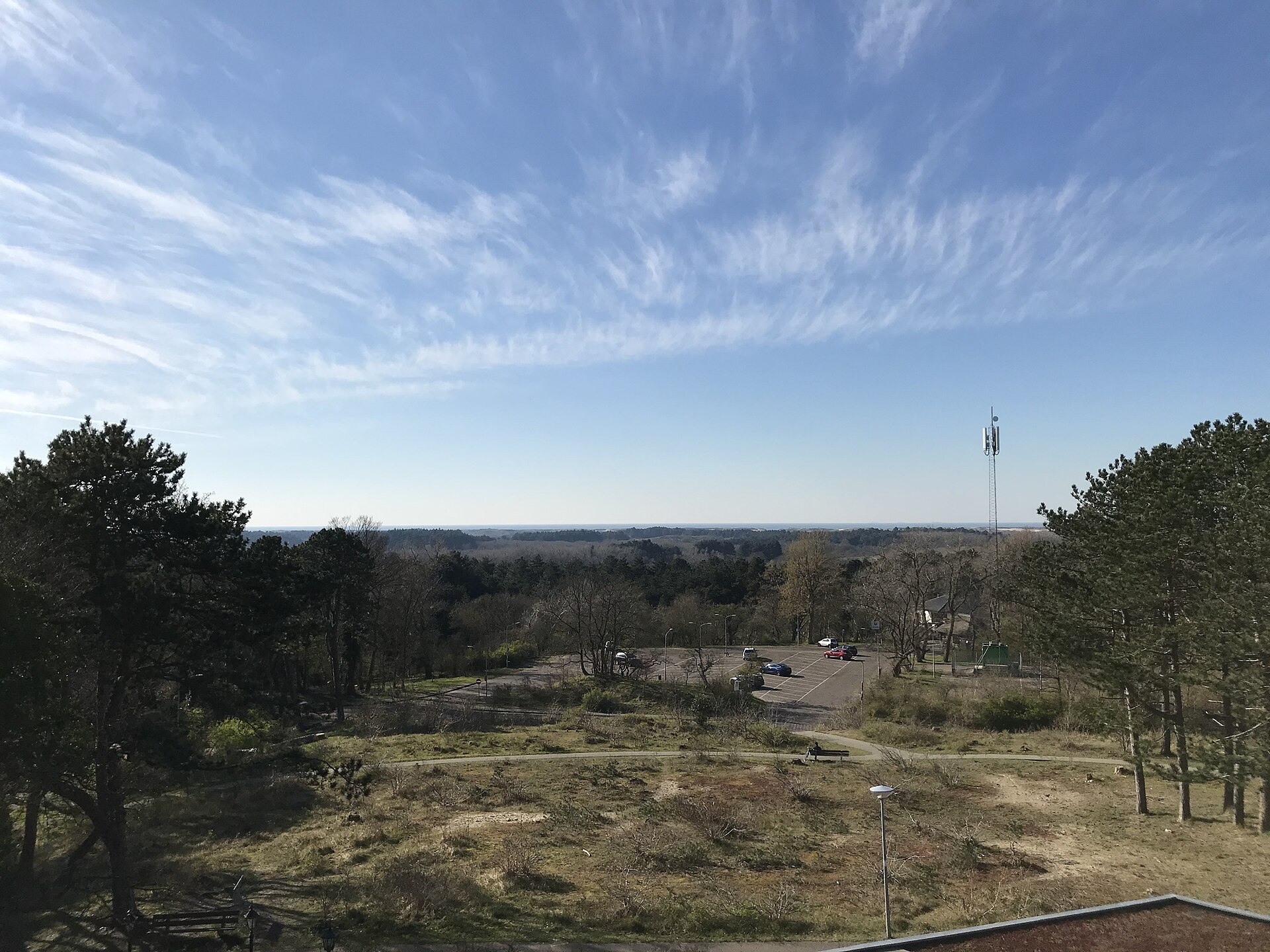
Behind the beach runs the Kennemerland dune system — a protected landscape of sand ridges, scrub, pine and open water that most beach visitors never set foot in. It is genuinely good walking and cycling country, it holds deer, foxes and an enormous bird population, and on a busy August Saturday it is empty while the sand is full.
There are marked paths from both Zandvoort and Overveen, and small entrance fees apply in parts of the reserve. If the weather is not beach weather — which, in the Netherlands, is most of the year — this is the reason to make the trip anyway. Two hours in the dunes and a plate of fish at a pavilion is a better November day out than most museums.
Circuit Zandvoort, and a change worth knowing
The racing circuit sits in the dunes immediately behind the beach, which is an unusual thing to find beside a nature reserve and the source of a long-running local argument.
Here is the current position, and it matters if you were planning around it: the 2026 Dutch Grand Prix was held on 23 August 2026 and was the final scheduled running of the race before it leaves the Formula 1 calendar. Do not book a trip expecting an annual Dutch GP. The circuit continues to host other racing and events, but the F1 weekend — which used to shut down the whole town and fill every hotel room in the region — is no longer part of the calendar.
Practically, this makes late August in Zandvoort considerably easier than it has been for several years. If you visited before and remember the crowds, that particular problem has gone.
The rest of the Dutch coast
Scheveningen
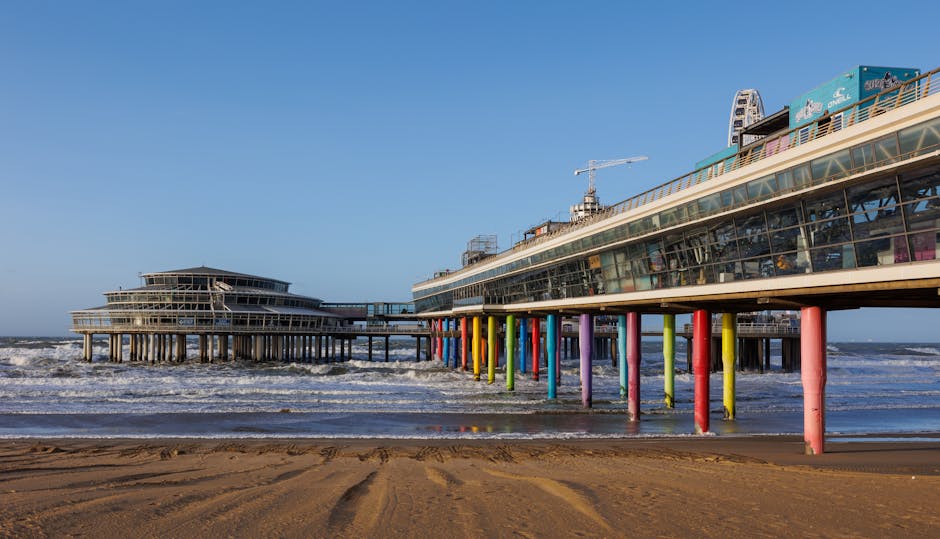
A major seaside resort, part of The Hague and a short tram ride from the city centre. It has the pier with its Ferris wheel and bungee jump, a long boulevard, the Kurhaus hotel, and a proper resort atmosphere that Zandvoort lacks entirely.
From Amsterdam it is about fifty minutes to The Hague plus the tram, so a longer day — but you get a city and a beach in one trip, and the Mauritshuis is one of the best small museums in Europe. Our guide to The Hague and Scheveningen covers doing both properly.
Wijk aan Zee and IJmuiden
Closer to Amsterdam than Zandvoort in a straight line but less convenient by public transport. Wijk aan Zee is a small village with a big beach and a serious windsurfing reputation, with the Tata steelworks unavoidably present on the horizon — which some find atmospheric and others find grim. IJmuiden has a working port, enormous sea locks and a wide beach with very few people on it.
Both are worth knowing if Zandvoort is packed and you want sand without the crowd. Neither is worth a special journey.
Zeeland: Domburg, Renesse and the Delta
The south-west province of Zeeland has the Netherlands’ best beaches by most measures — wider, sunnier, backed by higher dunes, and with the Delta Works flood barriers as an extraordinary piece of engineering to visit alongside. Domburg is the genteel end, Renesse the young one.
It is also three hours or more from Amsterdam and is emphatically not a day trip. This is where Dutch families take a week in July. If you have a car and a spare few days it is a genuinely lovely part of the country. From Amsterdam on a short trip, forget it.
Texel and the Wadden Islands
The wildest and emptiest Dutch coast, two and a half hours north plus a ferry, and worth an overnight rather than a day. Thirty kilometres of beach with essentially nothing built on it. Our guide to Texel and the Wadden Islands covers the ferries and which of the five islands suits which kind of traveller.
How the Dutch actually use a beach
There are a few conventions worth knowing, because a Dutch beach day does not look much like a Mediterranean one and visitors sometimes read it wrong.
Nobody expects to be hot. People come to the beach in the Netherlands to be outside, not to bake. Windbreaks go up before towels come out, jumpers stay within reach, and a day that would be considered a washout in Spain is a perfectly good beach day here. If you wait for weather that guarantees sunbathing you will not go.
The pavilion is the point. A Dutch beach day is structured around eating and drinking on a terrace at the edge of the sand, often for hours. The pavilions are not a convenience bolted onto the beach; they are the social centre of it. Ordering a beer and a plate of kibbeling — battered white fish with garlic sauce — and staying put is a complete and entirely respectable plan.
The paal system. The entire Dutch coast is marked by numbered posts, strandpalen, set roughly a kilometre apart. Locals arrange to meet at paal numbers, pavilions advertise by them, and lost children are found by them. Note the nearest one when you arrive; on a beach with no landmarks it is the only way to describe where you are.
Dogs, nudity and horses all have their own signposted zones and seasons, and the rules change between summer and winter. The signage is clear and it is worth two seconds of reading rather than an awkward conversation.
Beach chairs are rented, not bought. A lounger and windbreak for the day costs a modest amount at any pavilion and is the standard move. Turning up with a full picnic setup is fine too, and nobody minds either way.
When to go, and what to expect
Dutch beach weather is a narrow window and everybody uses it at once. When a genuinely hot weekend arrives, the entire Randstad heads for Zandvoort and the trains fill.
- June to early September is the season. July and August are Dutch school holidays and the busiest.
- Weekdays are usually quieter than weekends.
- Go early on a hot day. Arriving at ten rather than one changes everything about the experience.
- May and September are underrated: the sand is empty, the pavilions are open, and the light is better. Bring a jumper.
- October to April is walking weather rather than beach weather. A handful of pavilions stay open all year and a windswept walk followed by fish and a beer is a legitimate winter outing — see our Amsterdam in winter guide for the rest of the cold-season options.
Our month-by-month weather guide is realistic about how often the sun actually appears. The short version: plan the beach as an opportunistic day rather than a fixed item on the itinerary, and be ready to go when the forecast is good.
Making a full day of it
A beach on its own is a half-day at most in this climate. Three combinations that turn it into a proper outing:
Haarlem and Zandvoort. The best of the three. Haarlem is fifteen minutes from Amsterdam and ten more from the sea, so you can do a genuinely lovely old Dutch town in the morning — the Grote Markt, the Frans Hals Museum, the hidden almshouse courtyards — then be on the sand by two. Saturday adds the market on the Grote Markt. Our Haarlem day trip guide covers the town half.
Dunes and beach. Get off at Overveen rather than Zandvoort, walk or cycle through the Kennemerland dune reserve to the coast — good landscape most beach visitors never see — then come out onto the sand at Bloemendaal and walk south to Zandvoort for the train home.
The Hague and Scheveningen. A longer day, but you get the Mauritshuis, the Binnenhof and a proper resort beach in one trip. Fifty minutes to The Hague, then fifteen on the tram. Detail in our Hague and Scheveningen guide.
What we would avoid is trying to add Zandvoort onto an already full day. The train is easy but the beach rewards being unhurried, and arriving at five for ninety minutes before the light goes is not the version worth having.
Practical notes
- The beach is free. Pavilions charge for loungers and food; the sand costs nothing.
- Take a windbreak or rent one. This is not optional advice on the Dutch coast.
- Swim between the flags and take the currents seriously. Lifeguarded sections operate in season only.
- Cashless. Pavilions take card and generally nothing else.
- Nudist sections exist and are signposted along parts of the Zandvoort and Bloemendaal beaches. So do dog-friendly sections and dog-free ones. Read the signs.
- Return trains fill on hot summer afternoons and evenings. Leave earlier or later.
- Do not drive. Parking in Zandvoort in summer is expensive, limited and miserable, and the train arrives on the beach.
Keep Exploring
- The Netherlands Beyond Amsterdam
- The Hague & Scheveningen Beach
- Texel & the Wadden Islands
- Haarlem Day Trip
- Day Trips from Amsterdam
- Bike Rental in Amsterdam
- OV-chipkaart & OVpay Guide
- Amsterdam in Summer
- Amsterdam in Winter
- Weather Month by Month
- Free Things to Do in Amsterdam
- Amsterdam with Kids
Frequently Asked Questions
How do you get from Amsterdam to Zandvoort beach?
Direct trains from Amsterdam Centraal to Zandvoort aan Zee take about thirty minutes, with up to 38 services a day and a single around €6.90. Some services require a change at Haarlem. The station is a few minutes’ walk from the sand, with no bus or transfer needed.
Is Zandvoort worth visiting?
On a warm day, yes — a wide clean beach, year-round pavilions serving good food, protected dunes behind and a station on the sand. The town itself is 1960s apartment blocks and not attractive. Go for the beach and the dunes, not for the architecture.
What is the difference between Zandvoort and Bloemendaal aan Zee?
Same continuous beach, different crowd. Zandvoort is families and traditional pavilions; Bloemendaal aan Zee, a few kilometres north, is known for its beach clubs with DJs. You can walk between them in about forty minutes.
Can you swim at Zandvoort?
Yes, and the water quality is generally good. The North Sea is cold — genuinely swimmable in July and August, bracing either side. Lifeguarded sections operate in season and are marked by flags; rip currents are real, so swim between them.
Is there still a Formula 1 race at Zandvoort?
No. The 2026 Dutch Grand Prix, held on 23 August 2026, was the final scheduled running before the race left the Formula 1 calendar. The circuit still hosts other racing and events, but the F1 weekend that used to fill the town is no longer an annual fixture.
Which is the best beach near Amsterdam?
Zandvoort, for convenience alone — thirty minutes and the station is on the beach. Scheveningen is the bigger resort and pairs with a day in The Hague. For the wild version, Texel is two and a half hours north and deserves an overnight rather than a day.
Do you have to pay for the beach in the Netherlands?
No, the beaches are free and public. Beach pavilions charge for loungers, food and drink, and parts of the dune reserves behind the beach have small entrance fees, but the sand itself costs nothing anywhere on the Dutch coast.
When is the best time for a Dutch beach day?
June to early September, and on a weekday if you can. May and September are underrated — pavilions open, sand empty, better light, and you will want a jumper. Treat the beach as an opportunistic day when the forecast turns good rather than a fixed itinerary item.