Eindhoven is the fifth-largest city in the Netherlands, a leading technology hub, and the place a great many budget flights actually land. It has a flying-saucer building, one of Europe’s first contemporary art museums, a football club with a genuine European history, and a former Philips factory district full of studios and skate parks. It also has almost no canals, almost no gables and almost no tourists. This guide covers the Eindhoven things to do that make it worth a day, and is direct about who should skip it.
We should say this first: Eindhoven is not a beautiful city. Allied bombing and a German counter-raid in 1942 and 1944 took out much of the centre, and what replaced it was built quickly and for function. If you came to the Netherlands for canal houses and church towers, this is the wrong stop — go to Utrecht or Delft instead and enjoy them properly. What Eindhoven has is design, industrial history and a genuine creative economy, and if those interest you it is one of the more distinctive cities in the country. The single strongest reason to come is that you already have to: your flight lands here.
| Detail | |
|---|---|
| From Amsterdam | About 1h 20m by direct intercity, roughly €25.60 second class |
| From the airport | Bus 400/401 to Eindhoven Centraal, just over 25 min, about €5.15 |
| Van Abbemuseum | €16 adult · free with Museumkaart · Tue–Sun 11:00–17:00 · Stratumsedijk 2 |
| Philips Museum | City centre, on the site of Gerard Philips’s first light bulbs, 1891 |
| Strijp-S | Former Philips plants: studios, bars, shops, Area 51 skate park |
| Evoluon | The 1966 flying-saucer Philips pavilion, north-west of the centre |
| PSV | Philips Stadion — club museum and stadium tour |
| Dutch Design Week | 17–25 October in 2026 — the city’s busiest week, with more than 300,000 visitors over nine days |
| Airport closure | Closed 1 Feb – 19 Jul 2027 for runway works |
| Time to allow | A day, or an afternoon between flights |
Why Eindhoven exists in the shape it does
One company explains almost the entire city, so it is worth two paragraphs.
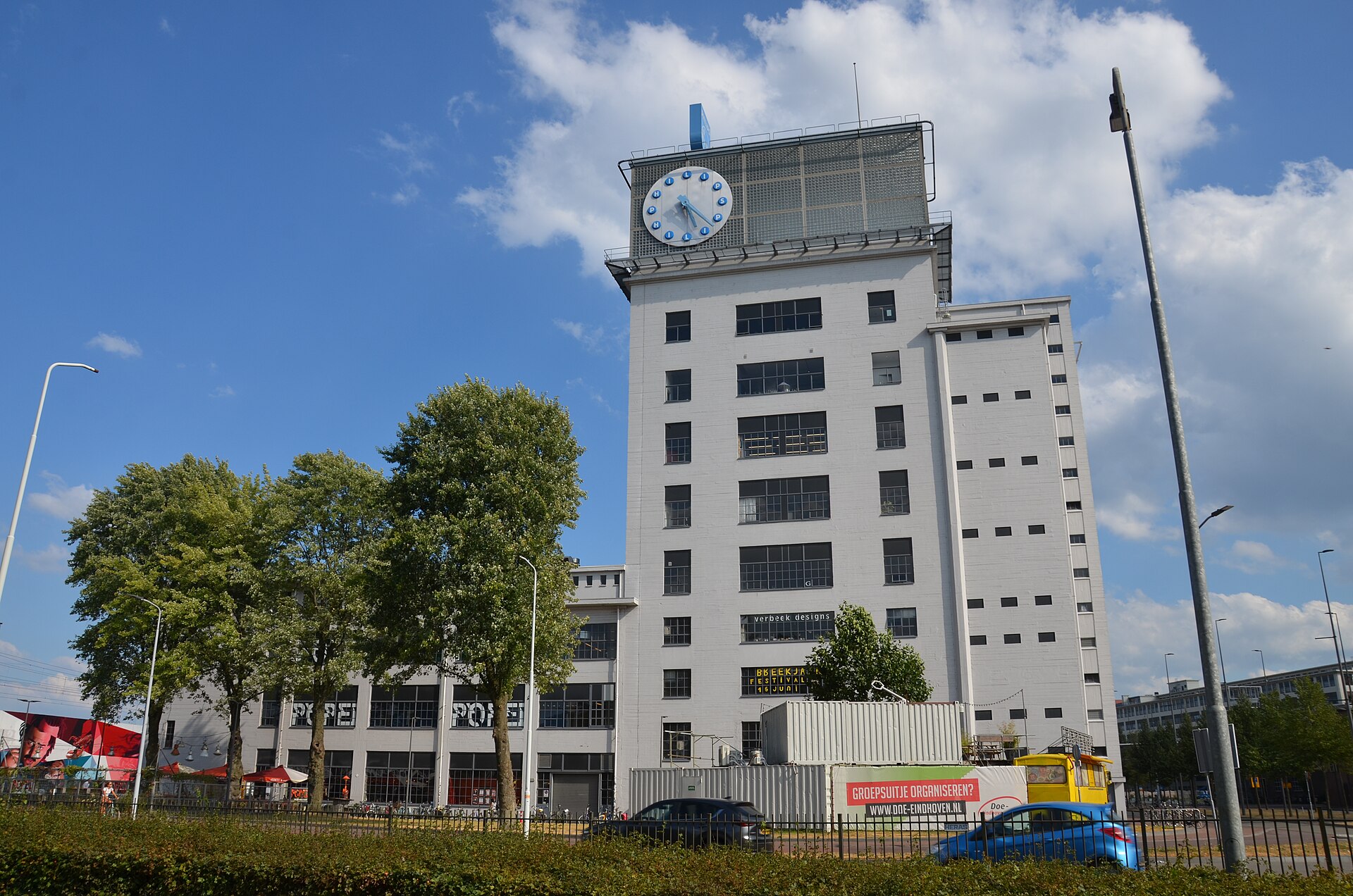
In 1891 Gerard Philips began making light bulbs in a small factory in what was then a modest Brabant market town of a few thousand people. His brother Anton joined and turned it into a sales operation, and within decades Philips was one of the largest electronics companies in the world. It built the factories, the workers’ housing, a sports club, a concert hall and the research laboratories. Eindhoven did not attract Philips; Philips grew Eindhoven around itself.
That produced two things you can still see. First, a company town’s architecture — purpose-built districts, enormous industrial sheds, a stadium named after the firm, and a general sense that the city was planned by engineers rather than grown by merchants. Second, when Philips decided in 1997 to move its headquarters to Amsterdam (the move began in 1998) and shed manufacturing, Eindhoven inherited a vast quantity of empty industrial floorspace and a large population of technically trained people. What it did with that is the interesting part: the factories became studios, the region became the Brainport technology cluster, and the Design Academy Eindhoven became one of the most influential design schools in the world.
So the city you visit is a post-industrial one that got its second act right. That is rarer than it sounds, and it is the reason a place with no medieval centre is worth a day at all.
The things worth your time
Van Abbemuseum
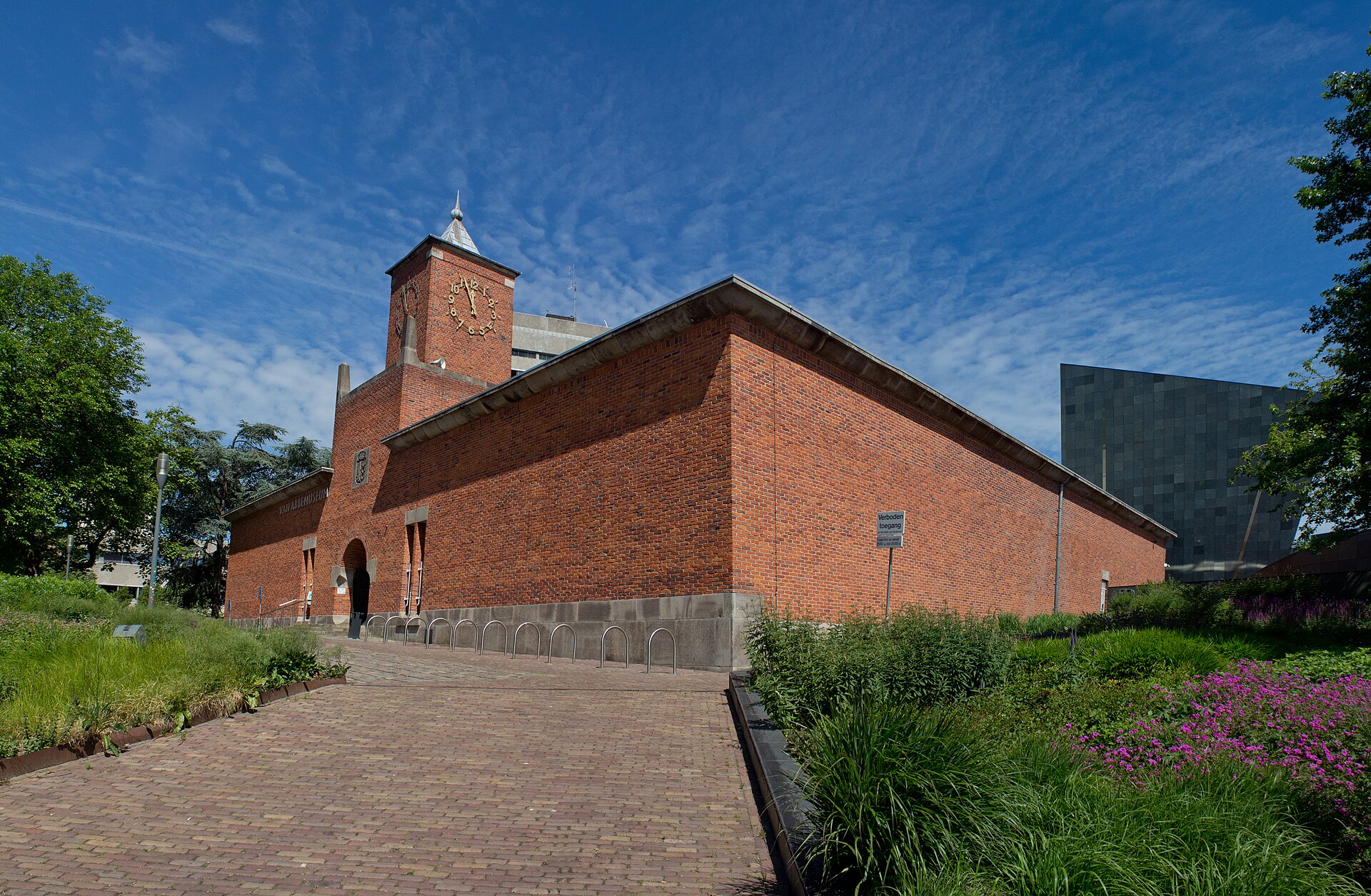
The best reason to come. Open Tuesday to Sunday 11:00 to 17:00, closed Mondays — though it opens on Easter Monday, Whit Sunday and Boxing Day. Adult entry is €16, and it is free with a Museumkaart, which changes the arithmetic entirely if you are touring the country. It sits at Stratumsedijk 2, about ten minutes’ walk from the station.
It was founded in 1936 by a cigar manufacturer, Henri van Abbe, and was among the first public museums for contemporary art established anywhere in Europe. The collection is genuinely serious — an important holding of El Lissitzky, plus Picasso, Kandinsky, Chagall, Beuys — and the curatorial programme is more argumentative and political than most Dutch museums dare to be. The building pairs a 1936 brick original with a dark, angular 2003 extension.
One caution: the museum has been carrying out works and had partial closures running into mid-2026. Check current gallery access on its own site before travelling specifically for a particular collection.
Strijp-S
The former Philips manufacturing complex north-west of the centre, and the single most characteristic thing in Eindhoven. What was once a closed Philips industrial site is now studios, independent shops, bars, restaurants, event spaces and the Area 51 skate park.
It is not prettified. The industrial buildings are still industrial buildings, the concrete is still concrete, and a fair amount of it is scruffy. That is the appeal. Come in the late afternoon, eat somewhere here rather than in the centre, and understand that this is where the city’s own population actually goes. It has its own railway station, one stop from Eindhoven Centraal.
The Evoluon
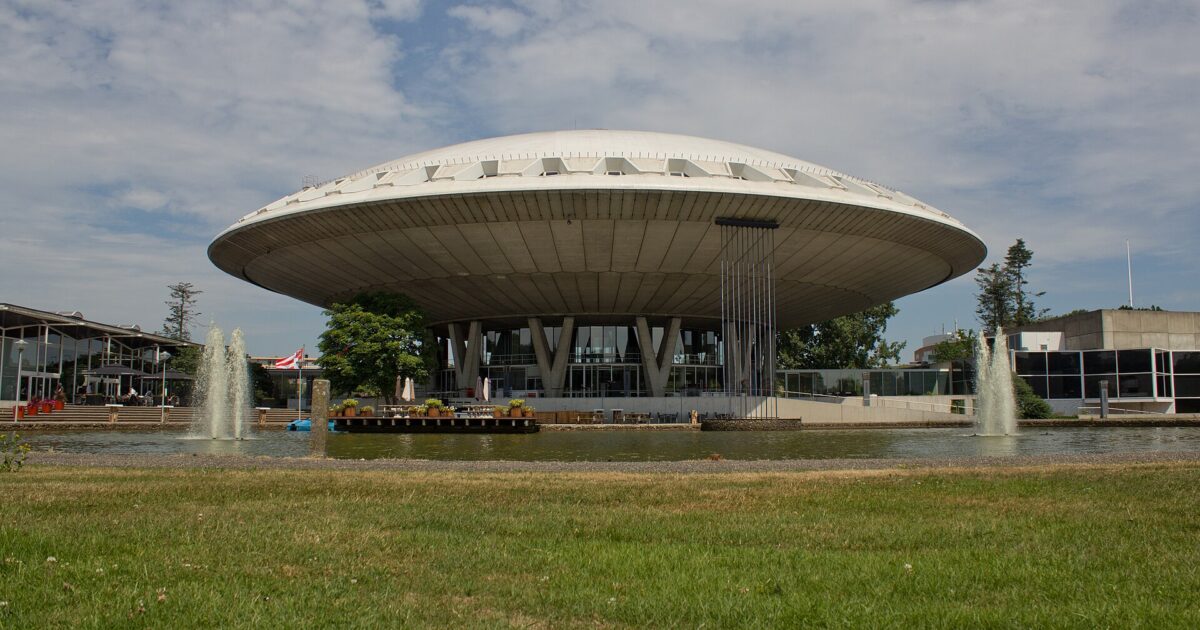
A concrete flying saucer on a lawn, built by Philips in 1966 as a science exhibition pavilion for the company’s 75th anniversary. It looks exactly like what a 1960s corporation thought the future would look like, and it has aged into something wonderful rather than something embarrassing. Twelve V-shaped legs hold up a dome nearly eighty metres across.
It has had several lives — public science museum, conference centre, and more recently a return to public programming — so check what is currently running before planning a visit inside. From the outside it is free and takes ten minutes, and it is the photograph you will actually want from Eindhoven.
Philips Museum
In the city centre, on the site where Gerard Philips made those first light bulbs in 1891. It covers the company’s history from carbon filaments through radio and television to the compact cassette and the CD, both of which Philips developed (the cassette by a team in Hasselt, the CD together with Sony). Modest in scale and well done. Check the museum’s own site for current prices and opening hours.
PSV and the Philips Stadion
PSV Eindhoven was founded in 1913 as the Philips sports club and is one of the three big Dutch clubs, with a European Cup in 1988. The stadium sits close to the city centre rather than out on a ring road, which is unusual and pleasant. There is a club museum and a stadium tour taking in the pitch and the tunnel. If you are in the Netherlands with any interest in football, this is a better use of an afternoon than most museums.
Dutch Design Week
Held every October, and the reason a great many people come to Eindhoven at all. Hundreds of venues across the city, thousands of designers, and a genuine international audience. It is the largest design event in northern Europe.
Two practical consequences. If you are interested in design, plan your trip around it — the city becomes a completely different place. If you are not, avoid October: accommodation fills, rates rise and every venue is busy. Exact dates shift year to year, so check the current ones rather than assuming.

Getting there and around
Direct intercity trains run from Amsterdam Centraal in about an hour and twenty minutes, at roughly €25.60 second class. Fares are distance-based and fixed, so there is no advance-purchase advantage — tap in and out with OVpay and travel when you like. See our OV-chipkaart and OVpay guide.
From Eindhoven Airport, Hermes bus 400 or 401 runs to Eindhoven Centraal in just over 25 minutes for about €5.15. Buses run from around 06:00 on weekdays, 07:30 on Saturdays and 08:30 on Sundays, with last departures around 00:30 — which matters a great deal if your flight is late. Our page on Eindhoven and Rotterdam airports works through the full transfer arithmetic and the late-arrival trap.
One thing to plan around: Eindhoven Airport is scheduled to close entirely from 1 February to 19 July 2027 for runway renovation, a Category III instrument landing system installation and terminal expansion. If you are booking anything in that window, check directly with your airline.
In the city, walk or cycle. The centre is compact and flat, Strijp-S is a fifteen-minute walk or one train stop from Centraal, and the Evoluon is a pleasant twenty-five minutes on foot or a short bus ride. OV-fiets hire at the station is the local solution and the best one.
Eindhoven also makes a good base for the south. Efteling is roughly an hour away, ‘s-Hertogenbosch is twenty-five minutes, and Maastricht about an hour and a quarter on the same line. Our Efteling theme park guide and Maastricht travel guide cover both.
The design thing, explained
Eindhoven markets itself relentlessly as a design city, and it is fair to be sceptical of that sort of claim. In this case it holds up, for a specific and traceable reason.
The Design Academy Eindhoven is one of the most influential design schools anywhere. Its graduates dominate the conceptual end of Dutch design, and its annual graduation show — held during Dutch Design Week — is watched by curators and manufacturers internationally. The school’s whole approach is unusual: it treats design as a way of asking questions rather than a way of styling objects, which is why Dutch graduate work is often strange, funny and slightly confrontational rather than sleek.
Around it sits the practical infrastructure. Studios in the Strijp districts, prototyping workshops, a high-tech campus doing genuine research, and enough small manufacturers that an idea can become a physical object without leaving the region. This is a design economy rather than a design brand, which is the difference between Eindhoven and cities that put the word on a banner.
What that means for a visitor: outside Design Week you will not see a great deal of it directly, because most of it happens inside studios and workshops. What you will see is the residue — good independent shops, interesting public installations, buildings that took a risk. If you want the concentrated version, come in October and accept that everywhere will be full. If you want to see Dutch design in a museum instead, the Stedelijk in Amsterdam holds the historical collection and the Centraal Museum in Utrecht holds the Rietveld material — our Stedelijk guide and Utrecht guide cover both.
A day in Eindhoven
- Morning. Arrive, walk into the centre, Philips Museum for the origin story — it makes everything else legible.
- Late morning. Van Abbemuseum. Two hours is right; free if you hold a Museumkaart.
- Lunch. The centre around the Markt and the Wilhelminaplein, or hold out and eat at Strijp-S.
- Afternoon. Strijp-S — walk the industrial halls, the shops and the skate park. Add the Evoluon if you want the photograph, or the Philips Stadion tour if football is your thing.
- Evening. Stratumseind, reputedly the longest bar street in the Netherlands, is where the students go. It is loud, cheap and entirely unpretentious.
If you only have an afternoon between flights, do Strijp-S and the Evoluon and skip the museums. That is the version of Eindhoven that is unlike anywhere else.
Eating and drinking
Prices are noticeably lower than Amsterdam’s for comparable quality, and the student and expat-engineer population means the range is broader than a city this size would normally support. The Brabant south takes food more seriously than the Randstad, though Eindhoven is the least Burgundian of the southern cities — for that, our Maastricht guide is the better reference.
Worth knowing locally: worstenbroodje, a sausage roll in sweet bread dough that Brabant is serious about; the abbey beers, since Belgium is close; and the fact that Strijp-S has better and more interesting kitchens than the centre. Our guide to must-try Dutch foods covers the national canon.
Where to stay, if you stay
Most visitors do not, and that is usually right — Eindhoven is a day rather than a base. But there are three situations where a night here makes sense.
An early flight. If you are departing Eindhoven Airport before about 08:00, the first bus from the city does not leave early enough on a Sunday and only just does on a weekday. A night near the airport or in the centre with a taxi booked removes the problem entirely, and rates here are a fraction of what an Amsterdam airport hotel costs.
Efteling with children. Eindhoven is about an hour from the park, has proper hotel stock, and costs less than staying on site. If the Efteling hotels are full or over budget, this is the practical alternative — see our Efteling guide for how the day works from here.
Touring the south. Eindhoven sits on the main line between the Randstad and Maastricht, twenty-five minutes from ‘s-Hertogenbosch and an hour and a quarter from Maastricht. As a middle night on a southern loop it works well.
The centre around Eindhoven Centraal has the chain hotels and is the convenient choice. Strijp-S has the more interesting places to sleep, in converted industrial buildings, and puts you where the evening is. Rates usually run below Amsterdam’s, except in October, when Dutch Design Week takes the entire city’s stock and prices go where you would expect.
Should you go?
Yes if you are flying in or out of Eindhoven Airport and have half a day; you have a real interest in design, industrial history or modern architecture; you hold a Museumkaart and the Van Abbemuseum is therefore free; or you want to see a Dutch city that is not organised around visitors at all.
No if you have four days in the Netherlands and have never been. Eindhoven is a specialist’s day out. The generalist’s day out is Utrecht, and it is not close. Our pillar on the Netherlands beyond Amsterdam ranks the alternatives with times and fares.
And a small honesty: Eindhoven is often described as a hidden gem, which it is not. It is a working industrial and technology city that has done something genuinely interesting with its post-industrial space. That is worth seeing on its own terms. It is not a substitute for the pretty Netherlands, and pretending otherwise sets visitors up to be disappointed by a place that never promised them gables.
Keep Exploring
- The Netherlands Beyond Amsterdam
- Eindhoven & Rotterdam Airports
- Efteling Theme Park Guide
- Maastricht Travel Guide
- Utrecht Travel Guide
- Rotterdam Day Trip
- Amsterdam Architecture Walking Guide
- City Passes Compared
- OV-chipkaart & OVpay Guide
- Must-Try Dutch Foods
- Art Galleries & Street Art
- Day Trips from Amsterdam
Frequently Asked Questions
Is Eindhoven worth visiting?
For design, industrial history and modern architecture, yes — the Van Abbemuseum, Strijp-S and the Evoluon are all genuinely distinctive. For canal-and-gable Dutch beauty, no; the centre was bombed in the 1940s and rebuilt for function. On a short first visit to the Netherlands, Utrecht is the better day out.
How do you get from Amsterdam to Eindhoven?
Direct intercity trains take about an hour and twenty minutes from Amsterdam Centraal, at roughly €25.60 second class. Fares are fixed and distance-based, so no advance booking is needed — just tap in and out with OVpay.
How much is the Van Abbemuseum?
€16 for adults, and free with a Museumkaart. Open Tuesday to Sunday 11:00 to 17:00, closed Mondays but open on Easter Monday, Whit Sunday and Boxing Day. It is at Stratumsedijk 2, about ten minutes’ walk from Eindhoven Centraal.
What is Strijp-S?
The former Philips manufacturing complex north-west of the centre, once closed to everyone but company staff. The factory halls now hold studios, independent shops, bars, restaurants and the Area 51 skate park. It has its own station, one stop from Eindhoven Centraal.
Can you go inside the Evoluon?
It depends what is running. The 1966 flying-saucer Philips pavilion has been a science museum, a conference venue and more recently a public programme space, so check the current use before planning a visit inside. From outside it is free and takes ten minutes.
When is Dutch Design Week?
Every October, across hundreds of venues city-wide — the largest design event in northern Europe. Exact dates shift each year, so check the current ones. If design is why you are coming, plan around it; if not, avoid October, when accommodation fills and rates rise.
Is Eindhoven Airport closing?
Temporarily, yes. It is scheduled to close entirely from 1 February to 19 July 2027 for runway renovation, a Category III ILS installation and terminal expansion. Check directly with your airline before booking anything in that window.
How do you get from Eindhoven Airport into the city?
Hermes bus 400 or 401 from outside the terminal to Eindhoven Centraal, just over 25 minutes, about €5.15. Services run from roughly 06:00 on weekdays, 07:30 Saturdays and 08:30 Sundays, with last departures around 00:30 — a late delayed flight can leave you without one.