Two European capitals, both on canals or a river, both dense with art, both a short flight from almost anywhere. The Amsterdam vs Paris question comes up constantly because the two cities look interchangeable from a distance and are not remotely interchangeable up close. One is a walkable town of about 940,000 that you can cross on foot. The other is a metropolis where you will spend an hour a day underground getting between the things you came for.
Set the rivalry aside: this is not a contest between a better and a worse city, it is a contest between two shapes of trip. Paris is deeper, larger, better at food and has more of everything. Amsterdam is smaller, easier, cheaper to move around, and delivers a much higher proportion of its content per day. For a first European trip of three or four days, we would send most people to Amsterdam. For a week, or for a second visit to Europe, we would send them to Paris. And for anyone with six days and a rail booking, the correct answer is neither — it is both, because the Eurostar between them takes 3h20.
| Amsterdam | Paris | |
|---|---|---|
| Ideal trip length | 3 days | 5–7 days |
| Getting around | Walk and cycle; tram €1.50–3 | Metro; single ticket €2.55, day pass €12.30 |
| Flagship museum | Rijksmuseum, €25 | Louvre, €22 EEA / €32 non-EEA |
| Second museum | Van Gogh Museum, €25 | Musée d’Orsay, €16 online |
| Food | Weak on native cuisine, strong on Indonesian | One of the reasons to travel |
| Accommodation | Climbs in high season, 12.5% tourist tax on top | Comparable, with more supply |
| Crowding | Concentrated in six central streets | Spread across a much larger city |
| Best for | First trips, short trips, low friction | Longer trips, repeat visitors, food |
The size difference is the whole story
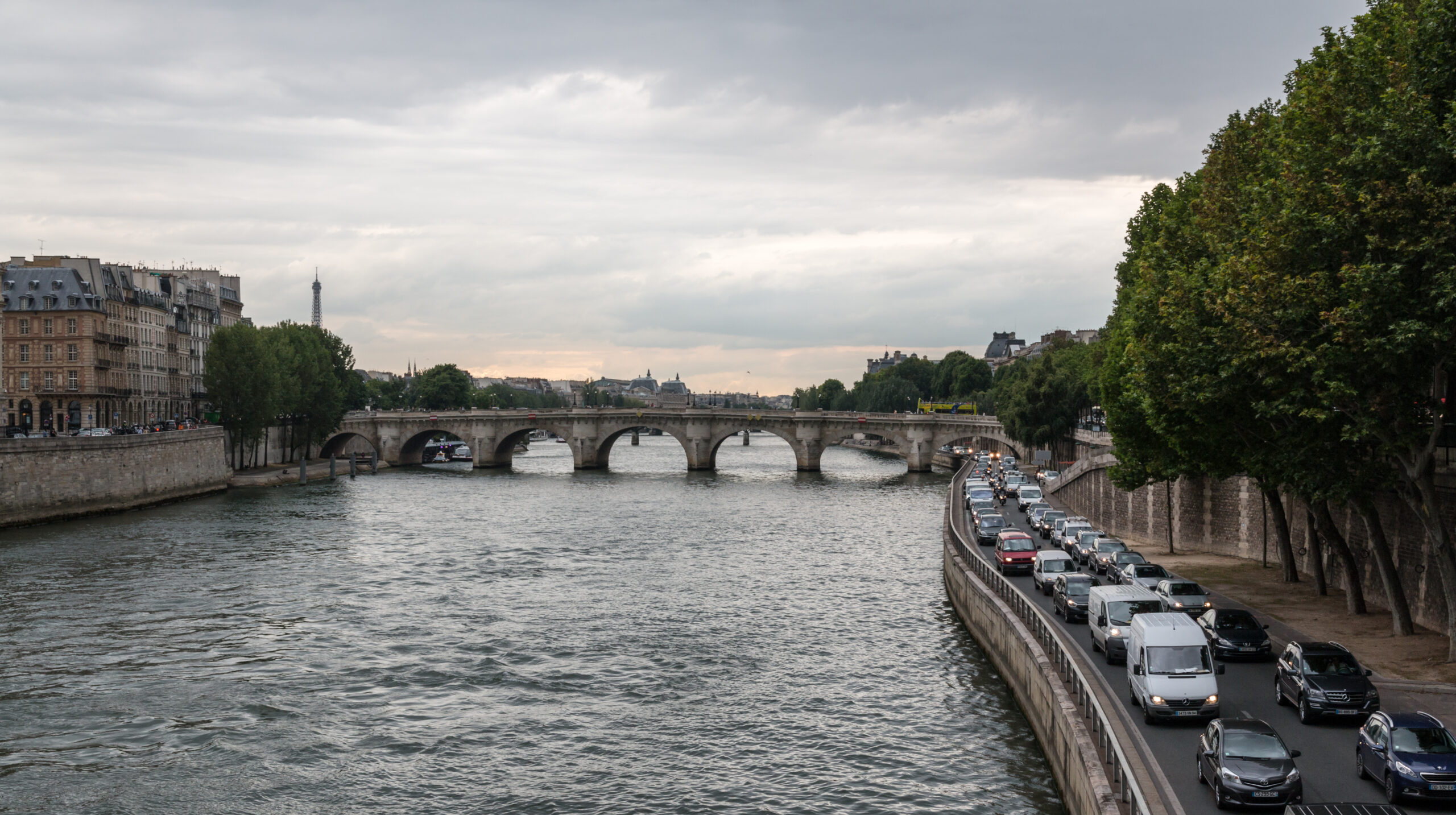
Central Amsterdam is roughly two kilometres across. Everything a visitor wants — Centraal, the canal ring, the Jordaan, De Wallen, Museumplein, De Pijp — sits inside a circle you can walk across in half an hour, and the walk itself is one of the pleasures. Paris is an order of magnitude bigger. The Louvre to the Eiffel Tower is a serious journey. Montmartre to the Marais is a serious journey. Almost every day in Paris involves the metro, and while the metro is excellent, it is time you spend below ground rather than looking at the city.
This produces two genuinely different experiences of a short trip. In Amsterdam, three days means eight or nine substantial things and a lot of walking between them, and you go home feeling you understood the place. In Paris, three days means four or five substantial things and a strong sense that you scratched the surface — which you did, because you did. Neither is a criticism. It is just what happens when you put a three-day trip into a seven-day city.
The practical consequence: if your trip is three or four days, Amsterdam gives you more. If it is a week, Paris rewards the extra time far more than Amsterdam does, because Amsterdam runs out of first-rank material around day four and Paris does not run out at all. Our page on how many days you need in Amsterdam makes that case in detail.
Museums: quality versus quantity
Paris wins on volume and Amsterdam wins on ratio, and the ratio matters more than people expect on a short trip.
Amsterdam’s case is concentration. The Rijksmuseum (€25), the Van Gogh Museum (€25, entirely timed entry) and the Stedelijk (€22.50, or €32.50 during the Kusama retrospective running to 17 January 2027) face the same square. You can do two of them in a day with a long lunch in between and walk between them in ten minutes. The Anne Frank House (€16.50, booked only through annefrank.org) is a short tram ride or walk away. There is no travel time at all in an Amsterdam museum day.
Paris’s case is depth. The Louvre is a different order of institution and would take a week to see properly. The Musée d’Orsay’s Impressionist floor is, for many people, the single best room of paintings in Europe. Then there are the Rodin, the Orangerie, the Pompidou, the Picasso, the Quai Branly — a list Amsterdam cannot approach. The cost of that depth is geography and time.
Price is now a genuine differentiator, and it moved sharply in 2026. In January the Louvre introduced dual pricing for the first time: €22 for EEA residents and €32 for everyone else, a 45% increase for non-EEA visitors. The Musée d’Orsay is €16 online, €14 at the door in a longer queue, €12 on Thursday evenings after six, and free for everyone on the first Sunday of the month. Amsterdam charges €25 flat at both the Rijksmuseum and the Van Gogh regardless of where your passport is from, and under-18s go free at both. For a non-European couple doing two flagship museums, that is a meaningful gap in Amsterdam’s favour — and the €75 Museumkaart, which covers 500-plus Dutch museums and pays for itself after roughly three to four major museum visits, widens it further. Our city passes compared page runs those numbers.

Food: Paris, without argument
We are consistently blunt about this on this site, so there is no point softening it here. Dutch cuisine is not a reason to travel. It is hearty, sensible, weather-appropriate food — stamppot, bitterballen, kroketten, herring from a stall, appeltaart under too much cream — enjoyable at the street level and largely unmemorable at the restaurant level. Paris is a city where the food is one of the primary reasons to go, from a modest bakery lunch to the full apparatus of a bistro dinner.
Amsterdam’s one genuinely unmissable meal is borrowed rather than native: Indonesian rijsttafel, a direct product of colonial history, in which a dozen or more small dishes arrive at once. It is a superb evening and there is nothing like it in Paris. Beyond that, Amsterdam’s strengths are Surinamese roti in De Pijp, the Middle Eastern strip along the Javastraat in Oost, the Foodhallen in Oud-West, and a modern bistro scene charging Copenhagen prices without quite reaching Copenhagen standards. Good. Not a reason to book. Our rijsttafel guide and food and drink guide set expectations honestly.
If food is in your top two reasons for a trip, this comparison is already over. Go to Paris.
Cost: closer than the reputations suggest
Both cities sit in Europe’s expensive tier, and the gap between them is smaller than most people assume — Amsterdam is not the cheap alternative to Paris.
- Accommodation: broadly comparable. Amsterdam prices climb in high season, and the tourist tax is charged as 12.5% of the room price excluding VAT on top. Paris has far more supply, which helps at the margins, and a wider spread of arrondissements to hide in.
- Transport: Amsterdam wins. A tram ride is €1.50–3 on OVpay contactless and a GVB 24-hour ticket is €10. In Paris a single ticket is €2.55 from January 2026, buses and trams are a separate €2.05 ticket, and a Navigo day pass is €12.30. But the real saving is that Amsterdam barely needs public transport at all.
- Museums: Amsterdam wins for non-EEA visitors, thanks to the Louvre’s 2026 dual pricing, and roughly ties for Europeans.
- Food: Paris wins on value at every level. You can eat better for less in Paris, and this is not close.
- Drink: Amsterdam is a beer city; Paris is a wine city. Broadly a wash.
For the full Amsterdam side of that arithmetic, see our guide to whether Amsterdam is expensive.
Arriving: Schiphol against the Paris airports
This is a genuinely underrated tiebreaker, because arrival friction eats a bigger share of a short trip than anything else you can control. Schiphol is a single terminal with three departure halls and a railway station directly beneath Schiphol Plaza. The train to Amsterdam Centraal takes 15–20 minutes and costs around €6, with several services an hour and a reduced overnight service. A taxi for the same trip is metered, so the fare varies, and it is a poor trade for anyone not travelling with four people and a lot of luggage. Schiphol’s own advice is two hours before a Schengen departure and three before a non-Schengen one, and since the security operation changed in May 2026 the free timed security slots bookable in the app are worth using.
Paris is served mainly by Charles de Gaulle and Orly, with Beauvais used by low-cost carriers, and all of them lie outside the city. Getting in from Charles de Gaulle in particular takes noticeably longer than the 15–20 minutes from Schiphol. That difference adds up across a return trip, which on a three-day visit is a meaningful fraction of your time. Our Schiphol guide and transfer page cover the Dutch end in detail.
Once you are in, the pattern reverses in an interesting way. Amsterdam barely needs its transport system — most visitors walk almost everything and ride trams only now and then, which is why a €10 GVB day ticket pays off only on days with several rides. Paris needs its metro constantly, which is why the €12.30 Navigo day pass usually does. Neither is expensive. But one city gives you the journeys as sightseeing and the other gives them to you as tunnels.
Crowds, seasons and the summer problem
Both cities are busy, and they are busy in different shapes. Amsterdam’s crowding is intense and geographically tiny — essentially the strip from Centraal down Damrak to the Dam and east into De Wallen, which on a July Saturday is genuinely unpleasant and which you can walk out of in eight minutes. Once you are in the Jordaan, De Pijp, Oost or Noord, the pressure drops away almost completely. Paris’s crowding is more evenly distributed and therefore harder to escape at the famous sites, but the city is large enough that whole arrondissements stay quiet.
The practical upshot is that Amsterdam is easier to game and Paris is more forgiving if you do not want to bother. In Amsterdam, being in the centre before ten in the morning or after seven in the evening changes the trip completely — and this is a city where that genuinely works, because the tour boats and day-trippers keep predictable hours. In Paris, arriving early at the Louvre helps, but the city as a whole feels much the same at nine as at three.
Season matters more in Amsterdam too. Its two weaknesses are crowding and price, and both are seasonal, so the same trip in October costs and feels dramatically different from the same trip in July. September and October are the best value in the Amsterdam calendar; late March to mid-May is the tulip window, the most beautiful and the most expensive. Paris’s seasonal swing is real but shallower. Our month-by-month weather page and hotel prices by month put numbers on it.
For how far that swing goes, see Amsterdam in summer versus winter.
Atmosphere: the part that actually decides it
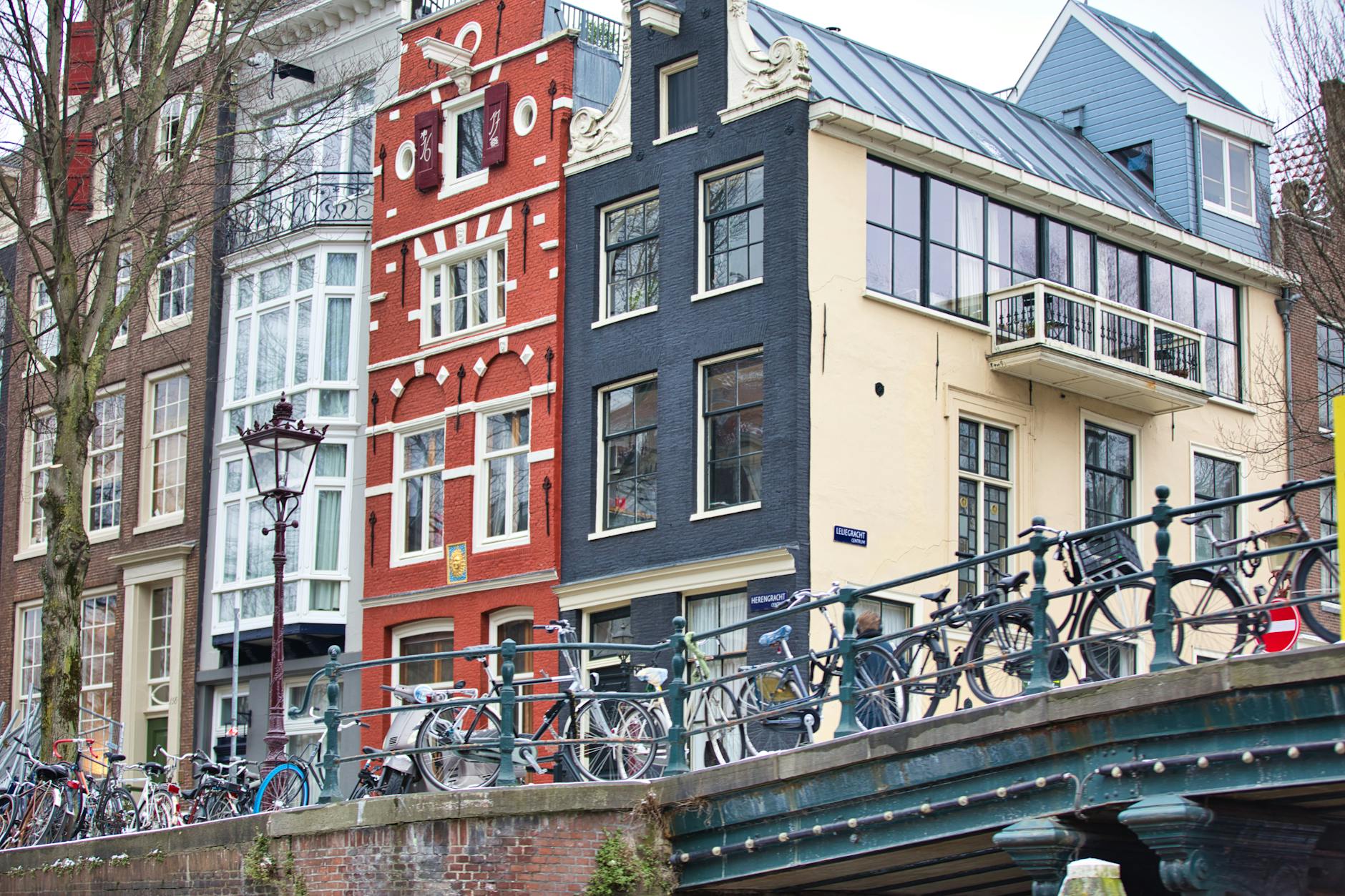
Amsterdam is a low-friction city. English is spoken universally and well, everything is small, nobody is in a hurry to be rude to you, and the whole place has a domestic, lived-in quality — those enormous ground-floor windows with the curtains open are not a tourist attraction, they are just how people live. It is an easy city to be a stranger in.
Paris is grander and more demanding. It is more beautiful in a formal, monumental way that Amsterdam does not attempt — Haussmann’s boulevards against gabled merchant houses is not a fair fight on scale. It also asks more of you: more language, more navigation, more social code. Plenty of people find that stimulating and plenty find it tiring, and which camp you fall into is the real answer to this question.
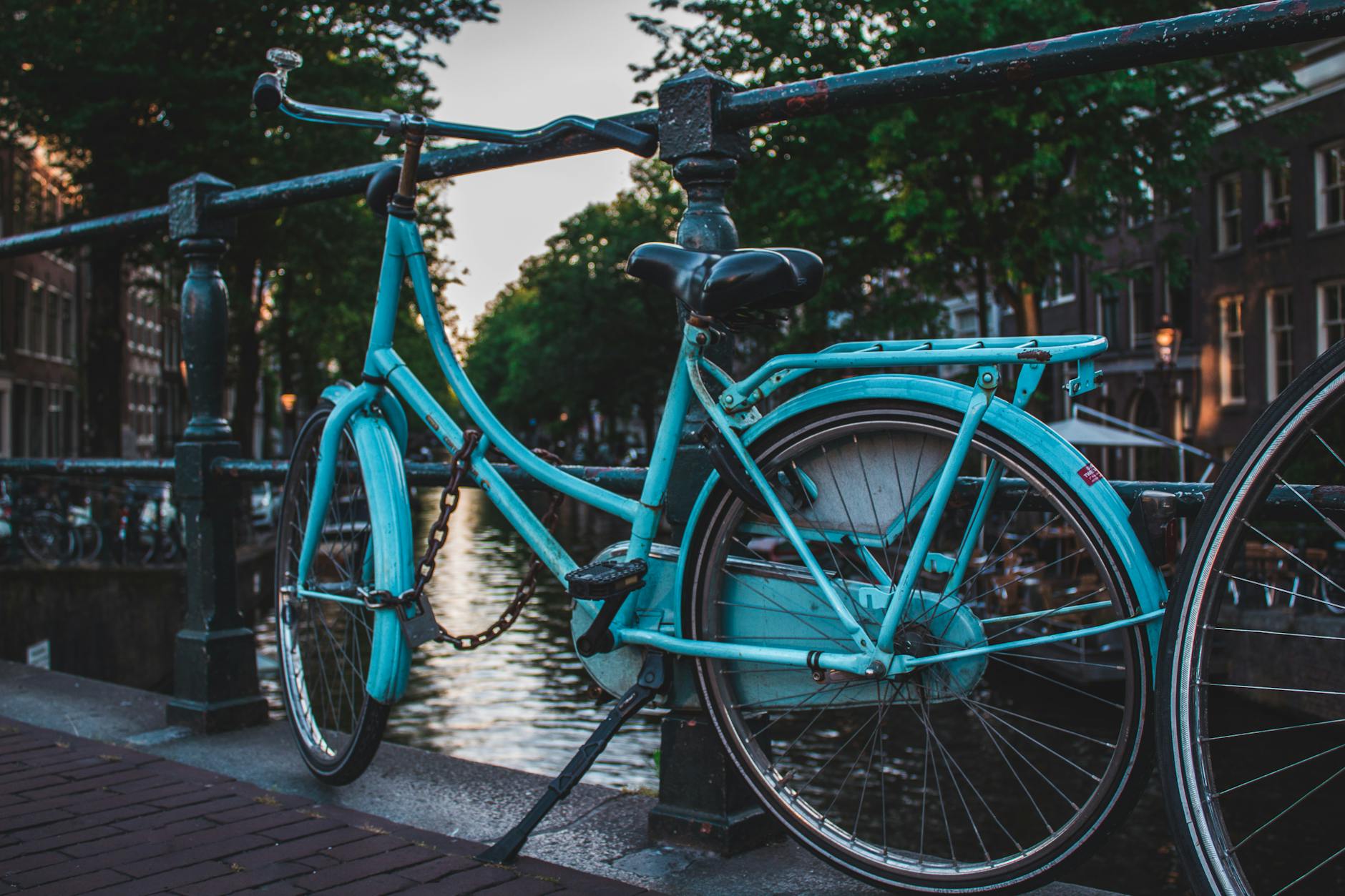
There is also the cycling, which is not a small thing. Amsterdam is the best city in the world to be a cyclist in, and hiring a bike converts the trip in a way that has no Paris equivalent. Distances collapse; Noord, Oost and the Amstel come into range. Our bike rental guide covers the rules and the etiquette, both of which matter, because local cyclists are fast and unforgiving.
Who should choose which
- Choose Amsterdam if your trip is three or four days; if it is a first European trip; if you want to walk and cycle rather than ride a metro; if you are travelling with children and want short distances; if the Dutch Golden Age or Van Gogh is the draw; if low friction matters more than grandeur.
- Choose Paris if you have five days or more; if food is a primary reason for the trip; if you want scale and monumentality; if you have already done a compact European city and want something with more in it; if you are travelling in high summer and would rather have a large city to dilute the crowds.
- Choose both if you have six days. Genuinely.
Doing both: the answer most people should take
The Eurostar covers Amsterdam to Paris in 3h20 with fares from around €35 if you book early, and booking opens roughly six months ahead. Thalys was folded into Eurostar in late 2023, so the service you want is now simply Eurostar. It is a city-centre to city-centre journey with no airport at either end, which makes it faster door to door than flying and considerably less unpleasant.
The route that works: three days in Amsterdam first, then three or four in Paris. Amsterdam first because it is the gentler arrival, because it is the better place to shake off a long-haul flight, and because Paris rewards the extra days more. Brussels sits between them at 1h52 from Amsterdam and makes a decent one-night stop if you like beer and Art Nouveau. Our Netherlands by train page covers the Dutch end of that, where fares are fixed and need no advance booking whatsoever.
If you want the route written out, our Benelux by train itinerary builds Amsterdam, Brussels and Bruges into one trip that connects onwards to Paris.
And if the middle stop is the real question, see Amsterdam vs Brussels.
Keep Exploring
- Is Amsterdam Worth It?
- How Many Days Do You Need?
- Is Amsterdam Expensive?
- Amsterdam Museums Guide
- Three Days in Amsterdam
- Amsterdam City Passes Compared
- The Netherlands by Train
- Amsterdam Food & Drink Guide
- Bike Rental in Amsterdam
- First-Time Mistakes to Avoid
- The Canal Ring
- Where to Stay in Amsterdam
Frequently Asked Questions
Is Amsterdam or Paris better for a first trip to Europe?
Amsterdam, for most people. It is small enough to walk, English is spoken universally, the transport is simple, and a three-day trip covers the city properly rather than scratching it. Paris is the better second European city, when you have five days or more and some travel confidence.
Is Amsterdam cheaper than Paris?
Not dramatically. Accommodation is broadly comparable, transport is cheaper in Amsterdam, and museums are cheaper for non-EEA visitors since the Louvre moved to €32 for them in January 2026. Paris wins clearly on food value, which narrows the overall gap considerably.
How long does the train from Amsterdam to Paris take?
About 3h20 on Eurostar, city centre to city centre, with fares from around €35 if you book early. Booking opens roughly six months ahead. Thalys was absorbed into Eurostar in late 2023, so there is only one operator to look for now.
Can you do Amsterdam and Paris in one trip?
Easily, and with six days or more you should. Three days in Amsterdam then three or four in Paris works best in that order — Amsterdam is the gentler arrival, and Paris rewards the extra days more. Brussels makes a reasonable one-night stop in between at 1h52 from Amsterdam.
Which city is better for museums, Amsterdam or Paris?
Paris has far more; Amsterdam has better concentration. The Rijksmuseum, Van Gogh Museum and Stedelijk share one square in Amsterdam, so a museum day involves no travel at all. In Paris, the Louvre alone would take a week and the great museums are spread across the city.
Is Amsterdam more walkable than Paris?
Considerably. Central Amsterdam is about two kilometres across and you can walk from Centraal Station to Museumplein in half an hour. Paris almost always requires the metro, which is excellent but means spending time underground rather than looking at the city.
Which is better in winter, Amsterdam or Paris?
Amsterdam has the stronger winter case for the price: hotels are at their cheapest, museums are near-empty midweek, brown cafés come into their own, and the Amsterdam Light Festival runs from 26 November 2026 to 17 January 2027. Paris in winter is bigger, greyer and no cheaper.
Is Paris or Amsterdam better with kids?
Amsterdam, mostly, because the distances are short and children tire on metros. NEMO is €21.50 from age four, ARTIS includes the aquarium and planetarium, and the Noord ferries are free. The trade-off is that central Amsterdam has bikes, trams and unrailed canals to watch out for.