This article contains advertising. Our booking links are routed through a partner that adds commission tracking automatically, so if you book through one we earn a commission from the provider, at no extra cost to you. It never affects what we recommend. Affiliate disclosure
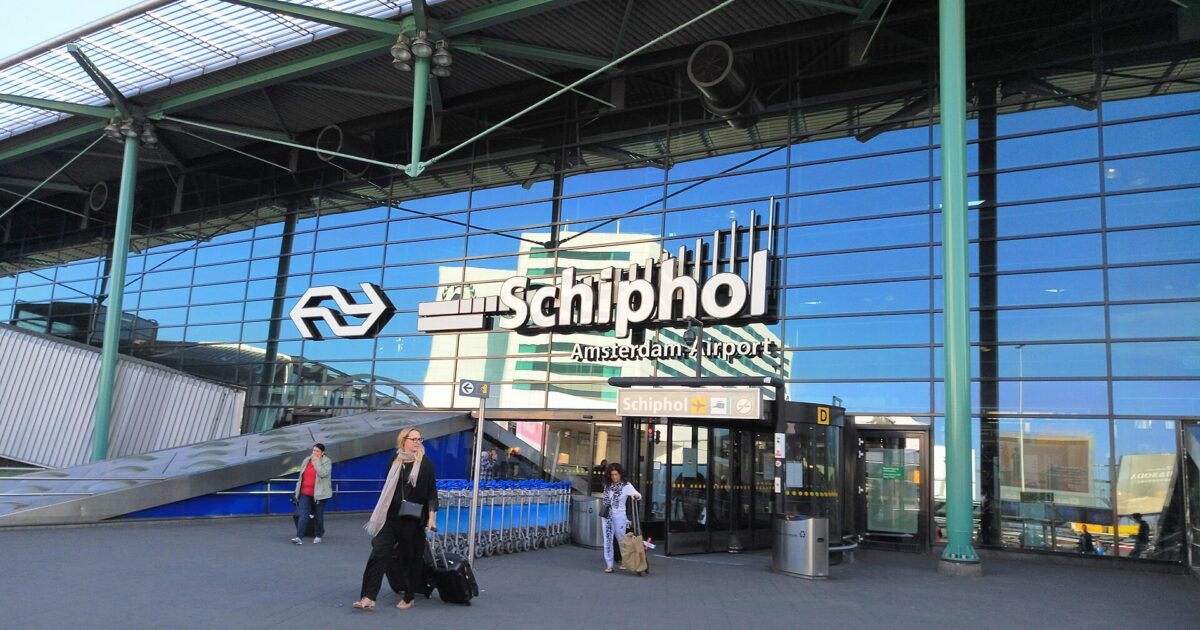
Schiphol is one airport building. Not three terminals, not a shuttle bus between satellites – one long structure with three departure halls at one end and seven piers fanning out from the other, all connected airside so you can walk from a Ryanair gate at B to a KLM gate at F without leaving the building. Understand that single fact and most of what confuses people about Amsterdam Airport Schiphol stops being confusing.
This is the complete guide to Schiphol: how the building is laid out, how early you actually need to arrive, what to do with a four-hour layover versus a twelve-hour one, where to sleep, where to store bags, which lounges you can simply buy your way into, and what the 2026 construction works mean for your flight. It is written for the passenger, not the aviation enthusiast – though if you are one, the Panorama Terrace gets its own section.
Schiphol at a Glance
| What | The short answer | Detail |
|---|---|---|
| Structure | One terminal, three departure halls, seven piers | Halls 1, 2 and 3; piers B to M, all connected airside |
| Arrive before departure | 2 hours Schengen, 3 hours non-Schengen | Schiphol’s own advice; book a free security slot on top |
| Into central Amsterdam | Train, 15–20 min, roughly EUR 6 | Station is directly under the terminal – see our Schiphol to Amsterdam guide |
| Left luggage | From about EUR 6–12 per 24 hours | Four airside points, one landside, plus automated lockers |
| Sleeping airside | YOTELAIR in Lounge 2 | Bookable by the hour; rest zones are free but basic |
| Buy-in lounge | Aspire No. 41 or KLM Crown Lounge | Roughly EUR 45–75 depending on lounge and demand |
| Free showers | Yes, Lounge 2–3 upper level | Bring your own towel and soap; 24/7 |
| Passengers in 2026 | 68–72 million expected | Under a government cap of 478,000 flight movements |
How Schiphol Actually Works: One Building, Three Halls, Seven Piers
Almost every complaint about Schiphol traces back to a misunderstanding of its shape. Travellers arrive expecting Heathrow-style terminals, look for a shuttle bus, and panic. There is no shuttle bus, because there is nowhere to shuttle to.
Departure Halls 1, 2 and 3
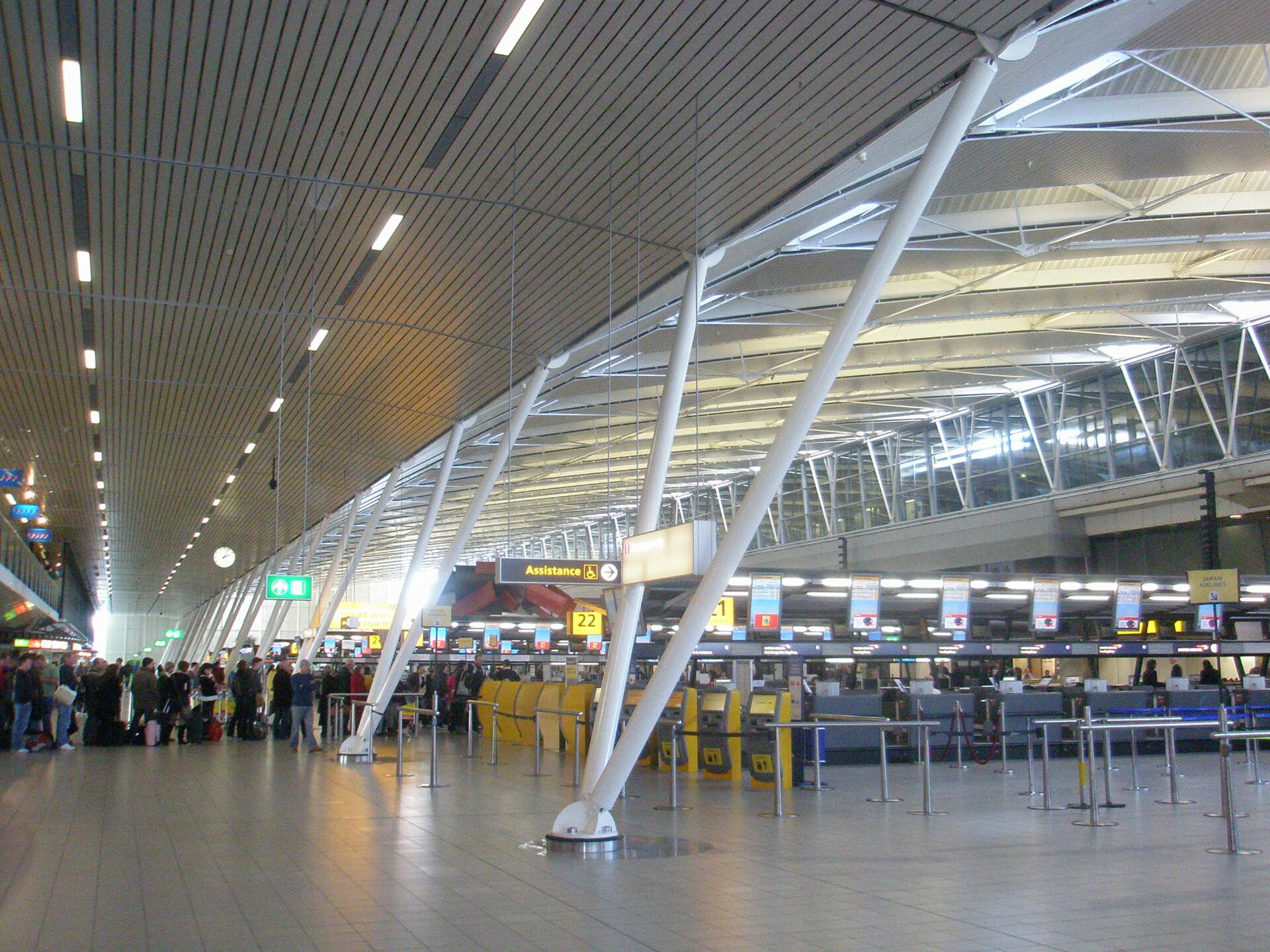
Landside, the building has three check-in areas: Departure Halls 1, 2 and 3, running left to right as you face the terminal from Schiphol Plaza. Your airline decides which one you use, and your boarding pass or the departure screens will tell you. They are a five to eight minute walk apart along one concourse, so arriving at the wrong hall costs you a brisk stroll, not a missed flight.
Hall 1 skews towards European low-cost and leisure carriers. Hall 2 is KLM’s home and handles most SkyTeam long-haul. Hall 3 takes a mix of long-haul and charter. That is a tendency, not a rule – airlines move between halls, so check the screens rather than trusting a blog post, including this one.
The Schengen Split, Which Governs Everything
Airside, Schiphol divides into two zones, and this division matters more than the halls do. Piers B, C and D serve Schengen flights – travel within the passport-free European zone, no border check on arrival. Piers E, F, G and H/M serve non-Schengen flights, which means the UK, the US, Asia, Africa and everywhere else, all of which require passport control.
Pier D is the clever one: it is split across two levels, Schengen on one and non-Schengen on the other, which is why your gate might read D-something on both a Barcelona flight and a Dubai flight. Crossing between the two zones means passing through passport control, and at busy times that queue can run twenty to forty minutes. If you are connecting from a Schengen arrival to a non-Schengen departure, or vice versa, budget for it rather than assuming a corridor walk.
Piers B to M
The piers are lettered but not evenly sized. B and C are compact. D is enormous and can take fifteen minutes to walk end to end. E, F and G handle the wide-bodies. H and M are the low-cost end – a bus-gate area that feels noticeably more spartan than the rest of the airport, with fewer places to sit and eat. If your boarding pass says H or M, get your coffee before you walk down there.
The much-delayed Pier A, a new wing intended to relieve pressure on the whole system, is now scheduled to open in April 2027. Until then, Schiphol is running roughly 70 million passengers a year through infrastructure that was comfortable at rather fewer.
How Early to Arrive at Schiphol
Schiphol’s standing advice is two hours before a Schengen departure and three hours before a non-Schengen one. That advice is reasonable, and in 2026 it is worth taking more literally than you might at other European airports.
The reason is that Schiphol changed how it runs security in May 2026, and queues spiked while the new operation bedded in. Things have settled, but the airport now leans hard on a system that many passengers still do not know exists: you can book a free security time slot in advance, online or through the Schiphol app. It costs nothing, it is not a premium product, and it meaningfully reduces the odds of standing in a filter queue watching your boarding time approach. Book one. There is no reason not to.
Some honest caveats on arrival timing. If you are flying Schengen, travelling hand-baggage only, have a security slot booked and are travelling outside the 06:00–09:00 and 16:00–19:00 peaks, ninety minutes is genuinely enough and you will spend the difference sitting at a gate. If you are checking a bag on a summer Saturday morning in Hall 1, three hours is not paranoid. And if you are flying long-haul from Hall 2 or 3 with checked bags, take the three hours as written – the passport control queue sits on top of the security queue, and the two do not overlap.
Privium and Paid Fast Track
Privium is Schiphol’s own membership scheme, using iris recognition for border control and giving members a separate security lane. It is genuinely excellent and genuinely aimed at people who fly through Amsterdam often – the annual fee makes no sense for one trip. Privium Plus members also get lounge access, at the ClubLounge between Departure Halls 1 and 2 landside, and the Privium Airside Lounge just past security. If you pass through Schiphol more than a handful of times a year, run the numbers. If you are here once, skip it.
Arriving at Schiphol: Your First Thirty Minutes
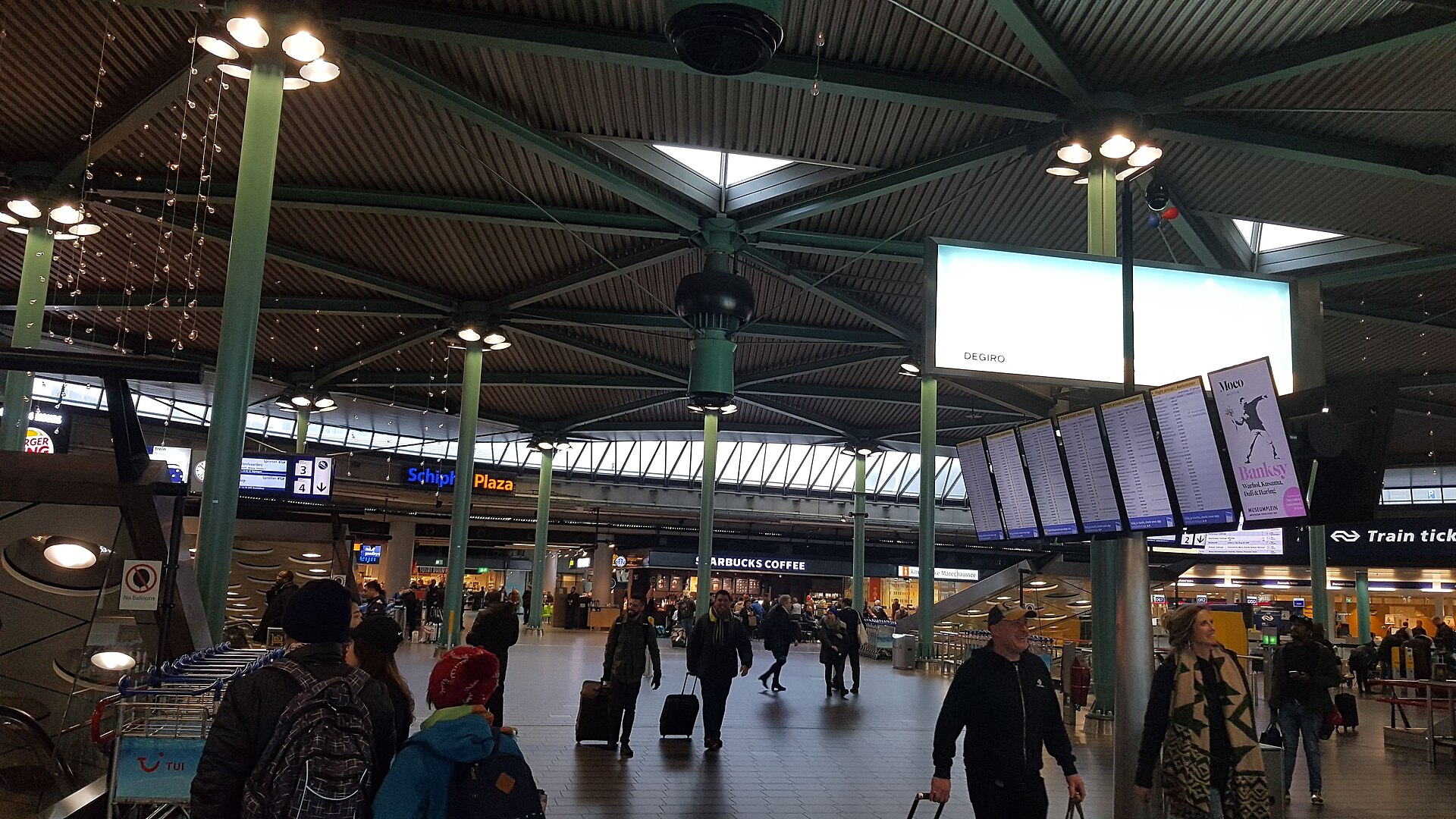
Arrivals at Schiphol are mercifully simple. You walk from your gate, through passport control if you have come from outside Schengen, down to baggage reclaim, through customs, and out into Schiphol Plaza – the covered public concourse that sits over the railway station and functions as the airport’s town square.
Schiphol Plaza is landside and open to anyone, which is why it has a full-size Albert Heijn supermarket, a decent bakery, several cafes, a pharmacy and a bank of ATMs. It is a much better place to buy a bottle of water, a SIM card or a sandwich than anything airside, and the prices are closer to city prices than airport prices.
Three things worth doing before you leave the building. Draw cash if you want it, though the Netherlands is close to cashless and you will manage without – our Amsterdam money and tipping guide covers what actually needs coins. Sort your connectivity if you are not on a roaming plan; the Amsterdam SIM card and WiFi guide explains which providers to look for. And buy your transport ticket, or simply plan to tap in with a contactless card, which is now the default.
Getting Into Amsterdam
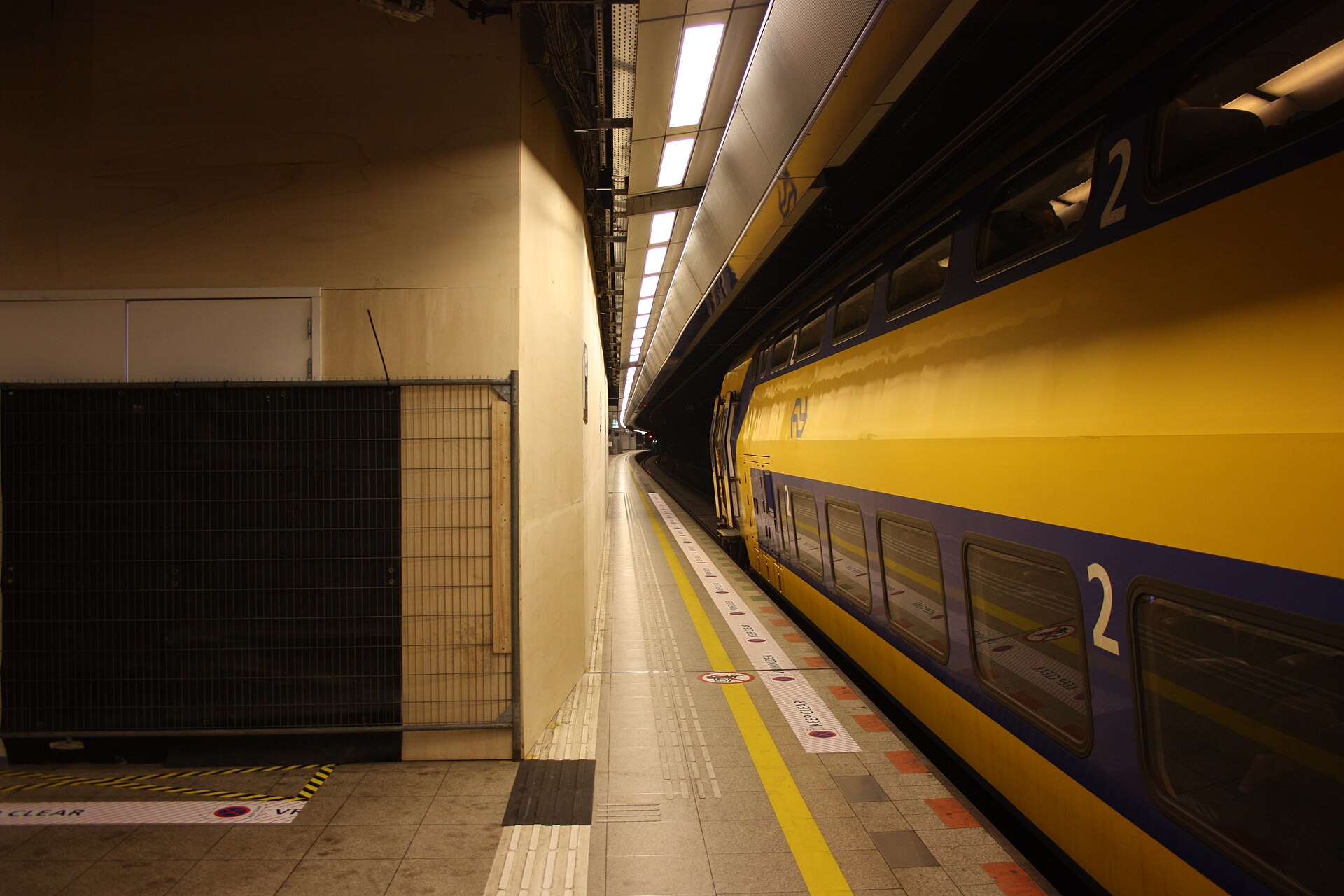
The train station is directly beneath Schiphol Plaza – escalators down, no walk, no shuttle. Trains to Amsterdam Centraal take fifteen to twenty minutes and run several times an hour, including through the night at reduced frequency. It costs roughly six euros and it is the right answer for almost everybody.
Taxis cost somewhere in the region of fifty to sixty-five euros to the centre and make sense if you are three or four people with luggage, or arriving at an awkward hour to a hotel far from a station. The Amsterdam Airport Express bus 397 is useful if you are staying near Museumplein or Leidseplein. All of the options, with current prices and the trade-offs between them, are laid out in our dedicated Schiphol to Amsterdam transfer guide, and the wider picture is in getting around Amsterdam.
If you are landing after midnight, read the Amsterdam night transport guide before you assume the trains have stopped. They mostly have not.
Connecting Flights at Schiphol
Schiphol is built to be a transfer machine – it is KLM’s single hub, and the whole airside layout exists to move people between planes. Connections here are usually easy. The exceptions are worth knowing.
The published minimum connection time is 40 minutes for Schengen-to-Schengen and typically 50 minutes or more where a border crossing is involved. Those are legal minimums that assume everything runs on time and your gates are not at opposite ends of the building. In practice, if you are booking a self-connection on separate tickets, give yourself two hours minimum and three if you are crossing the Schengen border or re-checking bags.
The single thing that catches people out: crossing between the Schengen and non-Schengen zones requires passport control, and there is no way around it. A 55-minute connection from a delayed Madrid flight to a Toronto departure at Pier G is tight in a way a 55-minute Madrid-to-Rome connection is not.
If you are connecting on a single ticket and you misconnect, the airline rebooks you and the transfer desks in each pier handle it. If you are on separate tickets, you own the problem. Travel insurance matters here more than most places, and our Amsterdam travel insurance guide covers what missed-connection cover actually pays out.
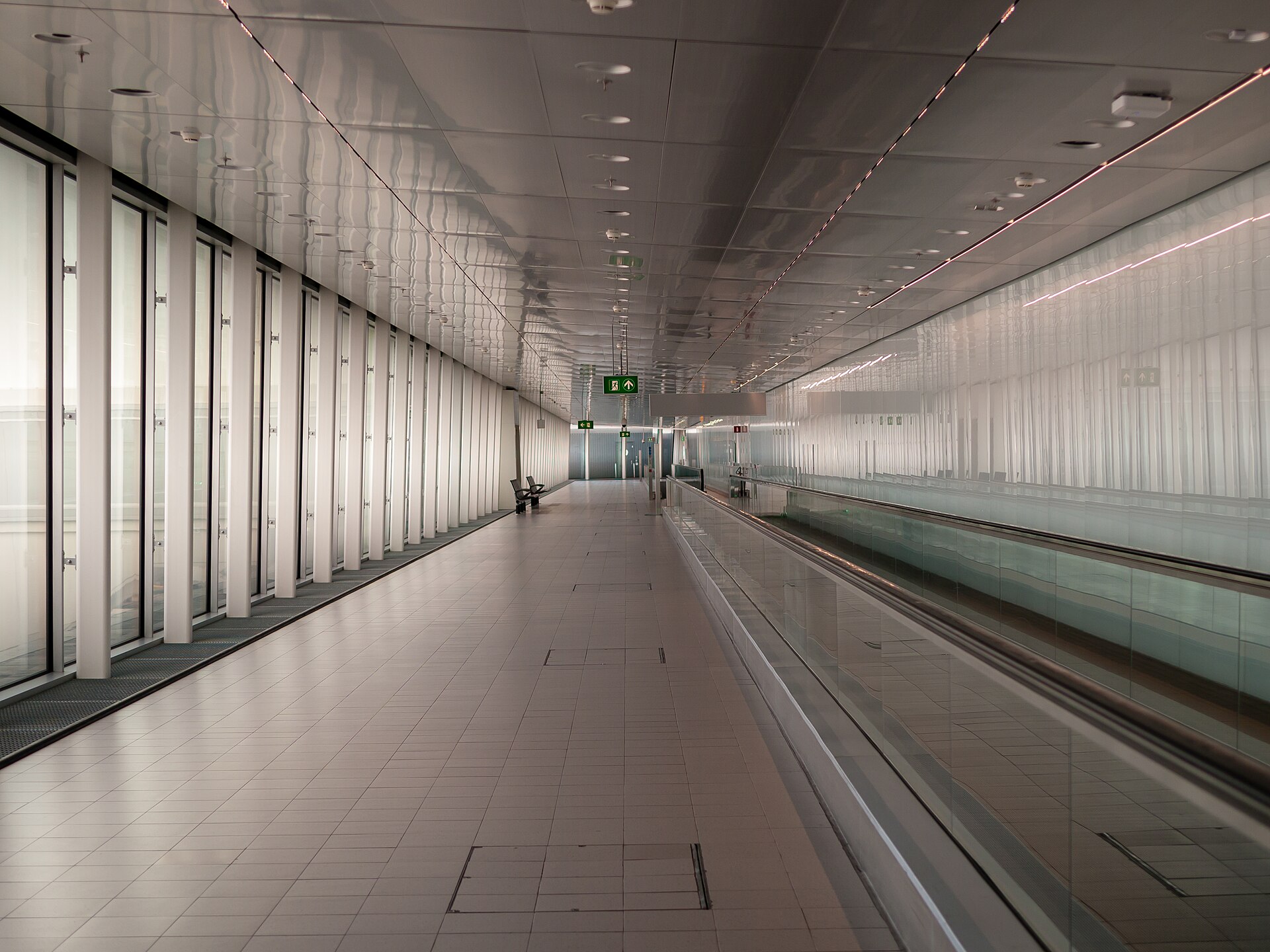
Layovers: What to Do With 4, 8 or 12 Hours
Schiphol is one of the better airports in the world for a layover, partly because it has genuine facilities and partly because the city is fifteen minutes away by train. The right plan depends almost entirely on how long you have.
Under Five Hours: Stay Airside
By the time you clear security, walk to the station, ride in, come back, and re-clear security and possibly passport control, a four-hour layover leaves you perhaps forty minutes in Amsterdam. It is not worth the anxiety. Stay in the building: walk out to the Panorama Terrace, find the indoor park area, get a proper meal rather than a sandwich, and use the free showers if you have been flying overnight.
Five to Eight Hours: Go Into the City
This is the sweet spot. Clear immigration, store your bags, take the train to Amsterdam Centraal, and you have three to four usable hours in the centre. That is enough for a canal walk through the Grachtengordel, a proper lunch, and one museum if you have pre-booked. It is not enough for the Anne Frank House unless you booked weeks ago, and it is not enough to gamble on a walk-up ticket anywhere.
A realistic layover plan: train in, walk from Centraal down through the Nine Streets, eat somewhere on Prinsengracht, walk back along a different canal, train out. Total time in the city, three hours. Total stress, low. If you want something more structured, the first day of our 2-day Amsterdam itinerary compresses reasonably well.
Set yourself a hard departure time from the city and honour it. Being back at Schiphol three hours before a long-haul departure is the correct amount of paranoid.
Eight Hours or More, and Overnight
With eight hours you can do the city properly – a museum, a long lunch, a neighbourhood. With an overnight, the decision is whether to sleep in the airport or leave it, and that depends on whether you can re-enter the Schengen area and whether a hotel is cheaper than your patience. Both options are covered below.
Sleeping at Schiphol
Schiphol has a long-standing reputation as one of Europe’s more sleepable airports, and it is deserved – but the reputation flatters the free options a little.
Free Rest Zones
There are designated rest areas airside with recliner-style seating, and the airport does not move people on overnight. It is workable. It is also bright, announcements continue, and the good spots are taken by late evening. If you are going to do this, arrive at the rest area early, bring an eye mask and earplugs, and keep your bag physically attached to you – Schiphol is safe but opportunistic theft happens in every airport at 4am.
YOTELAIR: The Airside Option
YOTELAIR sits inside Lounge 2, airside, and is the answer for anyone with a long layover who does not want to clear immigration. Rooms are compact cabins bookable in four-hour blocks rather than by the night, with a proper bed, a shower and a door that locks. It is not cheap per hour, but compared to a landside hotel plus two immigration queues plus a transfer, it frequently wins. Book ahead in summer; it sells out.
Landside Hotels
If you have a very early flight and are already in the Netherlands, staying near the airport the night before removes the single biggest source of morning stress. There is a cluster of hotels a short shuttle ride away and a couple within walking distance of Schiphol Plaza. The trade-off is obvious: you sleep well and start the day at the airport, but you spend an evening in an office park rather than in Amsterdam. For most trips, staying near Amsterdam Centraal and taking the first train out is the better call – the train runs early enough for almost any departure.
Showers
This is Schiphol’s underrated feature. There are free showers on the upper level of Lounge 2–3, open around the clock. You need to bring your own towel and soap, which nobody tells you and which is the entire trick. Pack a microfibre towel in your carry-on and a long layover becomes a completely different experience. Paid showers with towels provided are available through YOTELAIR for roughly EUR 17.50 for single use, and most lounges include them.
Lounges at Schiphol: Which You Can Buy Into
You do not need a business class ticket to get into a Schiphol lounge, and on a long layover the maths is better than people assume. Four hours of airport seating, two meals and several coffees will cost you thirty or forty euros anyway.
| Lounge | Where | How to get in | Rough cost |
|---|---|---|---|
| Aspire Lounge No. 41 | Non-Schengen, upper level | Priority Pass, DragonPass, oneworld status, or walk-up | ~EUR 45–55 walk-up |
| KLM Crown Lounge 25 | Schengen, upper level | SkyTeam status, business class, or paid entry | ~EUR 45–60 |
| KLM Crown Lounge 52 | Non-Schengen, near Pier F | SkyTeam status, business class, or paid entry | ~EUR 65–75 |
| Privium Airside Lounge | Just past security | Privium Plus membership only | Membership |
Crown Lounge 52 is the flagship – two levels, a decent bar, a terrace, showers, and the best food of the four. It is also the most expensive and the most crowded at long-haul departure peaks. Aspire No. 41 is the flexible one: it accepts the widest range of memberships and is the lounge most people can actually get into. Prices move with demand, so check on the day rather than budgeting from this table.
A blunt assessment: if you have under two hours, skip the lounge and eat properly instead. Between two and six hours, a lounge is usually worth it. Over six hours, consider YOTELAIR instead – a bed beats a buffet.
Luggage Storage, Lockers and Left Baggage
Schiphol’s left-luggage provision is unusually good, and it is what makes a layover trip into the city practical.
There are baggage storage points around the airport – four airside, past security, and one landside. Expect to pay in the region of EUR 6 for a piece of hand baggage, EUR 9 for a hold bag and EUR 12 for something oversized, per 24-hour period. Automated lockers sit after security on Holland Boulevard and in Lounges 1 and 2, take bags for up to seven days, and start around EUR 8 per 24 hours.
For longer storage, the staffed Baggage Storage area on Level -1, between Arrivals 1 and 2, is open 24 hours and takes bags for up to thirty days. That is the one to use if you are leaving the Netherlands for a side trip and coming back through Schiphol.
If you would rather store bags in the city than at the airport, there are lockers at Amsterdam Centraal and a network of shop-based drop-offs across the centre – usually cheaper, and better positioned if your plan is a day in town rather than a return to the airport.
Eating and Drinking at Schiphol
Airport food is airport food, and Schiphol does not transcend the genre. It does, however, offer two things worth knowing.
First, landside Schiphol Plaza is better value than anything past security. The Albert Heijn supermarket sells sandwiches, fruit, stroopwafels and drinks at ordinary Dutch prices, and you can take all of it through security apart from liquids over 100ml. Buying lunch here before you fly is the single easiest saving at this airport.
Second, Holland Boulevard – the stretch connecting the E and F piers – has the best concentration of airside food and the most pleasant places to sit. If you have time and a choice of where to wait, wait there rather than at your gate.
For genuinely Dutch things to try before you leave the country, the must-try Dutch foods guide is worth a skim; stroopwafels and drop travel well and make better souvenirs than most of what the gift shops sell.
Shopping and Tax-Free at Schiphol
Schiphol’s airside shopping is extensive and heavily promoted as tax-free, which is true and slightly misleading. Prices on spirits, tobacco and fragrance are usually genuinely competitive. Prices on electronics, sunglasses and designer goods frequently are not – you can often do better in the city, and Dutch high-street prices are not inflated to begin with.
Two things to separate. Duty-free shopping at the airport is one thing. Claiming a VAT refund on purchases you made in the city is a completely different process, done at the airport before you check in, with its own forms and validation queues. If you have been shopping in Amsterdam and expect money back, read our VAT refund guide before you get to Schiphol, and add an hour to your arrival time. The queue at the refund desk is real.
If you have left souvenir shopping until the airport, the best Amsterdam souvenirs guide will tell you what is worth buying and what is tourist tat with a windmill on it.
Killing Time: Showers, Quiet Spaces and Plane Spotting
Schiphol is better than most airports at giving you somewhere to be that is not a departure gate.
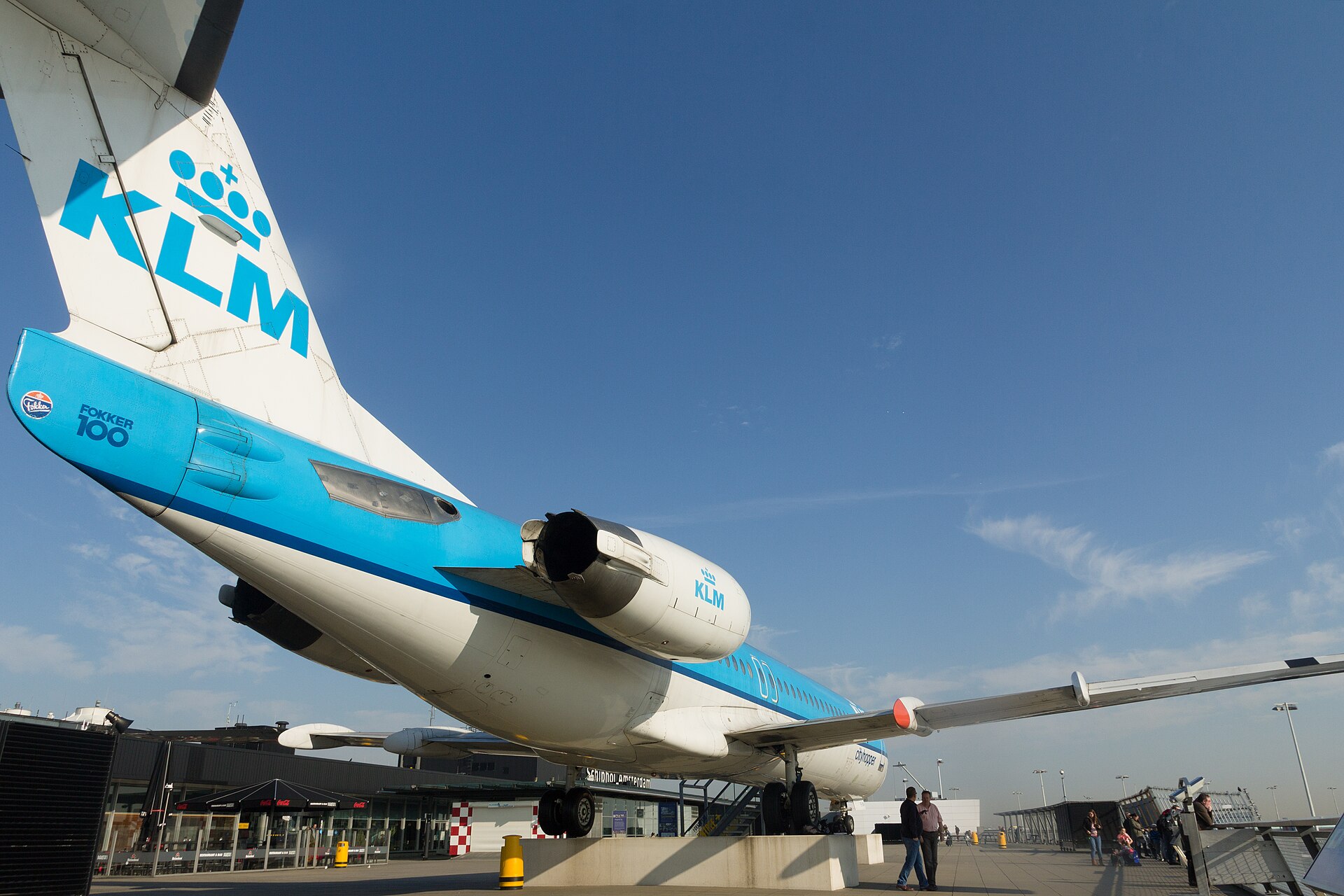
The Panorama Terrace is the standout – an open-air viewing deck, landside, with a genuinely good view across the apron and a retired aircraft parked on it. It is free, it is outdoors, and after a long flight it is the fastest way to feel human again. Being landside, it is accessible to anyone, including people meeting arrivals.
Airside, there is a meditation and silence centre for anyone who needs a genuinely quiet room, and an indoor park area with greenery and seating that is markedly calmer than the main concourse. Combined with the free showers, these three make Schiphol one of the few airports where a long layover is survivable without spending money.
Practical Schiphol Details Worth Knowing
- WiFi is free and unlimited across the airport, and it works properly.
- Payment is card-first everywhere. Some outlets are card-only. Dutch debit (PIN) is universal; a few small vendors still balk at American Express.
- Smoking is confined to designated cabins airside. The Netherlands enforces this.
- Lost property is handled centrally, with an online reporting form – report before you leave the country if you can.
- Accessibility is strong: assistance is bookable through your airline at least 48 hours ahead, and the building is step-free throughout. Our Amsterdam accessibility guide covers the city end.
- Visas and transit: Schengen rules apply, and airside transit between two non-Schengen flights does not require a Schengen visa for most nationalities, but some do need an airport transit visa. Check the Netherlands visa and entry requirements guide before you rely on it.
- Taxi touts: use the official rank or a booked car. The common Amsterdam scams guide covers what to watch for.
Schiphol in 2026 and 2027: What Is Changing
Schiphol is in an awkward phase, and it helps to know why the airport sometimes feels stretched.
The Dutch government has capped flight movements at 478,000 for 2026, down from a previous ceiling of 500,000, as part of a long-running noise and emissions dispute with the surrounding region. Schiphol has responded by carrying more passengers on fewer flights – it handled around 32.7 million passengers in the first half of 2026 across 4 per cent fewer flights than the year before, and expects 68 to 72 million across the full year. Fuller planes mean fuller terminals.
Meanwhile the airport is spending heavily on catching up: a record annual investment programme, overdue maintenance, additional electrical capacity, and the long-delayed Pier A, now due in April 2027. There is also a much larger redesign on the drawing board, a multi-billion-euro reshaping of the terminal planned over the coming decade.
What this means for you in practice: expect some construction hoarding, expect the occasional gate change, and take the security time slot seriously. It does not mean Schiphol is a bad airport – it remains one of the easiest large hubs in Europe to move through. It means the margins are thinner than they were, and arriving with time in hand is worth more here in 2026 than it was five years ago.
Keep Exploring Schiphol and Amsterdam
This guide is the overview. Each part of the Schiphol experience has its own detailed guide, and once you are through the airport, our wider Amsterdam trip planning guide picks up where this one leaves off.
- Schiphol to Amsterdam – every transfer option, with real costs and journey times.
- Getting around Amsterdam – trams, metro, bikes, boats and walking, once you are in town.
- OV-chipkaart and OVpay – how to pay for Dutch public transport without overpaying.
- Practical Amsterdam information – the whole practical cluster, from safety to tap water.
- Amsterdam packing list – including the microfibre towel that makes airport showers work.
- Things to do in Amsterdam – for layovers long enough to leave the building.
- Amsterdam weather by month – so you know what you are walking out into.
Frequently Asked Questions About Schiphol Airport
How many terminals does Schiphol have?
One. Schiphol is a single terminal building with three departure halls (1, 2 and 3) and seven piers (B to M). All piers are connected airside, so you can walk between any two gates without leaving the building or taking a shuttle. Your departure hall is determined by your airline and shown on your boarding pass.
How early should I get to Schiphol?
Two hours before a Schengen flight and three hours before a non-Schengen flight, which is Schiphol’s own guidance. Book a free security time slot online or in the Schiphol app on top of that – it costs nothing and materially reduces queueing. Hand-baggage-only Schengen travellers outside peak hours can reasonably get away with 90 minutes.
Can I leave Schiphol during a layover?
Yes, provided you can enter the Schengen area – which most visitors can, either visa-free or on a Schengen visa. The train to Amsterdam Centraal takes 15 to 20 minutes from the station directly beneath the terminal. With five or more hours between flights it is well worth doing; with four or fewer, stay airside.
Is it safe to sleep at Schiphol overnight?
Yes. Schiphol allows overnight stays, has designated rest zones with recliner seating, and is patrolled and well lit. It is safe but not comfortable – bring an eye mask and earplugs, and keep your bag attached to you. For a real bed without clearing immigration, YOTELAIR inside Lounge 2 books by the four-hour block.
Where can I store luggage at Schiphol?
There are baggage storage points airside and landside, plus automated lockers after security on Holland Boulevard and in Lounges 1 and 2. Expect roughly EUR 6 to 12 per 24 hours depending on bag size. For longer stays, the staffed Baggage Storage on Level -1 between Arrivals 1 and 2 is open 24 hours and holds bags up to 30 days.
Are there free showers at Schiphol?
Yes – on the upper level of Lounge 2–3, open 24 hours. You need to bring your own towel and soap, which is the detail most people miss. Paid showers with towels are available at YOTELAIR from around EUR 17.50, and most lounges include shower facilities in the entry price.
Can I pay to get into a Schiphol lounge without business class?
Yes. Aspire Lounge No. 41 accepts Priority Pass, DragonPass and walk-up payment, and is the easiest to get into. Both KLM Crown Lounges sell paid entry when capacity allows, with Lounge 52 in the non-Schengen area the largest and priciest. Expect roughly EUR 45 to 75 depending on lounge and demand.
How much is the train from Schiphol to Amsterdam?
Around six euros for a single to Amsterdam Centraal, with the journey taking 15 to 20 minutes. Trains run several times an hour and continue through the night at reduced frequency. You can tap in and out with a contactless bank card – no separate ticket needed.
Photo Credits
- The main entrance to Amsterdam Airport Schiphol – Amin, CC BY-SA 4.0, via Wikimedia Commons.
- Check-in desks and self-service kiosks inside a Schiphol departure hall – Bramkicken, CC BY-SA 3.0, via Wikimedia Commons.
- Schiphol Plaza – Rob Koster, CC BY-SA 4.0, via Wikimedia Commons.
- An NS double-decker intercity train at the underground Schiphol Airport railway platform – Sneeuwvlakte, CC BY-SA 4.0, via Wikimedia Commons.
- A long airside connecting corridor with a moving walkway between Schiphol piers – Matti Blume, CC BY-SA 4.0, via Wikimedia Commons.
- A retired KLM Fokker 100 parked on the Panorama Terrace at Schiphol – Alexey Komarov, CC BY-SA 4.0, via Wikimedia Commons.
For a flight before seven in the morning the sums change entirely — our hotels near Schiphol guide sorts the connected, walkable, airside and shuttle options and says which is worth the premium.
If you are connecting rather than arriving, our Schiphol layover guide works out what four, eight or twelve hours is actually worth now that EES border waits run to two hours.
Schiphol now has two queues and only one of them can be booked around — our security and fast track guide covers the free time slot, the liquids rule and how early to actually arrive.
If you need to put a bag down for a few hours or a few weeks, our Schiphol luggage storage guide covers the staffed depot, the lockers, and which side of security to use.
Confused about halls, piers and where your gate actually is? Our guide to Schiphol terminals, piers and connecting flights decodes the letters and gives realistic connection times for 2026.
Facing a night in the building? Our guide to sleeping at Schiphol covers the free rest zones, the 24-hour showers, YOTELAIR’s cabin rates and the landside boarding-pass check that starts around midnight.
Schiphol is not the only door into the country. If a budget fare has quoted you a different airport, our guide to Eindhoven and Rotterdam airports works out what each one really costs in time and money to reach Amsterdam.
You do not need business class to get through the door. Our guide to Schiphol lounges you can pay to enter lists every walk-in price, who takes Priority Pass, and which rooms are actually worth the money.
Before you spend anything past security, read our honest verdict on Schiphol shopping and what is actually worth buying — the tax-free label does less work than the signage suggests.
Hungry before a flight? Our guide to where to eat at Schiphol Airport runs through the airside restaurants, the cheaper landside options in Plaza, and what stays open through the night.