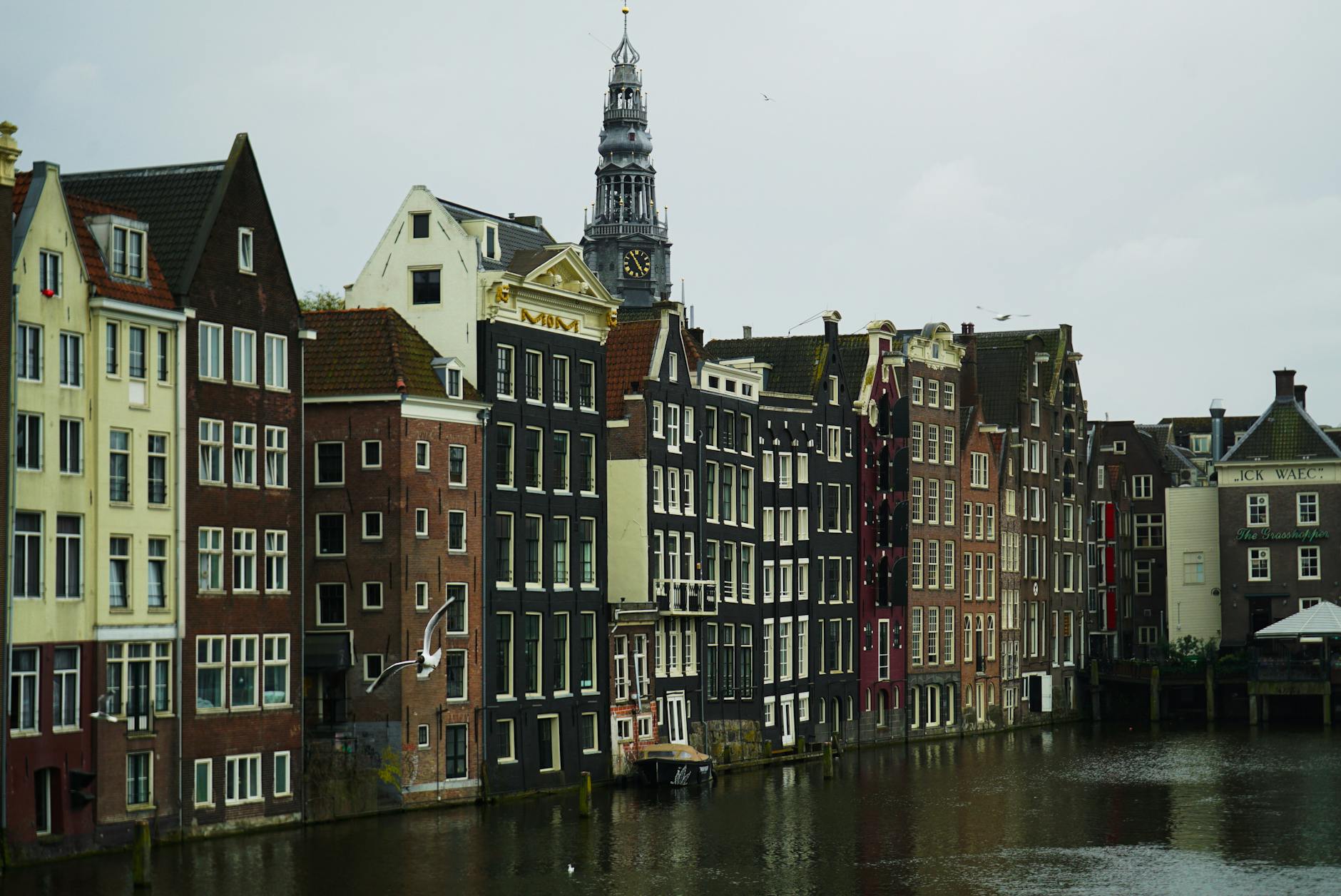
This is the page that answers the question honestly rather than enthusiastically. Amsterdam has spent fifteen years being sold as a weekend of canals, coffeeshops and cheap flights, and in that time it has quietly become an expensive, heavily managed, occasionally exhausting city that actively discourages a large slice of the people who still book it. So: is Amsterdam worth visiting in 2026? For most travellers, yes — emphatically — but for reasons that have almost nothing to do with the version of the city in the marketing.
Both halves of the answer are true. Amsterdam is one of the three or four best museum cities in Europe, it has the most coherent surviving historic centre north of Italy, and it is small enough to cross on foot in forty minutes. It is also pricier than Berlin, less dramatic than Prague, worse at food than almost anywhere in southern Europe, and busy to the point of unpleasantness on a summer Saturday in the centre. Whether it is worth it depends entirely on which of those two paragraphs describes the trip you are planning. This page sets out both, then hands you off to the guides that go deeper on cost, duration, season and the cities people weigh Amsterdam against.
| If you are… | Verdict | Why |
|---|---|---|
| A museum or art traveller | Absolutely worth it | Rijksmuseum, Van Gogh and Stedelijk on one square. Few cities match it. |
| On a first European trip | Worth it | Compact, English-speaking, easy to navigate, well connected by train. |
| A history or architecture traveller | Worth it | A UNESCO canal ring that is a working city, not a preserved set. |
| Travelling with children | Worth it, with planning | NEMO, ARTIS and the free ferries carry a trip. The centre does not. |
| Chasing food above all | Not really | Good, improving, expensive — but not a reason to fly here. |
| After a cheap party weekend | No | The city has legislated that trip out of existence. Go elsewhere. |
| On a tight budget | Conditionally | Doable, but mainly if you sleep outside the centre. |
| Looking for dramatic landscape | No | It is flat, urban and grey-skied. The Netherlands is not that trip. |

The short answer
Amsterdam is worth visiting if you are coming for what the city actually is: a dense, walkable, museum-heavy seventeenth-century merchant town that happens to sit inside a modern, liberal, extremely well-run country. Three days is enough to see it properly. It rewards early starts and slow evenings, it punishes the middle of the day in the centre, and it is one of the few major European capitals where the best thing you can do on your third morning is leave it for an afternoon and come back.
It is not worth visiting if your mental image is the Amsterdam of about 2012 — cheap beer, loose rules, a stag weekend with canals in the background. That city has been dismantled deliberately and thoroughly. Organised pub crawls are no longer permitted in the old centre. Drinking alcohol or smoking cannabis in the street in the city centre is forbidden, and nuisance fines run from €100 to €650. In 2023 the city ran an advertising campaign aimed specifically at British men aged 18–35 searching for “stag party Amsterdam” and told them, in as many words, to stay away. It worked. If that was the plan, book Prague or Kraków and everyone involved will be happier.
Between those two extremes sits the great majority of visitors, and for them the real question is not whether to come but how long for, when, at what budget and where to sleep. Those four decisions determine whether a trip here feels like great value or a mild rip-off, and each of them has its own page below.
What Amsterdam is genuinely world-class at
The museums, which are not a nice-to-have but the entire case
Strip everything else away and Amsterdam still justifies the flight on its museums alone. The Rijksmuseum (€25, daily 09:00–17:00) holds the Dutch Golden Age in one building and does it with a confidence very few national museums manage — the Night Watch, four Vermeers, and an upper floor of Delftware and ship models that most visitors skip and shouldn’t. The Van Gogh Museum (€25, entirely timed-entry) has around 200 paintings and 500 drawings by one artist, arranged chronologically, and it is the single most emotionally effective couple of hours in the country. The Stedelijk (€22.50, or €32.50 during the Kusama retrospective running 11 September 2026 to 17 January 2027) holds the largest Malevich collection in the West. All three face the same square.
Then there is the second tier, which in most cities would be the first: the Anne Frank House (€16.50, sold only through annefrank.org and released every Tuesday six weeks ahead), the Rembrandt House on Jodenbreestraat with its studio reconstructed from a bankruptcy inventory, NEMO’s Renzo Piano hull rising out of the IJ tunnel, the Moco villa on Museumplein, and STRAAT out at NDSM in a former welding hall. Our Amsterdam museums guide ranks them properly, and the attractions and tickets hub covers what genuinely needs booking.
One note on value, because it changes the maths considerably. The Museumkaart at €75 a year covers more than 500 Dutch museums, which means the Rijksmuseum and Van Gogh alone put you two-thirds of the way there and a third or fourth major museum clears it. At the Anne Frank House it brings the ticket down to a €1.00 booking fee, but you still need a timed slot booked online. The I amsterdam City Card (€67 for 24 hours, €94 for 48, €115 for 72) does not cover the Anne Frank House, and has not covered the Van Gogh Museum since June 2022 — which quietly removed most of its point for first-time visitors. Our city passes compared page runs the break-even numbers on all four.

The canal ring, which is a working city and not a film set
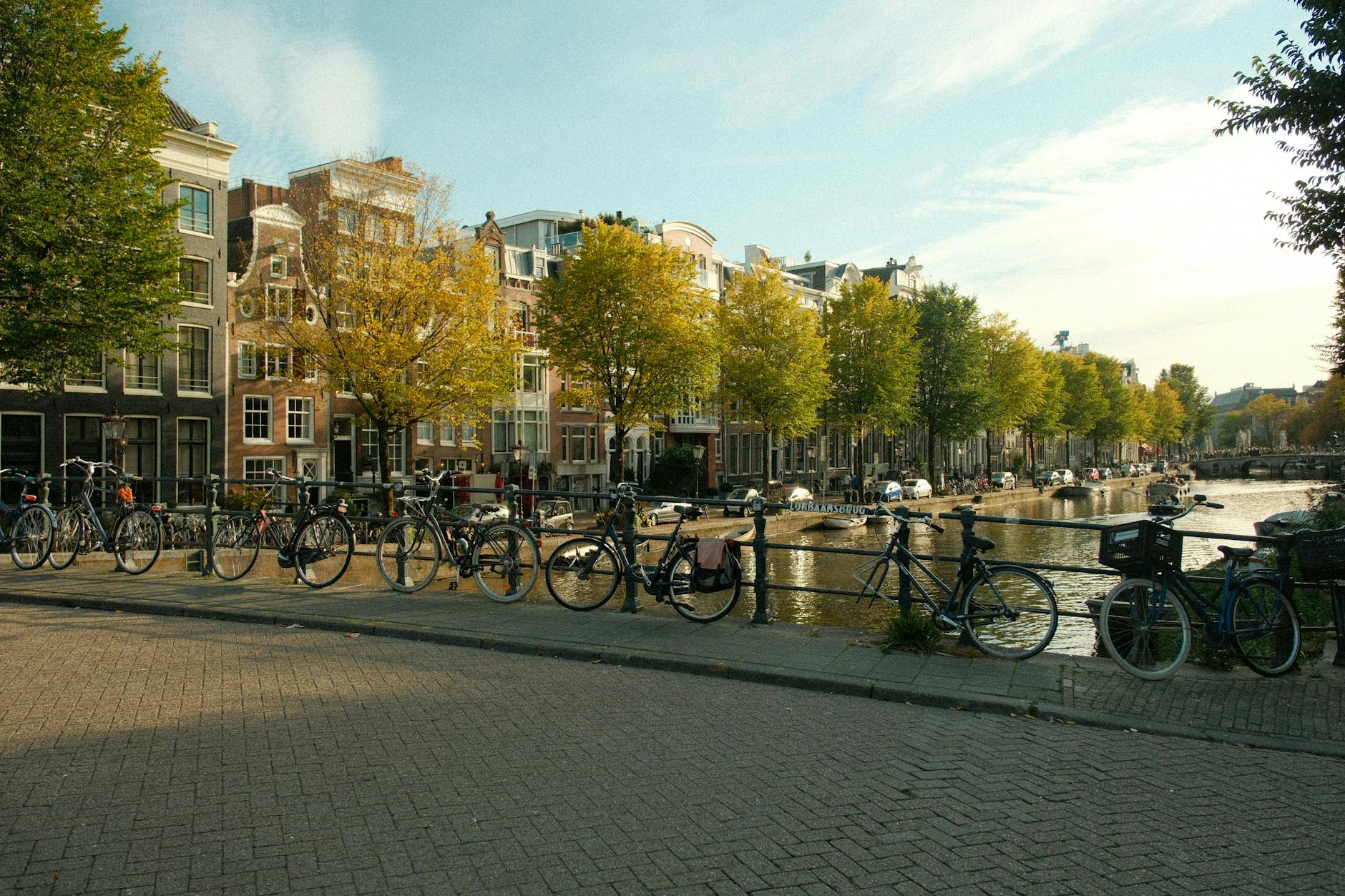
The Grachtengordel — Herengracht, Keizersgracht, Prinsengracht, dug from 1613 as a single planned expansion — is a UNESCO World Heritage Site, and unlike a lot of European heritage cores it is still full of people who live and work in it. The houses are narrow because they were taxed on frontage. They lean forward because the hoist beams at the top needed clearance to haul furniture up the outside. The gable styles change by decade, which means you can date a street by looking up. Our guide to the canal ring and the story of how it was built cover this properly, and the architecture walking route turns it into a morning.
This matters to the “worth it” question because it is the thing photographs undersell. A canal photo looks like every other canal photo. Standing on a bridge at seven in the morning, before the tour boats start, with the water flat and a heron on a mooring post, does not feel like anywhere else in Europe. The city is at its best in the hours nobody photographs it.
Cycling, which changes how the whole trip feels
Amsterdam is genuinely the best city in the world to be a cyclist in, and if you can ride confidently in traffic, hiring a bike converts the trip. Distances collapse. You reach Noord, Oost and the Amstel in the time it would take to wait for a tram. The caveat is real, though: local cyclists are fast, unsentimental and do not expect you to stop unpredictably, and visitors on rental bikes are the most common cause of minor collisions in the centre. If you have not cycled in traffic for a decade, do not start on a Saturday afternoon on Damstraat. Our bike rental guide covers the rules, the deposits and where to make your first nervous kilometre.
Compactness, which is chronically underrated
Central Amsterdam is about two kilometres across. You can walk from Centraal Station to Museumplein in half an hour through continuously interesting streets. Compare that with Paris, Berlin or London, where you will spend an hour a day underground getting between things. This is why a three-day Amsterdam trip delivers more than three days in a bigger capital, and why the city is such a good first stop on a European rail route. It is also why getting around is mostly a solved problem: OVpay contactless works on every tram, bus, metro and GVB ferry, a ride runs roughly €1.50–3, GVB day tickets start at €10 for 24 hours, and the ferries from behind Centraal are free.
What Amsterdam is honestly not worth it for
Food, if that is the reason you are coming
This is the part most guides will not say plainly. Dutch cuisine is not a draw. It is a cuisine of hearty, sensible, weather-appropriate food — stamppot, bitterballen, kroketten, raw herring from a stall, appeltaart under too much cream — and it is enjoyable and cheap at street level, and largely unmemorable at restaurant level. Amsterdam’s genuinely good eating is borrowed: Indonesian rijsttafel, which is the one meal here we would call unmissable and a direct product of colonial history; Surinamese roti in De Pijp; Turkish and Middle Eastern along the Javastraat in Oost; and a serious modern bistro scene in Oud-West and De Pijp that charges Copenhagen prices without quite reaching Copenhagen standards.
Our verdict, and it is a consistent one across this site: eat well in Amsterdam, absolutely, but do not build the trip around it. Book one rijsttafel, eat street food and market food the rest of the time, and put the difference into museums. The rijsttafel guide, must-try Dutch foods and cheap eats pages between them will feed you better for less than any restaurant list will.
The Red Light District as a spectacle
De Wallen is the oldest and largest of Amsterdam’s red-light areas and architecturally one of the most beautiful, and on a weekday morning it is a quiet neighbourhood of medieval alleys around the Oude Kerk. On a Friday night it is a crush of people filming other people’s workplaces, and the city has responded with rules worth knowing before you go: guided tours are not permitted in the district at all (elsewhere in the centre they are capped at fifteen people and may only run between 08:00 and 22:00), street drinking and smoking cannabis in public both carry fines, and bar closing times have been brought forward. Our honest Red Light District guide and the De Wallen neighbourhood guide reach the same conclusion: walk it once, early, quietly, and treat it as a district rather than an attraction.
Value for money, measured against the rest of Europe
Amsterdam is expensive and getting more so. Hotel rates climb in high season. Accommodation VAT went up, and the tourist tax, 12.5% of the room price before VAT, is added on top of the rate you were quoted and catches people out at checkout. Museum entry is €20–25 a head, repeatedly, and the small spends add up quickly.
Set against Berlin, Lisbon, Kraków or Budapest, that is poor value on paper. Set against Paris, London, Copenhagen or Zurich, it is unremarkable. Where the money actually goes, and the four or five levers that move the total most, are laid out in full on the cost page.
The full breakdown — hotels, food, transport, museums and what a realistic day costs at three budget levels — is in our guide to whether Amsterdam is expensive.
Crowds, in the centre, between May and September
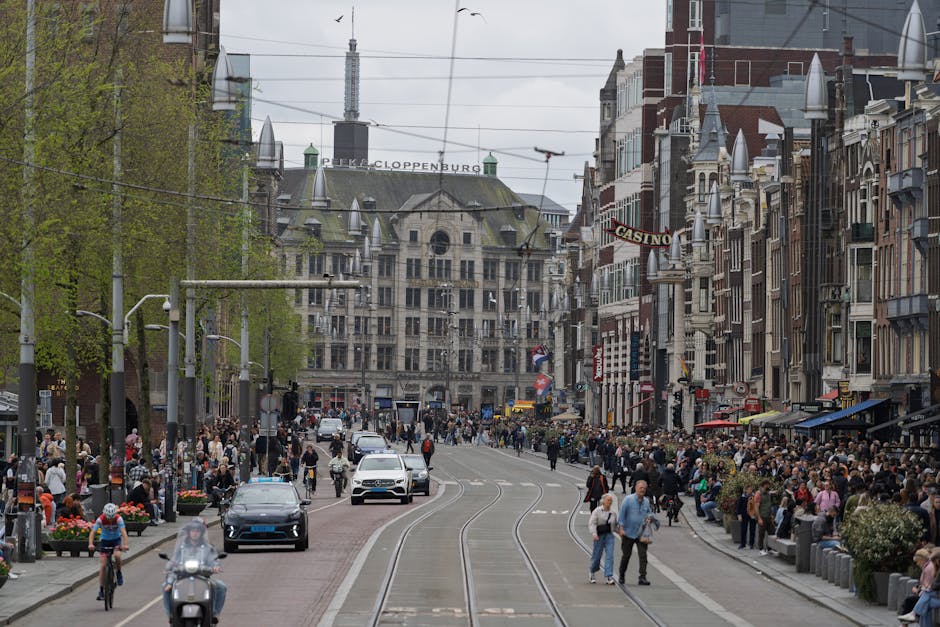
The honest complaint about Amsterdam is not that it is touristy — it is that the touristy part is geographically tiny. Roughly the strip from Centraal down Damrak to the Dam, and east into De Wallen, absorbs an enormous share of the visitors, and on a summer weekend it is genuinely unpleasant. The good news is that this is easy to design around, because the Jordaan, Oost, Noord, De Pijp and Oud-West are ten minutes away and feel like a different city. Our neighbourhoods guide is the fastest way to work out where you actually want to spend your afternoons, and the hidden gems page is the version for a second visit.
How long do you actually need?
Three full days is the answer for most people, and it is a comfortable three days rather than a forced march. Day one for the canal ring, the Jordaan and one museum. Day two for Museumplein properly, which means two museums and no more, because a third is wasted on anyone. Day three for a neighbourhood you have not seen, a market, and either Noord by ferry or a day trip out of the city. Two days works if you accept that you are choosing between the Rijksmuseum and the Van Gogh rather than doing both well. Four or five days is where day trips stop being a compromise and start being the best part of the week — Haarlem, Utrecht, Zaanse Schans, Kinderdijk, or the North Sea at Zandvoort, thirty minutes away by direct train for about €6.90.
More than five days in Amsterdam alone is, we think, a mistake. The city does not have that much in it, and the fifth museum is always the worst one. Five days plus the rest of the country, on the other hand, is a superb trip. Our three-day itinerary, five-day version and seven-day Netherlands route each take a different answer to that question.
If you are still deciding, our guide to how many days you need in Amsterdam works through two, three, four and five nights against what you actually want to see.
Amsterdam against the cities people really compare it to
Nobody chooses Amsterdam in a vacuum. It is almost always weighed against another European short-break city, or slotted into a route alongside one. Here is the honest shape of those comparisons, with the long version on each page.
| Matchup | Amsterdam wins on | The other city wins on | Pick Amsterdam if… |
|---|---|---|---|
| vs Paris | Walkability, low friction, museum density per square metre | Scale, food, sheer weight of things to see | You have three days rather than six |
| vs Berlin | Beauty, compactness, ease of a short trip | Price, nightlife, twentieth-century history | You want a beautiful city more than a serious one |
| vs Brussels | Almost everything a short-break visitor cares about | Food, beer, price, day-trip access to Bruges and Ghent | You have two days and only two days |
| vs Rotterdam | History, atmosphere, the canal ring | Architecture, space, cost, restaurants | You are here for the seventeenth century |
The full head-to-head is in Amsterdam vs Paris, including the case for simply doing both, given the Eurostar takes 3h20.
For the closest-run comparison of the four, see Amsterdam vs Berlin.
If the choice is a two-day city break, Amsterdam vs Brussels settles it faster than you would expect.
And for the domestic question — which Dutch city to actually base yourself in — see Amsterdam vs Rotterdam.
There is also the option most people miss entirely, which is not to choose at all. Amsterdam sits on a rail network that puts Brussels 1h52 away and Paris 3h20, both on the Eurostar services that absorbed Thalys in late 2023, with fares from around €35 if you book early — booking opens roughly six months ahead. Bruges is an hour beyond Brussels. A week that takes in all three is not a harder trip than a week in any one of them, and our page on the Netherlands by train explains why the Dutch end of it needs no advance booking whatsoever.
Our Benelux by train itinerary builds exactly that route — Amsterdam, Brussels and Bruges — with fares, timings and where to sleep in each.
When to go, and how much it changes the verdict
Season swings the answer to “is it worth it” more here than in most cities, because Amsterdam’s two weaknesses are crowding and price and both are seasonal. Tulip season, roughly late March to mid-May, is when the country is at its most photogenic and its most expensive; Keukenhof and the bulb fields are a genuine reason to time a trip, and our tulip season guide gets the timing right. July and August are warm, long-evening, crowded and dear. September and October are, in our view, the best value in the calendar — the weather holds, the terraces are still out, and rates drop off a cliff once the summer ends.
Winter is the underrated one. It is dark by half past four and the rain comes in sideways, but hotels are at their cheapest, the museums are near-empty on a Tuesday morning, brown cafés finally justify their existence, and the Amsterdam Light Festival runs from 26 November 2026 to 17 January 2027, with cruise tickets from about €27.50 and boats departing between 16:30 and 22:00. Our winter guide, spring guide and month-by-month weather page cover the detail, and hotel prices by month shows what each season actually costs you.
For the direct comparison, our guide to Amsterdam in summer versus winter puts the two trips side by side.
Do you even need to sleep in Amsterdam?
This is the single biggest lever on whether the trip feels like value, and it deserves more thought than it usually gets. Amsterdam hotel rates plus a 12.5% tourist tax make the bed the largest line in most budgets. Haarlem is about fifteen minutes away by direct train and is a genuinely lovely small city in its own right. Utrecht is around half an hour by Intercity and about €9–10 for a second-class single, has its own canal system with sunken wharf cellars you can eat dinner in, and is cheaper across the board. Zaandam is twelve minutes out and sits next to Zaanse Schans. All three let you spend your days in Amsterdam and your nights at a rate that is not Amsterdam’s.
The trade-off is real, though, and we will not pretend otherwise: you lose the evening. Amsterdam after dark, when the day-trippers have gone and the canal houses are lit from the inside, is one of the best things about the city, and a late-evening train back to Haarlem takes that away from you. Our where to stay guide and budget hotels under €100 cover the in-city options first, and the tourist tax page explains the surcharge nobody quotes you.
If you want the numbers run properly, our guide to staying outside Amsterdam compares Haarlem, Utrecht and Zaandam on price, journey time and exactly what you give up.
Worth it for whom? A traveller-by-traveller answer
First-time visitors to Europe
Yes, and it is one of the best possible first stops. English is spoken universally and well, the city is small, the transport is legible, the food is safe, and it connects by direct train to Paris, Brussels, London and most of Germany. Start here and the rest of the trip gets easier. Our first-timer mistakes page will save you most of a day.
Families
Yes, with a caveat. The centre is a poor environment for small children — bikes, trams, crowds, and canals with no railings — but the city around it is excellent. NEMO is €21.50 from age four and its rooftop square is free and open daily. ARTIS is €29.50 for over-13s and includes the aquarium and the planetarium in the ticket, with under-3s free. The Noord ferries are free and are a hit with any child under ten. Our Amsterdam with kids guide and the family hotels page handle the logistics.
Couples
Yes. This is a city that does evenings extremely well — an evening canal cruise rather than the packed daytime one, a brown café with a candle on the table, dinner in the Nine Streets, the Jordaan after dark. See romantic Amsterdam, the Nine Streets and canal cruises compared.
Solo travellers
Yes, and unusually so. It is safe, walkable, hostel-rich and easy to be alone in without feeling conspicuous, partly because so much of the social life happens on café terraces where a single person with a book is completely normal. Our solo travel guide and hostels guide cover it, and the safety page gives the honest picture, which is that the real risks here are pickpocketing and bike theft rather than violence.
Budget travellers
Conditionally. It is achievable, but only with deliberate choices: a hostel or an outer-neighbourhood bed, street food and markets rather than restaurants, a Museumkaart if you are here three days or more, walking rather than trams, and the surprising amount the city gives away free — the Rijksmuseum gardens, the Begijnhof, the Noord ferries, Vondelpark, the NEMO roof. See free things to do and the backpacker budget page.
Older travellers and anyone with mobility needs
Mostly yes, with honest warnings. Amsterdam is flat, which helps enormously, and the trams are largely accessible. But the canal-house museums are full of near-vertical seventeenth-century staircases, the cobbles are uneven, the bridges have steps, and the cyclists do not slow down for anyone. Our accessibility guide and guide for senior travellers are specific about which buildings are a genuine problem.
The practical objections, answered
“It rains constantly.” It rains often and lightly, rather than constantly and hard. The genuine issue is wind, which makes umbrellas useless — locals wear a hooded coat and get on with it. Museums, cafés and covered markets mean a wet day here costs you far less than a wet day at a landscape destination.
“It’s overrun with tourists.” Roughly six central streets are. Everything else is not. This is a design problem with an easy solution: sleep and eat outside the ring, and be in the centre before ten in the morning or after seven in the evening.
“Everything needs booking weeks ahead.” Two things do. The Van Gogh Museum is fully timed-entry and weekend morning slots go three to four weeks out in season, and the Anne Frank House releases tickets every Tuesday six weeks ahead with no walk-ups and no waiting list. Almost everything else can be decided the night before. Our booking timeline lays out what genuinely needs planning and what does not.
“The airport is chaos.” Schiphol had a difficult few years and its security operation changed again in May 2026, but it remains one of the easiest airports in the world to arrive at: a single terminal, a railway station directly beneath it, and a train to Centraal in 15–20 minutes for around €6. Free security time slots are bookable in the Schiphol app and are worth using. See the Schiphol guide and getting from Schiphol into the city.
“Do I need to worry about the drug laws?” Not if you behave normally. Coffeeshops are 18+, ID-checked, capped at five grams per person per visit and frequently cash-only, and smoking cannabis in public is banned in De Wallen, Dam, Damrak and Nieuwmarkt, with a €100 fine attached. Hard drugs are illegal and street dealers sell fakes. Our page on the laws tourists should know is the sober version, and the scams page covers the rest.
The verdict
Amsterdam is worth visiting, and the case is stronger than its reputation suggests — but it is a different case from the one it is usually sold on. It is not a cheap city, it is not a food city, and it is emphatically no longer a party city. It is a museum city with a beautiful, intact, walkable historic core, embedded in one of the easiest countries in Europe to travel around, and it repays a short, well-timed, well-located trip far better than a long one.
Three days, in September or in the depths of winter, sleeping away from the Damrak strip, with a Museumkaart in your pocket and one rijsttafel booked, is close to a perfect European short break. Five days in July in a central hotel at €300 a night, eating on Leidseplein and queuing for everything, is where people come home and say Amsterdam was overrated. Both trips are available at the same address. The difference between them is entirely in the planning, which is what the rest of this cluster is for.
Keep Exploring
- Amsterdam Trip Planning Guide
- Things to Do in Amsterdam
- Amsterdam Museums Guide
- Amsterdam Neighbourhoods Guide
- Where to Stay in Amsterdam
- Trip Cost & Budget Breakdown
- Three-Day Amsterdam Itinerary
- Day Trips from Amsterdam
- The Netherlands Beyond Amsterdam
- Amsterdam Food & Drink Guide
- Getting Around Amsterdam
- Amsterdam by Season
- Amsterdam for Every Traveller
- Practical Amsterdam Information
- Amsterdam Attractions & Tickets
- Amsterdam Tours & Experiences
Frequently Asked Questions
Is Amsterdam worth visiting for 2 days?
Yes, but only if you accept a narrow trip. Two days means one big museum rather than two, the canal ring on foot, one neighbourhood, and no day trip. It works well as one stop on a longer European rail route and less well as a standalone flight, because the airport transfer and the check-in times eat a meaningful share of a 48-hour visit.
Is Amsterdam overrated?
The Damrak–Dam–De Wallen strip is genuinely overrated and takes up almost all of the city’s screen time. The museums, the canal ring away from the centre, the Jordaan, De Pijp, Noord and the day trips are underrated. Most people who come home disappointed spent their whole trip inside the first list.
How many days do you need in Amsterdam?
Three full days suits most visitors. Two is workable but compromised, four or five is where day trips become the best part of the trip, and more than five in the city alone is more time than Amsterdam can fill well.
Is Amsterdam expensive compared with the rest of Europe?
It sits in the expensive tier, alongside Paris, London and Copenhagen, and well above Berlin, Lisbon or Kraków. The bed is the biggest variable, and the rate climbs in high season, with tourist tax added on top.
Is Amsterdam still worth visiting if you don’t drink or smoke?
Yes, and arguably it is a better trip. Nothing in the museum case, the architecture case or the day-trip case involves either, and the city has spent years steering itself deliberately away from the drinking-tourism version of itself.
What is the best time of year to visit Amsterdam?
September and October give the best balance of weather, crowds and price. Late March to mid-May is the tulip window and the most beautiful, but also the busiest and the dearest. Winter is cheapest and the museums are quietest, at the cost of daylight.
Is Amsterdam safe for tourists?
Yes, by any European standard. The realistic risks are pickpocketing in crowded central streets and around Centraal, bike theft, and being clipped by a cyclist while standing in a bike lane. Violent crime against visitors is rare.
Should I stay in Amsterdam or somewhere cheaper nearby?
If the budget is tight, Haarlem (about 15 minutes), Zaandam (about 12) or Utrecht (around half an hour, €9–10) will all save you real money. The cost is the evening: Amsterdam once the day-trippers have left is one of its best hours, and a late train back means giving that up.
Is Amsterdam worth visiting in winter?
Yes, for a specific kind of trip. Hotels are at their cheapest, museums are near-empty midweek, brown cafés come into their own, and the Amsterdam Light Festival runs from 26 November 2026 to 17 January 2027 with boats from about €27.50. Accept that it is dark by half past four.
Do I need to book Amsterdam museums in advance?
Two of them, yes. The Van Gogh Museum is entirely timed-entry, with weekend morning slots going three to four weeks ahead in season, and the Anne Frank House sells only through annefrank.org, releasing tickets each Tuesday six weeks out with no walk-ups. The Rijksmuseum needs a start time but rarely sells out.