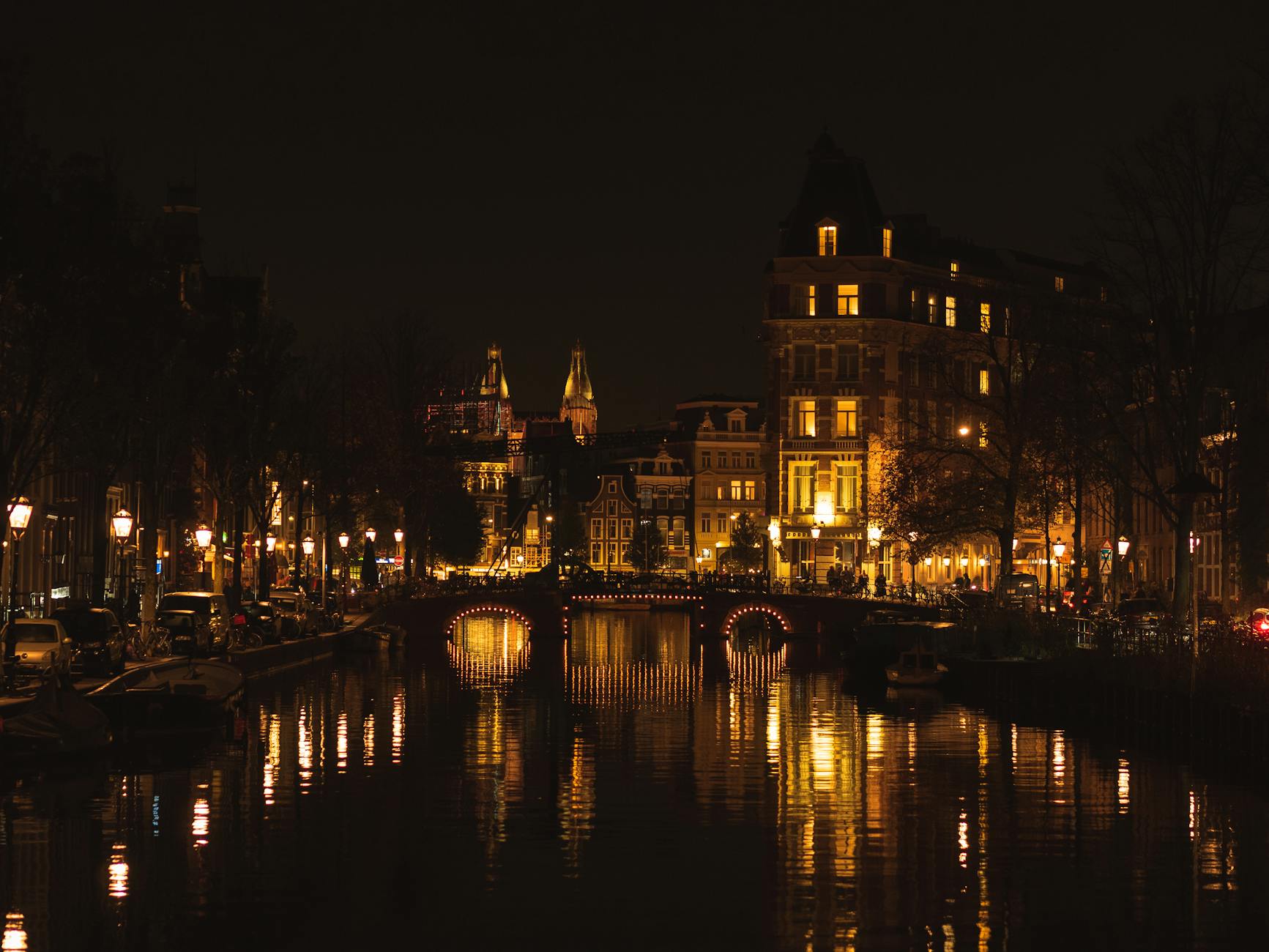
There is a version of a night out in this city that gets sold hard to people in their twenties and delivered somewhat less hard on the ground: five bars, a guide, a shot at each, a wristband, thirty strangers. This page is about what an Amsterdam pub crawl actually is in 2026, what it costs, why the format has quietly changed, and whether it beats the obvious alternative of walking into a bar and ordering a beer.
The framing you need first is legal rather than social. Organised pub crawls are prohibited in Amsterdam’s old city centre — the 1012 postcode that covers De Wallen, Damrak and the streets around them — as part of the same package of rules that banned guided tours past the windows and capped group sizes. Crawls have not disappeared; they have adapted, meeting inside venues, coordinating by WhatsApp rather than by a guide with a raised umbrella, and shifting towards the squares outside the historic core. That adaptation is the single biggest thing separating a well-run crawl from one that will end with a fine or a cancelled night.
Pub crawls at a glance
Typical 2026 rates per person. Almost all include some combination of welcome drink, shots and entry to a club at the end.
| Format | Price | Length | Verdict |
|---|---|---|---|
| Standard commercial crawl | €20–30 | 3–4 hours | Fine if you know what it is |
| Hostel crawl | Free to €10 | 2–3 hours | Better value, smaller |
| Private group crawl | Quoted per group | Your call | The workable stag option |
| Craft beer tasting walk | €35–55 | 3 hours | The grown-up version |
| Doing it yourself | Cost of drinks | Your call | Usually the best night |
The rules that changed the format
Amsterdam spent the last several years deliberately making itself less attractive to one kind of visitor, and the pub crawl was near the top of the list. The measures worth knowing:
- Organised pub crawls are not permitted in the old centre. Operators who work there anyway are risking your night as well as their licence.
- Drinking alcohol in the street is prohibited in the 1012 area, with a fine of around €95. Enforcement is visible, particularly from Thursday to Saturday after 20:00. Carrying an open can between bars is exactly the behaviour it targets.
- Shops in the inner city cannot sell alcohol after 16:00 from Thursday to Sunday, and the shelves are physically covered. Pre-drinking from a supermarket is not the fallback it is elsewhere.
- Bar closing times in De Wallen were brought forward, so the late end of the night has moved out of the district rather than simply moving indoors.
- No smoking in the street — tobacco or cannabis — in De Wallen, Dam, Damrak and Nieuwmarkt, with a €100 fine.
- Guided groups are capped at fifteen and may not operate after 22:00, which is why a legitimate crawl is not, technically, a guided tour.
In 2023 the city went further and ran advertising aimed squarely at British men aged 18 to 35 who searched for “stag party Amsterdam” and “pub crawl Amsterdam”, telling them to stay away. Whatever you think of that, it tells you exactly how the city sees this category, and it is worth reading our laws tourists should know before a big night rather than after one.
What a commercial crawl is actually like
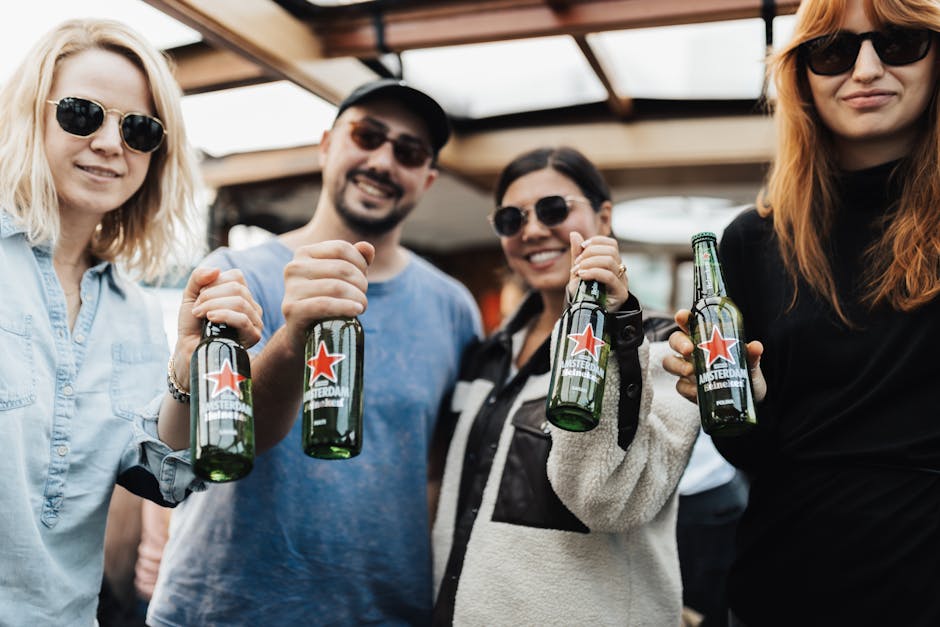
€20 to €30 buys you three to four hours, four or five venues, a welcome drink, a shot in each bar and free or reduced entry to a club at the end. Groups run from twenty to sixty depending on the night. Meeting points are usually a specific bar on or near Leidseplein or Rembrandtplein at around 20:00 or 21:00.
The honest description: the venues are chosen because they will take a large group at short notice, not because they are good, and the crawl is a social product rather than a drinking one. You are paying to be introduced to thirty people and moved between bars without having to make any decisions. For solo travellers that is a genuinely useful thing to buy, and it is the single best argument for the format. Our solo travel guide makes the same point about the first night of any trip.
The less honest part of the marketing is the value calculation. A shot in each of four bars is not €25 of alcohol, and the “free club entry” is often to a place that would have let you in anyway before midnight. If you are buying it for the drinks, you are overpaying. If you are buying it for the company, it is reasonable.
Hostel crawls
Most of the larger hostels run their own, free or nearly so, usually smaller and considerably less regimented than the commercial ones. If you are staying in one, start here — it costs nothing, the group is people you will see at breakfast, and you can leave when you like. Our hostels guide covers which ones have a bar worth staying in.

Stag and hen groups: read this bit
Amsterdam is a harder city for a large stag or hen group than its reputation suggests, and the gap between reputation and reality is where most of the trouble starts. Group sizes for organised nights are restricted, street drinking is fined, beer bikes have been banned in the centre since 2017, and bars and clubs turn away large single-sex groups routinely — not occasionally, routinely.
If you are running a group of eight or more, the workable version is a private booking rather than a public crawl: a bar or a boat hired for your party, arranged in advance, with a name on a door. Splitting into groups of four also works far better than arriving twelve-strong and expecting to be let in anywhere. Our stag and hen party guide covers the logistics properly, and our boat rental guide covers the private option — noting that amplified music on the canals is prohibited and equipment can be confiscated.
The grown-up alternative: a beer tasting walk
€35 to €55 for around three hours, four venues, a guide who knows the brewing, and tasters rather than pints. Smaller groups, earlier start, and bars chosen because the beer is good rather than because the door is wide.
This is a different product wearing similar clothes, and for anyone over about twenty-five it is usually the better night. The Netherlands has an excellent independent brewing scene — Brouwerij ‘t IJ under the windmill on the eastern edge of the centre is the obvious landmark of it — and a good guide will take you to places you would not have found. Our craft beer and brewery guide has the venues if you would rather do it unguided.
Where the nightlife actually is
Because the crawls have been pushed out of the old centre, it helps to know how the city’s drinking geography breaks down — the squares are not interchangeable, and picking the wrong one is how people end up on Damrak paying nine euros for a bad lager.
Leidseplein is the big, loud, international one: Paradiso and Melkweg on the edges of it, a dense ring of bars, and a crowd that skews young and visiting. Most commercial crawls start here or nearby. Rembrandtplein is its slightly older sibling, heavier on clubs, and the other standard meeting point. Reguliersdwarsstraat, running off it, is the historic heart of gay Amsterdam and one of the best streets in the city for a night out regardless of who you are — our LGBTQ guide covers it properly.
Away from the squares, the Jordaan and the Nine Streets are brown café country, De Pijp around the Albert Cuyp is where a lot of younger Amsterdammers actually drink, and Noord across the IJ has the warehouse bars and the late clubs. None of those are crawl territory, which is rather the point of them.
Or just do it yourself
Here is the thing nobody selling a crawl will tell you: Amsterdam is unusually good at the unstructured version. The bars are close together, they are open late, nobody minds you nursing one beer, and the city’s own drinking culture is built around the brown café — small, wood-panelled, warm, gezellig — which is the exact opposite of what a forty-person group needs.
A route that works: start in the Jordaan around eight for two brown cafés, walk east through the Nine Streets, then choose between Rembrandtplein for volume or the smaller bars around the De Pijp end of the city for something quieter. Beer is roughly €5 to €7 a glass in most places, so a full night of five drinks costs about what the crawl ticket does before you have drunk anything.
Two practical notes. Card is universal and some bars are cashless entirely; our money and tipping guide covers the etiquette, which is minimal. And the night transport network is good but sparse — check our night transport guide before you assume there is a tram at three.
Booking notes and how not to waste the money
- Check where it operates. If a listing promises a crawl through the Red Light District, it is either misdescribing itself or planning to break the rules.
- Check the group size. Twenty is a night out. Sixty is a queue.
- Check what “included drinks” means. Usually one welcome drink and a shot per venue. Anything advertised as unlimited will have a time window attached.
- Check the meeting point and the start time. Most begin between 20:00 and 21:00, and the group leaves the first bar on schedule whether you are there or not.
- Bring ID. The drinking age is 18 and it is enforced properly, including on people who clearly are not 17.
- Do not carry drinks between venues in the centre. That is the €95 one.
- Book direct where the operator has its own site. The resale platforms add margin on a product that is already thin.
Which to pick
- Solo, first night, want company: a hostel crawl if you are in one, a commercial crawl if not. Worth it for the introductions alone.
- Couple: skip it. A beer tasting walk or your own route through the Jordaan will be a far better evening.
- Group of four or five friends: do it yourself. You already have the company you were going to pay for.
- Stag or hen party: a private booking, arranged in advance, split into small groups on the door.
- Interested in beer rather than volume: the tasting walk at €35 to €55, without hesitation.
- On a tight budget: brown cafés in the Jordaan, €5 a beer, and our backpacker budget guide for the rest of the night.
Keep Exploring
- Amsterdam tours and experiences
- Craft beer and breweries in Amsterdam
- Stag and hen parties in Amsterdam
- Hostels and backpacker guide
- Night transport in Amsterdam
- Laws tourists should know
- Solo travel in Amsterdam
- The Jordaan
- Amsterdam Dance Event
Frequently asked questions
Are pub crawls banned in Amsterdam?
Organised pub crawls are not permitted in the old city centre, the 1012 postcode covering De Wallen and Damrak. They still operate elsewhere in the city, meeting inside venues and coordinating by messaging rather than being led through the streets.
How much does an Amsterdam pub crawl cost?
Commercial crawls run €20 to €30 for three to four hours with a welcome drink, a shot per bar and club entry at the end. Hostel crawls are free or under €10. Craft beer tasting walks are €35 to €55.
Can I drink in the street?
Not in the old centre. Street drinking in the 1012 area carries a fine of around €95 and is actively enforced from Thursday to Saturday evenings. Finish your drink in the bar.
What time do crawls start?
Usually between 20:00 and 21:00, from a named bar on or near Leidseplein or Rembrandtplein. They run three to four hours and end at a club. The group moves on schedule, so arrive on time.
Is a pub crawl good for solo travellers?
It is the best argument for the format. You are buying introductions rather than alcohol, and on a first night in a strange city that is worth €25. If you are already travelling with friends, the value largely evaporates.
Can large groups join?
Public crawls generally cap group bookings, and bars turn away large single-sex groups routinely. For eight or more, arrange a private booking in advance and plan to split into smaller groups at the door.
What is the drinking age?
Eighteen, for everything including beer, and it is checked properly. Bring photo ID even if you are comfortably older, because door staff ask more often than you would expect.
Can I buy alcohol from a shop first?
Not in the inner city after 16:00 from Thursday to Sunday, when shops are required to stop selling and physically cover the shelves. Outside those hours and those streets it is normal, but street drinking rules still apply.
Are the included drinks worth the ticket?
No, if you count them. A welcome drink and four shots is not €25 of alcohol, and the club entry is often free before midnight anyway. Judge the ticket on the company, not the contents.
What is a brown café?
The traditional Dutch pub — small, wood-panelled, stained dark by a century of smoke, and central to how Amsterdam actually drinks. No crawl will take you to one, because they hold thirty people at most and would rather not hold thirty at once.
Do crawls run every night?
The larger operators run nightly in summer and typically Thursday to Saturday the rest of the year. Numbers thin out badly in January and February, and a crawl with nine people on it is a different and much flatter evening than one with thirty. Ask how many are booked before you pay in low season.
Are there crawls without heavy drinking?
The beer tasting walks are the closest thing, since they serve small measures and spend the time talking about what is in the glass. Some operators also run food-and-drink walks that pair bars with bitterballen and cheese, which is a gentler night and considerably more Dutch.
Is it safe?
Broadly yes, with the usual caveats about drunk crowds late at night, pickpockets in busy bars and the street dealers in the alleys who are always selling something fake. Our safety guide covers the specifics.
How do I get home afterwards?
Night buses cover the city but run infrequently, and the trams and metro stop well before the clubs do. Check the night network before you go out, and remember that taxis from a rank are the reliable option at three in the morning.