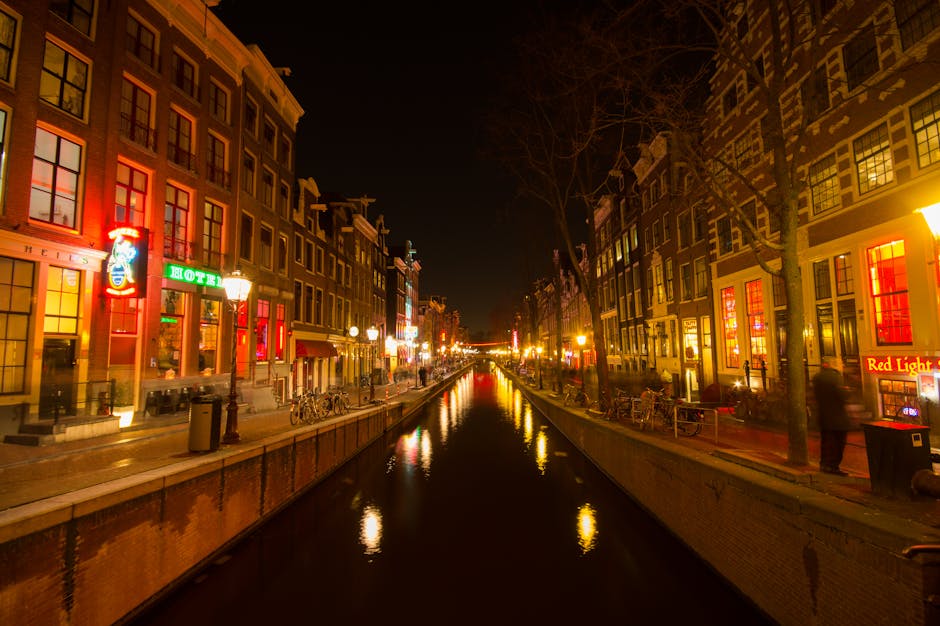
De Wallen — Amsterdam’s famous Red Light District — is the city’s oldest neighbourhood, the medieval heart that grew up around the Oude Kerk (Old Church) in the 13th century. Beyond the famous red-lit windows, it’s a small, beautiful district packed with hidden museums, atmospheric brown cafés, the city’s Chinatown, the world’s oldest condom shop, and the secret 17th-century church Ons’ Lieve Heer op Solder. New rules since 2023 have radically cleaned up the area. This guide covers the history, what to see, where to eat, when to visit, and the rules every visitor must follow.
De Wallen at a Glance
- Name: De Wallen ("the walls"), referring to the medieval city wall. Also called Rosse Buurt (red neighbourhood).
- Where: 2-3 blocks east of Damrak, between Centraal Station and Nieuwmarkt.
- Founded: 13th century — Amsterdam’s oldest district.
- Size: ~6 city blocks; explorable in 1-2 hours.
- What’s here besides red lights: Oude Kerk (1306), Our Lord in the Attic, Café ‘t Mandje, Chinatown, brown cafés, the original Amsterdam.
- Crowds: Day, manageable. Evening 22:00-02:00, dense.
A Brief History
- 1200s: Amsterdam’s first settlement grows around a dam on the Amstel; the area east of Damrak (Oudezijds — "Old Side") was the original walled city.
- 1306: Oude Kerk consecrated.
- 1500s-1600s: Sailors arrive at the port; the area becomes a sailor’s quarter with taverns, distilleries, and brothels.
- 1666: Catholic worship banned; secret "hidden churches" like Our Lord in the Attic built into private homes.
- 1800s: District becomes synonymous with the world’s oldest profession.
- 2000: Sex work decriminalised across the Netherlands.
- 2010s: City buys up windows to reduce sex work; cleans up area.
- 2023: Major new rules — no street smoking, no large guided tours after 19:00, no public drinking, plans to move erotica out of the centre.
- 2024: Tightened "Stay Away" campaign deters rowdy stag tourists.
Oude Kerk (Old Church)

- Year: Consecrated 1306; Amsterdam’s oldest surviving building.
- Style: Gothic, with later additions.
- What you’ll see inside: Wooden ceiling (largest medieval wooden vault in Europe); Saskia van Uylenburgh’s tomb (Rembrandt’s wife); contemporary art installations.
- Entry: €13.
- Hours: Mon-Sat 10:00-18:00, Sun 13:00-17:30.
- Tower climb: separately bookable; panoramic views over De Wallen and the IJ.
Ons’ Lieve Heer op Solder (Our Lord in the Attic)
- Where: Oudezijds Voorburgwal 38.
- What it is: 17th-century Catholic church built secretly in the attic of a private home, when Catholic worship was banned during the Protestant Reformation.
- Why visit: A genuine architectural surprise — climb the narrow stairs of an ordinary canal house and find a fully formed church in the rafters.
- Entry: €17.
- Allow: 90 minutes including audio guide.
- One of Amsterdam’s best small museums.
Other Museums in De Wallen
- Red Light Secrets Museum (Oudezijds Achterburgwal 60): inside a former working brothel; first-person sex-worker stories. €14.50.
- Cannabis Museum: history of cannabis in the Netherlands. €13.
- Hash Marihuana & Hemp Museum: bigger sibling next door. €15.
- Erotic Museum: not for everyone; €7.50.
- Wallen Museum: small history-of-the-district museum.
Brown Cafés & Historic Bars

- Café ‘t Mandje (Zeedijk 63): Europe’s oldest gay bar (1927). Tiny, atmospheric. See our Gay Amsterdam guide.
- In de Wildeman (Kolksteeg 3): historic beer café; 200+ bottled beers.
- Wynand Fockink: 17th-century jenever tasting room; bow-and-sip the traditional Dutch way.
- Café de Schutter: cosy student-friendly brown café.
- Café de Pieper: 17th-century neighbourhood pub.
- Hill Street Blues: legendary smoking-coffee shop.
Amsterdam Chinatown
- Where: Zeedijk and surrounding streets — the eastern edge of De Wallen.
- What: Amsterdam’s small Chinatown (mostly Chinese and Surinamese-Chinese).
- Highlights: Fo Guang Shan He Hua Temple (largest Buddhist temple in Europe outside Asia, opened 2000); dim sum at Nam Kee or Sea Palace; cheap Chinese supermarkets.
- Best for: Lunch break from museum-going.
Where to Eat in De Wallen
- Nam Kee (Zeedijk): legendary dim sum and Cantonese roast meats.
- Hofje van Wijs: historic tea/coffee specialist, café food.
- The Lobby Nesplein (Hotel V): trendy brunch spot.
- Bird: Thai street food, two locations in De Wallen.
- Restaurant De Roode Leeuw (Damrak side): Dutch classics in a historic setting.
- The Pancake Bakery (Prinsengracht near edge): classic Dutch pancakes.
- Café Bern (Nieuwmarkt): Swiss cheese fondue specialist; book ahead.
Rules for 2026 Visitors

- No photography of sex workers or their windows — large fines and confrontation.
- No public alcohol drinking in De Wallen since 2024. €150 fine.
- No public cannabis smoking in De Wallen since 2023. €100 fine.
- No large guided tours after 19:00: groups over 20 banned in evening.
- Be quiet in residential streets: this is a residential neighbourhood too.
- Don’t lean on sex-worker windows: respect their work.
- Don’t stare — pass through respectfully.
- Don’t haggle or harass: services are professional; prices are set.
When to Visit

- Morning (08:00-11:00): quietest; best for photos of architecture; museums opening.
- Afternoon (11:00-17:00): museum visits; cafés open; light foot traffic.
- Early evening (17:00-21:00): red lights come on around dusk; crowds start.
- Late evening (21:00-02:00): heaviest tourist flow; can feel chaotic.
- Late night (after 02:00): quieter again but less safe to wander.
- Best one-time visit: 17:00-19:00 just as lights come on, before crowds peak.
A 90-Minute Walking Route
- Start: Centraal Station.
- Walk south along Zeedijk; stop at Café ‘t Mandje (or just admire).
- Continue south past the Buddhist temple to Geldersekade.
- Turn west onto Oudezijds Achterburgwal — main red-light canal.
- Stop at Red Light Secrets Museum.
- Reach Oude Kerk: enter for a 30-minute visit.
- Walk south to Our Lord in the Attic.
- End at Nieuwmarkt: lunch at Café Bern or Nam Kee.
Hidden Gems
- Condomerie: the world’s oldest condom specialist shop (Warmoesstraat 141).
- Bookmarket in the covered alley between Oudezijds Achterburgwal and Kloveniersburgwal.
- Casa Rosso theatre (only if you’re curious about the erotica scene).
- Voorburgwallen canal views: especially at dusk.
- De Bakkerswinkel: gorgeous coffee + cake.
- Princess of the Crown (Oudezijds Voorburgwal): one of the city’s prettiest brown cafés.
Safety
- Heavily policed; uniformed police and undercover officers everywhere.
- CCTV throughout.
- Pickpocketing is the main risk — front-zip bags, watch your wallet.
- Drink spiking is rare but reported; keep drinks in sight.
- Don’t accept drugs from people met on the street.
- Avoid the area after 03:00 alone; daytime is completely safe.
- If you feel uncomfortable, walk to Damrak — well-lit main street with police presence.
The Future of De Wallen
The city has plans to move sex work out of the centre into a new "erotic centre" outside Amsterdam — repeatedly delayed by residents’ resistance in proposed neighbourhoods. Whether De Wallen will still have red windows in 5-10 years is uncertain. Visit while it remains an unusual mix of medieval Amsterdam, hidden museums, and the controversial profession that’s defined the area for centuries.
Practical Tips
- Best entry point: Centraal Station — walk south.
- Tour guides: small group tours (under 20) still legal in daytime.
- Free walking tours: most start from Dam Square; reliable English-language alternatives include New Europe and Sandeman’s.
- Cash and card: most places take card; small kiosks prefer cash.
- Public toilets: scarce — use a café with purchase.
- LGBTQ+ travellers: Café ‘t Mandje and the wider Zeedijk corridor are LGBTQ+ history rich.
- Photography of architecture: fine. Of red-lit women: never.
The best museum in the district is a clandestine Catholic church on Oudezijds Voorburgwal — see our Our Lord in the Attic and Begijnhof guide.
No guided group may pass the windows any more, and nothing runs after 22:00 — our red light district tours guide explains what is left to book and what it costs.
Frequently Asked Questions
Is De Wallen safe to walk through?
Yes, very. Heavily policed, well-lit, with constant foot traffic. Standard pickpocket precautions apply.
Can I take photos in De Wallen?
Yes — of buildings, canals, museums. Never of sex workers or their windows.
Are there family-friendly things to do in De Wallen?
Yes — visit by day for the Oude Kerk, Our Lord in the Attic, Chinatown, and architecture. Avoid evenings with young children.
What’s the best museum in De Wallen?
Our Lord in the Attic — a 17th-century hidden church inside a canal house. Unique to the world.
When does De Wallen close?
It doesn’t — it’s a public neighbourhood. Most sex-work windows close 02:00. Cafés and bars 01:00-03:00.
Is sex work legal in Amsterdam?
Yes — decriminalised since 2000. Sex workers are self-employed; pay tax; have rights and union representation.
Final Thoughts
De Wallen is one of Amsterdam’s most fascinating and misunderstood neighbourhoods. Skip the stag-do clichés and explore the area properly: visit the Oude Kerk, climb into Our Lord in the Attic, eat dim sum on Zeedijk, drink jenever at Wynand Fockink, and respect the women who work the windows. The new 2024 rules have cleaned the area up considerably — it’s quieter, less rowdy, and more rewarding for thoughtful visitors than at any time in 20 years.
For more, see our Neighbourhoods pillar, our Red Light District etiquette guide, and our Amsterdam Centrum guide.
Related Amsterdam guides
- The Jordaan — narrow streets, brown cafes and courtyard gardens.
- Is Amsterdam safe? — the honest, non-alarmist safety picture.
- Common scams to avoid — the dozen cons that target visitors.
- Red Light District honest guide — what it is really like, and the rules that apply.