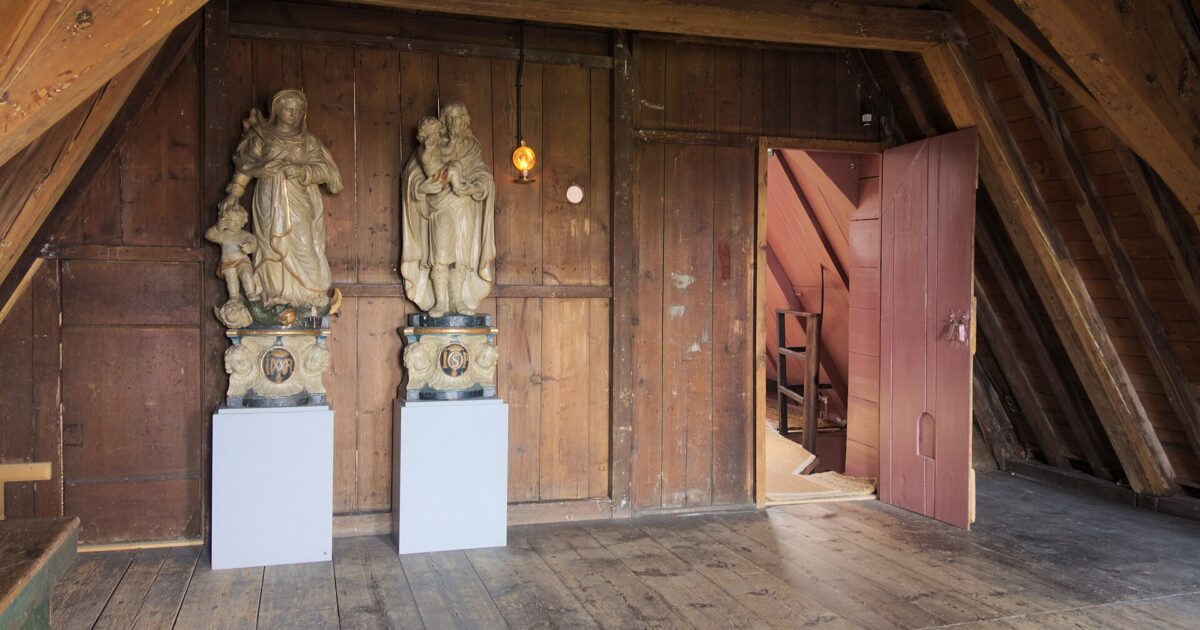
On a canal in the middle of the red light district there is a narrow merchant’s house that looks like every other narrow merchant’s house on the street. You go in, climb through a seventeenth-century home — kitchen, parlour, box beds, a confessional the size of a wardrobe — up a series of increasingly steep staircases, and emerge into a full baroque church with a marble altar, an organ and galleries, holding a hundred and fifty people, built inside the roof space of three houses joined together. Nothing about the outside suggests it is there. That was the entire point.
Our Lord in the Attic Amsterdam is the survivor of a system, not a one-off eccentricity. After 1578 this was officially a Protestant city, Catholic worship was banned in public, and roughly a third of the population was Catholic. The solution Amsterdam arrived at was characteristic: the law said no, the authorities agreed not to look, and worship carried on behind unmarked doors as long as nobody made a fuss about it. Dozens of these clandestine churches existed. Two of the best are a fifteen-minute walk apart, one costs €18 and one is free, and together they explain more about how this city actually works than any museum on Museumplein.
Both places at a glance
Checked September 2026 against the museum’s own site and the Begijnhof’s.
| Our Lord in the Attic | The Begijnhof | |
|---|---|---|
| Adult ticket | €18 | Free |
| Museumkaart | Free entry, still reserve a slot | Not applicable |
| Opening hours | Daily 10:00–18:00 | Daily, roughly 10:00–18:00 |
| Closed | 25 December and 27 April | 27 April |
| Address | Oudezijds Voorburgwal 38 | Off Spui, in the centre |
| Time needed | 60–90 minutes | 15–25 minutes |
| Booking | Not compulsory, but advised | None, and no groups |
| Audio guide | Included | None — read the plaques |
| Accessibility | Very limited; historic stairs | Level, cobbled courtyard |
| Noise | Normal museum | People live here — keep quiet |
Why Amsterdam has hidden churches at all
In 1578 Amsterdam changed sides. The city had held out for the Spanish and Catholic cause during the Dutch revolt, and in an event still called the Alteration it switched to the rebel, Protestant camp overnight. The Catholic clergy were expelled, the churches were handed to the Reformed congregation — the Oude Kerk and the Nieuwe Kerk both changed hands then — and public Catholic worship became illegal.
What did not happen was the disappearance of Catholics. They remained a very large minority, along with Lutherans, Mennonites, Remonstrants and a growing Jewish community, and Amsterdam’s response was the one it has applied to awkward questions ever since: a formal prohibition, quietly not enforced, in exchange for discretion. Worship in private was tolerated provided the building did not look like a church from the street, no bells rang and nobody processed outside. Officials were sometimes paid to maintain their lack of curiosity.
The result was a city with dozens of schuilkerken — clandestine churches — hidden in attics, warehouses and behind house fronts, some of them large and expensively fitted out. It is the same instinct that runs through the whole of our Amsterdam culture and history guide, and it is worth understanding before you climb the stairs, because otherwise the attic church looks like an oddity instead of a system.
Our Lord in the Attic
Ons’ Lieve Heer op Solder, to give it its Dutch name, was built between 1661 and 1663 by a merchant called Jan Hartman, who bought a canal house and the two smaller houses behind it and converted the combined upper floors into a church. It served as a working parish church for roughly two centuries. When a new public Catholic church opened nearby in the nineteenth century, a group of Amsterdammers bought the house rather than let it be gutted, and opened it as a museum in 1888 — making it one of the oldest museums in the city, older than almost anything except the Rijksmuseum.
The house first
You do not go straight up. The route takes you through the domestic floors, and this is the part most visitors do not expect to enjoy and then do: a seventeenth-century Amsterdam house preserved to a standard nothing else in the city quite matches, with the front room where business was done, the kitchen with its tiles and pump, the box beds, the sand on the floors. It is the everyday context that the grand canal-house museums, all salons and chandeliers, tend to skip.
Then the church
Up through the attics, and it opens out. Two tiers of galleries, a pink-and-grey marble altar with a large altarpiece, a pulpit that folds away into a column when it is not in use, a small organ, and enough space for around 150 people. The roof timbers are directly overhead. Everything is scaled slightly down, the way a ship’s interior is, and the sense of a full church folded into a roof cavity is the thing people remember.
It is still consecrated and still used occasionally for services and weddings. The audio guide is included, well made and worth taking; it does a good job of explaining the tolerance arrangement rather than presenting the church as a persecution story, which would be a distortion. Allow an hour, ninety minutes if you take the house seriously.
Where it is, which is the strange part
Oudezijds Voorburgwal 38 is in De Wallen, which means you walk to a seventeenth-century clandestine church past window brothels and neon. Visitors find this jarring and it is worth saying plainly: it is not a problem, it is the oldest part of Amsterdam and both things have been on this canal for centuries. Go in the morning, when the district is quiet and largely residential. Our De Wallen guide and our honest red light district guide cover the area without the smirk.
The Oude Kerk, Amsterdam’s oldest building, is three minutes away on the same canal — the church the Catholics lost in 1578, now an art space with its own ticket. Seeing the two within an hour is the whole argument of this page in physical form.
The practical detail
€18 for adults, free on a Museumkaart though you should still reserve a free slot, daily 10:00 to 18:00, closed on Christmas Day and King’s Day. Booking is no longer compulsory but is sensible; the house is small and admission is managed. The one real warning is access: this is a seventeenth-century merchant’s house with steep, narrow, winding original staircases and there is no way to make the climb to the church step-free. If stairs are difficult, ask the museum what is possible before you travel, and see our accessibility guide.
The Begijnhof
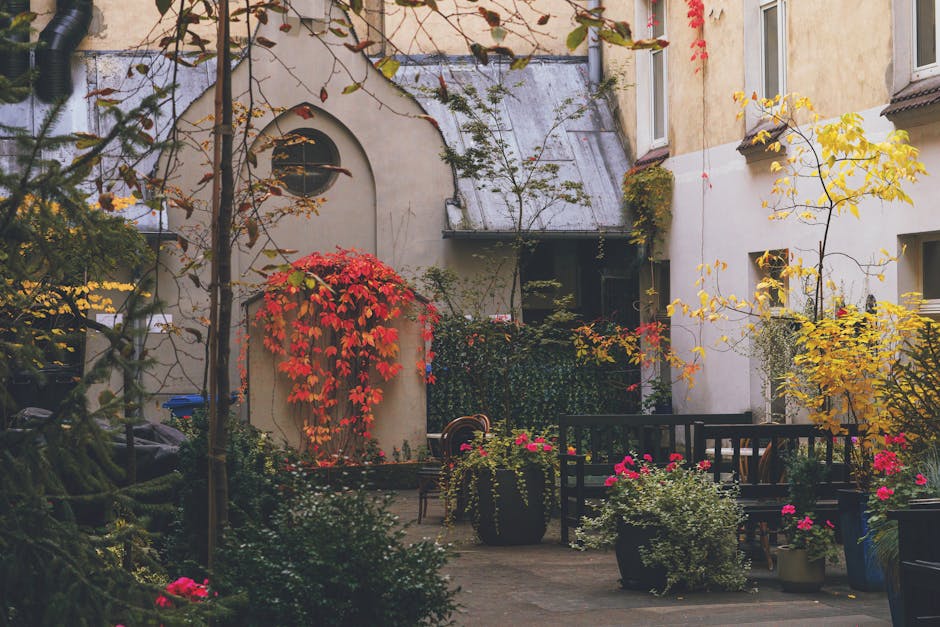
Fifteen minutes west, off the Spui, there is a plain door in a wall. Through it is a walled courtyard of houses around a lawn, with two churches in it, and a silence that is genuinely startling given that Kalverstraat and its crowds are ninety seconds away. Entry is free.
What a beguine was
Beguines were lay religious women — Catholic, devout, living communally and chastely, doing charitable and nursing work, but taking no permanent monastic vows and free to leave and marry. It was a medieval solution to the problem of unmarried women with no wish to be either wives or nuns, and it gave them an unusual degree of independence for the time. The Amsterdam Begijnhof was founded in the fourteenth century, and the last Amsterdam beguine died in 1971. The houses are still lived in, by single women, and that arrangement is not a museum reconstruction.
The Houten Huys
Number 34, the dark timber front, dates from about 1528 and is one of only two surviving medieval wooden houses in Amsterdam — timber construction was progressively banned after the fires of the fifteenth century, and stone replaced it everywhere else. Standing in front of it you are looking at the oldest house front in the city.
Two churches, on opposite sides
The larger church in the middle of the courtyard is the English Reformed Church, a fifteenth-century building that was the beguines’ own until it was confiscated after the Alteration and handed in 1607 to the English-speaking Protestant community — Scottish and English merchants, and Puritan exiles, some of them connected to the group that later sailed for New England. It still holds services in English and is, in its plain way, a working parish church for English-speaking Amsterdam.
Directly opposite it, on the other side of the lawn, is the Begijnhof chapel: another clandestine church, built in 1671 out of two ordinary houses after the beguines lost their own building. From the courtyard it looks like a house front. Inside it is a full Catholic chapel, quietly ornate, usually empty, and it is free. Most visitors photograph the lawn and leave without going in, which is a mistake — it is the second half of the same story you paid €18 for on the other side of town.

How to behave here
This matters more than at any other free attraction in Amsterdam, because people live here and the courtyard is their front garden. Keep your voice low. Do not photograph windows or doorways as though the residents were exhibits. No large groups; guided tours are not permitted inside. Stay on the paths, do not sit on the lawn, and leave by early evening. It takes fifteen or twenty minutes to see properly, and the single most common complaint from residents is noise from visitors who treat it as a photo stop rather than a home.
Three more hidden churches, free and quick
If the idea grips you, three more are within a short walk and cost nothing.
- De Papegaai, officially the Petrus en Pauluskerk, is on Kalverstraat and you will walk past it without noticing: a full church wedged between shopfronts, entered through what looks like a shop door. Stepping off the busiest shopping street in the Netherlands into a silent nave is the best three minutes on Kalverstraat.
- De Krijtberg on Singel is the opposite case: an emphatically visible neo-Gothic Jesuit church of 1883, built once Catholics were finally allowed to look Catholic again. Two spires, a dark rich interior, and a useful full stop to the story — this is what the attic church became when it no longer had to hide.
- The Oude Kerk, from 1306, is the city’s oldest building and its first parish church, now largely an art venue with a paid ticket. Worth it for the vast wooden roof and the floor made entirely of gravestones.
Several more are scattered through the centre, and our hidden gems guide picks up the thread beyond churches.

The other side of the same arrangement
Catholics were not the only group living under this deal, and it is worth knowing what the rest of it looked like, because it changes how you read the attic church. Lutherans, Mennonites and Remonstrants all worshipped under versions of the same rule — permitted in practice, invisible from the street, and taxed in one way or another for the privilege.
The Jewish community got a different deal again, and in one respect a better one. Sephardic Jews arriving from Portugal and Spain, and later Ashkenazi families from central and eastern Europe, were allowed to build synagogues that looked like synagogues. The Portuguese Synagogue of 1675 is a vast brick building that makes no attempt to hide, put up while Catholics a kilometre away were still climbing into an attic to hear mass. The freedom was real but it was not equality: Jews were barred from most guilds, which is a large part of why the community concentrated in trades outside them. Our Jewish Cultural Quarter guide covers that story properly.
Set the three together — a hidden Catholic church in a roof, a hidden Catholic chapel behind a house front in a beguine courtyard, and a monumental synagogue built in the open — and Amsterdam’s famous tolerance stops being a slogan and becomes what it actually was: a series of specific, negotiated, unequal accommodations, arrived at because they were good for trade and because open conflict was bad for it. That is a more interesting thing than the version on the postcards, and you can walk all three in an afternoon.
The same instinct is visible in the city’s later history too, from the nineteenth-century Catholic emancipation that produced De Krijtberg to the twentieth-century policies our laws guide covers. Amsterdam has been managing the gap between what is written down and what is permitted for four and a half centuries, and the attic is where you can see it.
Both in one morning
This is one of the best half-days in central Amsterdam, and almost nobody does it as a set.
- 10:00 — Our Lord in the Attic, first slot. De Wallen is quiet and residential at this hour.
- 11:15 — the Oude Kerk, three minutes away, even if only from outside.
- 11:45 — walk west across the Damrak and past the Royal Palace to Kalverstraat.
- 12:00 — De Papegaai, three minutes, free.
- 12:15 — the Begijnhof, including the chapel opposite the English church.
- 12:45 — lunch on Spui, or carry on to the Nine Streets.
It costs €18 in total, covers four centuries and about a kilometre, and it slots into any of our itineraries — see the three-day itinerary for where it fits best.
Is Our Lord in the Attic worth €18?
Yes, and it is the museum we most often recommend to people who think they have already done Amsterdam. It is not a big-name attraction, it does not appear on most two-day lists, and it is more interesting than several things that do. The combination of an intact seventeenth-century house and a full church in its roof does not exist anywhere else, and €18 is below the going rate for a major Amsterdam museum.
The honest cautions: it is small, so if you need a big day out from a ticket this is not it. The stairs rule it out for some visitors entirely. And on a first two-day trip it competes with the Rijksmuseum and the Anne Frank House, which should come first. On a third or fourth day, or with a Museumkaart in your pocket, it moves close to the top of the list — and the Begijnhof, which costs nothing at all, should be on every itinerary regardless.
Keep Exploring
- Amsterdam attractions and tickets: every current price
- Amsterdam culture and history
- Amsterdam’s history, in order
- The De Wallen neighbourhood guide
- Hidden gems in Amsterdam
- Free things to do in Amsterdam
- The Jewish Cultural Quarter
- An architecture walk through the centre
- The complete Amsterdam museums guide
Frequently asked questions
How much is Our Lord in the Attic Amsterdam?
€18 for adults, and free with a Museumkaart — though Museumkaart holders should still reserve a free timed ticket, because admission to the house is managed.
Do I need to book in advance?
It is no longer compulsory, but the museum advises it and we agree. The house is small, and reserving guarantees you get in on the day you want.
How long does a visit take?
An hour for most people, ninety minutes if you give the domestic rooms the attention they deserve. The audio guide is included and worth the extra time.
Is the Begijnhof free?
Yes, entirely, every day of the year except King’s Day on 27 April. There is no ticket, no reservation and no guided-tour access; you simply walk in through the gate.
Where is the entrance to the Begijnhof?
Off the Spui, through an unmarked-looking archway that thousands of people walk past daily, with a second entrance on Gedempte Begijnensloot. If you cannot find it, you are probably standing next to it.
Can you go inside the churches at the Begijnhof?
Usually yes, and both are worth it. The English Reformed Church is the large one in the middle; the hidden Catholic chapel of 1671 is directly opposite and looks like a house from outside. Both are free, and opening depends on services.
Why were the churches hidden?
Public Catholic worship was banned in Amsterdam after 1578. Private worship was tolerated as long as the building did not look like a church from the street, so congregations built full churches inside attics and behind house fronts. Dozens existed.
Is Our Lord in the Attic suitable for children?
From about eight upwards. The staircases, the box beds and the idea of a church hidden in a roof tend to land well; younger children will find the domestic rooms slow. Our Amsterdam with kids guide has better options for under-sevens.
Is it wheelchair accessible?
Largely not. The route runs on original seventeenth-century staircases that are steep and narrow, and the church itself sits at the top of the house. Contact the museum before travelling to find out what parts you can see.
Is the red light district location a problem?
No. The museum is on a working canal in the oldest part of the city and both things have coexisted here for centuries. Visit in the morning if you would rather see the district quiet.
What is the oldest house in Amsterdam?
The Houten Huys at Begijnhof 34, from about 1528, one of only two surviving medieval timber houses in the city. It is in the courtyard, on your left as you come in from Spui.
Are there other hidden churches to visit?
Yes. The Begijnhof chapel of 1671 and De Papegaai on Kalverstraat are both free and both effectively invisible from outside. De Krijtberg on Singel shows what Catholic Amsterdam built once it was allowed to be seen.
Both of these sit near the top of our guide to unusual things to do in Amsterdam, which strings them into a day with the Oude Kerk, the Jordaan hofjes and the shipyard across the water.