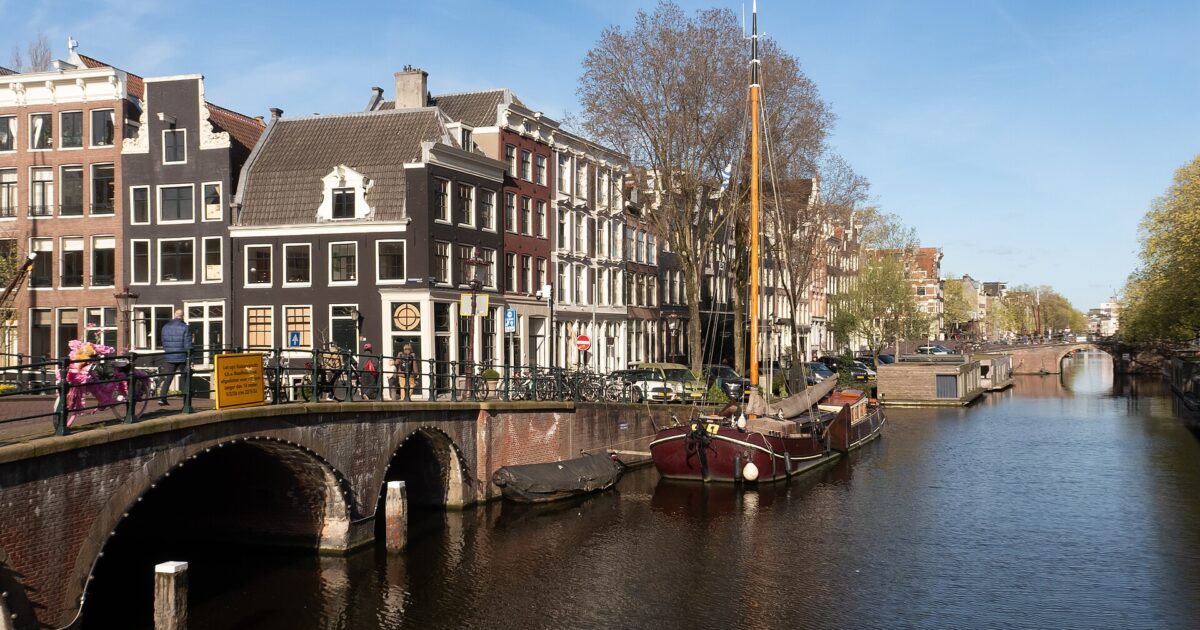
This is a page of numbers rather than adjectives. Is Amsterdam expensive? Yes — it sits in the upper tier of European city breaks, alongside Paris, London and Copenhagen, and comfortably above Berlin, Lisbon, Kraków or Budapest. But “expensive” is a useless word without a total, so what follows is a realistic daily figure at three budget levels, an itemised list of what each thing actually costs in 2026, and the five decisions that move the total more than everything else combined.
Amsterdam’s cost problem is concentrated almost entirely in one line. The bed. Hotels average roughly €160 a night in 2026 and often top €300 in high season, and the tourist tax (12.5% of the room price excluding VAT) gets added on top of the rate you were quoted. Everything else — transport, museums, food, drink — is either normal for Western Europe or, in the case of public transport, unusually good value. Fix the accommodation decision and Amsterdam stops being an expensive city. Leave it unexamined and no amount of eating frites will rescue the budget.
| Style of trip | Per person, per day | What that buys |
|---|---|---|
| Budget | Roughly €120 | Hostel or outer-neighbourhood bed, street food and markets, walking, one museum |
| Mid-range | Roughly €220 | Three-star hotel, one sit-down meal a day, two museums, tram travel, a cruise |
| Luxury | €500+ | Four- or five-star canal hotel, restaurant dining, taxis, private tours |
Those figures include accommodation. Strip the bed out and a careful day in Amsterdam — transport, one museum, two meals and a beer — costs a fraction of the total, which tells you where the problem is.
Accommodation: the line that decides everything
Amsterdam hotel rates average roughly €160 a night in 2026 and often top €300 between May and September and during major events. That average conceals a wide spread: a central canal-house room in July is a different product from a February room in Oost, and the gap between them is larger here than in most cities because the supply of central rooms is physically capped by a seventeenth-century street plan.
Three things are worth knowing before you book. First, the tourist tax is at a record high in 2026 and is charged as a percentage on top of the room rate, so a “€200 a night” booking is not a €200 a night booking — check what the property states at the point of booking rather than assuming. Second, accommodation VAT rose, and that has fed through to headline rates rather than being absorbed. Third, the seasonal swing is enormous: our hotel prices by month page tracks it, and the difference between a February Tuesday and an August Saturday can be a factor of two or more for the identical room.
The practical options, roughly in order of how much they save you: a hostel dorm; a hotel in Oost, Noord or Nieuw-West rather than the canal ring; a room in Haarlem, Zaandam or Utrecht and a fifteen-to-thirty-five-minute train each morning; or simply moving the trip to October or February. Our budget hotels under €100, hostels guide and tourist tax and hidden costs pages cover each in detail.
The out-of-town option is the biggest single saving available, and our guide to staying outside Amsterdam compares Haarlem, Utrecht and Zaandam on price, journey time and what you give up.
Transport: the cheapest thing in the city
This is where Amsterdam is genuinely good value, and it surprises people arriving from London or Paris. OVpay contactless is the default — tap your bank card or phone on any tram, bus, metro or GVB ferry — and an individual ride runs roughly €1.50–3. The ferries from behind Centraal to Noord are completely free, all day, every day, and they are one of the better twenty minutes in the city.
- Schiphol to Centraal by train: 15–20 minutes, roughly €6, several per hour, station directly beneath Schiphol Plaza. A taxi for the same journey is €50–65, which is a poor trade unless you are four people with luggage at two in the morning.
- GVB day tickets 2026: €10 for 24 hours, €16 for 48, €21.50 for 72, €27.50 for 96, €34 for 120. Child 4–11 day ticket €5. Validity runs from your first check-in, not from midnight.
- Do the maths before buying one. Pay-as-you-go with a contactless card is capped at €10.50 a day, so a €10 day ticket only wins if you ride several times, and central Amsterdam is walkable enough that most visitors do not take that many trams.
- Bikes: rental is the classic option; OV-fiets, the national station bike, is €4.80 per 24 hours with no subscription fee, though you register for it first.
- Do not drive. Central street parking is expensive by the hour, and a large share of spaces are reserved for permit holders. P+R on the edge of the city is €6 a day off-peak and €13 at peak, but it only works if you travel in on public transport with an accepted ticket and pay for your parking within an hour of the trip back. A bank card or phone will not do, except with OVpay at Sloterdijk.
Our public transport guide, OVpay and OV-chipkaart guide and taxi and Uber costs pages go further, and the free ferry page covers the best-value ride in the city.
Museums and attractions: €20–25, repeatedly
Individually these are normal European prices. The problem is volume — Amsterdam is a museum city, so you pay them three or four times over a short trip, and a couple doing two museums a day for three days spends around €270 on entry alone.
| Attraction | Adult, online |
|---|---|
| Rijksmuseum | €25 |
| Van Gogh Museum | €25 (timed entry, online only) |
| Stedelijk Museum | €22.50 (€32.50 during the Kusama retrospective) |
| Anne Frank House | €16.50 (€7 ages 10–17, €1 under 10) |
| Rembrandt House | €23.50, or €19.50 for a 16:00–18:00 slot |
| Moco Museum | €17.95–€21.95, demand-priced by day and time |
| Heineken Experience | from €24.95 |
| A’DAM Lookout | €16.50 online, +€7.50 for the swing |
| ARTIS zoo | €29.50 for 13+, includes aquarium and planetarium |
| NEMO Science Museum | €21.50 from age 4 |
| STRAAT Museum, NDSM | €21.50 adult, €16.50 student |
The lever here is a pass, and the right one is usually the Museumkaart rather than a tourist card. At €75 a year for adults (€39 up to 18) it covers more than 500 Dutch museums: the Rijksmuseum and Van Gogh alone put you two-thirds of the way there, and a third or fourth major museum clears it. It does not cover the Anne Frank House. The I amsterdam City Card runs €67 for 24 hours, €94 for 48 and €115 for 72, includes public transport and a canal cruise, but does not cover the Anne Frank House and has not covered the Van Gogh Museum since June 2022 — a change that quietly removed most of its value for first-timers. Our city passes compared page runs all four against each other, and the I amsterdam card page tests that one product on its own.
And a great deal here costs nothing at all. The Rijksmuseum gardens are free without a ticket. The Begijnhof is free. The NEMO rooftop square is free and open daily, with one of the best views in the city. Vondelpark, the Noord ferries, the Albert Cuyp and the Bloemenmarkt, the whole canal ring on foot — all free. Our free things to do page is genuinely long.
Food and drink: cheap at the bottom, steep at the top
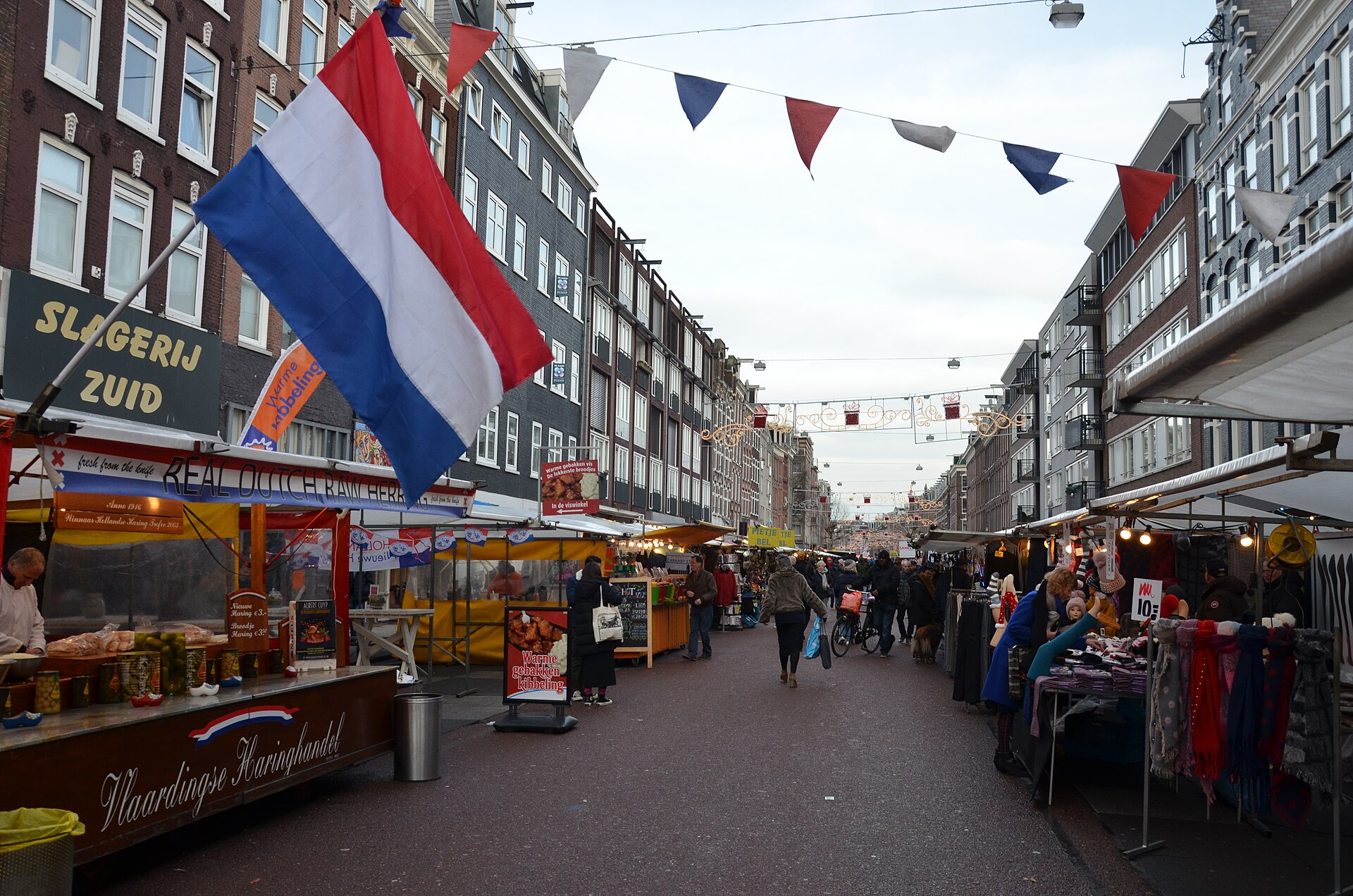
Amsterdam has an unusually wide food price range, and the cheap end is genuinely good rather than merely survivable. Street and market food — frites with sauce, a herring roll from a stall, a fresh stroopwafel, Surinamese roti in De Pijp, a broodje from a bakery — will feed you well for single-figure sums. The Albert Cuyp market and the Foodhallen in Oud-West both do a proper lunch for the price of a sandwich elsewhere.
The top end is where it bites. A mid-range restaurant dinner for two with wine adds up quickly, and the modern bistro scene in De Pijp and Oud-West is priced accordingly. Our consistent verdict across this site is that Amsterdam is not a food destination and you should not budget as though it were: book one rijsttafel, which is the genuinely unmissable meal here and typically feeds two people well for the price of one restaurant dinner, and eat street food, market food and bakery food the rest of the time. See cheap eats, street food, food markets and the rijsttafel guide.
A worked three-day budget for two people
Numbers in the abstract are easy to argue with, so here is a real one: two adults, three nights, October, staying in Oost rather than the canal ring, doing the city properly without being either martyrs or spendthrifts.
- Accommodation, 3 nights: a decent three-star double outside the ring; at around the €160 city average, expect roughly €480, plus tourist tax on top.
- Museums: two Museumkaarten at €75 each = €150, covering the Rijksmuseum, Van Gogh, Stedelijk and Rembrandt House between them, which would otherwise be about €192 for two people across four museums — and the cards keep working for a year.
- Anne Frank House: €33 for two, booked six weeks ahead through annefrank.org.
- Transport: €22 for two Schiphol return train journeys at €5.50 a single, plus pay-as-you-go trams over three days. Walking covers the rest.
- Food: market lunches and casual dinners, plus one rijsttafel for the two of you.
- Canal cruise and drinks: one cruise and a few drinks.
The Museumkaarten, the Anne Frank House tickets and the two Schiphol returns come to €205 for two people, and the Museumkaarten remain valid for a year afterwards. Add roughly €480 for the room and you are at around €685 before trams, food and drinks. The same trip in July, in a central canal-ring hotel where rooms often cost €300 or more, puts the room alone at €900-plus, before eating on Leidseplein and buying individual museum tickets. Our full trip cost breakdown extends this to longer trips and different travel styles.
The five decisions that actually move the total
- When you go. The single largest lever. February and late October cost a fraction of July and April. See our winter guide.
- Where you sleep. Canal ring versus Oost is a large gap; Amsterdam versus Haarlem is a larger one.
- Whether you buy a Museumkaart. Three or four major museums and it has paid for itself.
- Whether you eat sitting down. Market and street food versus restaurants makes a large difference to the daily total.
- Whether you walk. A two-kilometre-wide city rarely justifies a transport pass.
The seasonal lever is large enough to deserve its own page — see Amsterdam in summer versus winter.
Where the money quietly leaks
Beyond the big lines there is a set of small costs that nobody budgets for and that quietly add up over a short trip. None of them is a scandal; all of them are avoidable if you know they are coming.
- Cashless venues. Several major attractions — the Van Gogh Museum and the Rijksmuseum among them — are card-only, and a good many small cafés and coffeeshops are the reverse and take cash only. Carry a little of both. Foreign card surcharges and dynamic currency conversion at payment terminals are the usual leak here: always choose to be charged in euros.
- Disposable transport cards. Buying a single train ticket from a machine adds about €1 for the throwaway card. Tapping OVpay with a contactless bank card or booking online avoids it entirely.
- Bike rental deposits. Rentals typically require a deposit or a card pre-authorisation, and theft or damage charges are not trivial. Bike theft is genuinely common in Amsterdam, so use the supplied lock properly and lock the frame to something fixed.
- Luggage. Left-luggage at Schiphol runs €7 for hand baggage, €9.50 for hold baggage and €12 for oversized items per day, with lockers at €8.50. Central station lockers are convenient and priced accordingly.
- The location premium. Damrak, Leidseplein, Rembrandtplein and the immediate canal frontages charge a straightforward markup for the view. Two streets back is a different price for the same food.
- Tourist tax at checkout. Worth repeating because it catches the most people: it is a percentage on top of the room rate, not a flat fee, so it scales with the room you chose.
Our pages on money, currency and tipping and the scams to avoid cover the rest, including the ticket-resale traps around the Anne Frank House, which sells only through annefrank.org and has publicly flagged lookalike sites selling fakes.
Is it expensive for families?
Less than you would expect, because the Dutch approach to children’s pricing is unusually generous and the best family attractions are not the expensive ones. Under-18s go free at the Rijksmuseum and the Van Gogh Museum, and under-19s at the Stedelijk — although a free ticket still needs to be reserved as a slot at the Van Gogh. The Anne Frank House is €7 for ages 10–17 and €1 for under-10s. ARTIS is free for under-3s and around €25.50 online for children aged 3–12, and its Micropia and Groote Museum are free for children under 12. The Museumkaart for under-18s is €39 rather than €75. The GVB child day ticket, ages 4–11, is €5.
The genuine family costs are accommodation, because family rooms and adjoining doubles carry a premium in a city with a constrained supply of large rooms, and food, because a family of four eating sitting down twice a day will spend heavily. The counterweight is that the best things to do with children here are cheap or free: the Noord ferries cost nothing and are a hit with anyone under ten, the NEMO rooftop square is free and open daily, Vondelpark is free, and the markets are entertainment in themselves. NEMO’s own entry is €21.50 from age four, which is one of the better-value tickets in the city for the three hours it fills. Our Amsterdam with kids and family hotels pages work through the accommodation problem in detail.
How Amsterdam compares with other European cities
Against Berlin, Amsterdam is clearly dearer — Berlin’s accommodation, food and drink are all meaningfully cheaper, and it is the standard comparison for anyone choosing between the two. Against Paris and London, Amsterdam is broadly comparable on accommodation and cheaper on transport, though Paris wins on the sheer volume of free public space. Against Brussels, Amsterdam is dearer on beds and about level on everything else, which is a large part of why a Brussels stopover is such good value on a Benelux route. Against Rotterdam, forty minutes down the line, Amsterdam is more expensive on almost every line item.
The full cost comparison with the obvious cheaper rival is in Amsterdam vs Berlin.
And for the other direction, see Amsterdam vs Paris.
Keep Exploring
- Is Amsterdam Worth It?
- How Many Days Do You Need?
- Trip Cost & Budget Breakdown
- Tourist Tax & Hidden Costs
- Amsterdam City Passes Compared
- Free Things to Do in Amsterdam
- Cheap Eats in Amsterdam
- Budget Hotels Under €100
- The Backpacker Budget
- Hotel Prices by Month
- Money, Currency & Tipping
- Public Transport Guide
Frequently Asked Questions
Is Amsterdam expensive to visit?
Yes, in the upper European tier. Budget roughly €120 per person per day at the careful end, around €220 mid-range and €500 or more at the luxury end, all including accommodation. Hotels average roughly €160 a night in 2026 and often top €300 in high season, with tourist tax added on top.
How much money do I need for 3 days in Amsterdam?
Start with the fixed costs: for two people, Museumkaarten (€150), Anne Frank House tickets (€33) and two Schiphol returns (€22) come to €205; three nights at around the €160 hotel average add roughly €480, so expect about €685 before trams, food and drinks. Stay outside the canal ring in a shoulder-season month, eat mostly market and street food and book one proper meal to keep the rest down. The same three days in July in a central hotel, where rooms often pass €300 a night, with restaurant dinners costs a good deal more.
Is Amsterdam more expensive than Paris?
Broadly comparable on accommodation and restaurants, and cheaper on transport — an Amsterdam tram ride is €1.50–3 and the city is small enough to walk. Paris offers more free public space and a deeper cheap-eating scene, so a careful traveller can go lower there.
What is the cheapest way to visit Amsterdam?
Come in February or late October, sleep in a hostel or in Haarlem, walk everywhere, eat at the Albert Cuyp and the Foodhallen, and buy a Museumkaart if you are doing three or four major museums. That combination keeps a day around the €120 budget mark without feeling like deprivation.
Is the I amsterdam City Card worth it?
Only for a very intensive attraction schedule. At €67 for 24 hours it excludes the Anne Frank House and has excluded the Van Gogh Museum since June 2022, which removes the two things most first-time visitors want. For most people the €75 Museumkaart is the better buy.
How much is a beer in Amsterdam?
Prices vary from bar to bar, so check the menu board before you order. Canalside terraces and Leidseplein charge a location premium; walk two streets back from the water and the price drops noticeably.
Do I need to tip in Amsterdam?
Service is included and tipping is not obligatory. Rounding up, or leaving five to ten per cent for a good sit-down meal, is normal and appreciated rather than expected. Our money and tipping guide covers the conventions in full.
How much is the tourist tax in Amsterdam?
It is at a record high in 2026 and is charged as a percentage on top of your room rate rather than as a flat nightly fee, so it scales with an expensive room. Check what your property states at the point of booking — it is the most common unpleasant surprise at checkout.
Is public transport expensive in Amsterdam?
No — it is one of the better values in the city. Individual rides run €1.50–3 on OVpay contactless, GVB day tickets start at €10 for 24 hours, and the Noord ferries behind Centraal are free. The train from Schiphol to Centraal is around €6 against €50–65 for a taxi.
Photo Credits
- A bridge and canal houses on the Brouwersgracht: Amsterdam, de Brouwersgracht vanaf de brug bij de Keizersgracht met RM2449+50 op de Keizersgracht IMG 0916 2026-04-06 10.00 by Michielverbeek, CC BY 4.0, via Wikimedia Commons.
- Food and clothing stalls at Albert Cuyp: Albert Cuyp markt Amsterdam 2018 2 by Steven Lek, CC BY-SA 4.0, via Wikimedia Commons.