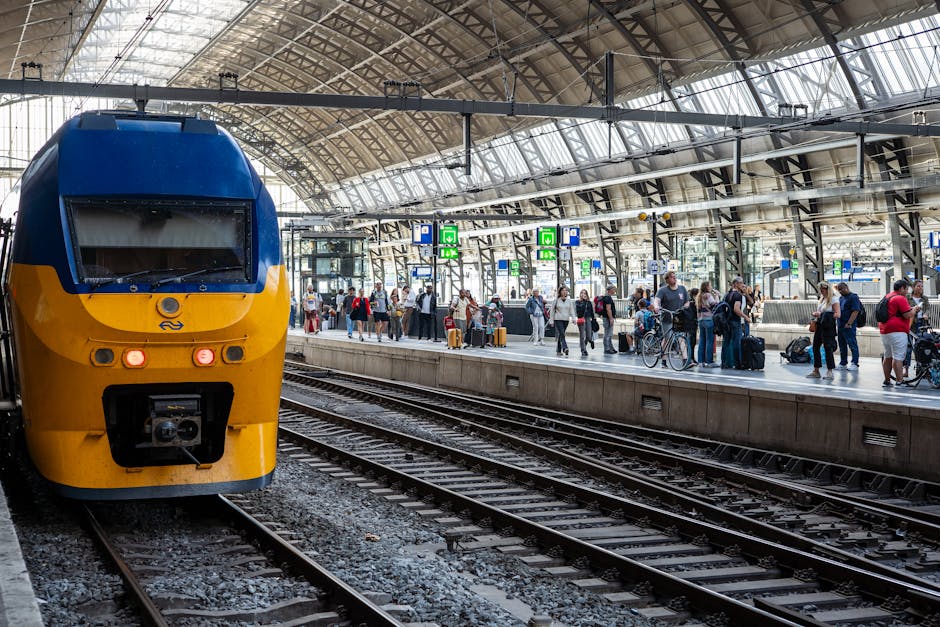
Three cities, two countries, one rail line, and no airport after the one you land at. This Amsterdam Brussels Bruges itinerary is the best-value week in northern Europe, and the reason is boring and structural: Amsterdam to Brussels is 1h52, Brussels to Bruges is under an hour, and neither leg needs a car, a transfer or an early start. You can do the whole thing with a suitcase and no planning beyond one Eurostar booking.
These three places are not equally good, and any itinerary that gives them equal time is wrong. Amsterdam deserves three days. Bruges deserves two and would be ruined by four. Brussels deserves one and a half and is the city everybody underrates and overrates in the same breath — dull to look at in places, superb to eat and drink in, and the cheapest bed of the three. What follows is the route we would actually book, plus a shorter version, a longer one, and the honest verdict on which stops you could drop.
| Day | Where | Sleep | Travel |
|---|---|---|---|
| 1 | Amsterdam — arrive, canal ring on foot | Amsterdam | Schiphol–Centraal, 15–20 min, ~€6 |
| 2 | Amsterdam — Museumplein, two museums | Amsterdam | — |
| 3 | Amsterdam — a market, Noord, the Jordaan | Amsterdam | — |
| 4 | Move to Brussels. Grand-Place, beer, moules | Brussels | Eurostar, 1h52 |
| 5 | Brussels morning, then move to Bruges | Bruges | SNCB, 53–65 min, ~€17 |
| 6 | Bruges — the whole town on foot | Bruges | — |
| 7 | Bruges morning, fly home from Brussels | — | Bruges–Brussels Airport by rail |
Before you start: four decisions
Book the Eurostar and nothing else. The Amsterdam–Brussels leg is the one journey on this route that rewards advance booking. Fares to Paris start from around €35 booked early and Brussels is the shorter leg on the same service; booking opens roughly six months ahead, and Thalys was folded into Eurostar in late 2023 so there is only one operator to look for. There is also the Eurocity Direct from Amsterdam Zuid via Rotterdam and Antwerp — a reasonable fallback if the Eurostar prices have run away.
Do not book anything else in advance. Brussels to Bruges is SNCB Intercity, every 30 to 60 minutes from around six in the morning to eleven at night, about €17 single and €24–28 for a day return. Turn up, buy at a machine, get on. Dutch domestic fares work the same way: fixed, distance-based, no advance-purchase advantage whatsoever, so you can decide each morning and pay the same. Our Netherlands by train page explains the Dutch system.
Book the two Amsterdam museums that need it. The Van Gogh Museum is entirely timed-entry and online-only, with weekend morning slots going three to four weeks out between April and October. The Anne Frank House (€16.50) sells only through annefrank.org, released every Tuesday six weeks ahead, with no walk-ups and no waiting list. Everything else on this route can be improvised. See our booking timeline.
Think about which airport you fly home from. Ending in Bruges and flying from Brussels is the natural shape. Flying back out of Schiphol means an extra long leg on the last day, which is a waste. If the return flight has to be from Amsterdam, run the route in reverse — Bruges first, Amsterdam last — and it works just as well.
Days 1–3: Amsterdam
Three days is the right allocation and it is defensible rather than arbitrary. Amsterdam is roughly two kilometres across in the part you care about, so the days go a long way, but the supply of first-rank sights is finite: three world-class museums, one canal ring, the Anne Frank House and perhaps five neighbourhoods worth an afternoon.
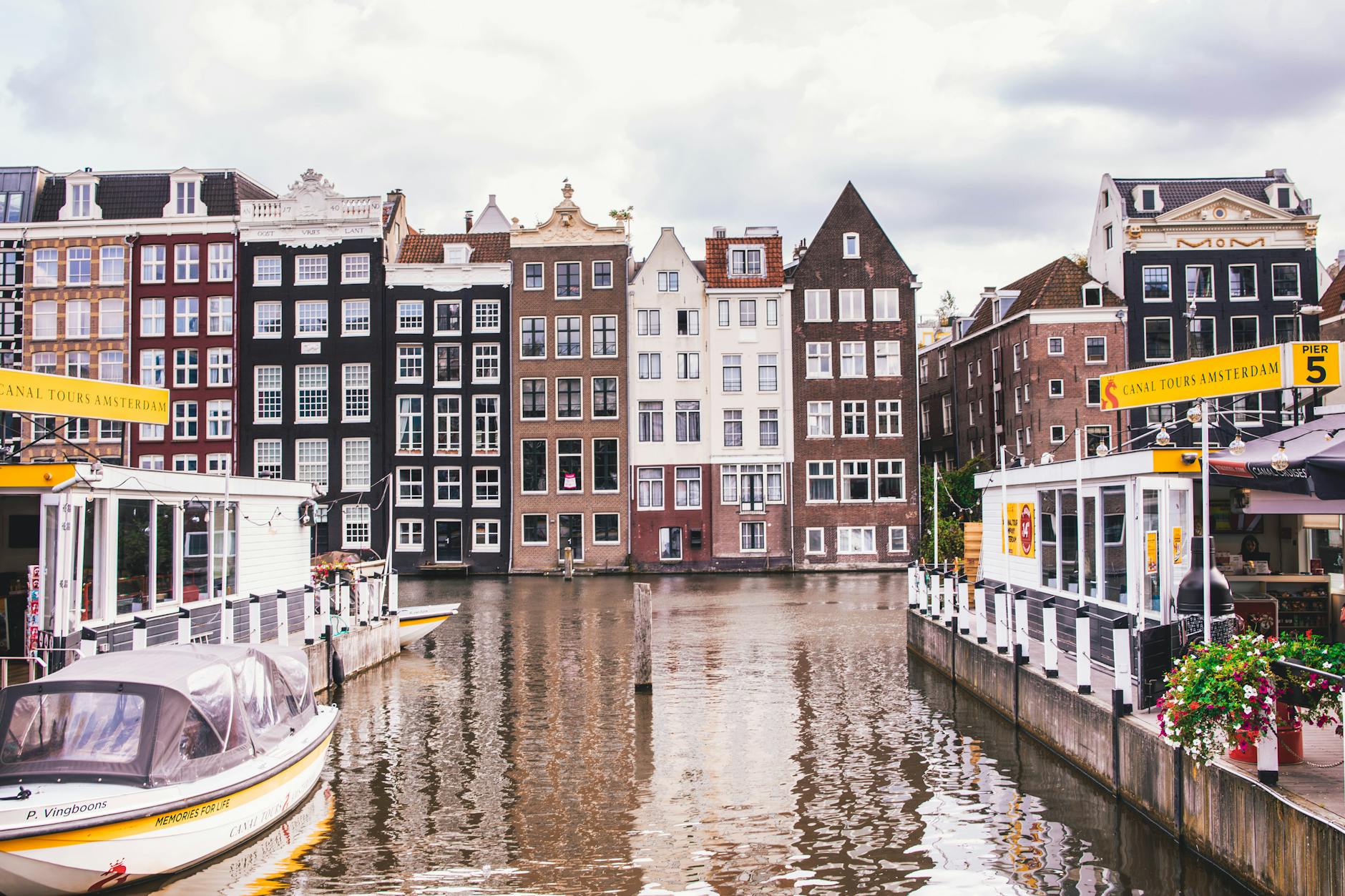
Day one. Come out of Centraal and turn away from Damrak, which is the worst street in the city. Go west into the Jordaan, work down through the canal ring — Herengracht, Keizersgracht, Prinsengracht, dug from 1613 as a single planned expansion and now a UNESCO World Heritage Site — and finish in the Nine Streets. One museum in the late afternoon if the flight was kind to you, dinner somewhere unambitious, an early night.
Day two. Museumplein properly. The Rijksmuseum (€25, daily 09:00–17:00) and the Van Gogh Museum (€25, timed entry) face the same square and are ten minutes apart, so this is a museum day with no travel in it at all. Two is the ceiling — a third is wasted on anyone. If you are staying three days or more, the €75 Museumkaart covers both and 500-plus other Dutch museums, and pays for itself after roughly three to four major museum visits. Our museums guide and passes comparison cover the choices.
Day three. A market — the Albert Cuyp in De Pijp, or the Saturday Noordermarkt in the Jordaan — then the free ferry from behind Centraal to Noord, which takes about four minutes and costs nothing. NDSM has STRAAT (€21.50) in a former welding hall; the A’DAM Lookout is €16.50 with a €7.50 swing over the edge at a hundred metres. Book a rijsttafel for the evening: a dozen or more Indonesian dishes arriving at once, a direct product of colonial history, and the one genuinely unmissable meal in the Netherlands. Our three-day itinerary writes this out hour by hour.
Day 4: move to Brussels
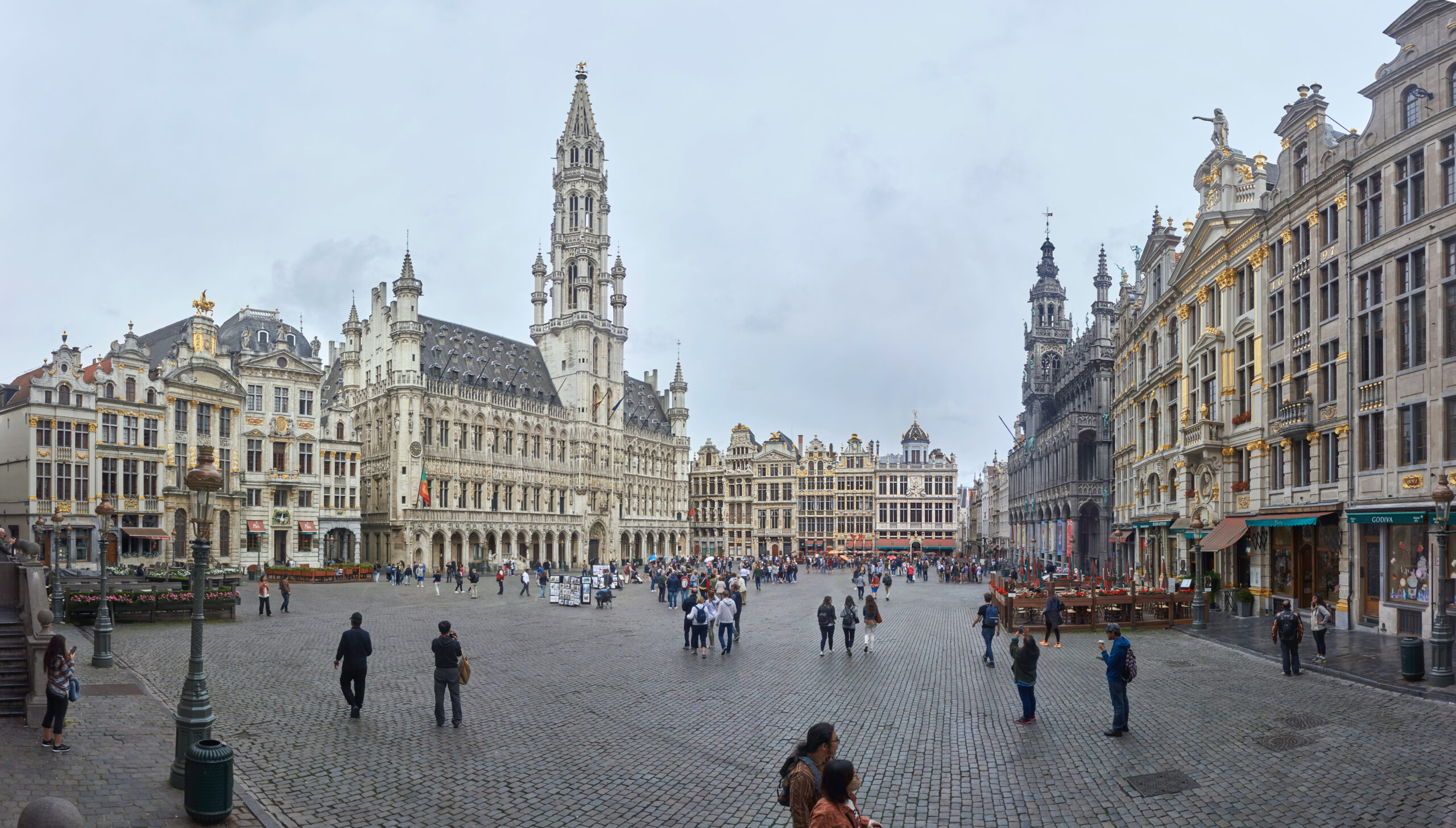
Take a mid-morning Eurostar rather than a dawn one — 1h52, city centre to city centre, arriving at Brussels Midi in time for lunch. Drop the bag and walk to the Grand-Place, which is the single best square in Europe for the fifteen minutes it takes to stop being sceptical about it: the Town Hall spire on one side, the gilded guild houses of the seventeenth-century rebuild on the others, and the whole thing enclosed so completely that you come upon it suddenly from a side street.
Brussels’ honest reputation is that it is administratively dull and architecturally patchy, and that is fair about a great deal of it. What it is genuinely world-class at is eating and drinking. Belgian beer is a serious cultural artefact and the cafés that serve it properly — the right glass, the right temperature, a list running to dozens — have no Dutch equivalent. Moules-frites, carbonnade, waterzooi and the chocolate shops do the rest. Budget your Brussels money for the table rather than the ticket desk.
If you want more structure than that: the Musical Instruments Museum in a genuine Art Nouveau department store, the Magritte Museum, the Comic Strip Centre in a Horta building, and a walk through the Art Nouveau streets of Saint-Gilles and Ixelles. Skip the Atomium unless you are travelling with children, and skip Manneken Pis entirely — it is the most reliably disappointing sight in northern Europe and it is two minutes from the Grand-Place, so you will see it anyway by accident.
If you are weighing which of the two to give more time to, see Amsterdam vs Brussels.
Days 5–6: Bruges
Leave Brussels after a slow morning — the Sablon antiques market if it is a weekend, or the Musical Instruments Museum — and take an early-afternoon train. Brussels Midi to Bruges is 53 to 65 minutes direct, roughly €17 single, every half hour to hour. No booking, no supplement, no thought required.
Bruges is the most photogenic town on this route and the one that most rewards being handled correctly. The correct handling is: stay the night. The whole point of Bruges is the hours when the day-trippers have gone, roughly after six in the evening and before ten in the morning, when the canals go quiet and the whole medieval core becomes what people came to see. Between eleven and five it is extremely busy for its size, and visitors who come in on a day trip from Brussels see only that version and go home unimpressed.
Two full days is right. Day one for the Markt and the Belfry, the Burg, a canal boat, the Groeningemuseum’s Flemish Primitives and an evening walk with no destination. Day two for the Begijnhof and the Minnewater, the almshouses, a brewery, and getting deliberately lost in the northern streets where almost nobody goes. Our Amsterdam to Bruges page covers the day-trip version for anyone who cannot spare the nights.
Day 7: home
Bruges to Brussels Airport is a straightforward rail journey with a change or a direct service depending on the hour, so a midday or afternoon flight is comfortable from a Bruges breakfast. If you are flying from Schiphol instead, the last day becomes a travel day and you should reverse the whole route rather than accept that.
Variants
Five days instead of seven
Cut Brussels to a half day rather than cutting Bruges. Two nights Amsterdam, one Brussels, two Bruges. You will see the Grand-Place, eat one very good Belgian meal, and move on — which is genuinely enough Brussels for a first visit. Do not cut Amsterdam below two full days or the museums stop fitting.
Ten days, adding Ghent and Antwerp
Ghent is the correction to Bruges — a similar medieval core with a working university city around it, far fewer visitors, and better food. It sits directly on the Brussels–Bruges line, so adding two nights costs no extra travel at all. Antwerp adds a genuinely great art city and Rubens, and sits on the Amsterdam–Brussels corridor so it can be a stop rather than a detour.
Adding Paris
Paris is 3h20 from Amsterdam and much less from Brussels, on the same Eurostar network. A ten-day Amsterdam–Brussels–Bruges–Paris run is one of the great European rail trips and involves no aircraft at all between the first and last. Our Amsterdam vs Paris page covers how the two anchor cities differ.
Staying Dutch instead
If Belgium does not appeal, the same week works entirely within the Netherlands: Amsterdam, Utrecht, the Hoge Veluwe, Kinderdijk and Rotterdam, moving base twice. Our seven-day Netherlands itinerary builds that route.
And if the question is which Dutch city to base in, see Amsterdam vs Rotterdam.
What it costs
Accommodation dominates, as always. Amsterdam is the most expensive bed of the three by a clear margin, and the tourist tax is charged as 12.5% of the room price, excluding VAT, on top. Brussels is the cheapest, which is one of the better arguments for giving it a night rather than day-tripping. Bruges sits between them and rises steeply in summer.
- Rail, whole route: depends almost entirely on how early you book the Eurostar. Schiphol–Centraal is about €6; Brussels–Bruges about €17; Bruges–Brussels Airport similar.
- Amsterdam museums: €25 each at the Rijksmuseum and Van Gogh, €16.50 at the Anne Frank House, or a €75 Museumkaart if you will use three.
- Belgium: cheaper on food and drink, comparable on museums, and Brussels is cheaper on beds than either of the other two.
For the Amsterdam side in detail, see our guide to whether Amsterdam is expensive.
Five mistakes people make on this route
Giving all three cities equal time. The commonest error, and the one that produces the flattest week. Two nights each sounds tidy and is wrong in both directions: Amsterdam needs a third day to fit its museums without rushing, and Brussels does not need a second.
Day-tripping to Bruges from Brussels. Superficially sensible, since it is under an hour each way and saves a hotel change. In practice it delivers you into Bruges at the exact hours it is at its worst and takes you out before it becomes what you came for. If the schedule genuinely cannot fit a Bruges night, be honest that you are seeing the day-trip version.
Booking the Dutch trains in advance. There is no advance-purchase discount on NS domestic fares — they are fixed and distance-based — so pre-booking buys you nothing and costs you flexibility. The only leg worth reserving early is the Eurostar to Brussels. NS also raised fares by around 6.5% in the 2025–26 round, so treat any euro figure you read as indicative and check ns.nl.
Leaving the two Amsterdam bookings too late. The Van Gogh Museum’s weekend morning slots go three to four weeks out between April and October, and the Anne Frank House releases every Tuesday six weeks ahead with no walk-ups. Resellers such as Tiqets and GetYourGuide hold separate inventory from the official Van Gogh site, so a sold-out official date is worth re-checking — but no legitimate reseller carries Anne Frank House tickets at all, and the museum has publicly flagged lookalike sites selling fakes.
Building the last day around a long journey. Ending in Bruges and flying from Schiphol turns day seven into four hours of trains. Either fly out of Brussels, or run the route in reverse from the start.
Where to sleep in each city
Because you are moving twice, location matters more than usual: a hotel ten minutes from the station saves you two awkward walks with a bag, and on a seven-day route that is worth paying a little for.
Amsterdam. The instinct is to book inside the canal ring and the instinct is expensive. Central rates are the highest of the three cities, and the tourist tax is charged as 12.5% of the room price, excluding VAT, on top of whatever you paid. Oost, Oud-West and De Pijp are ten or fifteen minutes from the centre by tram, cost meaningfully less, and are better places to eat dinner. Noord is cheaper again and the free ferry from behind Centraal takes about four minutes. Avoid anything on or immediately off Damrak — you will pay a premium for the worst street in the city. Our where to stay guide and budget hotels under €100 break it down by neighbourhood.
Brussels. One night, so stay central and walk. The area around the Grand-Place and Sainte-Catherine puts you within ten minutes of everything you will do in a night and a morning, and Brussels is the cheapest bed on this route so the central premium costs little. Brussels Midi, where the Eurostar arrives, is a functional station in an unlovely district; there is no reason to sleep near it.
Bruges. Stay inside the ring of canals, without exception. The entire argument for giving Bruges two nights is the early mornings and late evenings inside the medieval core, and a hotel out by the station takes that away for a saving that is not worth it. Bruges is small enough that anywhere inside the old town is walking distance from everywhere else.
Practicalities across the border
This is an easy route to run, but a few things differ between the two countries in ways that catch people out.
- Payment. Both countries are heavily cashless, but the Netherlands is stricter about it — a number of Amsterdam venues, including the Rijksmuseum and the Van Gogh Museum, are card-only, while some small Dutch cafés are cash-only in the other direction. Carry a little cash and always choose to be charged in euros rather than accepting a terminal’s currency conversion.
- Language. English is spoken almost universally in the Netherlands and in Flemish Belgium, including Bruges. Brussels is officially bilingual French and Dutch, and English is widely but less uniformly spoken. Nothing on this route requires you to speak anything else.
- Transport payment. In the Netherlands, OVpay contactless works on every tram, bus, metro and GVB ferry — just tap a bank card or phone, at roughly €1.50–3 a ride. Buying a single train ticket from a machine adds about €1 for a disposable card, which tapping avoids. Belgian city transport uses its own systems, but on this route you will barely need them: Bruges is entirely walkable and Brussels’ sights cluster tightly.
- Luggage. All three cities have luggage lockers at the station, which makes the moving days flexible — you can check out, leave the bag, have a final morning, and collect it on the way to the train. In Amsterdam, Schiphol also has staffed storage and automated lockers if you are arriving early or leaving late.
- Border formalities. None. The Netherlands and Belgium are both in the Schengen area and the trains simply run through.
- Weather. Assume rain in all three cities, more or less year-round, and assume wind that makes umbrellas useless. A hooded coat is the local solution. Our packing list covers the rest.
One more scheduling note worth knowing: if this route falls between 26 November 2026 and 17 January 2027, the Amsterdam Light Festival is running, with cruise tickets from about €27.50 and boats departing between 16:30 and 22:00. It is the single best reason to do this itinerary in winter, when beds in all three cities are at their cheapest and Bruges in particular is transformed by having almost nobody in it.
For how much the season changes the Amsterdam leg, see Amsterdam in summer versus winter.
The honest verdict on each stop
Amsterdam is the anchor and earns its three days on museums and the canal ring, not on the reputation it used to have. The party city has been legislated away — pub crawls banned in the old centre, drinking in the public area of the centre forbidden, with nuisance fines starting at €100.
Bruges is worth two nights and would be spoiled by four. It is small, it is beautiful, and the beauty is concentrated enough that a third full day starts to feel like walking the same streets again. Stay the night or do not bother.
Brussels is the one to compress if something has to give, but do not skip it entirely — a night there is cheap, the food and beer are the best on the route, and the Grand-Place justifies the stop on its own. Treat it as a very good dinner with a square attached and you will come away liking it.
Keep Exploring
- Is Amsterdam Worth It?
- Amsterdam to Bruges
- The Netherlands by Train
- Netherlands 7-Day Itinerary
- Three Days in Amsterdam
- Amsterdam vs Paris
- Amsterdam Museums Guide
- What to Book in Advance
- Amsterdam City Passes Compared
- Indonesian Rijsttafel
- How Many Days Do You Need?
- Where to Stay in Amsterdam
Frequently Asked Questions
How many days do you need for Amsterdam, Brussels and Bruges?
Seven works well: three in Amsterdam, one and a half in Brussels, two in Bruges. Five is possible by cutting Brussels to a single night rather than trimming Amsterdam or Bruges, both of which need their full allocation to make sense.
How long is the train from Amsterdam to Brussels?
1h52 on Eurostar, city centre to city centre. Booking opens roughly six months ahead and early fares are much cheaper — this is the one leg of the route worth reserving in advance. The Eurocity Direct from Amsterdam Zuid via Rotterdam and Antwerp is the fallback.
Do you need to book Brussels to Bruges trains in advance?
No. SNCB runs the route every 30 to 60 minutes from around six in the morning until eleven at night, taking 53 to 65 minutes, at about €17 single or €24–28 for a day return. Buy at a machine or in the app on the day.
Is Bruges worth staying overnight or just a day trip?
Stay overnight. Bruges between eleven and five is very busy for its size; before ten and after six it becomes the town people actually travel to see. Day-trippers get only the crowded version, which is why so many come away underwhelmed.
What order should I do Amsterdam, Brussels and Bruges in?
North to south — Amsterdam, Brussels, Bruges — if you are flying home from Brussels, which is the natural shape. Reverse the whole route if your return flight is from Schiphol, rather than adding a long final travel day at the end.
Should I add Ghent or Antwerp?
Ghent, if you have ten days. It has a similar medieval core to Bruges with a working university city around it, far fewer visitors and better food, and it sits directly on the Brussels–Bruges line so it costs no extra travel. Antwerp suits anyone who wants Rubens and a serious art city.
Is a rail pass worth it for this route?
Usually not. The route involves only three or four paid journeys, Dutch fares have no advance-purchase advantage at all, and Belgian intercity fares are low. Book the Eurostar leg early and buy the rest as you go.
Is Brussels worth visiting at all?
Yes, for a night. It is patchy to look at and administratively dull in places, but the Grand-Place is outstanding, it has the cheapest beds on the route, and its beer and food are the best of the three cities by a distance. Compress it, but do not skip it.