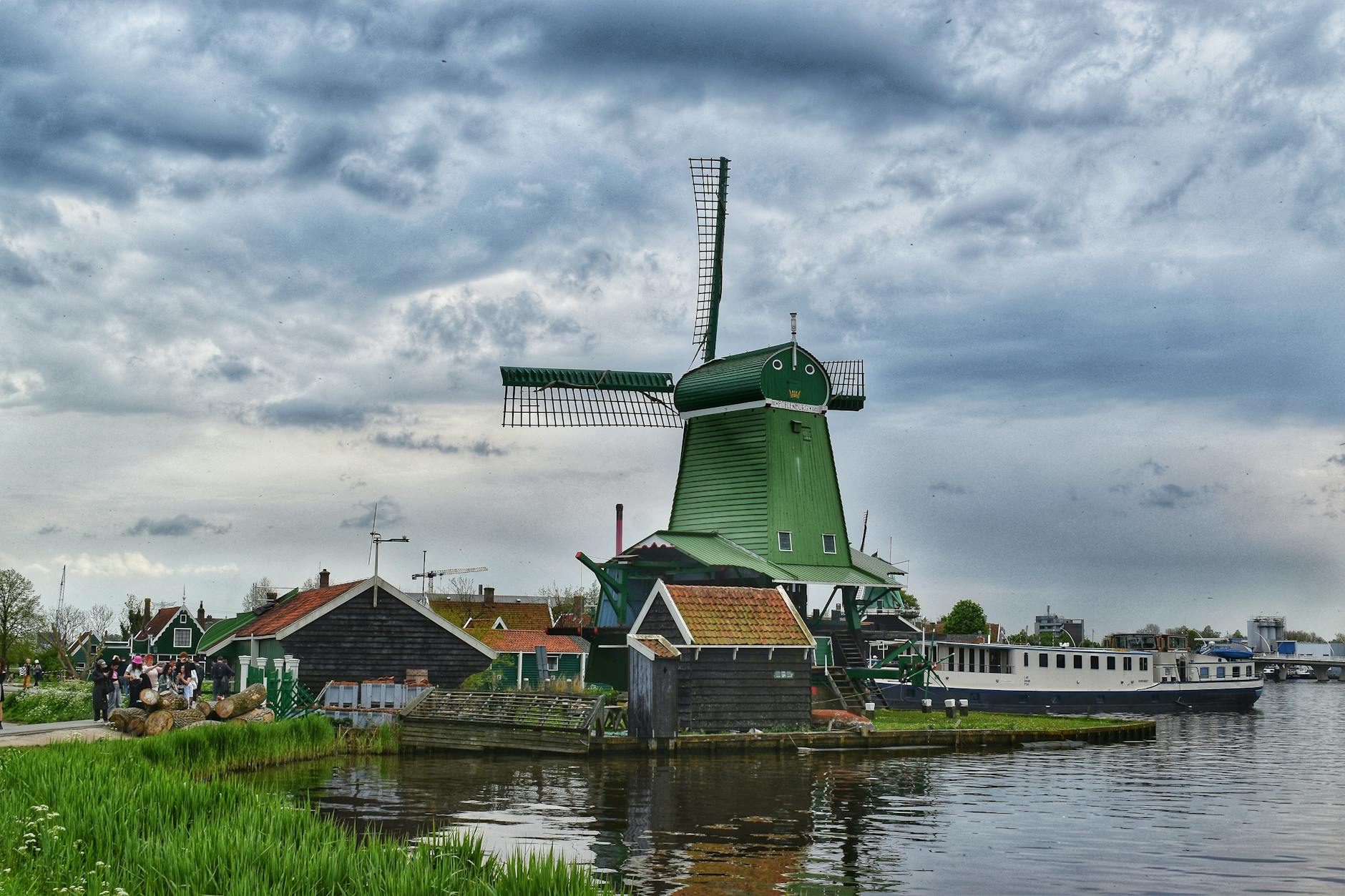
Every morning from about half past eight, a slow convoy of coaches pulls away from the streets behind Centraal Station carrying several thousand people out of Amsterdam for the day. Windmills, tulips, a Belgian medieval city, a village built on peat with canals instead of roads. It is one of the largest tourism operations in the Netherlands and almost nobody arrives having thought about it properly, because the decision is usually made at 22:00 the night before on a phone.
This page is about the tour product itself rather than the destinations — what the operators actually sell, what a seat on a coach costs in 2026, when a guided trip genuinely beats the train, and when you are paying forty euros for someone to accompany you onto a service you could have caught yourself for eleven. If you want to know where to go, our day trips from Amsterdam guide covers the destinations in detail. If you have already picked a destination and you are deciding how to get there, stay here.
Amsterdam day tours at a glance
Indicative 2026 rates per person from the main booking platforms. Everything is demand-priced, so the same seat can move twenty euros between a wet Tuesday in February and a Saturday in tulip season.
| Type | Typical price | Length | Group size |
|---|---|---|---|
| Half-day coach, villages and windmills | €35–55 | 4–5 hours | 40–55 |
| Full-day coach, multiple stops | €55–90 | 8–10 hours | 40–55 |
| Small-group full day | From about €57.50 | 8–9 hours | Max 16–18 |
| Transfer plus entry, no guide | From about €35 | Your call | N/A |
| Two-destination full day | From about €149 | 10–11 hours | Varies |
| Private car and guide | €300+ per group | Your call | Your party |
| Going yourself by train | €5–30 return | Your call | N/A |
The first question: tour or train?
The Netherlands has one of the densest and most reliable rail networks in Europe, and this changes the maths on guided day tours in a way it does not in, say, Ireland or Iceland. Haarlem is fifteen minutes from Centraal. Utrecht is under half an hour. Rotterdam is forty minutes. Delft, Leiden and The Hague are all an easy morning. For those places, a coach tour is buying you commentary and company, not access, and you should be clear that this is what you are paying for.
Where the tour genuinely wins is anywhere awkward to reach on public transport, anywhere with a queue you would otherwise stand in, and anywhere that requires stitching two or three stops together in one day. That is a short and specific list, and it is worth knowing it before you book.
- Take a tour for: Giethoorn, which is genuinely awkward by train and bus; Keukenhof in season, where the coach also solves the entry ticket and the shuttle queue; multi-village routes that chain Zaanse Schans, Edam, Volendam and Marken in one day; and Bruges, where the tour absorbs a long international drive.
- Take the train for: Haarlem, Utrecht, Leiden, Delft, Rotterdam, The Hague, Gouda, Alkmaar. All of them are direct, frequent, cheap and pleasant, and you keep your own timetable.
- Take the bike for: Waterland and the villages just north of the IJ, which are about fifteen minutes of pedalling from the free ferry. Our bike tours guide covers the guided version at around €44.
There is a second, less obvious argument for the coach, and it is honest enough to state plainly: some people simply do not want to navigate. After three days of trams, ticket gates and a language they cannot read, being collected at nine and returned at six with everything handled is a genuine pleasure, and there is nothing wrong with buying it. Just buy it knowingly rather than because the poster in the hotel lobby implied Haarlem was hard to reach.
The routes operators actually sell
Strip away the marketing and there are about six products, sold by a dozen companies under thirty different names.
Windmills and fishing villages
The workhorse of the industry. A coach runs north to Zaanse Schans for the windmills, the clog demonstration and a cheese tasting, then on to Edam, Volendam and Marken for the harbours and the green wooden houses. Half-day versions cut it to two stops and run four to five hours; full-day versions do all four and run eight or more.
Our honest view is that the half-day is the better buy. The full-day version spends a great deal of its time in the coach and in car parks, and Edam and Volendam are close enough in character that doing both is repetitive. If you only want the windmills, the train to Zaandijk Zaanse Schans takes about seventeen minutes and costs a few euros, and you walk over the bridge.
Keukenhof, in season
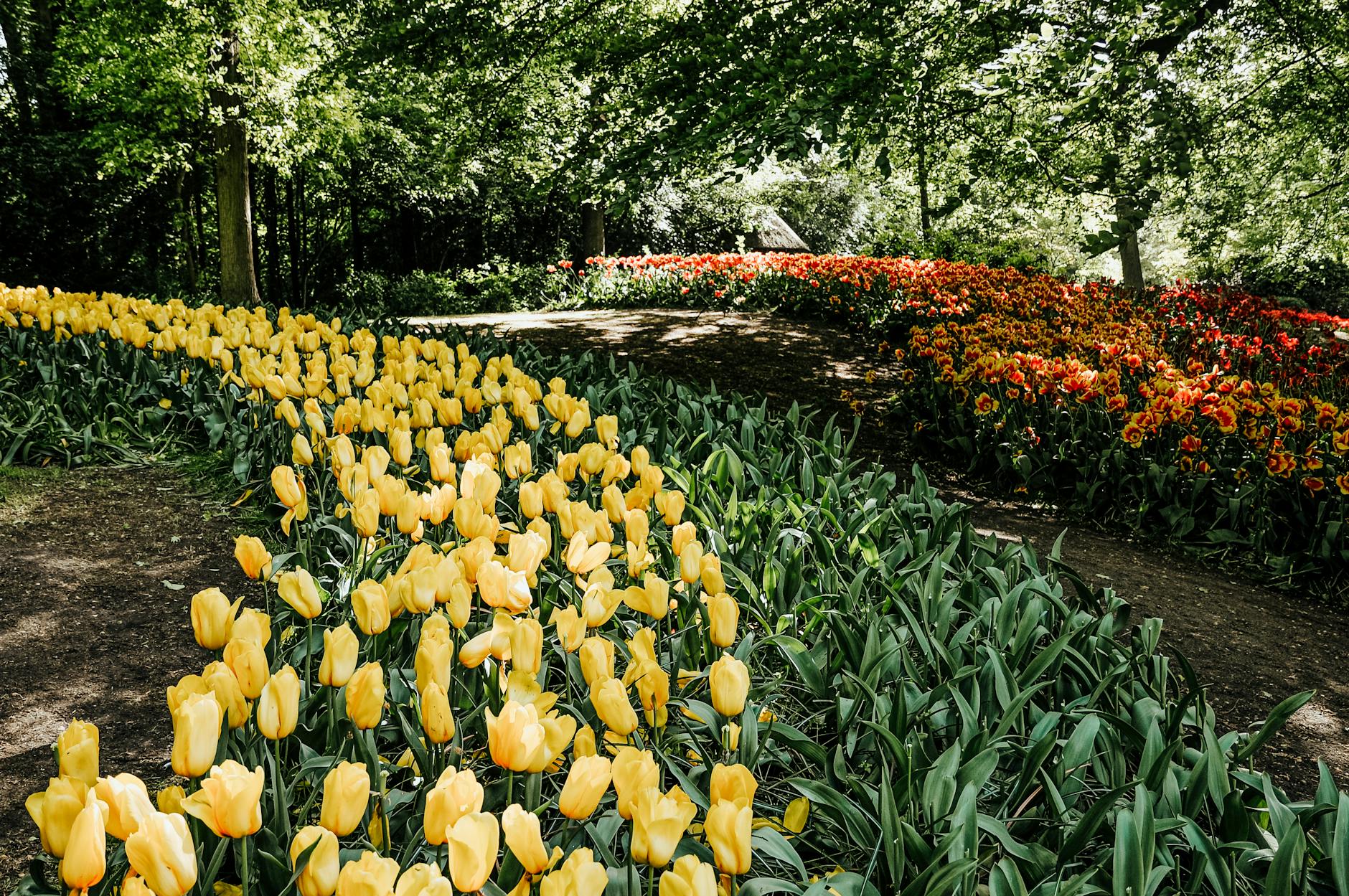
The tulip gardens open for roughly eight weeks from late March, and this is the one destination where the organised option is clearly worth it. Transfer-plus-entry packages start from around €35 with a flexible return, small-group guided full days from about €57.50, and a version combining Keukenhof with Zaanse Schans from about €69.50. Add a tulip-farm stop and it is nearer €87.50.
The reason to take it rather than the public bus is not the guide, it is the ticket. Keukenhof is timed-entry and the shuttle from Schiphol and Leiden gets extremely busy on spring weekends; a package puts you through both problems in one purchase. Our Keukenhof guide covers the gardens themselves, and the tulip season guide explains when the fields outside the gardens actually bloom, which is not the same question.
Giethoorn
The village with canals instead of streets, roughly two hours north-east, and the clearest case for booking a coach. Doing it independently means a train to Steenwijk and then a local bus, which is perfectly possible but eats the day at both ends. Tour versions typically run eight hours or so and include a punt or whisper-boat cruise on the canals. Some operators sell it combined with Keukenhof in one enormous day from about €149; that is eleven hours and two very different places, and we would not.
Read our Giethoorn guide before you commit, because the village is small and gets extremely busy, and the case for going at all is stronger in April or September than in July.
Bruges and Belgium
A long day — usually ten to eleven hours — with three or four hours of driving and four or five hours in the city. It works because the coach turns an international journey into a nap. That said, the train is genuinely good on this route too, and our Bruges day trip guide lays out both. If you are going as a couple and you value the time in the city over the price, go by rail and stay later.
The southern cities
Rotterdam, Delft and The Hague sold as one loop. This is the tour we most often suggest people skip. All three are on the same fast rail line, a day pass is inexpensive, and the coach version gives you about ninety minutes in each, which is not enough for any of them. Go to one properly instead: our Rotterdam and Delft guides make the case for each.

Coach, small group or private
The single biggest determinant of what the day feels like is not the destination, it is how many people are on the vehicle.
The full-size coach carries forty to fifty-five. It is the cheapest per head and it is a perfectly decent way to travel, but the arithmetic of large groups is unforgiving: every stop needs a headcount, every toilet break takes twenty minutes, and boarding a full coach four times in a day costs you the best part of an hour. The commentary is delivered over a microphone and you will hear about a third of it clearly from the back.
Small-group tours cap at sixteen or eighteen in a minibus, cost perhaps twenty to forty per cent more, and are worth it if you can afford it. They move faster, reach places coaches cannot park, and the guide is a person talking to you rather than a voice in a speaker. On a full day the time saved is real — often an extra forty-five minutes at the destinations rather than in the vehicle.
Private tours start around €300 for a group and rise quickly. For four or more people going somewhere awkward, this can work out surprisingly close to four small-group seats while giving you the route and the timings. For two people it is a luxury purchase, and an honest one — it is not better value, it is just better.
What is included, and what is not
This is where the price comparisons go wrong, because two tours advertised at €59 can differ by thirty euros once you are actually there.
- Entry fees. Zaanse Schans is a free open-air site but the individual windmills, the museum and the workshops charge separately. Keukenhof entry is a real cost and should be stated explicitly. If a listing says “entrance fees not included”, assume you will spend another €15 to €25.
- Boat cruises. On Giethoorn tours the canal boat is usually included; on some it is an add-on bought on the day. Check, because it is the entire point of Giethoorn.
- Lunch. Almost never included. Budget €12 to €20 and expect the stop to be somewhere geared to coaches. Bring something if you would rather not.
- Guide versus driver. Cheaper tours are driver-plus-audio, not a guide. Both can be fine, but they are not the same product and the price gap usually reflects exactly this.
- Hotel pick-up. Rare in Amsterdam and usually only on private tours. Almost everything departs from a fixed point in the centre.
- Tips. Not obligatory and not expected in the way they are elsewhere. Our tipping guide covers the Dutch norms; a few euros for a guide who worked hard is generous, not required.
Departure points and timing
Nearly every coach tour leaves from the same handful of places: the streets immediately east and west of Centraal Station, Prins Hendrikkade, Damrak, or occasionally Museumplein. Your confirmation will name a specific corner, and the coach will not wait long. Allow twenty minutes more than you think, because the tram network around Centraal is congested at that hour and the meeting point is often a nondescript kerb without a sign.
Most full-day tours depart between 08:30 and 09:30 and return between 17:00 and 19:00. Half-days go morning or afternoon; the morning slot is better in every season, because the sites are emptier before eleven and the afternoon coach arrives into the busiest part of the day. If you are staying outside the centre, check the first tram or metro of the day against your departure time — our public transport guide has the timings.
One scheduling point worth stating: do not put a day tour on your last day. A coach stuck on the A4 in Friday traffic is a poor place to worry about a flight, and our Schiphol guide already asks you to be at the airport two to three hours before departure.

Season, and the honest bit about weather
A day tour is more weather-exposed than almost anything else you will book here, because most of the value is outdoors. Zaanse Schans in horizontal rain is a windswept car park with windmills in it. Volendam in February is a closed harbour. Giethoorn in a downpour is an hour in an open boat.
This argues for two things. Book flexible, since most platforms allow free cancellation up to 24 hours ahead and the forecast here is reliable at that range. And weight your tours towards the shoulder seasons if you have the choice: April, May and September are the sweet spot, with long days, working attractions and considerably smaller crowds than July. Our weather by month guide has the detail, and the autumn guide makes the case for late September specifically.
In deep winter, many of these tours still run but with much of the point removed — short daylight, closed seasonal attractions, and villages that empty out. Winter is for the city, the museums and the indoor half of Amsterdam, not for a coach to a shuttered fishing harbour.
Booking without overpaying
Amsterdam day tours are sold overwhelmingly through the big platforms, which resell the same handful of operators under different listing names. That means the same coach can appear at three prices, and it means the reviews attached to a listing may describe a slightly different product from the one you are buying.
Three habits are worth having. Read the itinerary rather than the title, because “Zaanse Schans, Edam, Volendam and Marken” and “Zaanse Schans and Volendam” are a four-hour difference. Check the operator name in the small print and search that name, not the listing. And book a week or two ahead in shoulder season, and considerably further ahead for anything in tulip season or on a summer weekend — our what to book in advance guide has the timeline for the whole trip.
Our booking platforms guide compares GetYourGuide, Tiqets and Viator on price, cancellation terms and what happens when a tour is cancelled on you.
Which to book
- One day outside the city, first visit: the half-day windmills and villages coach. Cheap, undemanding, back by mid-afternoon with the evening intact.
- Late March to mid-May: Keukenhof, in whichever package suits — the transfer-and-entry version if you want your own pace, the small-group guided one if you do not.
- You want somewhere genuinely different: Giethoorn, small group, with the boat confirmed as included.
- You are here four days or more: take the train to Haarlem or Utrecht instead and keep the tour budget for something better.
- Four or more people: price a private car and guide before you book four coach seats. It is closer than you expect.
- You dislike being managed: skip the category entirely. Buy a rail day return, take our day trips guide and go.
Keep Exploring
- Amsterdam tours and experiences: the full guide
- Day trips from Amsterdam
- Keukenhof Gardens day trip
- Zaanse Schans windmills
- Giethoorn day trip
- Amsterdam to Bruges
- Haarlem in a day
- Amsterdam bike tours
- Best walking tours in Amsterdam
- What to book in advance
Frequently asked questions
How much do day tours from Amsterdam cost?
Half-day coach tours run roughly €35 to €55, full-day coaches €55 to €90, and small-group full days from about €57.50. Transfer-and-entry packages to Keukenhof start around €35, and private tours from about €300 per group.
Are guided day tours worth it in the Netherlands?
For Giethoorn, Keukenhof in season and multi-village routes, yes. For Haarlem, Utrecht, Delft, Leiden, Rotterdam and The Hague, usually not — all are quick, cheap and direct by train, and a tour buys commentary rather than access.
Do I need to book in advance?
A week or two is enough in shoulder season. In tulip season, on summer weekends and over the Christmas period, book several weeks out. Most platforms allow free cancellation 24 hours ahead, so booking early costs you little.
Where do the tours leave from?
Almost all depart from fixed points around Centraal Station — Prins Hendrikkade, Damrak, or the streets either side of the station — occasionally from Museumplein. Hotel pick-up is rare outside private tours. Allow twenty minutes more than you think for getting there.
Is the half-day or the full-day windmill tour better?
The half-day, for most people. The full-day version adds a lot of coach time and a third and fourth village that feel much like the second. If you want more than four hours out of the city, spend it in one place rather than four.
Are entrance fees included?
Often not. Zaanse Schans is free to walk through but the windmills and workshops charge; Keukenhof entry is a real cost. Read the inclusions line, and assume another €15 to €25 per person if it is silent on the subject.
Is lunch included?
Almost never. There is usually a stop somewhere that caters to coaches, where you should expect to pay €12 to €20 for something unremarkable. Bringing food is entirely normal and nobody will mind.
What happens if it rains?
The tour runs. Most of what you are seeing is outdoors, so a wet day materially damages the experience. Use the free cancellation window — usually 24 hours — and rebook for a better day if your trip allows it.
Can I do Keukenhof independently?
Yes. Buy a timed entry ticket and take the shuttle bus from Schiphol, Leiden or Hoofddorp. It works, but on a spring weekend the queues are substantial, which is why the combined packages from about €35 are genuinely good value.
How long is a full day tour?
Eight to ten hours for most, ten to eleven for Bruges or a two-destination combination. Departures cluster between 08:30 and 09:30 and returns between 17:00 and 19:00. Do not schedule one on a day you are also flying.
Are small-group tours worth the extra?
Usually yes. Sixteen people board four times faster than fifty, a minibus parks closer, and you can hear the guide. The premium is typically twenty to forty per cent and the time it buys back is often forty-five minutes at the destination.
Do tours run in winter?
Many do, with reduced frequency, but a lot of the appeal disappears with the daylight and the seasonal attractions. Between November and February, the city itself is the better use of your time than a coach to a closed harbour.
Can I take a day tour to Belgium or Germany?
Belgium yes — Bruges is the standard product at ten to eleven hours, and Brussels and Antwerp are sold too. Germany is a stretch from Amsterdam for a single day, and Cologne day tours in particular spend more time on the motorway than in the city.