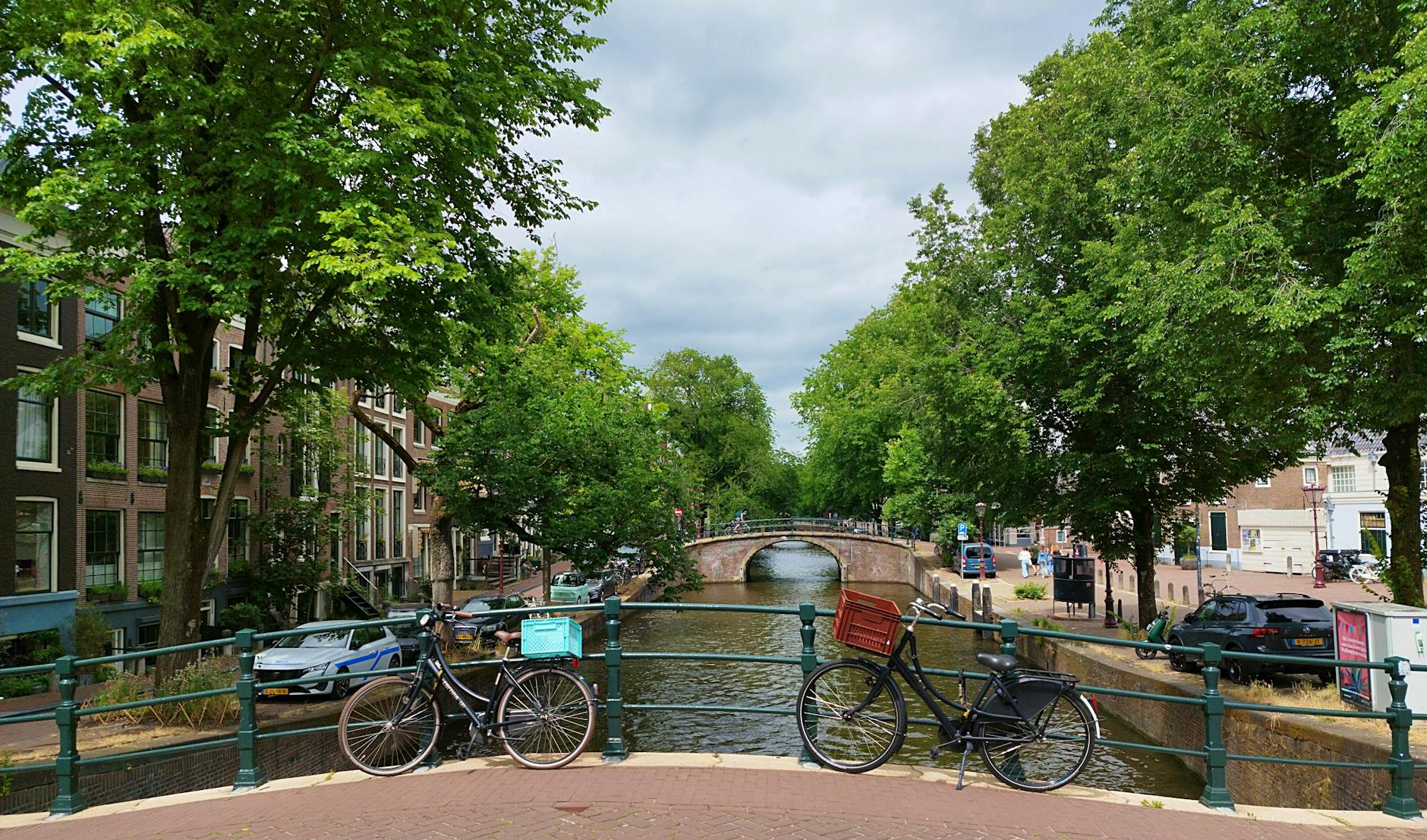
There are more bicycles than people in Amsterdam, the city has spent fifty years building an infrastructure for them that most of the world is still copying, and a guided ride is the obvious way to experience it. It is also the tour category where the marketing and the reality diverge most sharply, because the pictures show a serene couple gliding along a canal and the reality on a Saturday in the centre is a fast, dense, rule-governed traffic system with no patience for hesitation.
So the Amsterdam bike tour verdict up front, and it is a conditional one. If you cycle regularly at home, a guided ride is excellent and covers three times the ground of a walking tour for €25 to €35. If you have not been on a bike in ten years, the city centre is emphatically not where you should relearn, and you should either take the countryside version instead or skip the category entirely. The countryside tours north of the IJ are, for most visitors, the better product anyway: calmer riding, real Dutch landscape, and about €44 for three and a half to four hours.
Bike tours at a glance
Typical 2026 rates. Bike hire is included in all of these; e-bikes usually cost a little more.
| Type | Price | Length | Suits |
|---|---|---|---|
| City tour | €25–35 | 2.5–3 hours | Confident riders |
| Countryside / Waterland | About €44 | 3.5–4 hours | Almost everyone |
| Countryside on e-bikes | €44 and up | About 4 hours | Less confident riders |
| Private guided ride | Quoted per group | Your call | Families, specific needs |
| Self-guided hire | €10–20 a day | Your call | Confident, independent |
First, the honest question: can you cycle?
Not “have you ever ridden a bike” but “are you comfortable riding in traffic, one-handed, signalling, looking over your shoulder, while people overtake you at speed on both sides”. That is what the centre of Amsterdam asks of you.
Dutch cyclists are fast, competent and entirely unsentimental about tourists who wobble. The bike lanes carry commuters going to work, parents with two children on a cargo bike, scooters, and delivery riders, and they all expect you to hold a line and to know the rules. A nervous rider in the middle of that is genuinely unsafe rather than merely embarrassing.
Be honest with yourself about this. The countryside tours exist partly for exactly this reason, and taking one instead is not a downgrade — several people we know who cycle every day at home still prefer the Waterland route because the riding is more pleasant. Our bike rental guide covers going out alone, and our first-time mistakes guide lists cycling overconfidence among the classics.
City tours
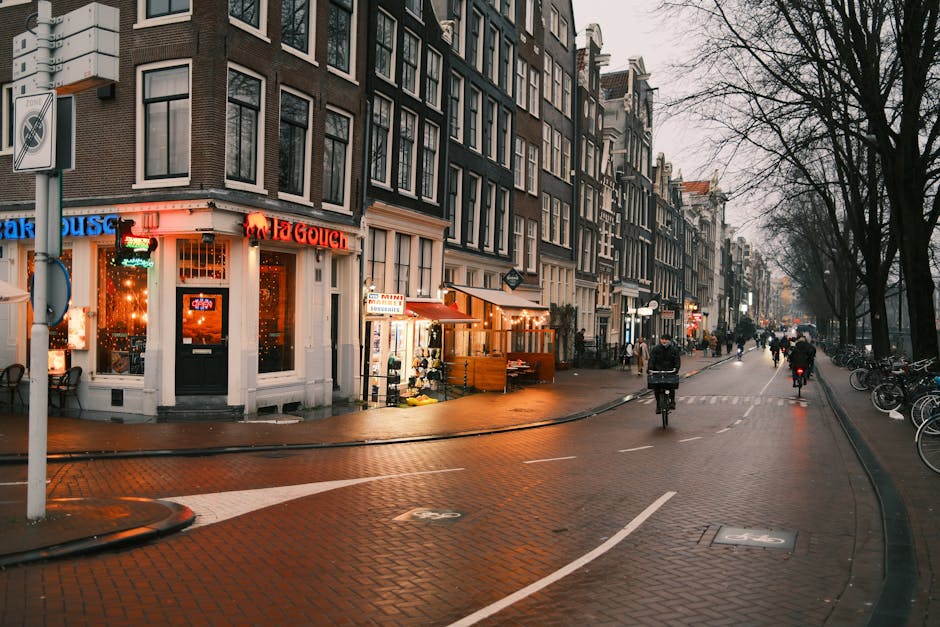
Two and a half to three hours, €25 to €35 with the bike included, groups usually of eight to fifteen. The standard route loops the canal ring, cuts through the Jordaan, runs out to Vondelpark and the museum quarter, and often comes back through the eastern docks or De Pijp.
The case for it is straightforward: you cover three or four times the ground of a walking tour in the same time, you see the parts of the city that are too far apart to walk between, and you are doing the thing Amsterdam is actually famous for. A good guide also takes the junctions for you, calling the group through, which removes most of the stress of riding here for the first time.
The case against is the traffic. In July, in the centre, at midday, a group of twelve tourists on bikes is a slow-moving obstacle in a busy system, and you will feel it. Guides manage this well — they pick quieter parallel routes and time the crossings — but they cannot make the city empty. If you book a city tour, book the earliest departure of the day.
Countryside tours, which are usually better
Cross the IJ on the free ferry and within fifteen minutes of pedalling you are in Waterland: flat green polder, drainage ditches, dikes, sheep, and small villages that look almost exactly as they did two centuries ago. Zunderdorp and Ransdorp are the usual stops, wooden houses and a church tower and not much else, which is the point.
Tours run three and a half to four hours and cost around €44, with morning departures around 09:30 and afternoon ones around 14:30 with the larger operators. The riding is on quiet lanes and dike paths with almost no cars, which means you can look at the landscape instead of at the wheel in front of you. For most visitors this is simply a better experience than dodging trams on Damrak.
It is also the only way most people will see the actual Netherlands on a short trip. The country outside Amsterdam is a completely different place, and forty minutes of pedalling gets you there far more convincingly than a coach to a windmill car park. Our day trips guide covers the alternatives.
E-bikes
Most countryside operators now offer an electric option and it is worth taking if you are at all unsure about the distance or if the group has mixed fitness. Waterland is completely flat, so the motor is not about hills — it is about wind, which is the real terrain of the Netherlands and can be relentless on an exposed dike. An e-bike also keeps a group together, which makes the whole tour more relaxed.
Cheese and clogs: the honest verdict
Many countryside tours include a stop at a farm for a cheese tasting and a clog-making demonstration. This is unashamedly a tourist set-piece and nobody in the Netherlands has worn clogs to work in a very long time.
That said, it is a pleasant twenty minutes, the cheese is real and generally good, the clog demonstration is a genuinely interesting bit of woodworking, and the stop gives you a break and a toilet in the middle of a four-hour ride. Treat it as a rest stop with a gift shop attached and it is fine. Do not book a tour for it — and if you want proper Dutch cheese, our cheese guide will send you somewhere better.

Which one to book
- You cycle regularly and want the city: a city tour, earliest departure, small group.
- You cycle rarely, or at all nervously: the countryside tour, and take the e-bike.
- You have children: countryside, and check the minimum age and whether child seats or tag-alongs are available. Our Amsterdam with kids guide has the wider picture.
- You have four days or more: countryside, without much hesitation. You will see the city on foot anyway.
- You have two days: probably neither. A walking tour and a canal cruise are the better use of a short trip.
- You want the ride, not the guide: hire a bike and go out to Waterland yourself. It is well signposted, and our bike rental guide explains hiring and locking properly.
What is included, and what is not
Almost every tour includes the bike, a helmet if you want one, and the guide. Most countryside tours include the ferry crossing, which is free anyway, and any entry fees at the farm stop. Very few include food, so eat first or bring something.
Check three things before booking. Whether the price is for a standard bike or an e-bike, because the gap can be €10 or more. What the group maximum is, since twelve and twenty-five are very different rides. And whether the tour ends where it started — some finish across the water and leave you to make your own way back, which is easy but worth knowing.
Other routes worth knowing about
City and countryside are the two big categories, but a handful of other guided rides exist and one or two are better than either.
North to the shipyard. Over the ferry and east or west along the north bank, taking in the NDSM wharf and the street art, then back past A’DAM Lookout. Short, flat, almost traffic-free, and it shows you the part of Amsterdam that is changing fastest. Our Noord guide covers the ground.
The eastern islands. Java-eiland, KNSM, Borneo and Sporenburg — modern Dutch housing built on old dock land, and some of the most interesting contemporary architecture in Europe. Calm cycling and almost no tourists. Pair it with our architecture guide.
South through the Amstel valley. Out along the river past the Magere Brug and into the countryside the other way, which is greener and has more water than Waterland. Less commonly offered and worth asking about.
Food-and-bike combinations. A ride with tasting stops, usually through De Pijp and the markets. More expensive, and the eating and the cycling both suffer slightly from being combined — our food tour reviews cover the walking versions.
One route we would gently steer you away from is anything marketed as a bike tour of the red light district. It is the wrong vehicle for the subject, the streets there are narrow and crowded, and guided tours along the windows have been banned since 2020 in any case — see our honest guide instead.
Amsterdam cycling rules, briefly
Your guide will cover this, but arriving knowing it makes the first fifteen minutes much less alarming.
- Red asphalt is a bike lane and it is a road. Never stand in one. This is the single biggest source of friction between visitors and locals in this city.
- Ride on the right, overtake on the left, and hold a straight line. Predictability matters more than speed.
- Signal with your arm before every turn, every time. Everyone does it and everyone expects it.
- Do not hold a phone while riding. It is illegal and the fine is substantial.
- Cross tram rails at a right angle. A wheel that drops into a groove will put you on the ground, and this is the most common way visitors are injured on bikes here.
- Lights are compulsory after dark and enforced — white or yellow at the front, red at the back. Check yours before an evening tour finishes late.
- Bells are for communication, not aggression. A short ring means “I am behind you”, and it is not rude.
- Almost nobody wears a helmet and they are not required. Take one if it is offered and you want it; you will look like a tourist, and that is not a real problem.
Our Dutch etiquette guide covers the unwritten half of this, and our laws guide the enforced half.
What to wear and bring
Nothing specialist. Amsterdammers cycle in ordinary clothes, upright, at a moderate pace, and you should too. What matters is a windproof layer with a hood, because you will be exposed for three hours and the wind off the polder is the real weather here — our packing list covers it. Gloves from October to April. Something that will not catch in a chain. A bottle of water, since countryside stops are sparse.
Bikes here are almost all upright roadsters with back-pedal brakes, which surprise people who have only ridden bikes with hand brakes. Say so at the start if that is unfamiliar; operators can usually supply a hand-brake bike instead, and finding out about the brakes in traffic is a bad way to find out.
Booking, seasons and weather
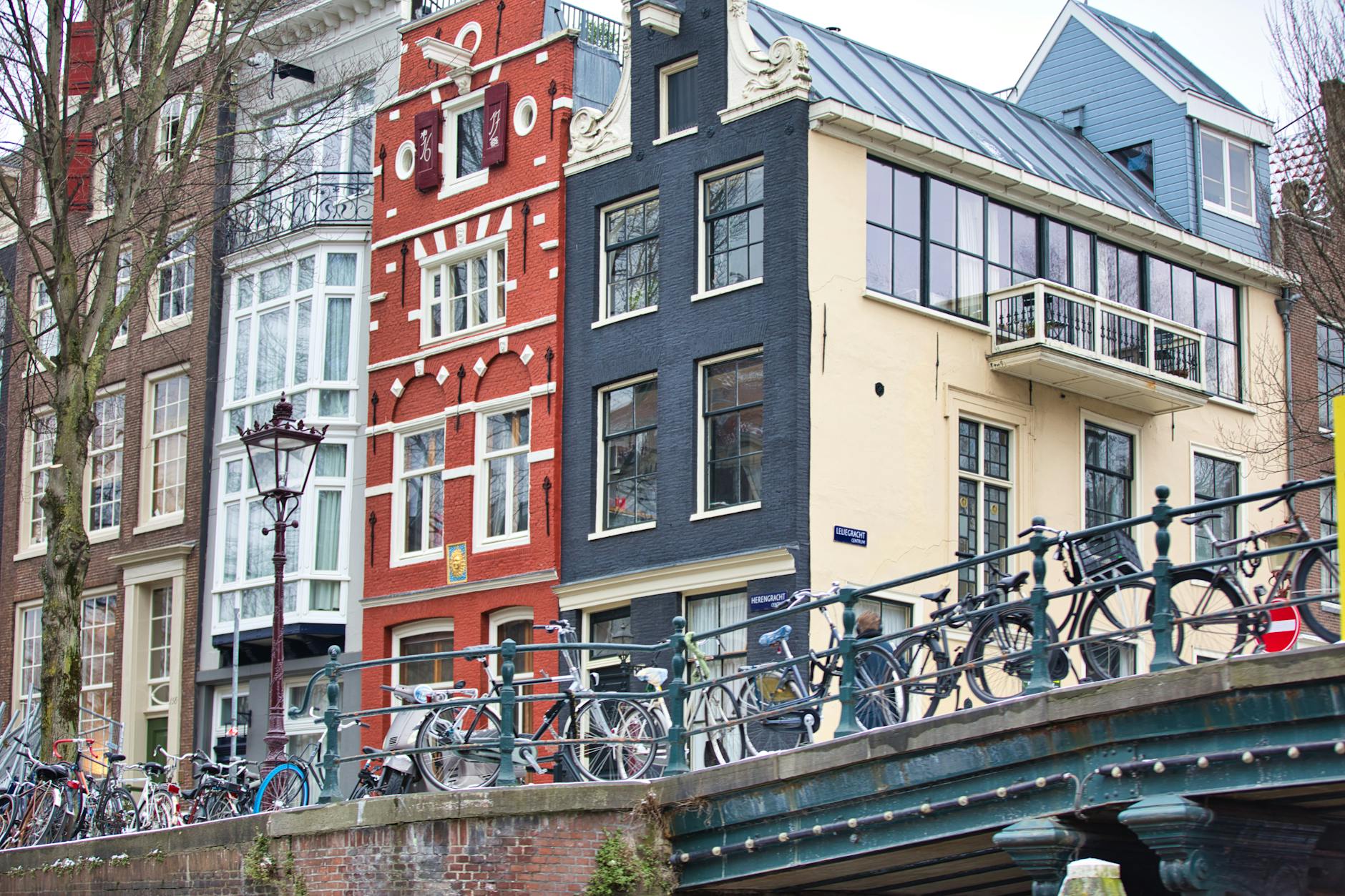
Book a few days ahead in spring and summer, and on the day is often fine in autumn and winter. Tours run all year; winter departures are fewer and colder, and a four-hour dike ride in January is for a specific kind of person.
The best months are May, June and September, when it is warm enough to be comfortable and the tourist load is off the centre. April is beautiful and busy, with the added draw of the bulb fields — our tulip season guide has the dates, and some countryside routes pass flowering fields in season.
Tours generally run in rain. Light rain on a bike in decent clothing is entirely fine and very Dutch. Sustained heavy rain with wind is not, and a good operator will offer to move you rather than sending a group out into it — check the cancellation terms, and read our weather by month guide for what to expect.
Choosing an operator
The listings are hard to tell apart. Four things actually separate them.
- Group size. Twelve people move through Amsterdam traffic; twenty-five do not. If a maximum is not stated, assume the higher number and ask.
- Guide-to-group ratio on the road. The better city operators put a second guide at the back of the group to keep it together at junctions. It sounds like a detail and it is the difference between a calm ride and a stressful one.
- Bike quality and brake type. Back-pedal brakes are standard here and unfamiliar to many visitors. An operator who asks about it when you book is one who has thought about their customers.
- Where it starts. A departure point twenty-five minutes from your hotel eats the beginning of the day. Check the meeting point on a map before you pay, and use our transport guide for a realistic journey time.
Book direct with the operator where possible rather than through a resale platform. The price is usually the same and rescheduling around the weather — which you may well want to do — is far easier with the people who own the bikes.
Is it worth it?
The countryside tour: yes, clearly, for around €44. It gets you out of a crowded city into real Dutch landscape, the riding is genuinely enjoyable rather than merely survivable, and it is the closest thing to a day trip that does not involve a coach. Of everything in our Amsterdam tours guide, it is the one most consistently underrated by visitors.
The city tour: yes if you cycle regularly, no if you do not. At €25 to €35 it is fair value and covers ground efficiently, but it competes with a walking tour that costs half as much and shows you the same centre more slowly and more thoroughly. And if you are not a confident rider, you will spend three hours concentrating on the wheel in front of you and see almost nothing.
Either way, do it early in the day and early in your trip. Amsterdam makes far more sense once you have moved through it at cycling speed, and everything you do afterwards is better for it.
Keep Exploring
- Amsterdam tours and experiences: the full guide
- Renting a bike in Amsterdam
- Best walking tours in Amsterdam
- Rent a boat in Amsterdam
- Day trips from Amsterdam
- The free ferries to Noord
- Dutch customs and etiquette
- Getting around Amsterdam
Frequently asked questions
Is an Amsterdam bike tour worth it?
The countryside version, yes, at around €44 for three and a half to four hours — it is quiet, genuinely scenic and one of the most underrated things on offer. The city version is worth it only if you already cycle regularly.
How much does a bike tour in Amsterdam cost?
City tours run €25 to €35 for two and a half to three hours with the bike included. Countryside tours are around €44 for three and a half to four hours, with e-bikes usually a little more.
Are bike tours safe for beginners?
Countryside tours, yes — quiet lanes, almost no cars, flat. City tours, not really. Central Amsterdam’s bike lanes are fast and busy and are a poor place to relearn a skill you have not used in years.
Do I need to wear a helmet?
No. Helmets are not required in the Netherlands and almost nobody wears one. Operators will supply one on request, and there is no reason not to take it if you want it.
What is Waterland?
The flat polder countryside immediately north of Amsterdam, across the IJ. Dikes, drainage ditches, sheep and small villages such as Zunderdorp and Ransdorp. It is where almost all countryside bike tours go, and it starts about fifteen minutes’ ride from the ferry.
Should I get an e-bike?
If your group has mixed fitness, or if you are unsure about four hours in the saddle, yes. The land is flat, so the motor is really there to deal with the wind, which is constant and can be hard work on an exposed dike.
Are the cheese and clog stops worth it?
As a rest stop with real cheese and an interesting bit of woodworking, yes. As a reason to book the tour, no. Nobody in the Netherlands wears clogs, and better cheese is on sale in the city.
How long are the tours?
City tours are two and a half to three hours. Countryside tours are three and a half to four, usually with morning departures around 09:30 and afternoon ones around 14:30.
Do tours run in winter?
Yes, with fewer departures. Groups are much smaller, which is pleasant, but four hours on an exposed dike in January needs proper clothing and a certain attitude.
Can children come?
On countryside tours generally yes, subject to a minimum age. Check whether child seats, tag-alongs or tandems are available when you book, and pick the countryside route rather than the city one.
What if I cannot ride a bike at all?
Then this is not the tour for you, and Amsterdam is not the city to learn in. Take a walking tour or a boat instead — both show you plenty and neither requires a skill you are acquiring in traffic.
Can I just hire a bike and go alone?
Yes, if you are confident. Hire is €10 to €20 a day, the routes north are well signposted, and bikes travel free on the IJ ferries. Our bike rental guide covers hiring, locking and the theft problem, which is real.