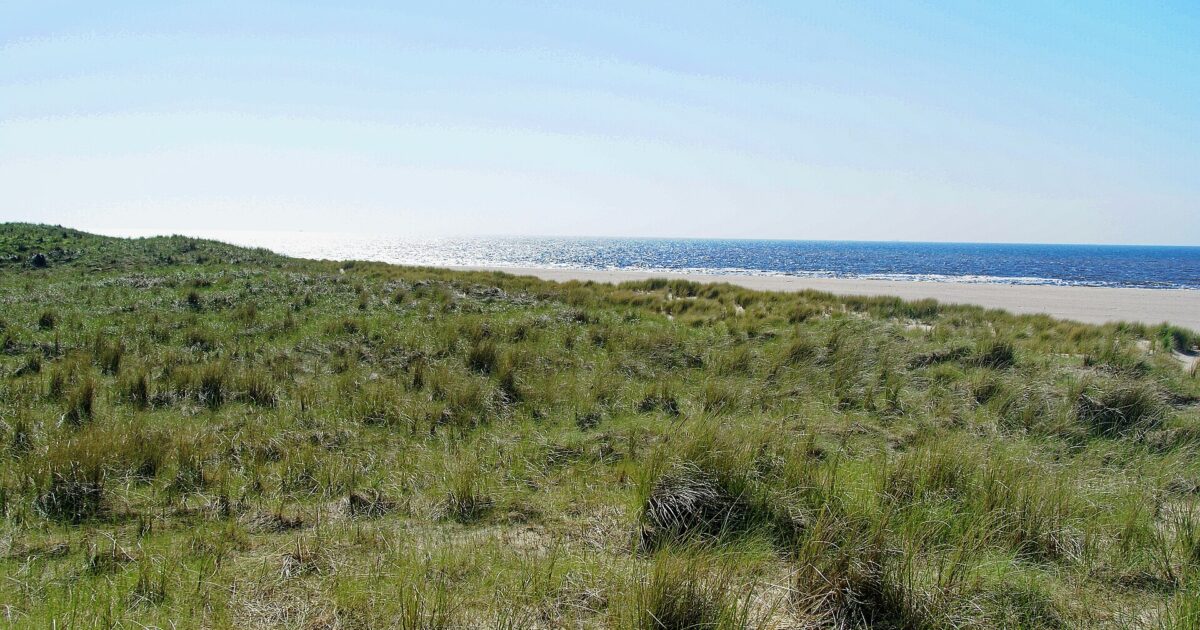
North of the Dutch mainland, a chain of five islands separates the North Sea from the Wadden Sea — the largest unbroken system of intertidal sand and mud flats in the world, and a UNESCO World Heritage Site. This is the emptiest, quietest part of the Netherlands, and almost no short-trip visitor ever sees it. This guide covers Texel and the Wadden Islands: which one to pick, how to get there, what the ferry actually costs, and why a day trip is the wrong way to do it.
One thing first, because it saves people a wasted day. Texel is the only island that works as a day trip from Amsterdam, and even that is a stretch: you take a train to Den Helder, then a ferry of about twenty minutes, so check the NS and TESO timetables before you commit. What you get for that is thirty kilometres of beach, dunes, sheep, seals and a landscape with essentially nothing built on it. That is wonderful if you want space and terrible if you want things to do. This is a two-night destination, and it is at its best in June or September. If you have three days in the Netherlands, do not come here.
| Island | Character | Best for |
|---|---|---|
| Texel | Largest, most accessible, has villages and a proper road network | First visit, families, the only realistic day trip |
| Vlieland | Smallest and most remote. Completely car-free | Silence, and people who want the extreme version |
| Terschelling | Best cycling, best nightlife, hosts the Oerol festival | Younger visitors and long cycling days |
| Ameland | Easy to reach, varied, genuinely beautiful | Families wanting more than Texel |
| Schiermonnikoog | The fifth and least visited | Getting properly away from everything |
Getting to Texel, and what the ferry costs
Texel is reached from Den Helder, at the northern tip of North Holland, on the TESO ferry. The crossing takes about twenty minutes.
The train from Amsterdam Centraal to Den Helder takes roughly an hour and a quarter, and a shuttle bus connects the station to the ferry terminal. Allow around two and a half hours door to door.
TESO prices in returns, not singles, which confuses people expecting to pay twice. For a cyclist or moped rider with their machine, a single return is €6.00. Multiple-return tickets bring that down: five returns for €23.50, fifteen for €65.00, a hundred for €242.00. Children aged 4 to 11 and anyone over 65 pay €6.00 for a single return, €16.00 for five and €45.00 for fifteen. A bicycle or moped travelling without its rider costs €3.00 single, €10.00 for five or €29.00 for fifteen. One rule to note: a multiple-return ticket can be used at most once an hour per cyclist.
We have not verified foot-passenger and car fares from the operator’s own pages, so we will not quote them — check TESO directly before you travel. What we can say with confidence is that this is a cheap crossing by any standard, and that taking a bike across rather than a car is both cheaper and better.
On the island side, Fietsverhuur Veerhaven Texel sits right beside the ferry terminal and rents standard bikes, e-bikes, cargo bikes, scooters and fatbikes. Book ahead in July and August. If you are new to Dutch cycling, our bike rental guide covers the etiquette, which transfers directly — though here you will be sharing the path with almost nobody.
What to do on Texel
Ecomare
The island’s most visited attraction, and deservedly. It is a rescue and rehabilitation centre for seals and porpoises found injured or orphaned along the coast, combined with a museum of the Wadden Sea and the dunes. Adult entry is €17.00 and children aged 4 to 12 are €11.50.
Time your visit around the public seal feedings at 11:00 and 15:30. They draw a crowd, but the animals are close and the staff explain what they are doing rather than performing. If you are travelling with children, this is the fixed point to build the day around.
Two honest notes. It is a working rescue centre, so the animals present vary and some are permanently resident because they cannot be released. And it is popular in a place where nothing else is, so it is the one spot on the island that feels busy.
De Slufter
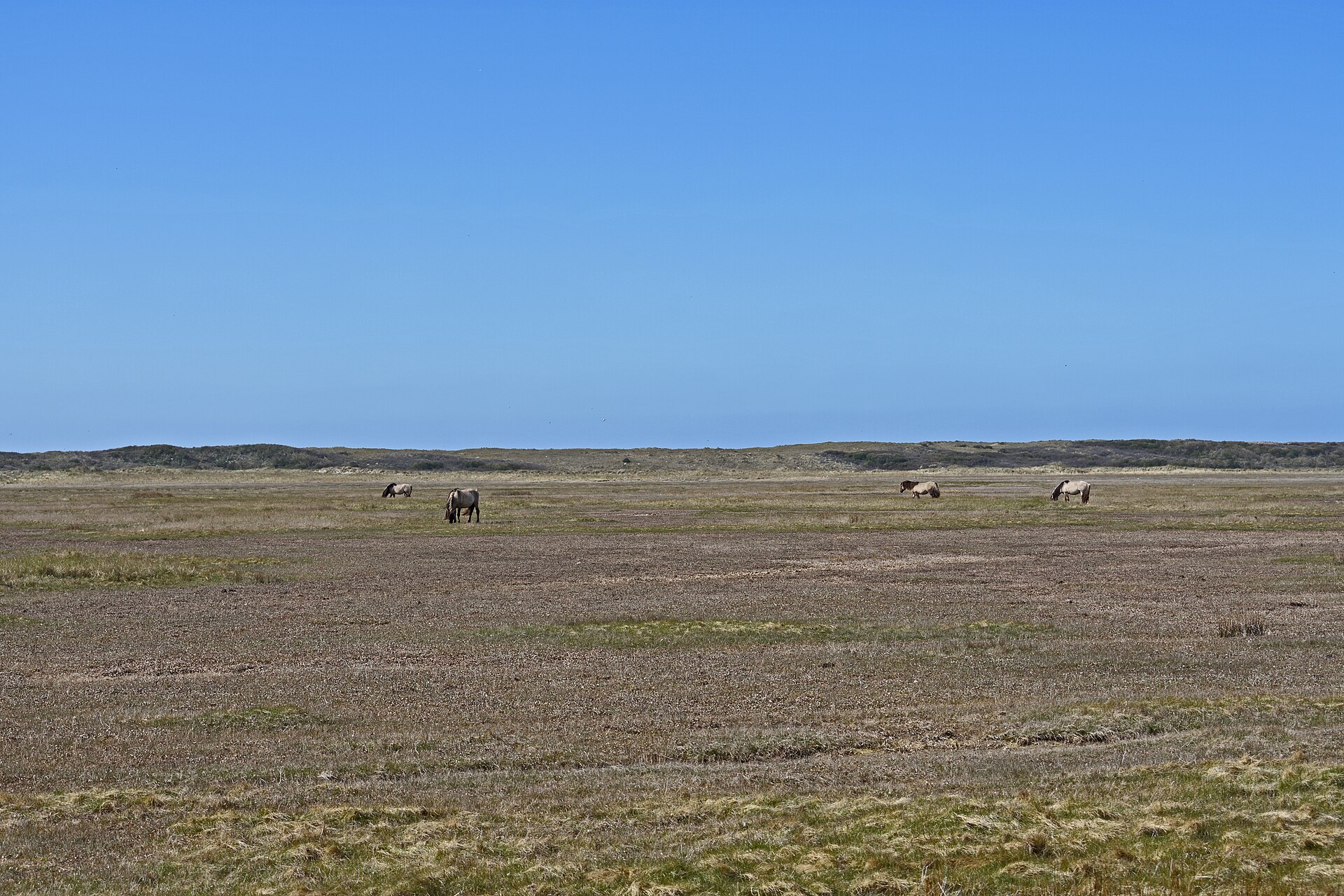
The most dramatic landscape on the island and, for our money, the reason to come. De Slufter is a breach in the dune line where the North Sea floods a valley freely at high tide, creating a salt marsh that is neither land nor sea. Konik horses and sheep graze it. In late summer the sea lavender turns the whole basin pale purple, which is one of the more extraordinary sights in a country not otherwise known for them.
You walk in on marked paths from the dune ridge. Check the tide before you go — the point of the place is that it floods, and the paths do too. Bring binoculars if you have them; this is a serious birding site.
The beach, which is most of the point
Thirty kilometres of it, numbered by paal — the marker posts that run along the entire Dutch coast. Texel locals give directions by paal number and so should you. The beach pavilions cluster near the access points; between them there is nothing at all, which on a September weekday means a kilometre of sand entirely to yourself.
The North Sea is cold. It is swimmable in July and August if you commit, and bracing rather than pleasant either side of that. There are lifeguarded sections in season and long stretches that are not — pay attention to the flags, because the currents here are real.
The villages
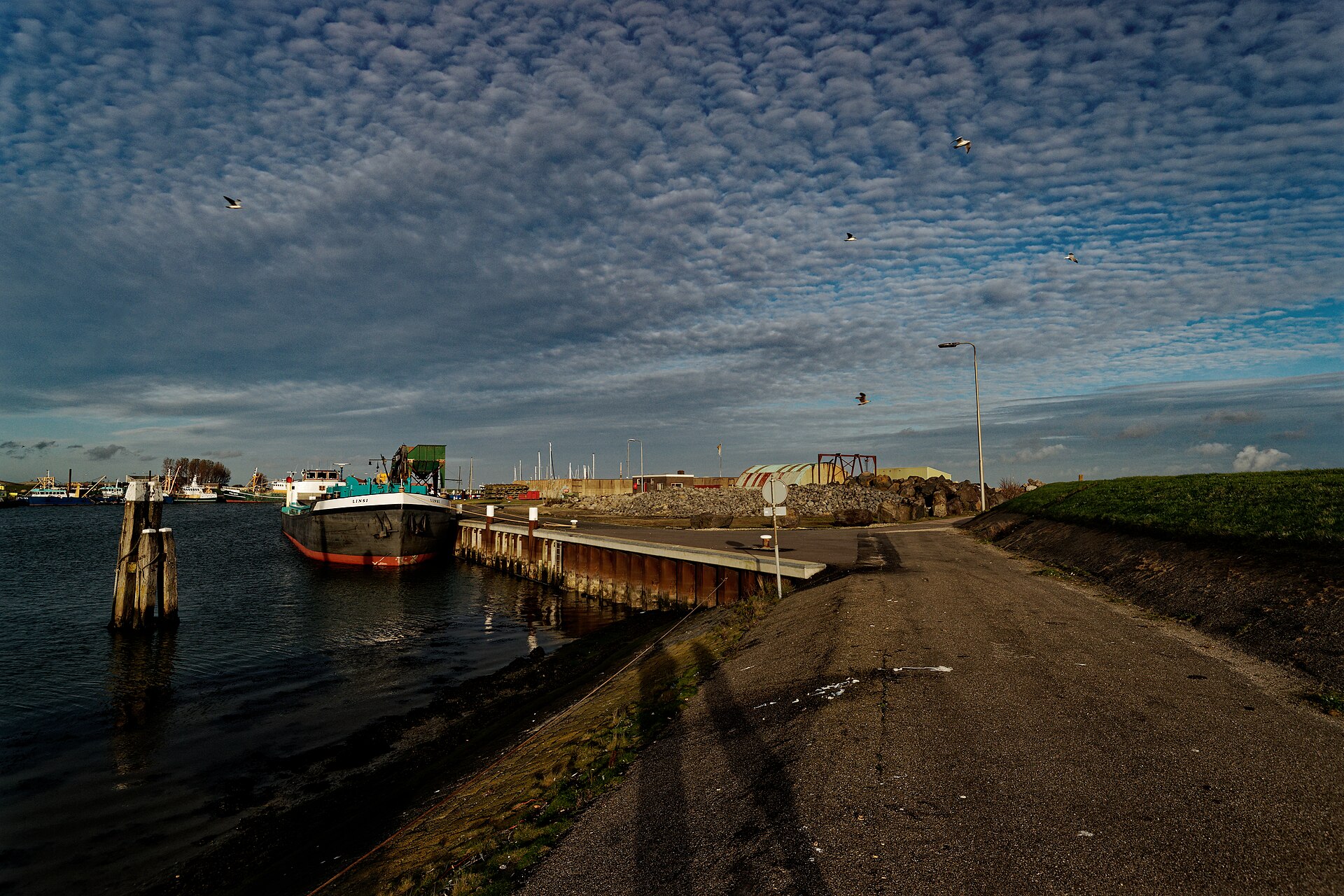
Den Burg is the main town and where the shops and the supermarket are. Oudeschild has the harbour, the fishing fleet and the maritime museum. De Koog is the island’s main beach resort and its busiest village, pleasant enough. Den Hoorn and Oosterend are small, old and worth the cycle for their own sake.
Texel lamb, and the food question
There are more sheep than people on Texel and the lamb is a genuine local speciality with a protected designation. The island also produces its own beer and a small amount of wine, and the fishing fleet at Oudeschild lands what ends up on the plates. Eating well here is straightforward in a way it is not on many small islands. Our guide to must-try Dutch foods covers the mainland canon for contrast.
The other four islands
Texel is the accessible one. The other four are reached from ports further east along the Frisian coast, all take longer, and all are more committing. They are also, in different ways, better.
Vlieland is the smallest and most remote, and it is completely car-free — visitors cannot bring a vehicle at all. One village, one road, dunes and beach for the rest. It is the purest version of a Wadden island and it is unapologetically about doing nothing.
Terschelling has the best cycling of the five, a genuine nightlife scene by island standards, and hosts Oerol — a ten-day outdoor theatre and arts festival in June that takes over the whole island and is one of the more remarkable cultural events in the Netherlands. Book accommodation a very long way ahead for that, or avoid it entirely.
Ameland is the family choice: easy enough to reach, varied landscape, four villages, and genuinely beautiful. If Texel feels too developed and Vlieland too austere, this is the middle.
Schiermonnikoog is largely national park and very quiet, the place to go if the goal is to see nobody.
The Wadden Sea, and why it is protected
The water between the islands and the mainland is not a bay or a strait. It is a tidal flat system — the largest unbroken one in the world — stretching from the northern Netherlands along the German coast to Denmark, and it was inscribed as a UNESCO World Heritage Site for reasons that are ecological rather than scenic.
Twice a day the tide drains most of it, exposing thousands of square kilometres of sand and mud that turn out to be one of the most productive ecosystems on earth. The mud holds an enormous biomass of worms, molluscs and crustaceans, and that food supply makes the Wadden the single most important staging post for migratory birds on the East Atlantic Flyway. Ten to twelve million birds pass through in a year. Knot, godwit, oystercatcher and brent geese arrive in numbers that are difficult to describe and easy to photograph badly.
There are seals, too — harbour and grey — hauled out on sandbanks that appear and vanish with the tide. Boat trips run from several harbours to see them at a respectful distance, and Ecomare on Texel handles the ones that end up in trouble.
What this means for a visitor is that the emptiness is the attraction rather than a shortfall. There is nothing to do here in the sense of attractions to queue for. There is an enormous amount to look at, if you slow down enough to look. Take binoculars, learn to read a tide table, and give it a full day rather than an afternoon.

Wadlopen: walking to an island
One thing worth knowing about, because it is genuinely unusual. At low tide the Wadden Sea drains to expose an enormous expanse of mud and sand, and it is possible to walk across it from the mainland to some of the islands. This is wadlopen, mudflat walking, and it is a properly established Dutch pursuit with licensed guides.
It is also not casual. The tide comes back across flat ground faster than you can walk, channels are deep, fog descends, and people have died doing this without a guide. Going with a licensed guide is a legal requirement in practice and a sensible one in every other sense. Trips run from spring to autumn, take several hours, and leave you filthy and delighted.
If the idea appeals, book a licensed operator and expect to be told firmly what to bring. If it does not, the same landscape is visible from any dyke on the north coast at low tide, for free.
When to go
June and September are the answer, and it is not close. Long days, warm enough, everything open, and a fraction of the summer crowd. September also brings the late-summer sea lavender at De Slufter.
July and August are Dutch school holidays and the islands fill with Dutch and German families. Accommodation books out months ahead and ferry queues form for cars. It is still not crowded by Amsterdam standards, but it is the busy season here.
Winter is stark, wind-flattened and largely closed. Some people love it; most facilities do not run and the light goes by four. Come only if bleakness is the point.
Whatever the month, bring a windproof layer. There is nothing between the North Sea and you, and the wind is a permanent condition rather than a weather event. Our month-by-month weather guide is written for the mainland; assume the islands are colder and considerably windier.
Can you do Texel as a day trip?
Technically yes. Practically, we advise against it.
A day trip means five hours of travel for perhaps six hours on the island, most of which will go on Ecomare, one beach and a cycle between them. You will not see De Slufter properly, you will not be on the beach at the hour it is worth being on it, and you will spend the whole day watching the ferry timetable. It is a lot of effort for a compressed version of a place whose entire character is unhurried.
If you have a day, go to Zandvoort instead — half an hour from Amsterdam, on the same North Sea, with much of the same dune landscape. If you have two nights, come to Texel and it becomes one of the best things you do in the Netherlands. Our pillar on the Netherlands beyond Amsterdam sets out where else the trains reach and how long each takes.
Full comparison of the mainland coast options in our guide to Zandvoort and the best Dutch beaches.
Two nights on Texel, in order
If you take the advice above and give it two nights, this is the shape that works.
Day one, afternoon. Arrive on an early-afternoon ferry, collect a bike at the terminal, and ride to your accommodation. Then head straight for the nearest beach access and walk. Nothing else — the first job is to reset to island pace, and that takes an hour of sand and wind. Dinner in Den Burg or Oudeschild.
Day two, morning. Cycle north up the island to De Slufter, timing it against the tide table. Two hours there, easily. Continue to the Eierlandse lighthouse at the northern tip if the legs are willing — the whole island is flat and the paths are excellent.
Day two, afternoon. Ecomare for the 15:30 seal feeding, then back down the west side. If it is warm, swim; if it is not, walk a beach section between two pavilions and see nobody.
Day two, evening. Oudeschild for fish, or Texel lamb wherever you can find it. The island brewery’s beer is worth trying and travels badly, which is the best possible reason to drink it here.
Day three, morning. Oosterend and Den Hoorn — the two prettiest villages — then the ferry back. You will have cycled perhaps sixty kilometres over two days on entirely flat ground, which is far less demanding than it sounds.
Three nights adds a boat trip to the seal banks and enough slack to do nothing for a full afternoon, which on Texel is a legitimate plan rather than a wasted day.
Practical notes
- Book accommodation early for summer, Oerol on Terschelling, and any Dutch school holiday. Island stock is finite in a way mainland stock is not.
- Take a bike, not a car. Cheaper on the ferry, better on the island, and every road here has a cycle path beside it.
- Check the tide before walking at De Slufter or anywhere on the Wadden side.
- Cashless, as everywhere in the Netherlands — though a small number of island businesses still surprise people, so do not arrive with an empty phone battery.
- OVpay works on the train and connecting buses; the ferry has its own ticketing.
- Binoculars earn their space. The Wadden Sea is one of the most important bird sites in Europe, particularly during spring and autumn migration.
- Nothing is open late. Plan dinner rather than assuming it.
Keep Exploring
- The Netherlands Beyond Amsterdam
- Day Trips from Amsterdam
- Alkmaar Cheese Market
- Kinderdijk Windmills
- The Hague & Scheveningen Beach
- Bike Rental in Amsterdam
- Amsterdam Bike Tours
- OV-chipkaart & OVpay Guide
- Must-Try Dutch Foods
- Weather Month by Month
- Amsterdam in Summer
- Amsterdam Packing List
Frequently Asked Questions
How do you get to Texel from Amsterdam?
Train from Amsterdam Centraal to Den Helder, about an hour and a quarter, then a shuttle bus to the ferry terminal and the TESO ferry across in roughly twenty minutes. Allow about two and a half hours door to door each way.
How much is the Texel ferry?
TESO sells returns rather than singles. A cyclist with their bike pays €6.00 for a single return, with multiple-return tickets at €23.50 for five and €65.00 for fifteen. Children 4–11 and over-65s pay €16.00 for five returns. A bike without a rider is €3.00. Check TESO directly for foot-passenger and car fares.
Is Texel worth a day trip?
Not really. Five hours of travel for six hours on the island means seeing a compressed version of a place whose whole character is unhurried. Two nights turns it into one of the best things you can do in the Netherlands. For a day at the coast, Zandvoort is half an hour from Amsterdam.
What is there to do on Texel?
Ecomare, the seal and porpoise rescue centre with a Wadden Sea museum, at €17 adult and €11.50 child with feedings at 11:00 and 15:30. De Slufter salt marsh. Thirty kilometres of beach. The harbour at Oudeschild, the villages, and cycling — the island is built for it.
Which Wadden Island should I choose?
Texel for a first visit or with children — it is the largest and easiest to reach. Terschelling for cycling and nightlife. Vlieland if you want the car-free extreme. Ameland as the family middle ground. Schiermonnikoog to see almost nobody at all.
What is wadlopen?
Mudflat walking across the exposed bed of the Wadden Sea at low tide, sometimes all the way to an island. It is an established Dutch pursuit but genuinely dangerous without a licensed guide — the tide returns faster than you can walk and channels are deep. Book a licensed operator.
When is the best time to visit the Wadden Islands?
June and September: long days, warm enough, everything open and a fraction of the peak crowd. July and August are Dutch school holidays and book out months ahead. Winter is stark and largely closed. Bring a windproof layer whenever you go.
Can you swim at Texel?
Yes, in July and August if you are willing — the North Sea is cold and bracing rather than pleasant either side of high summer. There are lifeguarded sections in season and long unguarded stretches, and the currents are real, so pay attention to the flags.