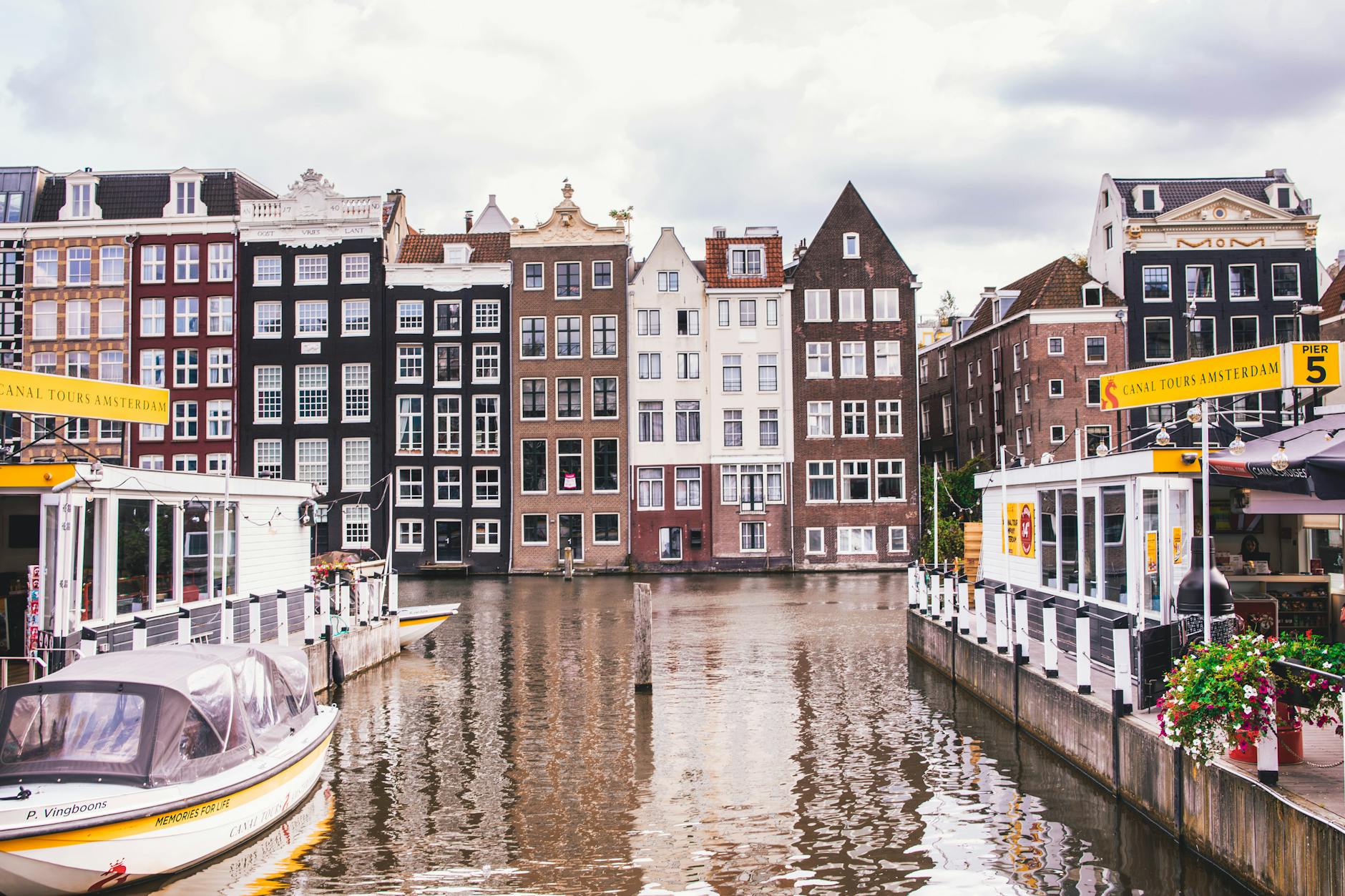
Of all the head-to-heads on this site, Amsterdam vs Berlin is the closest-run and the one where the two cities are least alike. They are frequently shortlisted together — both northern European, both liberal, both a cheap flight from most of the continent — and then people discover that almost nothing else about them matches. One is a small, pretty, seventeenth-century merchant town. The other is a sprawling, scarred, twentieth-century capital that was cut in half for twenty-eight years and has spent the decades since arguing with itself about what to build on the gaps.
Bluntly: Berlin is cheaper, bigger, more serious and much more interesting to think about. Amsterdam is prettier, easier, far more compact and much better suited to a short trip. If you are choosing on beauty and convenience, Amsterdam wins comfortably. If you are choosing on price, nightlife, contemporary culture or twentieth-century history, Berlin wins and it is not particularly close. What follows is the case for each, with the numbers.
| Amsterdam | Berlin | |
|---|---|---|
| Ideal trip length | 3 days | 4–5 days |
| Size | Compact; the centre is easy to cross on foot | Far larger; the U-Bahn is part of every day |
| Museums | Rijksmuseum and Van Gogh, €25 each | Museum Island day pass €24 for all of it |
| 3-day museum pass | Museumkaart €75/year, 500+ museums | Museum Pass €32 for 3 days, 30+ museums |
| Accommodation | Expensive, and dearer in high season; tourist tax is a percentage on top | Meaningfully cheaper across the board |
| Nightlife | Tighter city rules in the centre | Famous club scene |
| Beauty | UNESCO canal ring, intact | Patchy, deliberately so |
| Best for | Short, pretty, low-friction trips | Longer trips, history, budget, nightlife |
Price: Berlin, and by a clear margin
This is the most common reason people pick Berlin, and the reason holds up. Amsterdam hotel rooms are expensive and dearer still in high season, with a tourist tax of 12.5% of the room price (excluding VAT) charged on top of the rate you were quoted. Berlin is materially cheaper on accommodation and has vastly more supply, because it is not physically constrained by a seventeenth-century street plan.
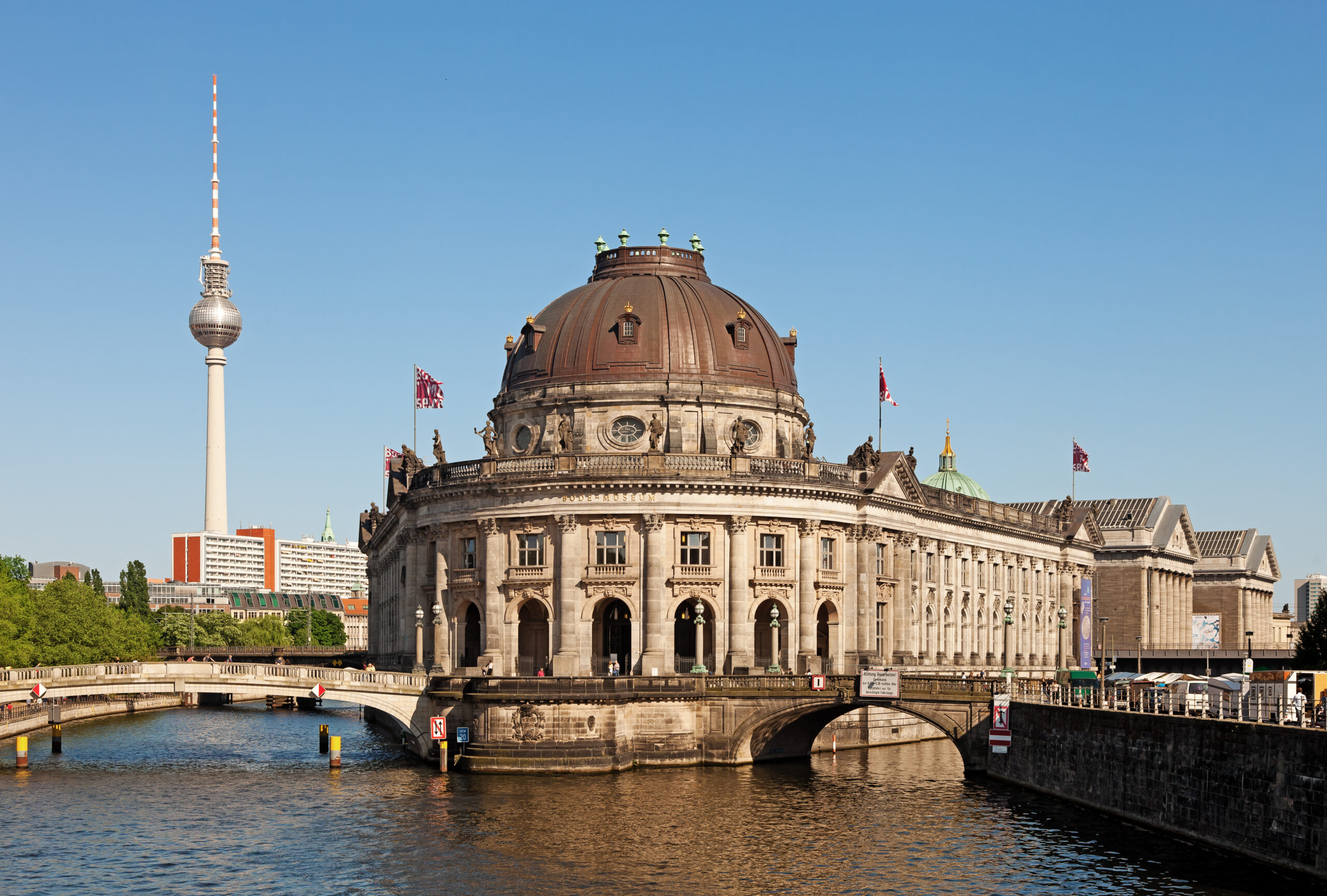
Museums tell the same story. Amsterdam charges €25 at the Rijksmuseum and €25 again at the Van Gogh — €100 for a couple doing both. Berlin’s Museum Island day pass is €24 and covers all the open collections on the island; individual entries there run €14–16. The Berlin Museum Pass is €32 for three consecutive days across more than thirty museums. Amsterdam’s equivalent value play is the Museumkaart at €75, which is excellent — 500-plus museums nationwide, and it pays for itself in three visits — but it is an annual card, and visitors can only buy a temporary version at selected museum desks, valid for 31 days and a maximum of five museums, at the full annual price. It is not a cheap city pass. Our city passes compared page runs the Dutch options properly.
Food and drink follow the same pattern. A beer in an ordinary Amsterdam bar costs noticeably more than in Berlin, and Berlin’s cheap-eating scene is deeper and better. Transport is not what will decide it: a GVB day ticket is €10, and BVG lists its current fares on bvg.de, but Amsterdam wins on a technicality, because it is small enough that most visitors barely use public transport at all.
For the full Amsterdam cost picture, see our guide to whether Amsterdam is expensive.
Beauty and coherence: Amsterdam, easily
Amsterdam’s canal ring is a UNESCO World Heritage Site and, unusually for a European heritage core, it is still a working residential city rather than a preserved set. It is unbroken for kilometres, and walking it is one of the genuine pleasures of European travel.
Berlin is not beautiful in that way and does not pretend to be. It was heavily bombed, rebuilt twice under two ideologies, and then stitched back together after 1989. The result is a city of extraordinary fragments — Museum Island, the Reichstag, Prenzlauer Berg’s surviving tenements, the Karl-Marx-Allee — separated by tracts of nothing very much. Some people find that far more interesting than prettiness. Others find it exhausting on a three-day trip, and both reactions are legitimate.
If your holiday photographs matter to you, this is not a contest. Our guides to the canal ring and the architecture walking route cover what makes the Amsterdam version work.
History: Berlin, without any argument
Berlin is one of the most important places in the world to understand the twentieth century, and it takes that seriously in a way few cities manage. The Holocaust Memorial, the Topography of Terror, the Wall Memorial on Bernauer Strasse, the Stasi Museum, the Reichstag dome, Checkpoint Charlie — a serious visitor can spend four days on this alone and come away permanently changed.
Amsterdam’s twentieth-century history is narrower but sharper. The Anne Frank House (€16.50, sold only through annefrank.org, released every Tuesday six weeks ahead) is one of the most affecting museum visits anywhere, and the Jewish Cultural Quarter, the Hollandsche Schouwburg and the Resistance Museum give it context that most visitors skip. Roughly three-quarters of the Dutch Jewish population was murdered — an unusually high share among occupied countries — and the city does not hide from it. But it is one story, told well, rather than Berlin’s whole shelf. Our pages on Amsterdam in the Second World War and Jewish heritage cover it properly, and the Anne Frank House guide handles the booking.
Where Amsterdam wins on history is earlier. The Dutch Golden Age is a first-rank story — a small waterlogged republic that became one of the richest places in the world, pioneered the permanently traded joint-stock company, and produced Rembrandt and Vermeer at the same time — and the Rijksmuseum tells it in one building better than anywhere tells anything. Berlin has little intact old townscape to set against it, though medieval churches such as the Nikolaikirche and Marienkirche survive.
Nightlife: Berlin, and it is not close any more
This one has changed decisively in the last few years and a lot of people have not caught up. Amsterdam’s reputation as a party city is a decade out of date. Organised pub crawls are no longer permitted in the old city centre. Drinking alcohol in the public area of the city centre is forbidden, as is smoking cannabis, and nuisance fines run from €100 to €650. Bars in the Red Light District close at 2am. In 2023 the city ran a “Stay Away” campaign aimed at British men aged 18–35 searching for stag-party trips.
Berlin, meanwhile, has one of the best club scenes on earth and a broadly permissive attitude to it. If nightlife is anywhere in your top three reasons for travelling, this comparison is settled. Amsterdam still has good bars, an excellent brown-café culture and a genuinely strong festival calendar — Amsterdam Dance Event in October is world-class — but the casual, cheap, late version of a night out has been designed out of the centre on purpose. Our ADE guide, craft beer guide and night transport guide cover what is actually there.
Size, and what it does to a short trip
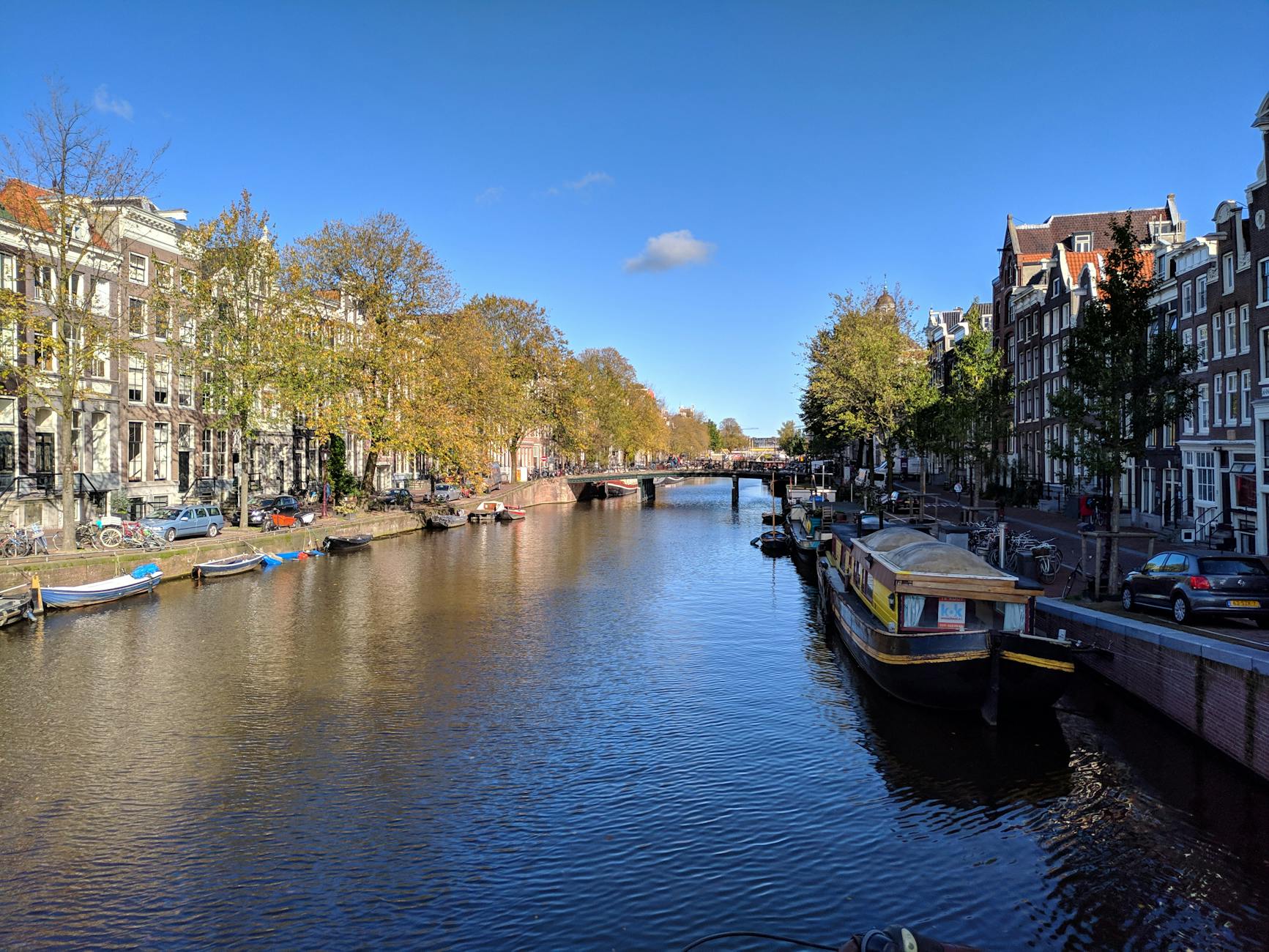
Central Amsterdam is about two kilometres across. You can walk from Centraal Station to Museumplein in half an hour through continuously interesting streets, and most visitors take four or five trams across an entire trip. Berlin is roughly nine times the area of Amsterdam and you will be on the U-Bahn or S-Bahn every single day, often for half an hour at a time. Mitte to Kreuzberg to Prenzlauer Berg is not a walk.
On a three-day trip that difference is decisive. Amsterdam gives you eight or nine substantial things and you go home feeling you understood the place; Berlin gives you five and a sense that you saw a quarter of it. Extend to five days and the ranking flips, because Amsterdam runs out of first-rank material around day four while Berlin does not run out at all. Our page on how many days you need in Amsterdam makes that argument at length.
The length question is really the same question as the city question — see how many days you need in Amsterdam.
Getting around, and getting there
Amsterdam’s advantage here is not the transport system, which is merely very good, but the fact that you can ignore it. It is the best city in the world to cycle in, and hiring a bike genuinely converts the trip — distances collapse and Noord, Oost and the Amstel come into range. The caveat is that local cyclists are fast and unforgiving and visitors on rental bikes cause most of the minor collisions in the centre. Our bike rental guide covers the rules. Berlin is also a decent cycling city, but the distances mean you are riding to get somewhere rather than riding as sightseeing.
Arrival favours Amsterdam clearly. Schiphol is one terminal with a railway station directly beneath Schiphol Plaza; the train to Centraal takes 15–20 minutes and costs around €6, several times an hour. A taxi is metered and costs many times as much for the same journey. Schiphol advises two hours before a Schengen departure and three before a non-Schengen one, and the free timed security slots bookable in its app are worth using since the security operation changed in May 2026. See our Schiphol guide.
The two cities are also well connected to each other by direct train, which makes the “both” option realistic on a week-long trip in the same way it is for Paris — Amsterdam first, then east.
Food and drink: Berlin on value, Amsterdam on one dish
Neither of these is a great food capital in the way Paris, Lyon or Bologna are, and both know it. Berlin’s strength is breadth and price: a genuinely excellent immigrant food scene, Turkish and Vietnamese in particular, at prices that make eating out a daily habit rather than a decision. Amsterdam’s strength is narrower and stranger. Dutch cuisine itself is hearty, sensible and unmemorable — stamppot, bitterballen, kroketten, raw herring from a stall, appeltaart under too much cream — good at the street level and not worth planning a trip around.
But Amsterdam has one meal that Berlin cannot match at all, and it is a product of colonial history rather than Dutch cooking: Indonesian rijsttafel, in which a dozen or more small dishes arrive together. It is the single genuinely unmissable thing to eat in the Netherlands, and one evening of it is worth more than a week of hunting for good Dutch restaurants. Beyond that, look to Surinamese roti in De Pijp, the Middle Eastern strip along the Javastraat in Oost, and the Foodhallen in Oud-West. Our rijsttafel guide, cheap eats and must-try Dutch foods pages set the expectations honestly.
On drink, the two cities diverge in character rather than quality. Amsterdam’s brown cafés — dark, wood-panelled, unhurried, genuinely centuries old in some cases — are a specific pleasure with no Berlin equivalent, and the Dutch craft brewing scene has become seriously good. Berlin’s advantage is that everything costs less and stays open later, so a beer there will cost you less than in an ordinary Amsterdam bar.
What each city does that the other simply cannot
It is worth naming the things that are not comparable at all, because those are usually what decides a trip.
- Only Amsterdam: a canal ring you can walk for hours without leaving the seventeenth century; a museum square with three first-rank collections ten minutes apart; the Anne Frank House; the best cycling in the world; free ferries across the IJ that cost nothing and go all day; day trips to windmills, tulip fields and a North Sea beach that are all under forty minutes by train.
- Only Berlin: the twentieth century told at full scale and with unusual honesty; a club scene that people travel across continents for; Museum Island; the sheer strangeness of a city with a seam running through it; space, and the cheapness that comes with having plenty of it.
The day-trip point deserves emphasis, because it is chronically underrated in this comparison. Amsterdam sits in a country small enough that a great deal is reachable in under an hour: Haarlem in about fifteen minutes, Zaanse Schans in about forty, Utrecht in about thirty-five for €9–10, Zandvoort’s beach in about thirty for around €6.90. Between late March and mid-May, Keukenhof and the bulb fields are within reach as well, and on a Friday from late March to the end of September so is the Alkmaar cheese market. That effectively extends Amsterdam’s content well past its own city limits, and it is the reason a four- or five-day Amsterdam trip works better than the city alone would suggest. Our day trips guide ranks them.
Who should choose which
- Choose Amsterdam if you have three days; if it is a first trip to Europe; if you want to walk and cycle rather than ride a U-Bahn; if the Dutch Golden Age, Van Gogh or the canal ring is the draw; if you are travelling with children and want short distances; if beauty matters more to you than significance.
- Choose Berlin if the budget is tight; if you have four or five days; if twentieth-century history is the reason for the trip; if nightlife or contemporary art is in your top three; if you have already done a small pretty European city and want something with more argument in it.
- Choose both if you have a week and like trains. Amsterdam first — it is the gentler arrival, and Berlin rewards the extra days.
The honest summary
Berlin is the better city and Amsterdam is the better short trip. That sounds like a fudge and it is not: Berlin has more in it, costs less, and will occupy a thoughtful traveller for a week, but it demands time and effort that a long weekend cannot give it. Amsterdam is designed, almost accidentally, for exactly the three-day visit most people are actually taking — small, dense, walkable, beautiful, and easy in a way that lets you spend your energy on what you came for rather than on logistics.
If you can only take one three-day trip this year, take Amsterdam. If you can take a week, take Berlin. If you can take a week and a rail pass, take both, in that order.
For the other big comparison, see Amsterdam vs Paris.
Keep Exploring
- Is Amsterdam Worth It?
- Is Amsterdam Expensive?
- How Many Days Do You Need?
- Amsterdam vs Paris
- Amsterdam Museums Guide
- Amsterdam in the Second World War
- The Dutch Golden Age
- Amsterdam City Passes Compared
- Amsterdam Dance Event
- Bike Rental in Amsterdam
- The Canal Ring
- Three Days in Amsterdam
Frequently Asked Questions
Is Amsterdam or Berlin better to visit?
Berlin is the more interesting city; Amsterdam is the better short trip. For three days, Amsterdam gives you far more per day because everything is walkable. For four or five days, Berlin’s depth of history, museums and nightlife pulls decisively ahead.
Is Berlin cheaper than Amsterdam?
Yes, clearly. Accommodation, food and drink are all meaningfully cheaper in Berlin, and museums are too — a €24 Museum Island day pass or a €32 three-day Museum Pass against €25 each for the Rijksmuseum and the Van Gogh Museum in Amsterdam.
Which city is better for nightlife?
Berlin, and it is no longer close. Amsterdam has legislated much of its party reputation away: pub crawls are banned in the old centre, drinking alcohol in the public area of the city centre is forbidden with nuisance fines from €100, and bars in the Red Light District close at 2am.
Which is better for museums, Amsterdam or Berlin?
Berlin has more and charges less for them; Amsterdam has better concentration and two genuinely world-famous collections in the Rijksmuseum and the Van Gogh Museum, ten minutes apart on one square. For value, Berlin. For a single unforgettable morning, Amsterdam.
Can you visit Amsterdam and Berlin in one trip?
Yes, and with a week it is a good plan. Direct trains link the two, so no airport is involved at either end. Do Amsterdam first — it is the gentler arrival and needs fewer days — then give Berlin four.
Which city is better for a first trip to Europe?
Amsterdam. English is spoken universally, the centre is walkable, the transport is simple, and the airport transfer is fifteen minutes. Berlin is a better second or third European city, once you have some travel confidence and more days to give it.
Is Amsterdam prettier than Berlin?
Considerably. Amsterdam’s canal ring is a UNESCO site and is intact for kilometres, still lived in rather than preserved. Berlin was heavily bombed, rebuilt under two ideologies and stitched together after 1989, so its best moments are fragments with gaps between them.
Which city is better with kids?
Amsterdam, mainly because of distance — children tire on long transit rides and Berlin involves many of them. NEMO is €21.50 from age four, ARTIS includes the aquarium and planetarium, and the Noord ferries are free. Watch the bikes, trams and unrailed canals in the centre.