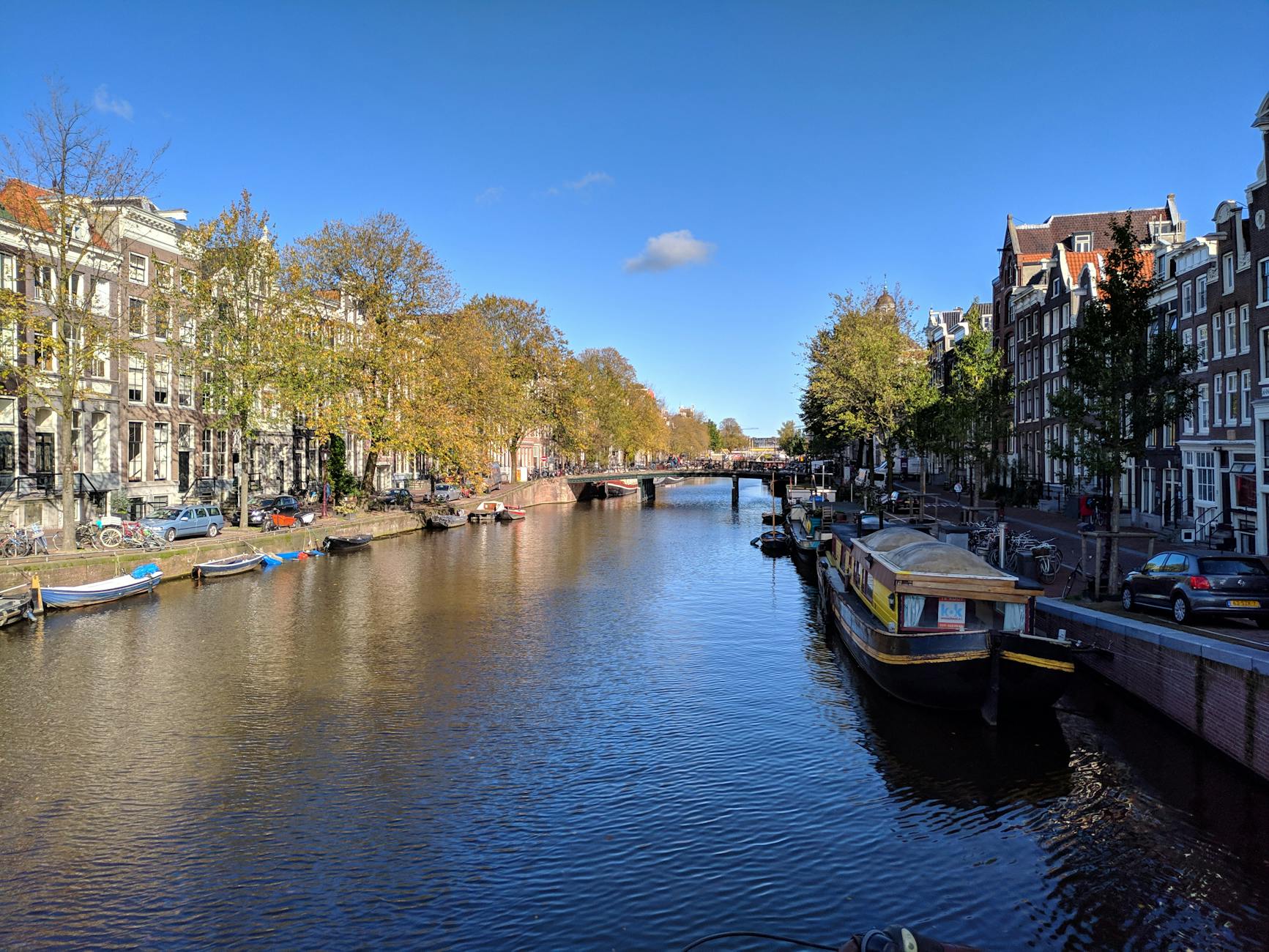
This page answers one question with a number and then defends it. How many days in Amsterdam you need depends less on how much there is to see — the honest answer is that there is not that much — and more on how many museums you can absorb before they stop landing, how much you want to leave the city, and whether the flight is worth it for the length of trip you are considering.
Our answer is three full days for most people. Not three nights with a late arrival and an early flight: three complete days on the ground. Two is genuinely workable and slightly compromised. Four is where day trips become the best part of the trip rather than a consolation prize. Five is generous. Six or more in Amsterdam alone is, we think, a planning error — not because you will run out of things to do, but because you will run out of things worth doing, and the country outside the ring road is right there and cheaper.
| Length | What it gets you | Who it suits | Verdict |
|---|---|---|---|
| 1 day | Canal ring on foot, one museum, one neighbourhood | Layover or a stop on a rail route | Better than nothing, worse than skipping it |
| 2 days | One big museum, the canal ring, Jordaan, one evening | City-break weekenders | Works, but you are choosing |
| 3 days | Two or three museums, three neighbourhoods, a market | Most first-time visitors | The sweet spot |
| 4 days | All of the above plus one proper day trip | Anyone who wants windmills or tulips | Excellent value for the extra night |
| 5 days | Two day trips, plus time to do nothing | Slow travellers, repeat visitors | Generous but justifiable |
| 7+ days | Amsterdam plus Utrecht, Rotterdam, the coast | Anyone with a full week | Only if you move base |

Why three days is the answer
Amsterdam is small — roughly two kilometres across in the part you care about — and that cuts both ways. It means you can see an enormous amount per day without spending an hour underground, which is why three days here goes further than three days in Paris or London. It also means the supply of genuinely first-rank sights is finite. There are, realistically, three world-class museums, one canal ring, one Anne Frank House, and perhaps five neighbourhoods worth an afternoon. Three days covers that comfortably with room to sit down.
The other constraint is museum fatigue, which is real and which nobody plans for. The Rijksmuseum takes two to three hours if you are being honest with yourself. The Van Gogh Museum takes two to three. Doing both in one day is physically possible and emotionally pointless — by the second hour of the second museum you are walking past Vermeers to find a bench. Our rule across this site is a hard maximum of two serious museums a day, and one on your first day, when jet lag and orientation are both working against you.
Three days, then, breaks down like this. Day one: arrive, walk the canal ring, get lost in the Jordaan, one museum in the late afternoon, dinner somewhere unambitious. Day two: Museumplein properly — two museums with a long lunch between them, then Vondelpark or the Nine Streets. Day three: a market, a neighbourhood you have not seen, and either the free ferry to Noord or a half-day trip out. That is a full trip. Our three-day itinerary writes it out hour by hour.
One day in Amsterdam: what you can honestly do
A single day is a stopover, not a visit, and it should be planned as one. The good news is that the geography makes it unusually productive: the train from Schiphol reaches Centraal in about 17 minutes from €5.50, and the old centre is compact enough to cover largely on foot.
What we would do with it: walk out of Centraal and immediately turn away from Damrak, which is the worst street in the city. Go west into the Jordaan, work down through the canal ring towards the Nine Streets, stop for lunch, then either the Rijksmuseum or the Van Gogh Museum in the afternoon — one, not both — and finish with an hour on a canal boat as the light goes. Skip the Anne Frank House on a one-day trip unless you already hold a ticket, because it sells out weeks ahead and cannot be improvised.
If the single day is a layover rather than a trip, the calculation is different and stricter — you need roughly six hours between flights before the city becomes worth leaving the airport for. Our Schiphol layover guide does that arithmetic properly, and the luggage storage page covers where to leave your bags.
Two days in Amsterdam: a real weekend
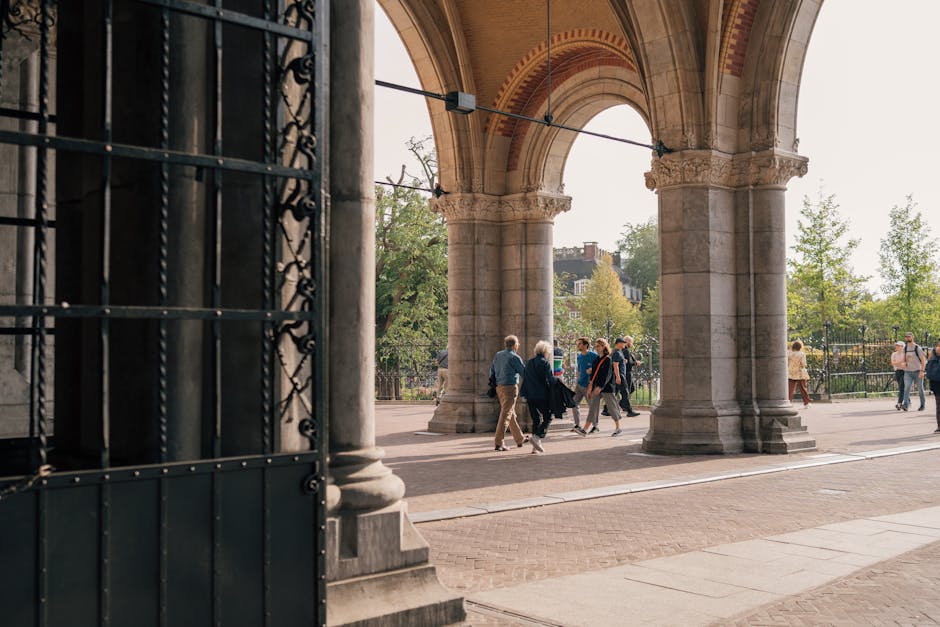
Two full days is the most common Amsterdam trip and it works, provided you accept the central trade-off: you are choosing between the Rijksmuseum and the Van Gogh Museum, not doing both properly. Most people should take the Van Gogh on a first visit — it is the more emotionally memorable of the two, and it is the one that is genuinely hard to see anywhere else. The Rijksmuseum’s collection is broader but its greatest hits are more familiar.
The shape that works: day one for the historic centre and the canal ring on foot, ending on a canal cruise or in a brown café. Day two for one museum in the morning, Vondelpark or the Albert Cuyp market at lunch, and De Pijp or Oud-West in the afternoon and evening. Do not add a day trip to a two-day visit. Zaanse Schans is only forty minutes away, but a half-day there costs you a third of your total time in the city itself, and you did not fly here for windmills. Our two-day itinerary lays out the version we would actually book.
Four days: where the trip gets interesting
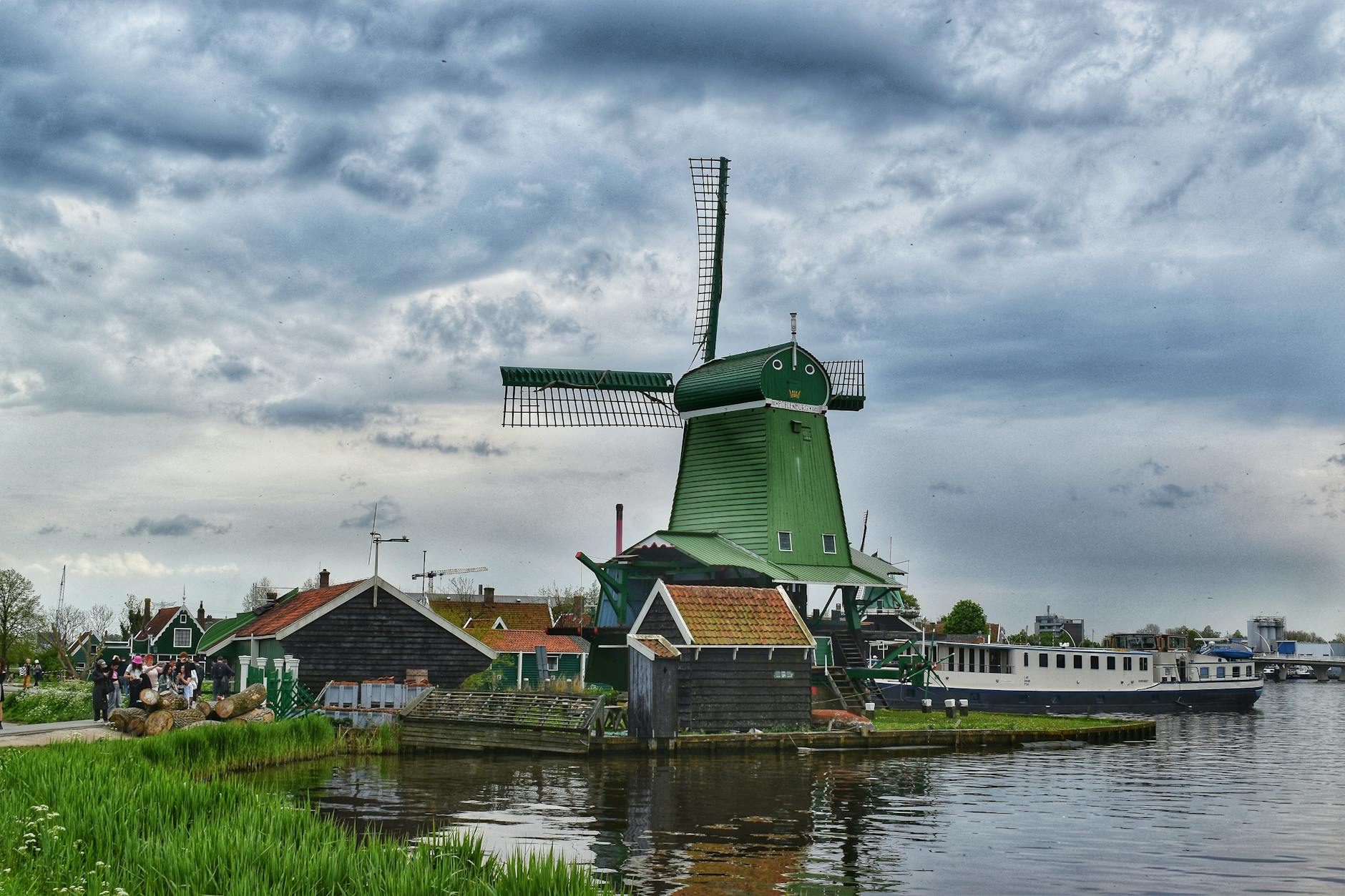
The fourth day is the best-value night you will book. With three days you have seen Amsterdam; with four you can see Amsterdam and one other thing, and the other things are excellent. Haarlem is fifteen minutes away by direct train and is a smaller, quieter, prettier version of the same architecture with a proper Saturday market and Frans Hals in the old almshouse. Zaanse Schans gives you the windmill photograph in a morning. Utrecht is about half an hour by Intercity for roughly €9–10 second class single, and has a canal system nobody outside the Netherlands has heard of, with restaurant terraces down at water level in the old wharf cellars.
Seasonally, the fourth day changes what is possible. Between late March and mid-May it buys you Keukenhof and the bulb fields, which is the single most photogenic thing in the country and impossible at any other time of year. On a Friday between late March and the end of September it buys you the Alkmaar cheese market. In summer it buys you Zandvoort, where the train from Centraal takes about thirty minutes, costs around €6.90 and puts you a few minutes’ walk from the sand. Our day trips guide ranks them all, and the Keukenhof page handles the timing.
Five days and beyond: move, don’t extend
Five days in Amsterdam is defensible if you travel slowly and like having mornings with nothing in them. It buys you two day trips, the second-tier museums — the Rembrandt House, STRAAT out at NDSM, NEMO if you have children — and enough time in Noord and Oost to feel like you have understood the city rather than photographed it. Our five-day itinerary is built around exactly that.
Beyond five, the advice changes shape entirely: stop extending and start moving. A week based solely in Amsterdam means paying Amsterdam room rates, which climb further in high season, for nights you are spending on trains back to a bed you did not need to keep. Moving base twice across a week costs perhaps ninety minutes of total travel, because Dutch rail fares are fixed and distance-based with no advance-purchase advantage at all. You can decide each morning and pay the same. Our Netherlands by train page explains the fare system, and the seven-day Netherlands itinerary builds the route.
The variables that change the number
Season
Winter days are short — dark by half past four — which compresses what you can fit in and pushes you towards museums and cafés rather than walking and parks. In practice that means a winter trip does more per day indoors and less overall, and three days in December delivers about what two and a half do in June. Against that, the museums are near-empty on a winter Tuesday morning, which is worth a great deal. Our winter guide covers the trade.
For the full side-by-side, see Amsterdam in summer versus winter.
Who you are travelling with
Children slow everything down and change the list. NEMO alone is a three-hour visit and costs €21.50 from age four; ARTIS is most of a day at €29.50 for over-13s. A family trip needs four days to cover what a couple does in three, and it needs the free Noord ferries in it somewhere, because they are the cheapest hit of the whole trip. Our Amsterdam with kids guide is built around that reality. Older travellers should also budget an extra day: the city is flat, which helps, but the cobbles, the bridges and the near-vertical museum staircases take a toll — see our guide for senior travellers.
Whether you are combining it with other cities
If Amsterdam is one stop on a European route, two days is often correct — you take the canal ring, one museum and an evening, and you move on. Brussels is 1h52 by Eurostar, Paris 3h20 with fares from around €35 booked early, and London about 4 hours direct. Two days here and two there beats four days in either.
Our Benelux by train itinerary builds Amsterdam, Brussels and Bruges into a single route.
Your budget
Length and cost are the same decision here more than in most cities, because the bed is the dominant line. Adding a fourth night in central Amsterdam in July can cost more than the flight did. Adding a fourth night in Haarlem, fifteen minutes away, often costs less than dinner. That is why the length question and the location question should be answered together rather than in sequence.
Our guide to staying outside Amsterdam compares Haarlem, Utrecht and Zaandam on price and journey time.
And whether Amsterdam is expensive puts a realistic daily figure on each style of trip.
What to book, and how far ahead
The length of your trip determines what you need to lock in. On a two-day visit, book the museum you have chosen before you fly, because losing a morning to a sold-out slot costs you a quarter of the trip. On three days or more, you have enough slack to be flexible about everything except two things.
- The Van Gogh Museum is entirely timed-entry and online-only. Between April and October, book one to two weeks ahead; weekend morning slots can go three to four weeks out. Resellers such as Tiqets and GetYourGuide hold separate inventory from the official site, so a sold-out official date is worth re-checking.
- The Anne Frank House sells only through annefrank.org — no legitimate reseller carries entry tickets. Tickets are released every Tuesday, six weeks ahead, and there are no walk-ups and no waiting list. Adult entry is €16.50.
- Everything else — the Rijksmuseum, the Stedelijk, canal cruises, restaurants, trains — can be decided the night before, and Dutch train tickets have no advance-purchase discount at all.
Our booking timeline sets out exactly what to reserve at eight weeks, four weeks, one week and the night before.
Two mistakes people make with the length question
Counting nights instead of days. Three nights with a 21:00 arrival and an 08:00 departure is two days, not three, and it is the single most common way people end up feeling rushed in a city that should not be rushed. Count the mornings you will wake up in Amsterdam and be free by nine. That number is your trip length.
Adding days in Amsterdam instead of adding places. The fifth day in the city is worth much less than the fifth day in the country. Utrecht, Rotterdam, the Hoge Veluwe with its free white bikes, Kinderdijk’s nineteen windmills, Texel out in the Wadden — all of them are within easy reach and none of them is expensive. Our page on the Netherlands beyond Amsterdam is the argument in full.
And if you are wondering whether to sleep in the other city instead, Amsterdam vs Rotterdam takes that question seriously.
The arrival day is rarely a day
This is the correction that saves most trips. A flight landing at Schiphol at 14:00 does not produce an afternoon in Amsterdam. Passport control, baggage, the walk down to the station beneath Schiphol Plaza, the train, the walk or tram to your hotel, and check-in together consume much of the afternoon, and you will arrive at your room wanting a shower rather than a museum. Treat that as an evening, not a day — a walk along a canal, dinner somewhere near the hotel, an early night.
The same applies in reverse. Schiphol’s own advice is to arrive two hours before a Schengen departure and three before a non-Schengen one, and the security operation changed in May 2026 with queues spiking as a result — the free timed security slots bookable in the Schiphol app are genuinely worth using. A midday flight home means leaving the city around eight in the morning, which is not a day either. So a “four-day trip” with an afternoon arrival and a midday departure is two full days and two half ones, and it will feel exactly like that.
Practically, this means two things. First, count only the mornings on which you will wake up in Amsterdam with the whole day ahead of you. Second, if your flights are awkward, the cheapest fix is almost always one extra night rather than a tighter schedule, because an extra night in a hotel costs less than the museum tickets you will waste rushing. Our Schiphol to Amsterdam page covers the transfer options and their real door-to-door times, and the security page explains the slot system.
A realistic pace, hour by hour
Amsterdam rewards a slower schedule than most people write for themselves, and the reason is the same reason it is a good city: everything is close together, so there is no natural friction forcing you to stop. It is entirely possible to walk from nine in the morning to nine at night here, and entirely miserable to do it two days running.
The pace that works is roughly this. One anchor in the morning — a museum, a market, a neighbourhood walk — starting early, because both the Rijksmuseum and the Van Gogh open at 09:00 and the first hour is the quietest of the day. A proper lunch that lasts an hour and involves sitting down. One anchor in the afternoon, smaller than the morning one. Then nothing scheduled after about five, because Amsterdam’s best hours are the unscheduled ones, when the day visitors have gone and the canal houses light up from the inside. Two anchors a day, three days running, is nine anchors — which is more of Amsterdam than most people see in a week of trying to do four things a day.
Keep Exploring
- Is Amsterdam Worth It?
- Two Days in Amsterdam
- Three Days in Amsterdam
- Five Days in Amsterdam
- One Week in Amsterdam
- Day Trips from Amsterdam
- Amsterdam Trip Planning Guide
- What to Book in Advance
- Where to Stay in Amsterdam
- Haarlem Day Trip
- Utrecht Travel Guide
- Amsterdam Museums Guide
Frequently Asked Questions
How many days in Amsterdam is enough?
Three full days suits most first-time visitors: two or three museums, three neighbourhoods, the canal ring on foot and a market, without rushing. Two days works if you accept choosing between the Rijksmuseum and the Van Gogh Museum, and four gives you a proper day trip on top.
Is 2 days in Amsterdam enough?
Yes, for a focused weekend. You will manage the canal ring, the Jordaan, one major museum and one evening properly. What you will not manage is two big museums plus a day trip — attempting that is how a two-day trip turns into a blur.
Is 5 days in Amsterdam too long?
Not if you use it to leave. Five days based in the city works with two day trips and some genuinely empty mornings. Five days of Amsterdam sightseeing alone runs out of first-rank material around day three and keeps charging you Amsterdam room rates for the privilege.
How many days do you need for Amsterdam with kids?
Four. NEMO is most of a morning at €21.50 from age four, ARTIS is a full day at €29.50 for over-13s, and children need the free Noord ferries and Vondelpark in between. A family covers in four days what a couple covers in three.
Should I add a day trip or an extra day in the city?
From the fourth day onwards, take the day trip. Haarlem is fifteen minutes away, Zaanse Schans about forty, Utrecht about half an hour for roughly €9–10, and all three are more interesting than a fourth Amsterdam museum.
How long do you need at the Rijksmuseum and Van Gogh Museum?
Two to three hours each, honestly. They are ten minutes apart on Museumplein, so doing both in a day is possible, but plan a long lunch between them and do not add a third museum afterwards.
Is one day in Amsterdam worth it?
As a stopover, yes. The train from Schiphol takes 15–20 minutes and costs around €6, lockers are available at the station, and one museum plus the canal ring fits comfortably. As the whole reason for a flight, no — go for two nights or don’t go.
How many days do you need to see the Netherlands?
A week, and it works best if you move base rather than day-tripping from Amsterdam. Three nights in Amsterdam, two in Utrecht and two in Rotterdam covers three cities, a national park and a UNESCO windmill landscape without a single early start.