Amsterdam is a city built on water, ambition and improbably stubborn engineering. From a fishing village on a peat marsh in the year 1000 to a 17th-century financial superpower running global trade from a single horseshoe of canals — and on through Nazi occupation, post-war revival and modern reinvention — this is a complete Amsterdam history timeline. Each era is paired with the places in the city where you can still see it today.
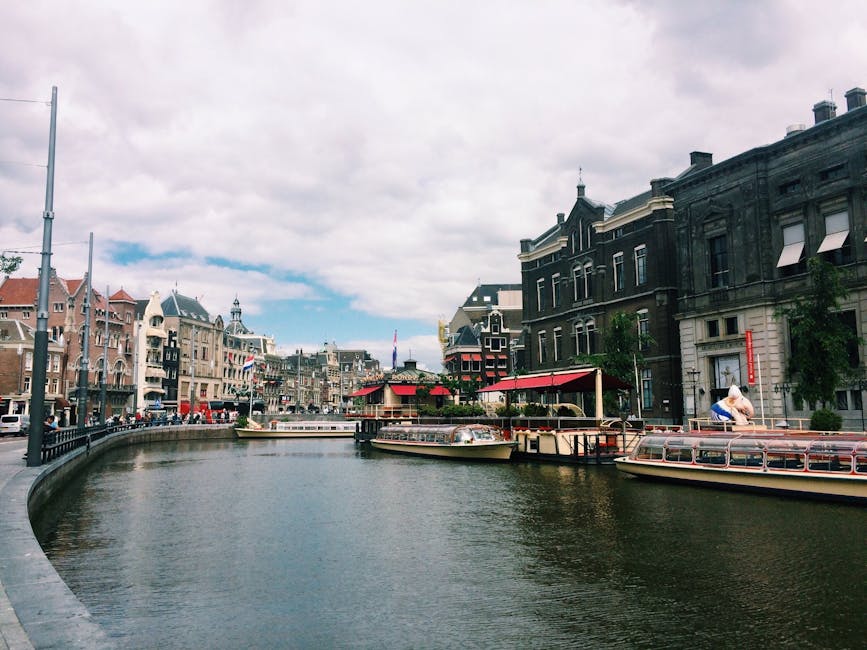
Before the City: 1000 BCE – 1100 CE
Long before Amsterdam existed, the western Netherlands was a sodden tangle of peat bogs, tidal flats and shallow lakes — the kind of land that you walked across only when you didn’t have a choice. The Romans came in the first century CE and built a fort at Velsen, but they never settled the future Amsterdam site. After the Roman withdrawal the area returned to fishing villages and isolated farms scattered across the IJsselmeer marshes.
From around 1000 CE local Frisians began the slow work of peatland reclamation — digging drainage ditches, planting willow stakes, hauling sediment up to make pasture. The land that would become central Amsterdam slowly emerged from beneath the water, raised by hand.
The Founding: 1170 – 1300
The trigger event was the All Saints’ Flood of 1170, which carved a much deeper channel for the Amstel river and threatened to drown the new pastures. Local farmers responded by building a dam across the Amstel — and the settlement that grew around it took its name from the structure: Aemstelledamme, "the dam on the Amstel".
- ~1200 CE — first wooden bridges and houses near the dam.
- 27 October 1275 — Count Floris V grants Amsterdam toll-free trading privileges across Holland. This is the first time the name appears in writing and is celebrated as the city’s official birthday.
- ~1300 — Amsterdam receives city rights from the Bishop of Utrecht, allowing it to build defensive walls and hold its own court.
- 1342 — Count William IV reaffirms and expands the trading privileges. Amsterdam’s grain trade with the Baltic begins.
See it today: Dam Square — still on the exact site of that 1170 dam — and the Oude Kerk (Old Church, completed around 1306), the oldest surviving building in Amsterdam.
Medieval Amsterdam: 1300 – 1550
The 14th and 15th centuries were a slow, steady rise. Amsterdam was never the biggest city in the Low Countries — Antwerp, Bruges and Ghent were larger and richer — but it had a quiet specialty: storing other people’s grain. Baltic wheat from Poland and the Hanseatic ports came south, was warehoused in Amsterdam, and shipped on to grain-poor southern Europe. This "mother trade" would underwrite everything that came next.
- 1421 — the Great Fire destroys most of the wooden city. Stone construction begins to replace timber after the second great fire of 1452.
- 1517 — the Reformation spreads through the Low Countries; Catholic and Protestant tensions grow.
- 1535 — the Anabaptist Riot: 12 men and women, naked and chanting, storm Dam Square claiming the apocalypse. They are executed; Amsterdam stays officially Catholic for another 43 years.
See it today: the Oude Kerk and the smaller Begijnhof, a 14th-century cluster of almshouses with the only surviving wooden house in central Amsterdam (Het Houten Huys, c. 1420).
The Alteration & Independence: 1550 – 1600
The 80 Years’ War (1568–1648) was a Dutch revolt against Habsburg Spain. For most of it, Amsterdam was officially loyal to Catholic Spain — but in 1578 the city flipped, in a single day. Protestant militiamen took City Hall, expelled the Catholic council, and Amsterdam became Calvinist. The event is remembered as the Alteratie.
Seven years later came the catalyst that turned Amsterdam from a regional grain port into a world city: the Fall of Antwerp in 1585. Spanish forces sacked the southern Netherlands’ great trading capital, and tens of thousands of Antwerp’s merchants — Protestant, Jewish, Flemish — fled north. They arrived in Amsterdam carrying their capital, their international networks and their know-how. Within a decade Amsterdam had absorbed the entire trading system of the southern Netherlands.
The Dutch Golden Age: 1600 – 1700
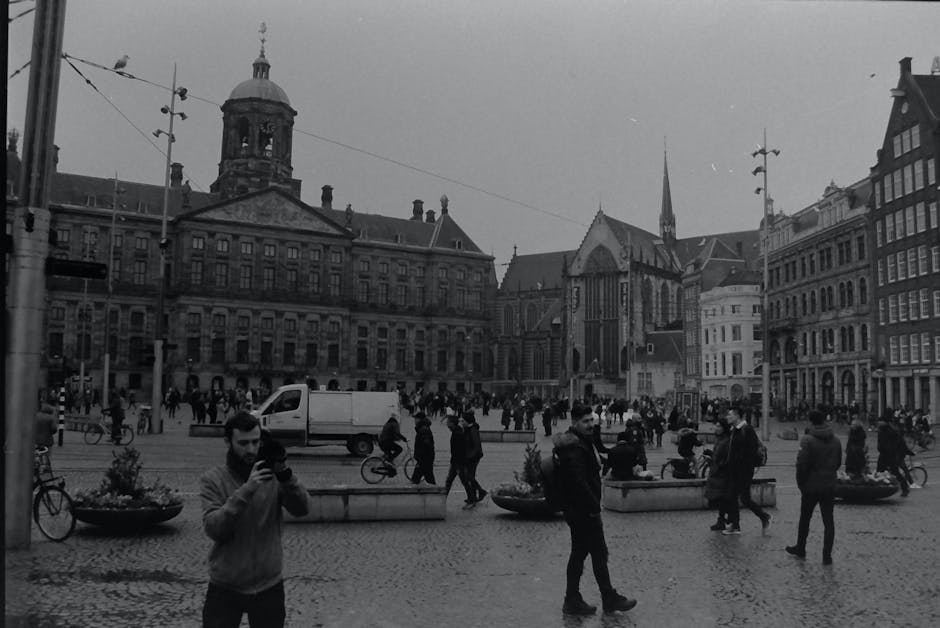
The 17th century is the era that defines Amsterdam. In 100 years a city of 30,000 people became a city of 200,000, became the largest port and richest market on earth, and built — in stone, brick and oak — the canal belt that you walk through today.
- 1602 — The Dutch East India Company (VOC) is founded in Amsterdam: the world’s first multinational corporation, the first publicly traded company, and for two centuries the largest commercial organisation on the planet. Its shares trade on the Amsterdam Stock Exchange — the world’s first.
- 1609 — The Bank of Amsterdam (Wisselbank) is founded; it becomes the world’s central bank in all but name.
- 1613 — Construction begins on the Grachtengordel, the three concentric main canals — Herengracht, Keizersgracht and Prinsengracht. UNESCO will list it as a World Heritage Site 397 years later.
- 1621 — The Dutch West India Company (WIC) is chartered to manage trade and colonies in the Atlantic. New Amsterdam (later New York) is founded in 1626.
- 1648 — The Peace of Münster ends the 80 Years’ War. The Dutch Republic is formally independent. Amsterdam is now arguably the most powerful city on earth.
- 1655 — The new Town Hall opens on Dam Square, designed by Jacob van Campen. It is then the largest secular building in Europe. Today it is the Royal Palace.
- 1672 — "Disaster Year" (Rampjaar): France, England, Münster and Cologne all attack the Dutch Republic at once. The country survives — barely — by flooding its own farmland.
This century also produced the painters everyone now associates with Dutch art: Rembrandt, Vermeer, Frans Hals, Jan Steen. Rembrandt painted The Night Watch in Amsterdam in 1642 (you can see it at the Rijksmuseum). Vermeer painted The Milkmaid in nearby Delft in the same decade.
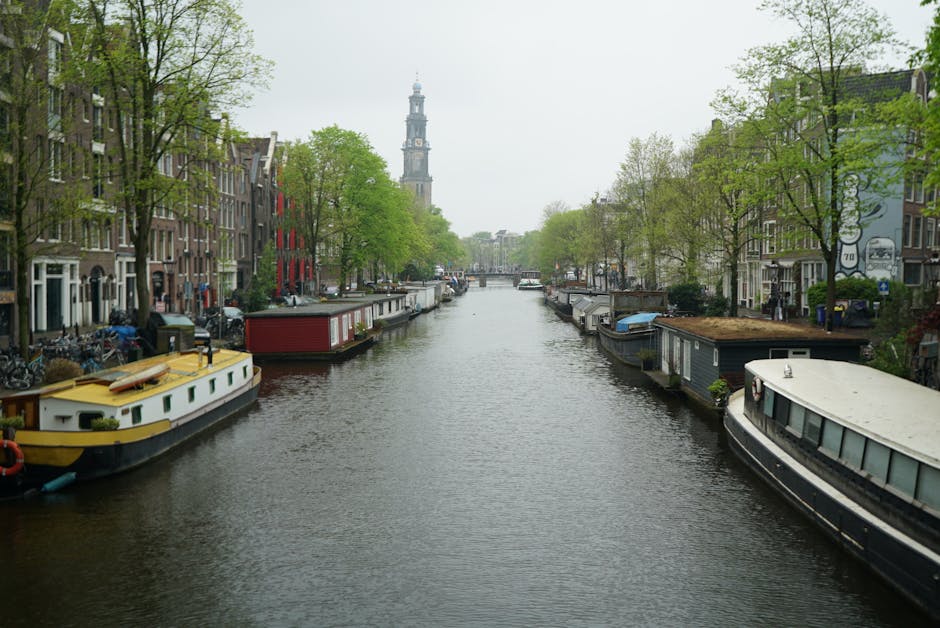
See it today: the Rijksmuseum (the Night Watch, the Milkmaid, the Threatened Swan), the Royal Palace on Dam Square, the entire canal belt (UNESCO World Heritage Site since 2010), the Westerkerk (1631), the Portuguese Synagogue (1675) and Rembrandt’s house at Jodenbreestraat 4 (now a museum).
Slow Decline: 1700 – 1810
The 18th century was Amsterdam’s quiet century. The country slipped from first to second-tier power. The VOC began to lose money around 1720 and was officially dissolved in 1798. Britain and France overtook the Dutch in trade and naval power.
- 1795 — French revolutionary armies occupy the Netherlands; the old Dutch Republic ends. The new Batavian Republic is proclaimed.
- 1806 — Napoleon installs his brother Louis as King of Holland. Louis moves into Amsterdam’s Town Hall — that’s why the building is now called the Royal Palace.
- 1810 — Napoleon annexes the Netherlands directly into France. Amsterdam is briefly the third-largest city in the French Empire.
Industrial Reawakening: 1813 – 1900
After Napoleon’s fall in 1813, the Netherlands becomes a kingdom under William I of Orange. Amsterdam is no longer the global power it once was — Rotterdam takes over as the country’s main port — but the 19th century brings industrialisation and a building boom.
- 1839 — first Dutch railway, Amsterdam–Haarlem.
- 1876 — the North Sea Canal opens, allowing modern ships direct access to Amsterdam’s harbour.
- 1885 — the Rijksmuseum opens, designed by Pierre Cuypers. Built to house the national art collection in monumental neo-Gothic style.
- 1889 — Amsterdam Centraal Station opens, also by Cuypers, on three artificial islands in the IJ.
- 1898 — Queen Wilhelmina is crowned at the Nieuwe Kerk on Dam Square.
See it today: Amsterdam Centraal, the Rijksmuseum, the Concertgebouw (1888) and the elegant 19th-century Vondelpark (1864).
Early 20th Century: 1900 – 1939
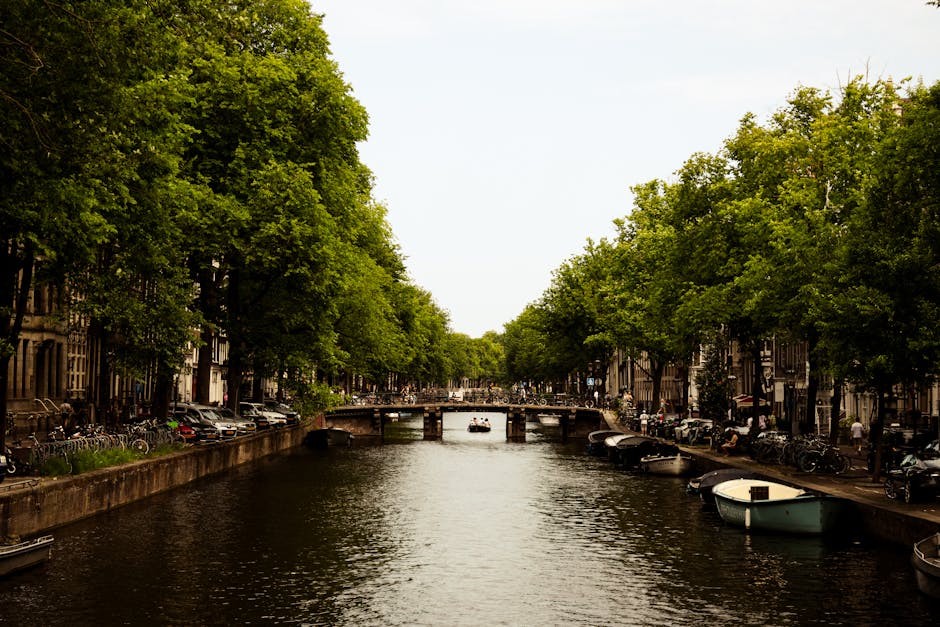
The Netherlands stays neutral in WWI but suffers food shortages and refugee waves. Amsterdam expands south for the first time in three centuries — the Amsterdam School architectural movement (Berlage, De Klerk, Kramer) builds entire new neighbourhoods around De Pijp and the Rivierenbuurt with curving brick facades and ornamental ironwork.
- 1903 — Berlage’s Beurs van Berlage (Amsterdam Stock Exchange building) opens, considered the first work of modern Dutch architecture.
- 1928 — the Olympic Games are held in Amsterdam; the new Olympic Stadium is built south of the city.
- 1934 — the Jordaan riots: hunger and high rents trigger working-class unrest.
World War II & the Holocaust: 1940 – 1945
10 May 1940: Nazi Germany invades the neutral Netherlands. After five days, Rotterdam is bombed flat and the country surrenders. The five-year occupation that follows is the darkest chapter in Amsterdam’s history.
- Amsterdam was home to about 80,000 Jews in 1940 — roughly 10% of the city. By 1945, only about 5,000 had survived.
- February 1941 — the February Strike: dockworkers, tram drivers and tens of thousands of Amsterdammers strike to protest the deportation of Jewish citizens. Crushed within days, but the only mass civil protest against the Holocaust anywhere in Nazi-occupied Europe.
- 1942–44 — Anne Frank, age 13, hides with her family above her father’s company at Prinsengracht 263. She writes a diary. The family is betrayed in August 1944; Anne dies at Bergen-Belsen in February 1945.
- Winter 1944–45 — the Hunger Winter. Allied advances liberate the south of the Netherlands but the north — including Amsterdam — endures a brutal famine. 20,000 die. Survivors strip parks bare for firewood and eat tulip bulbs.
- 5 May 1945 — Liberation Day. The German garrison surrenders; the Dutch national holiday Bevrijdingsdag remembers it every year.
See it today: the Anne Frank House, the National Holocaust Museum (opened 2024 in the former Hollandsche Schouwburg theatre), the Resistance Museum (Verzetsmuseum), the Dockworker Statue at Jonas Daniël Meijerplein, and the Hollandsche Schouwburg memorial site itself.
Post-War Reinvention: 1945 – 1980
Post-war Amsterdam was poor, half-empty (the Jewish neighbourhood east of Nieuwmarkt was largely deserted) and traumatised. Recovery was slow. By the late 1960s the city had reinvented itself as a counter-cultural capital.
- 1947 — the diary of Anne Frank is published.
- 1965 — the Provo movement stages absurdist street protests against the establishment, smoke and traffic, and inspires hippie culture across Europe.
- 1970s — squatters take over abandoned canal-side buildings. Vondelpark fills with travellers from California, Israel, Germany. Amsterdam becomes the European capital of soft drugs and youth tourism.
- 1973 — the Van Gogh Museum opens.
- 1976 — Dutch drug law splits soft from hard drugs and decriminalises personal cannabis use; the modern coffeeshop is born.
- 1980 — Queen Beatrix’s coronation in the Nieuwe Kerk is overshadowed by squatter riots: "geen woning, geen kroning" — "no housing, no coronation".
Modern Amsterdam: 1980 – Now
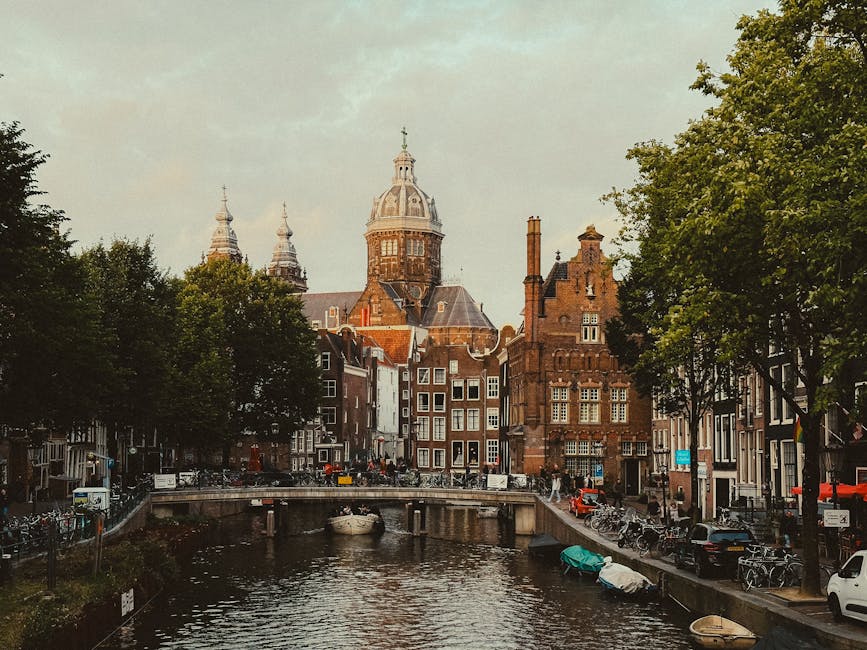
- 1980s — gentrification arrives. Squatter buildings turn into co-ops; the Jordaan starts to become an expensive postcode.
- 1992 — Bijlmer disaster: an El Al cargo plane crashes into a tower block in south-east Amsterdam, killing 43.
- 2001 — the Netherlands becomes the first country to legalise same-sex marriage. The first weddings are held at Amsterdam City Hall.
- 2010 — UNESCO inscribes the 17th-century canal belt on the World Heritage List.
- 2013 — the Rijksmuseum re-opens after a 10-year, €375-million renovation.
- 2018 — Amsterdam Marketing rebrands away from "I amsterdam" mass tourism marketing; the city begins its "quality not quantity" tourism strategy.
- 2020–22 — the COVID pandemic empties Amsterdam for the first time since 1945. Tourism returns sharply in 2023.
- 2024 — the National Holocaust Museum opens after 20 years of planning.
- 2025 — Amsterdam celebrates its 750th anniversary on 27 October.
Amsterdam History at a Glance
- 1175 — The dam is built on the Amstel.
- 1275 — First written reference; the city’s official birthday.
- 1306 — Oude Kerk consecrated.
- 1578 — The Alteratie: Amsterdam becomes Protestant.
- 1602 — VOC and the Amsterdam Stock Exchange founded.
- 1613 — Construction of the canal belt begins.
- 1648 — Dutch independence formalised.
- 1655 — Town Hall (now Royal Palace) opens.
- 1672 — Disaster Year (Rampjaar).
- 1798 — VOC dissolved.
- 1813 — Kingdom of the Netherlands founded.
- 1885 — Rijksmuseum opens.
- 1889 — Amsterdam Centraal opens.
- 1928 — Olympic Games.
- 1940 — Nazi occupation begins.
- 1945 — Liberation. Anne Frank dies in Bergen-Belsen.
- 1965 — Provo movement begins.
- 2001 — Same-sex marriage legalised.
- 2010 — Canal belt becomes UNESCO World Heritage Site.
- 2025 — Amsterdam turns 750.
Where to See History in Amsterdam Today
- Oude Kerk (Oudekerksplein 23) — the oldest surviving building.
- Begijnhof (Spui) — medieval almshouses, including the only wooden house left.
- Royal Palace on Dam — the former Town Hall, the "eighth wonder of the world" in 1655.
- Westerkerk — the most visible Golden Age church.
- Rembrandt House Museum (Jodenbreestraat 4).
- Rijksmuseum — Dutch Golden Age painting in one collection.
- Anne Frank House (Prinsengracht 263).
- National Holocaust Museum (Plantage Middenlaan 27).
- Resistance Museum (Plantage Kerklaan 61).
- Maritime Museum (Het Scheepvaartmuseum) — VOC and Dutch sea power.
- Amsterdam Museum (re-opening 2026 in Hermitage building) — the city’s own history museum.
- Portuguese Synagogue — the largest 17th-century synagogue in the world.
- Bijlmer Memorial Park — modern history’s most poignant Amsterdam space.
Amsterdam History: FAQ
How old is Amsterdam?
Amsterdam is officially 750 years old as of 2025, dating its founding to the toll-free trade rights granted on 27 October 1275. People had been living on the site for at least 200 years before that.
What was Amsterdam’s Golden Age?
The Dutch Golden Age (roughly 1588–1672, peaking around 1620–1660) was the period when Amsterdam was the most important trading city on earth. The Dutch East India Company, the Bank of Amsterdam and the canal belt all date from this single century.
Why is Amsterdam built on canals?
The canals were a 17th-century city expansion plan: drainage, transport and elegant residential lots all in one. They were dug between 1613 and 1660 in three concentric rings around the medieval centre. Sand from the dunes was packed inside oak piles to create stable building plots.
Why is Amsterdam called the Venice of the North?
Because of those canals — Amsterdam has more than 100 km of them. The nickname is older than people often think; it was already in use by the 17th century, when both Venice and Amsterdam were great trading cities and direct rivals.
What happened to Amsterdam in WWII?
The Netherlands was occupied by Nazi Germany from May 1940 until May 1945. Around 75,000 of Amsterdam’s 80,000 Jews were murdered in the Holocaust. The city itself was largely physically intact, but the population suffered terribly during the 1944–45 Hunger Winter.
What was Amsterdam called before?
The earliest name was Aemstelledamme (1275) — "the dam on the Amstel". This shortened to Amstelredamme, then Amsterdam.
Final Thoughts
Few cities wear their history this openly. The Oude Kerk’s 1306 stones are still standing. The 1655 Royal Palace still anchors Dam Square. Anne Frank’s hiding place is still visible at Prinsengracht 263. The 1613 canal belt is still the place everyone wants to walk. Knowing the timeline doesn’t just impress at dinner parties — it makes every street corner more legible.
For more on the cultural side of the city, see our Amsterdam Culture & History pillar, our Things to Do in Amsterdam guide, and our Amsterdam Neighborhoods Guide for tracing history through districts.