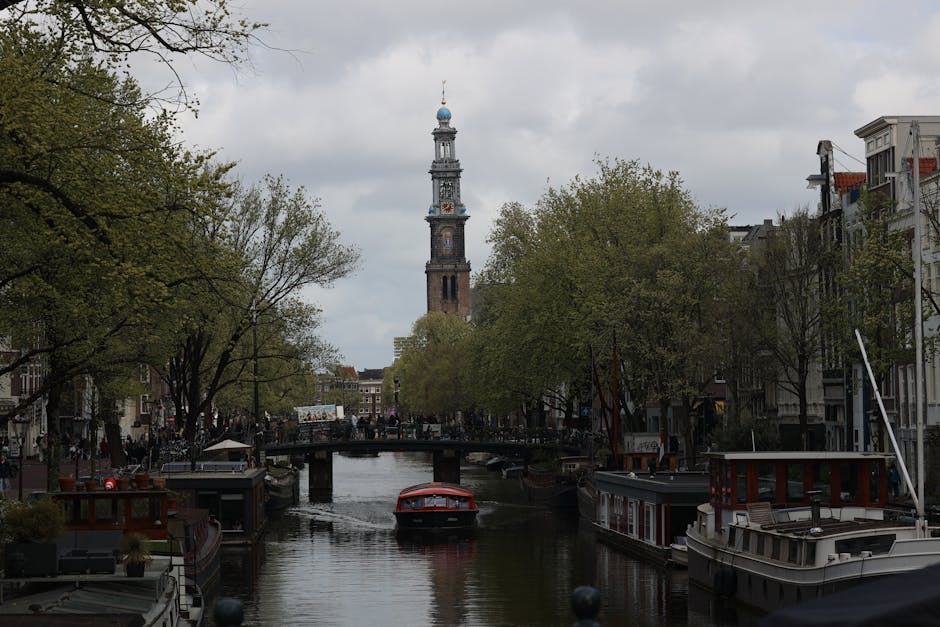
The Jordaan is Amsterdam’s most charming and atmospheric neighbourhood, a tight grid of narrow canals, leaning 17th-century houses, hidden courtyards (hofjes), brown cafes that have been pouring beer for four centuries, and Saturday markets where locals still actually shop. This Jordaan Amsterdam guide walks you through everything you need to know — what to see, where to eat and drink, the best walking route, market days, hofjes you can actually enter, and how to experience the district like a local rather than a passing tourist.
The Jordaan at a glance
A quick orientation before you wander. Details change, so treat this as a starting point and check current hours and prices. For how the Jordaan compares with other districts, see the Amsterdam neighborhoods guide.
| Detail | The short version |
|---|---|
| Best for | Cafes, boutiques, slow walks, photography |
| Don’t miss | Hofjes, Noordermarkt (Sat), brown cafes, Westerkerk |
| Vibe | Charming, villagey, quiet after dark |
| Getting there | Tram to the Jordaan’s edges (check the GVB planner); walkable from center |
| Time needed | Half a day to a full, lazy day |
| Stay or visit | Great to stay if you want calm and charm |
Why the Jordaan Is Worth Your Time
The Jordaan packs more atmosphere per square metre than any other district in Amsterdam. It sits immediately west of the Grachtengordel (the famous canal belt) and stretches roughly from Brouwersgracht in the north to Leidsegracht in the south, hemmed in by Prinsengracht to the east and Lijnbaansgracht to the west. Within those few square kilometres you’ll find Anne Frank House, the Westerkerk bell tower, the Noordermarkt, more than a dozen surviving hofjes, three or four of the city’s oldest brown cafes, and a still-real Dutch neighbourhood where people raise families above flower shops and bicycle workshops.
If the Jordaan grabs you, you will probably also like the elegant Canal Ring (Grachtengordel) just east, and the livelier, market-driven De Pijp across town. Together they make an easy trio over a couple of days.
Unlike the Wallen or Leidseplein, the Jordaan never tips over into theme-park territory. Walk a hundred metres off the main canals and you’re on a residential street where the loudest sound is a tram bell three blocks away. That balance — major attractions on the edges, genuine quiet inside — is exactly what makes this district the single best base for first-time visitors who want to walk everywhere and feel they’re seeing the real Amsterdam.
A Quick History: From Workers’ District to Cultural Heart
The Jordaan was laid out in 1612 as part of Amsterdam’s Fourth Expansion. While the wealthy merchants got the wide concentric canals of the Grachtengordel, the labourers, immigrants and small tradespeople were pushed into this densely packed grid west of Prinsengracht. The streets were built along the existing drainage ditches and country paths, which is why the Jordaan’s roads run at odd angles compared to the rest of the city.
Most of its first inhabitants were religious refugees: Protestant Flemings fleeing Spanish persecution, French Huguenots, and Sephardic Jews from Spain and Portugal. Tanners, dyers, soap-makers and other "smelly trades" were also confined here, away from the merchants. The neighbourhood’s name almost certainly comes from the French jardin (garden), referring either to the small gardens that once dotted the area or to the plant and flower names given to its streets — Bloemstraat, Rozenstraat, Anjeliersstraat, Tuinstraat.
For three centuries the Jordaan stayed working-class. Through the 1960s it was a rough but tightly knit district with its own dialect, songs and sense of identity. Gentrification arrived properly in the 1980s and 90s, and today the Jordaan is one of Amsterdam’s most expensive postcodes — but the bones of the old neighbourhood are still here in the hofjes, the brown cafes, and the families that have run the same butcher or bakery for four generations.
Top Things to Do in the Jordaan
1. Visit the Anne Frank House
Prinsengracht 263, on the eastern edge of the Jordaan, is where Anne Frank and seven others hid for two years during the Nazi occupation. It is one of Europe’s most moving museums and the single most-visited site in Amsterdam. Tickets are sold exclusively online at the official website, released six weeks in advance, and they sell out within hours. Book the moment the calendar opens for your travel dates. Allow 90 minutes inside; no photography is permitted.
2. Shop the Saturday Noordermarkt
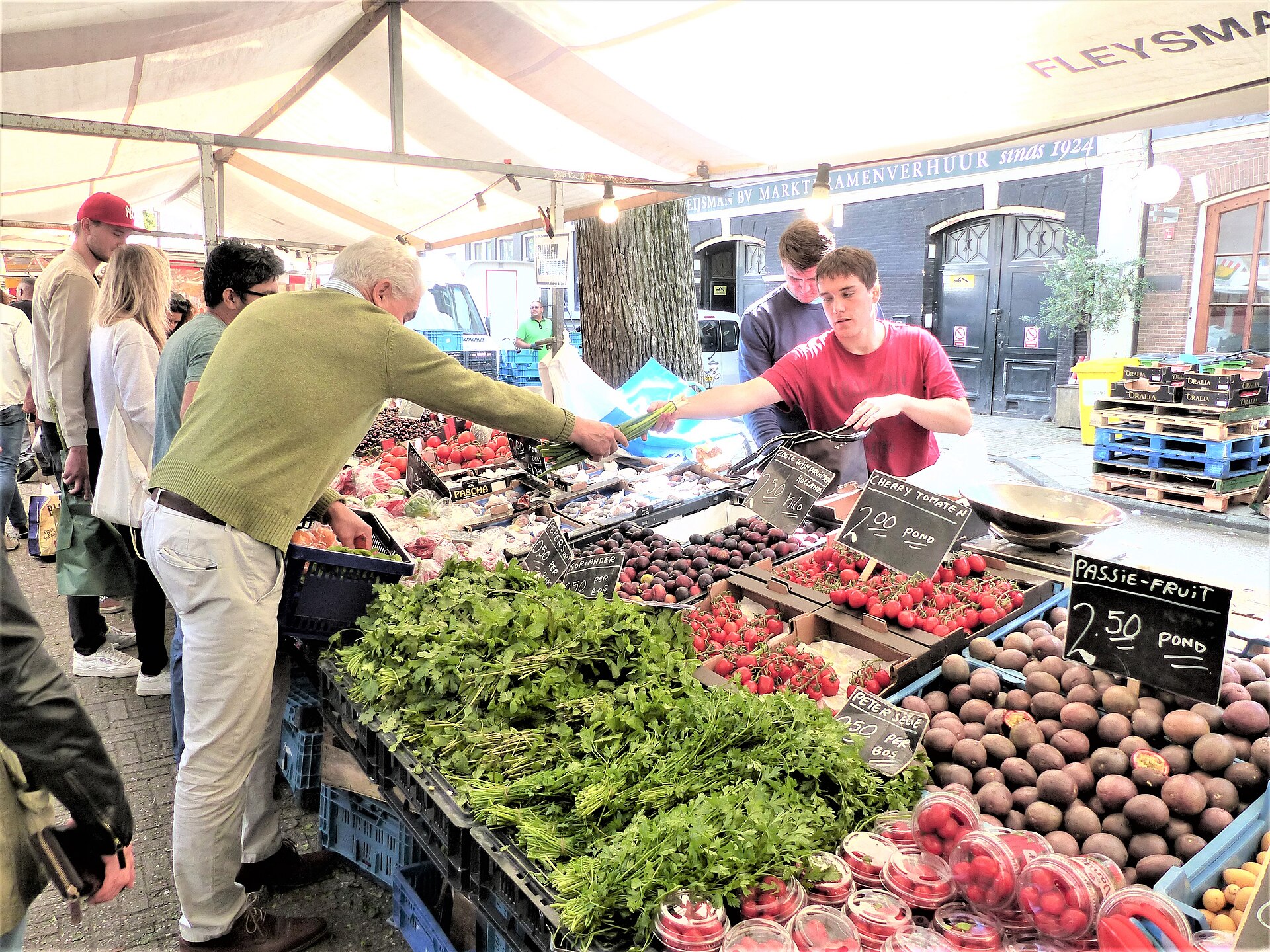
Held every Saturday from 9am to 4pm in the square in front of the Noorderkerk, this is where the Jordaan still feels most like itself. The northern half is a farmers’ market with organic vegetables, raw cheeses, smoked fish, fresh bread and seasonal flowers. The southern half is an antique and vintage flea market — old prints, glassware, jewellery, cameras, vinyl. Locals come early; most of the best stalls are selling out by 11am. Saturday morning at the Noordermarkt remains the most authentic Amsterdam experience available without leaving the city centre.
3. Explore the Hofjes
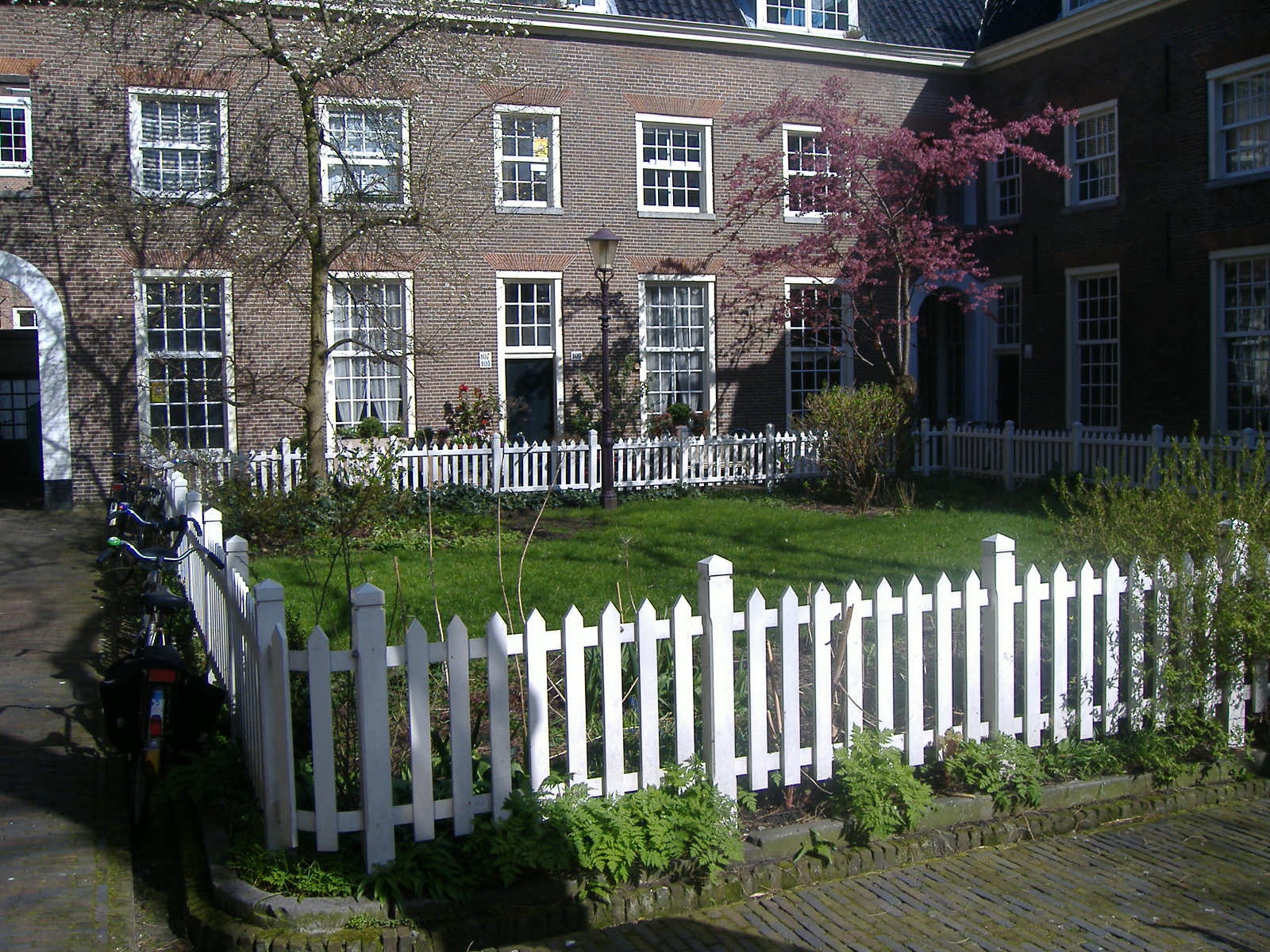
Hofjes are 17th-century almshouses — cluster homes built around a quiet inner courtyard, originally to house elderly single women, widows or workers too old to earn. The Jordaan has the highest concentration in the city, with at least 19 still standing. Most are still residential and quiet, so visit between 10am and 5pm only, keep your voice down, and don’t photograph residents’ windows. The most accessible are:
- Sint Andrieshofje (Egelantiersgracht 107–145) — the oldest in the Jordaan, founded in 1617. Walk through the blue-tiled corridor.
- Karthuizerhofje (Karthuizersstraat 21–131) — the largest hofje in Amsterdam, built on a former Carthusian monastery.
- Claes Claesz Hofje (1e Egelantiersdwarsstraat 1–5) — three connected courtyards founded in 1626 for widows of mariners.
- Raepenhofje (Palmgracht 28–38) — six tiny houses around an even tinier garden, founded in 1648.
- Suyckerhoff Hofje (Lindengracht 149–163) — the most photogenic, with a beautifully tended garden.
4. Houseboat Museum (Woonbootmuseum)
The world’s only houseboat museum sits inside a 1914 freighter called the Hendrika Maria, moored on Prinsengracht five minutes from Anne Frank House. It’s small and not flashy, but it’s the only way to see what living on one of Amsterdam’s houseboats is actually like — the tiny galley kitchen, the bath under a hatch, how electricity and sewage hookups work. Open daily 10:00 to 17:00 (until 20:00 from 1 July to 30 September); €9.50 for adults, or €8 for early-morning online tickets.
5. Amsterdam Tulip Museum
One small room on Prinsengracht 116 telling the story of Tulip Mania — the 1630s speculative bubble when a single bulb sold for the price of a canal house. It’s modest but informative, particularly for visitors who can’t time their trip with Keukenhof’s spring season. Combine with a visit to the attached shop, which sells the only certified-export bulbs in central Amsterdam.
6. Browse the Galleries
The Jordaan is Amsterdam’s gallery district. The streets between Rozengracht and Westerstraat hold more than 40 contemporary art galleries, most clustered along Bloemgracht and Hazenstraat. Galerie Ron Mandos (Prinsengracht 282) shows major Dutch and international names; Eduard Planting Gallery (Eerste Bloemdwarsstraat) specialises in fine-art photography; and Galerie Mokum (Oudezijds Voorburgwal — but with strong Jordaan ties) holds the country’s largest collection of contemporary Dutch realism. Most galleries are open Wednesday to Saturday afternoons and free to enter.
A Suggested Self-Guided Jordaan Walking Route
This 2.5-kilometre loop takes about two hours at a relaxed pace and covers the highlights without backtracking. Start early — ideally before 10am on a weekday — to enjoy quiet streets and good light for photos.
- Westerkerk & Anne Frank House (Prinsengracht 281). Begin at the Westertoren. Even if you’ve not booked Anne Frank House, the queue and the small statue of Anne by the church are worth a moment.
- Cross to Bloemgracht — sometimes called the "Herengracht of the Jordaan" for its grand 17th-century houses. Look for the three tall sister houses at numbers 87–91.
- Detour up Eerste Bloemdwarsstraat to Lindengracht, a former canal that was filled in. Saturday market here too.
- Walk to the Noorderkerk and Noordermarkt. Pause for coffee at Winkel43 — their apple pie is famous and deserves the hype.
- South down Prinsengracht a few blocks, then west on Egelantiersgracht. This is the prettiest canal in the Jordaan. Find the Sint Andrieshofje at numbers 107–145; gently push the unmarked blue door open and step into the courtyard.
- End at Café ‘t Smalle (Egelantiersgracht 12) for a beer or genever on the waterside terrace, in the same spot since 1786.
The Best Brown Cafes in the Jordaan
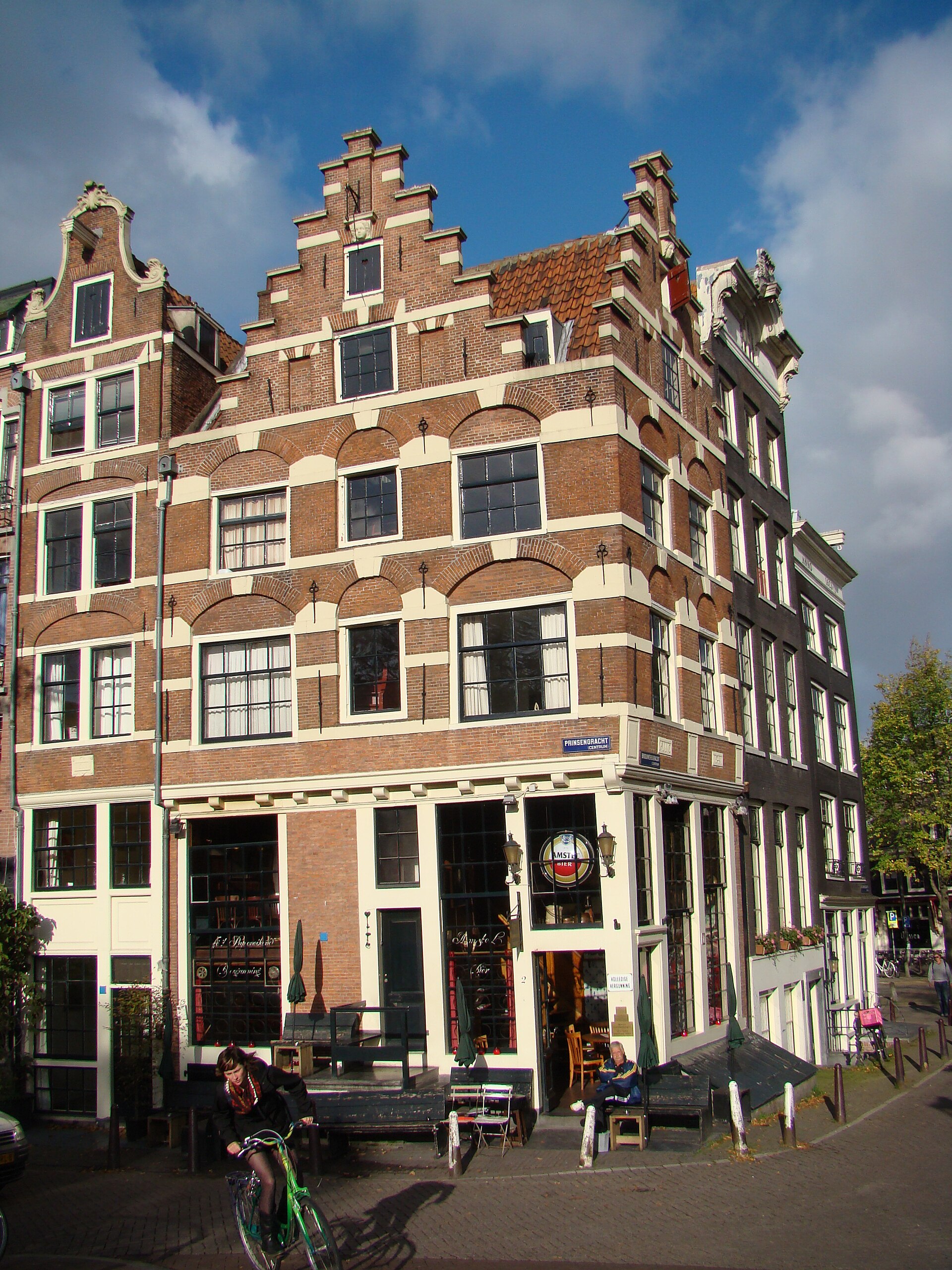
A bruin café (brown cafe) is Amsterdam’s version of an English pub or a French bistrot — small, wood-panelled, beer-stained, no music, no TVs, and ideally about three hundred years old. The Jordaan has the highest concentration in the country.
- Café ‘t Smalle (Egelantiersgracht 12). Operating since 1786 in a building that was originally a Genever distillery. The waterside terrace is the most-photographed in Amsterdam and rightly so.
- Café ‘t Papeneiland (Prinsengracht 2). Built in 1642. The basement is rumoured to hide a tunnel used to smuggle Catholic priests during Protestant Amsterdam’s anti-Catholic period. Order the apple pie.
- Café Chris (Bloemstraat 42). The bar claims to date from 1624, and its own story has the builders of the Westerkerk drinking their wages here.
- Café de Tuin (Tweede Tuindwarsstraat 13). Slightly newer (only about 100 years old) but the most local of the lot — usually the soundtrack is Dutch conversation, not English.
- Café P 96 (Prinsengracht 96). The pavement boat — extends right onto the canal in summer.
Etiquette: order at the bar, settle the tab when you leave, tip by rounding up rather than 15%. A small Heineken is a vaasje; a large is a fluitje. Genever (the Dutch ancestor of gin) is served in a tulip glass filled to the brim — the first sip is taken bent over with hands behind your back.
Where to Eat in the Jordaan
Breakfast & Coffee
Winkel43 (Noordermarkt 43) is the Jordaan’s most famous breakfast spot, owed entirely to its appeltaart — a thick-crusted, caramelised-apple pie served warm with a mountain of unsweetened whipped cream. Expect a 30-minute wait on Saturday mornings; it’s worth it. Toki (Binnen Dommersstraat 15) does Tokyo-style filter coffee and minimalist pastries. Pluk Amsterdam (Reestraat 19, just over the Nine Streets line but still walkable) serves the city’s best smoothie bowls and avocado toasts.
For more on Dutch dishes and where to find them around the city, our Amsterdam food and drink guide pairs well with a Jordaan eating crawl.
Lunch
Small World Catering (Binnen Oranjestraat 14) — a tiny deli case of seasonal salads, quiches, and cakes; everything is excellent. De Belhamel (Brouwersgracht 60) sits at the prettiest corner of any Amsterdam canal junction; the lunch menu is reasonable and the Art Nouveau interior is a destination in itself. Daalder (Lindengracht 90) hides behind an unassuming door — book ahead for the lunch tasting menu.
Dinner
- Moeders (Rozengracht 251). "Mothers" — a Dutch home-cooking restaurant. The dining room is decorated with thousands of photos of customers’ mothers. Order the stamppot (mashed potatoes with kale and smoked sausage) for the most traditional meal in the city.
- Toscanini (Lindengracht 75). The Jordaan’s Italian institution. House-made pasta, hand-pulled mozzarella, regional wines. Booking essential, weeks ahead in summer.
- Balthazar’s Keuken (Elandsgracht 108). Three-course set menu only, changes weekly. One of the most consistently excellent mid-priced restaurants in the city.
- Restaurant Bordewijk (Noordermarkt 7). Open since 1985 and somehow still under-the-radar. Modern European cooking that punches well above its price tag.
- SLA Jordaan (Westerstraat 34). Salads done seriously — the city’s best fast-casual healthy option.
Shopping in the Jordaan
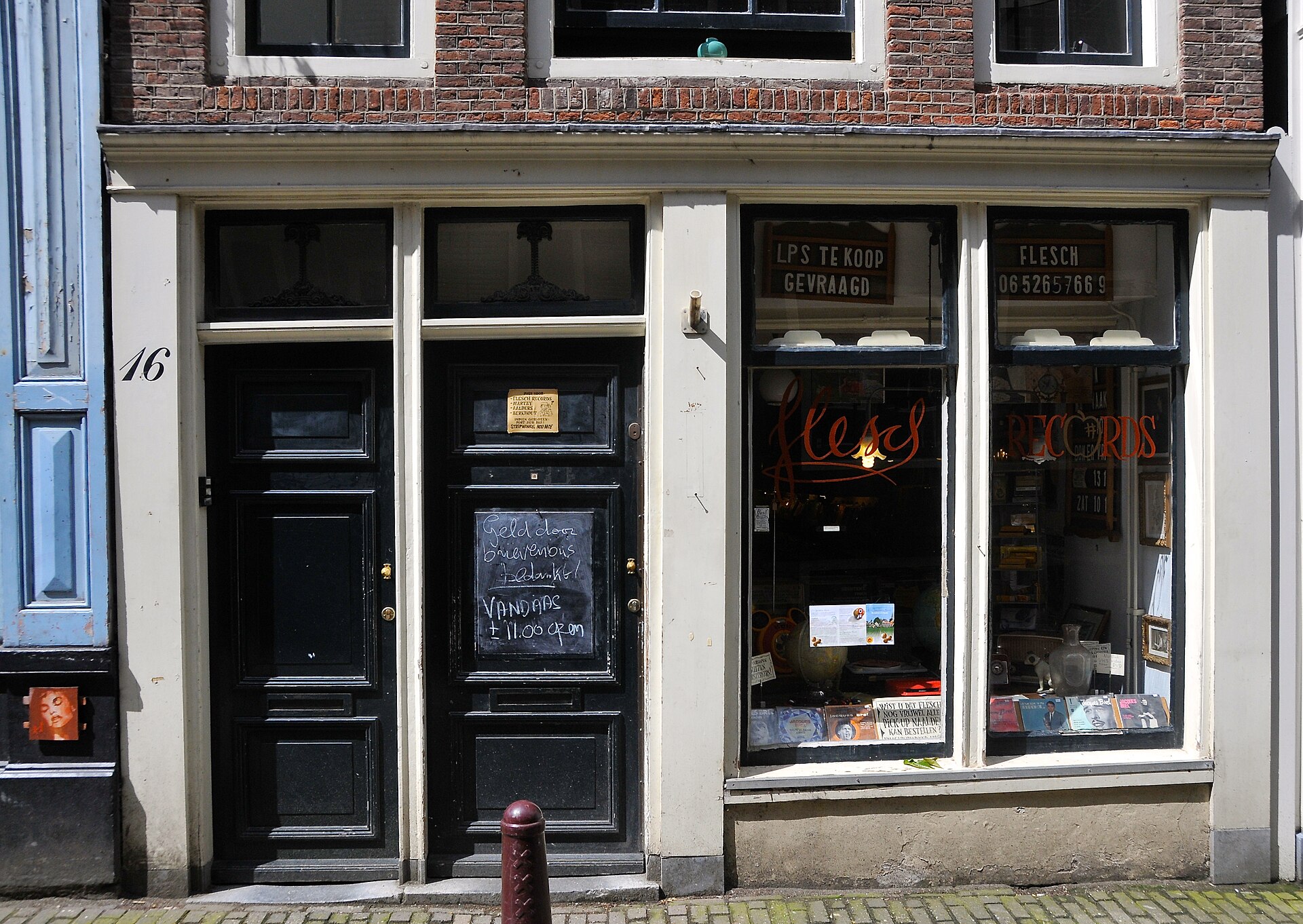
The Jordaan is independent-shop territory — almost no chain stores, and the few that exist (Lush, Rituals) are tucked away. The best concentrations are along Westerstraat, Haarlemmerstraat (technically just north of the Jordaan, but always grouped with it), Hazenstraat, and the cross-streets that link Prinsengracht to Lijnbaansgracht.
- Concrete Matter (Haarlemmerdijk 127) — beautifully curated men’s lifestyle objects: pocket knives, leather wallets, vinyl, Japanese stationery.
- Things I Like Things I Love (Haarlemmerstraat 29) — the city’s best selection of independent fashion labels.
- Het Magazijn (Lindengracht 191) — vintage Scandinavian and Dutch design furniture and lamps.
- Mooi Mooier Mooist (Westerstraat 60) — homewares and gifts; everything looks like it would cost double in the rest of the city.
- Friday Next (Overtoom 31, just over the Jordaan border) — concept store with rotating exhibitions, a cafe, and a furniture showroom.
- De Kaaskamer (Runstraat 7, on the Jordaan/Nine Streets boundary) — the best Dutch cheese shop in the city; vacuum-pack your aged Goudas to take home.
Jordaan Markets by Day
- Monday — Lapjesmarkt textile market on Westerstraat (8am–1pm); Noordermarkt flea market (9am–1pm).
- Wednesday — Lindengracht street market (mixed; food, clothes, household).
- Saturday — Noordermarkt farmers’ & antique market (9am–4pm); Lindengracht general street market (9am–5pm); Westermarkt clothing & accessories on Westerstraat.
Saturday is the unbeatable day for any Jordaan visit. You can hit three markets within ten minutes’ walk, eat your way through the lot, and still be at Café ‘t Smalle by 4pm.
Hidden Streets & Photo Spots
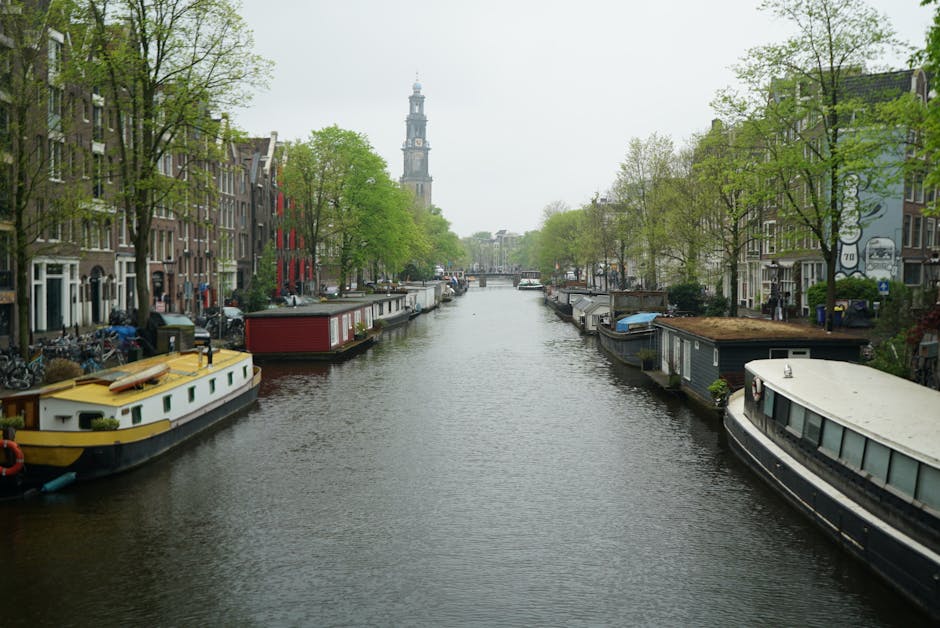
- Lindenstraat — possibly the prettiest non-canal street in the city. Ivy-clad houses near Eerste Lindendwarsstraat.
- Driehoekstraat ("Triangle Street") — a tiny three-cornered street with a 17th-century distillery still operating in part of the building.
- Karthuizersstraat — a quiet green street with the Karthuizerhofje hidden behind unmarked doors at numbers 21–131.
- Egelantiersgracht at sunrise — the canal points directly into the morning sun, gilding the gables.
- The Bloemgracht-Prinsengracht corner — the most-photographed crossing in Amsterdam after the Magere Brug.
Where to Stay in the Jordaan
Hotels in the Jordaan are small, family-run and generally excellent — but the district has fewer beds than the city centre, so book early.
Prefer a different base? Compare areas in our guide to the best neighborhoods for first-time visitors, or read up on Amsterdam-Noord if you want something more creative and offbeat across the IJ.
- The Hoxton Amsterdam (Herengracht 255) — technically just over the canal in the Grachtengordel, but feels Jordaan-adjacent. Stylish, mid-price, brilliant lobby cafe.
- Linden Hotel (Lindengracht 251) — small, affordable, immaculate. Walking distance to everything.
- Mr. Jordaan (Bloemgracht 102) — boutique 17th-century canal-house hotel with just 49 rooms.
- Pulitzer Amsterdam (Prinsengracht 323) — across the canal, but technically the closest five-star to the Jordaan.
- The Toren (Keizersgracht 164) — historic boutique hotel with one of the prettiest canal-view bars in the city.
For more options, see our complete guide to Where to Stay in Amsterdam.
How to Get to the Jordaan
The Jordaan has no metro station, by historic design. The closest stations are Centraal Station (10 minutes’ walk to the northern Jordaan) and Rokin (15 minutes to the southern Jordaan). Several tram lines run along the Jordaan’s edges, but lines 13 and 17 do not stop at Westermarkt until works finish in early 2028, and lines changed on 29 March 2026, so check the GVB journey planner before you go. Best of all, walk or cycle: the Jordaan is best experienced from street level. For a deeper transport overview see our Getting Around Amsterdam guide.
Best Time to Visit the Jordaan
- Saturday morning for the markets; arrive by 9.30am.
- Weekday early evenings (5–7pm) when locals come home and brown cafes hit their proper rhythm.
- Sunday late mornings for the quietest, most photogenic walks; almost no traffic on residential streets.
- Late September for the Jordaan Festival, when residential streets close to traffic, sing-alongs erupt outside cafes, and the neighbourhood throws three days of folk-music block parties.
- April, when tulip planters spill from every window box and bridge.
Practical Tips for the Jordaan
- Cash isn’t always king. Many cafes and small shops are now card-only — and in the Jordaan that often means Maestro/Dutch-issued cards only, not Visa/Mastercard. Carry €50–100 in cash as a backup.
- Open hours skew late. Most independent shops don’t open until 11am, sometimes noon. Plan markets and museums for the morning, shopping for after lunch.
- Cycle paths run through residential streets. Always check both ways before crossing — locals on bikes do not slow down.
- Don’t ring hofje doorbells. If a courtyard has an open door it’s fine to step inside quietly; if it’s closed, it’s closed.
- Watch the bridges. Many Jordaan bridges are narrow and low; tour boats blast their horns under them and you’ll be deafened if you’re standing on top.
Jordaan Amsterdam: FAQ
Is the Jordaan worth visiting?
Yes — the Jordaan is the single most atmospheric district in central Amsterdam and arguably the best-preserved 17th-century neighbourhood in northern Europe. It contains Anne Frank House, the Westerkerk, dozens of hofjes, and the city’s best brown cafes within a 15-minute walk of each other.
How long do I need in the Jordaan?
A focused walking visit takes 2–3 hours. To do it justice with a market, a hofje, lunch, and a brown cafe, give it a full day. Many travellers stay in the Jordaan precisely so they can drop in and out across a long weekend.
Is the Jordaan safe at night?
Yes. The Jordaan is one of the safest, quietest residential districts in central Amsterdam at night. The brown cafes typically close at 1am on weekends and 12am midweek, and after that the streets return to family-neighbourhood quiet. Standard city precautions apply but there is no specific risk associated with the area.
Where is the Jordaan in Amsterdam?
The Jordaan sits immediately west of the Grachtengordel canal belt, bounded by Brouwersgracht (north), Leidsegracht (south), Prinsengracht (east) and Lijnbaansgracht (west). It is a 10-minute walk from Centraal Station.
What is the Jordaan known for?
Narrow canals, gabled 17th-century houses, hidden hofjes (almshouse courtyards), brown cafes, the Saturday Noordermarkt, the Anne Frank House, the Westerkerk tower, and a working-class history that produced its own dialect, songs and a tight community feel that survives in pockets despite gentrification.
Can I do the Jordaan as a day trip?
Absolutely. A morning at the Noordermarkt, lunch at Winkel43 or Moeders, an afternoon walking the hofjes and Egelantiersgracht, and dinner at Toscanini or ‘t Smalle makes for one of the most rewarding single days in Amsterdam.
Final Thoughts
The Jordaan rewards slow travel. Where central Amsterdam asks you to keep moving — next museum, next coffee, next photo — the Jordaan asks you to sit on a bench by Egelantiersgracht and watch the light change for half an hour, then duck into a brown cafe, then walk through one more hofje. Build it into your itinerary as a full day rather than a tick-box hour, and it will quietly become the part of Amsterdam you’ll talk about for years.
For more on Amsterdam’s neighbourhoods, see our complete Amsterdam Neighborhoods Guide, our Best Neighborhoods for First-Time Visitors, or our hub guide on Things to Do in Amsterdam.
Related Amsterdam guides
- Nine Streets (De 9 Straatjes) — the city’s best browsing-and-coffee grid.
A guide who knows which hofje doors you can push is worth the whole tip — see our best walking tours in Amsterdam guide.
Two of the city’s best slices are within five minutes of each other on this side of the Prinsengracht — our guide to the best apple pie in Amsterdam explains why the queue outside Winkel 43 is a Monday and Saturday problem rather than a permanent one.
This neighbourhood has the highest concentration of old bars in the city — our guide to brown cafés in Amsterdam names them street by street, from ’t Smalle’s canal terrace to the sing-alongs at Café Nol.
Photo Credits
- Cafe ‘t Papeneiland: Amsterdam Prinsengracht 2 718 by Arch, Public domain, via Wikimedia Commons.
- Produce shopping at Noordermarkt: Farmer’s Market (18) by Elekes Andor, CC BY-SA 4.0, via Wikimedia Commons.
- Karthuizerhof courtyard houses: Courtyard in Amsterdam, Holland by Majorly, CC BY-SA 3.0, via Wikimedia Commons.
- A small record shop in the Jordaan: ‘Flesch Records’ Noorderkerkstraat Amsterdam (7582867270) by FaceMePLS (Flickr), CC BY 2.0, via Wikimedia Commons.