The single most-asked Amsterdam transport question is some version of: “Do I need an OV-chipkaart?” The 2026 answer is far simpler than it used to be. Since the nationwide rollout of OVpay contactless tapping, most visitors no longer need an OV-chipkaart at all, because your contactless bank card or phone now works directly on every tram, bus, metro and train in the country. This guide explains what the OV-chipkaart still does, when it is worth buying one, when OVpay is the smarter choice, which tourist tickets are actually good value, and how the new OV-Pas changes the picture again.
The short version, in about forty words: for a typical city break you do not need the OV-chipkaart. Tap a contactless card or phone (OVpay) to ride, or buy a GVB day ticket if you travel a lot. Reserve the plastic card for long stays or cash top-ups. The rest of this page is the detail behind that answer.
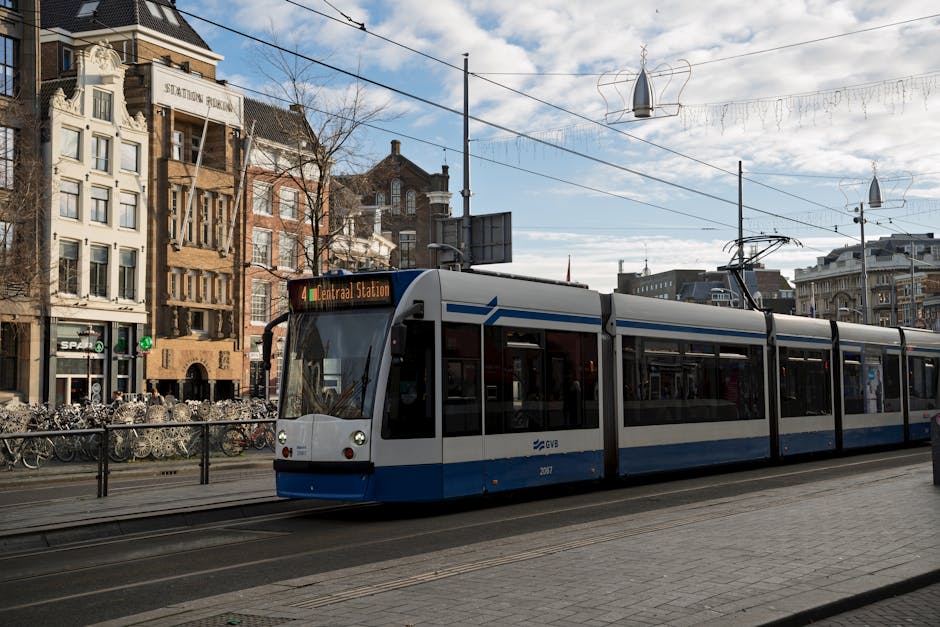
Quick Answer: OV-Chipkaart, OVpay, or a Pass?
Your best option depends almost entirely on how long you are staying and how much you will ride. The table below cuts to the chase; the sections that follow explain the why behind each choice. Treat the prices as 2026 estimates and confirm them in the GVB or NS app before you travel, since fares tend to nudge upward each year.
| Your situation | Best choice | Rough cost (2026) |
|---|---|---|
| 1-3 days, light transport use | OVpay (tap a contactless card/phone) | Pay per ride, daily cap applies |
| 1-3 days, heavy transport use | GVB day or multi-day ticket | ~EUR 9.50 / 24h up |
| Airport plus Keukenhof / Zaanse Schans | Amsterdam & Region Travel Ticket | ~EUR 23-44 for 1-3 days |
| Travelling around the Netherlands | OVpay nationwide, or anonymous OV-chipkaart | EUR 7.50 card + balance |
| Visiting often / settling in | The new digital OV-Pas | ~EUR 6 |
- Visiting 1-3 days, low transport use – just use OVpay (tap your contactless bank card or phone). Nothing to buy.
- Visiting 1-3 days, lots of transport – buy a GVB Day Ticket from any tram driver or vending machine.
- Visiting 4-7 days, lots of transport including the airport – the Amsterdam & Region Travel Ticket covers Schiphol, Keukenhof and Zaanse Schans buses.
- Travelling around the Netherlands – use OVpay nationwide, or buy a refillable anonymous OV-chipkaart.
- Visiting more than once a year – look at the new digital OV-Pas that is replacing the OV-chipkaart.
If you are still mapping out how the trams, metro and ferries actually fit together, read this alongside our Amsterdam public transport guide, which covers the network itself rather than just how to pay for it.
OVpay: The Easiest Tourist Option
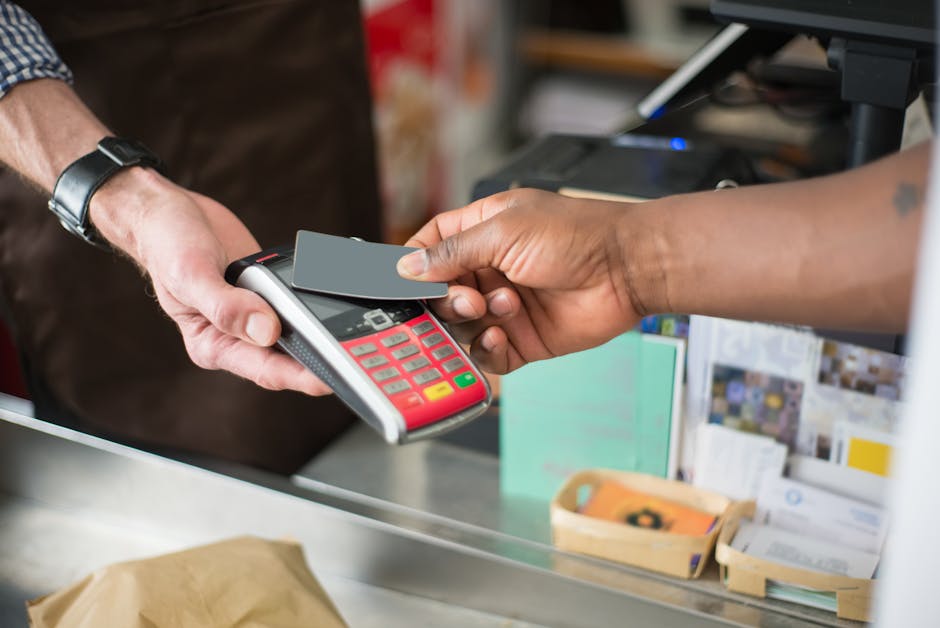
OVpay is the reason this whole topic got simpler. It launched nationwide a couple of years ago and, for a short visit, it is genuinely all you need: nothing to buy, nothing to load, nothing to top up. You walk up, tap, ride, and tap off. For a traveller arriving jet-lagged with a phone already set up for Apple Pay or Google Wallet, that is about as low-friction as public transport gets.
- Tap a contactless bank card (Visa, Mastercard, Maestro, V PAY, American Express) on the reader when you board.
- Tap again when you exit the tram, bus or metro.
- Use the same card for one journey – never tap your phone to check in and your plastic card to check out.
- Apple Pay, Google Wallet and Samsung Pay all work.
- A daily cap applies across the GVB network, so heavy use in one day will not run away from you.
- Per-trip fares combine a small boarding fee with a per-kilometre charge, capped per journey within the city.
- Wait for the green tick and beep – a red cross means the tap did not register.
- Charges appear on your statement within a few days, often grouped together at the end of the day.
The quiet superpower of OVpay is that it is not a local Amsterdam thing; it works across the entire country on every operator, from GVB here to NS intercity trains, Connexxion regional buses, RET in Rotterdam and HTM in The Hague. One card or phone covers a tram in Amsterdam in the morning and a train to Utrecht in the afternoon. That makes it the obvious default if your trip includes any of the classic day trips from Amsterdam, since you do not have to think about tickets at all between cities. The one habit to build is checking that a green tick actually appeared; an absent-minded tap that did not take is the usual cause of an unexpected default charge.
What the OV-Chipkaart Still Is
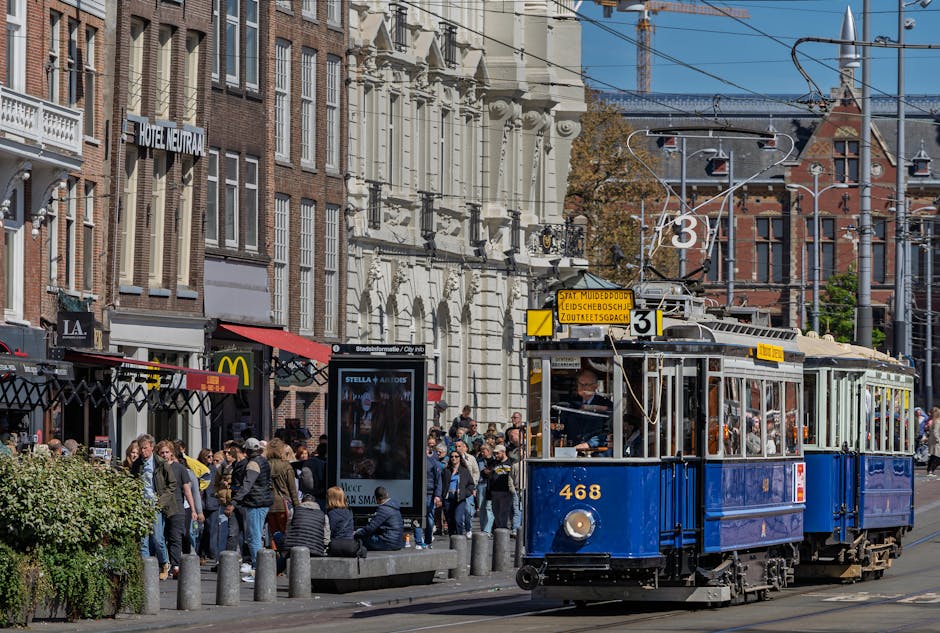
The OV-chipkaart is the yellow plastic smartcard that every Dutch operator ran on for well over a decade. It still works in 2026 and you will see locals using it everywhere, but its role for visitors has shrunk to a few specific cases. Understanding those cases stops you buying a card you will barely use and then struggling to reclaim the deposit on your last day.
- Anonymous OV-chipkaart: around EUR 7.50, non-refundable in practice for tourists, valid several years, tops up at machines and staffed counters.
- Personal OV-chipkaart: requires a Dutch bank account, so it is not available to short-term visitors.
- Disposable OV-chipkaart: a cheap paper card pre-loaded with 1, 2 or 3 days of unlimited GVB rides.
- Top up at any GVB ticket machine, an NS station kiosk, or an Albert Heijn supermarket.
- Minimum balance to enter a tram or bus is a few euros; for a train you need around EUR 20 loaded.
- Refunds on the deposit and unused balance generally need a Dutch bank or postal address, which makes them impractical for tourists.
So who should still buy one? Realistically, three groups. Travellers who would rather not link a bank card to a tap-and-go system and prefer to load cash; people staying long enough that a refillable card feels tidier than dozens of contactless charges; and the occasional visitor whose foreign card simply refuses to play nicely with the readers. For everyone else, the verdict is straightforward: OVpay does the same job with less hassle and no deposit to chase. If you do end up with a card and plan to ride the trams a lot, our Amsterdam tram routes guide will help you get your money’s worth out of it.
GVB Day & Multi-Day Tickets
If you are the sort of traveller who hops on a tram for every other errand, a GVB unlimited day ticket quickly beats paying per ride. These are sold by every tram driver, at vending machines, at GVB ticket offices and at the I amsterdam Visitor Centre, and they cover unlimited travel on GVB tram, bus, metro and ferry within the city. Prices rise gently with each extra day, so the per-day cost of a longer pass is noticeably lower than a string of single days.
- 1-hour GVB ticket: around EUR 3.40
- 1 day (24h): around EUR 9.50
- 2 days (48h): around EUR 15.50
- 3 days (72h): around EUR 21
- 4-7 days: scaling up toward roughly EUR 41-42 for a week
Two things to keep straight. First, a GVB pass runs for a set number of hours from your first tap, not to midnight, so timing your first ride well can squeeze an extra evening or morning out of it. Second, the pass is GVB-only: it does not cover NS trains, regional Connexxion buses, the Schiphol airport bus 397, or the Keukenhof shuttles. If your plans cross those boundaries, you want a different ticket, which is exactly what the next section is about.
Amsterdam & Region Travel Ticket
This is the single best ticket for visitors who want to combine the city with the airport and a couple of the famous nearby sights in one go. It comes in 1, 2 and 3-day versions, and crucially it stretches well beyond the GVB city zone.
- 1 day: around EUR 23
- 2 days: around EUR 34
- 3 days: around EUR 44
The ticket includes all GVB tram, bus, metro and ferry travel, the Schiphol airport train, and the regional buses that reach Keukenhof, Zaanse Schans, and the Volendam and Marken area. For a visitor planning, say, a tulip-season day at Keukenhof plus a windmill afternoon plus airport transfers, it removes a lot of ticket admin and often costs less than buying each leg separately. Buy it at Schiphol Plaza, the I amsterdam Visitor Centre near Centraal, or online. If you arrived through the airport, our Schiphol to Amsterdam guide compares this ticket against a plain train fare for that specific journey.
I amsterdam City Card vs OV-Chipkaart
People often lump the I amsterdam City Card in with transport cards, but it is really a sightseeing bundle that happens to include travel. It packages unlimited GVB transport with free entry to dozens of museums and a canal cruise, and it is priced accordingly. The honest test is simple: it earns its keep only if you will pack in three or more included museums a day, and even then it is worth checking the list, because a couple of the biggest names are not part of it. For pure getting-around, a GVB ticket or plain OVpay is cheaper. To work out whether the card fits your itinerary, run it against the shortlist in our Amsterdam trip planning guide.
Trains: Amsterdam Centraal & Schiphol
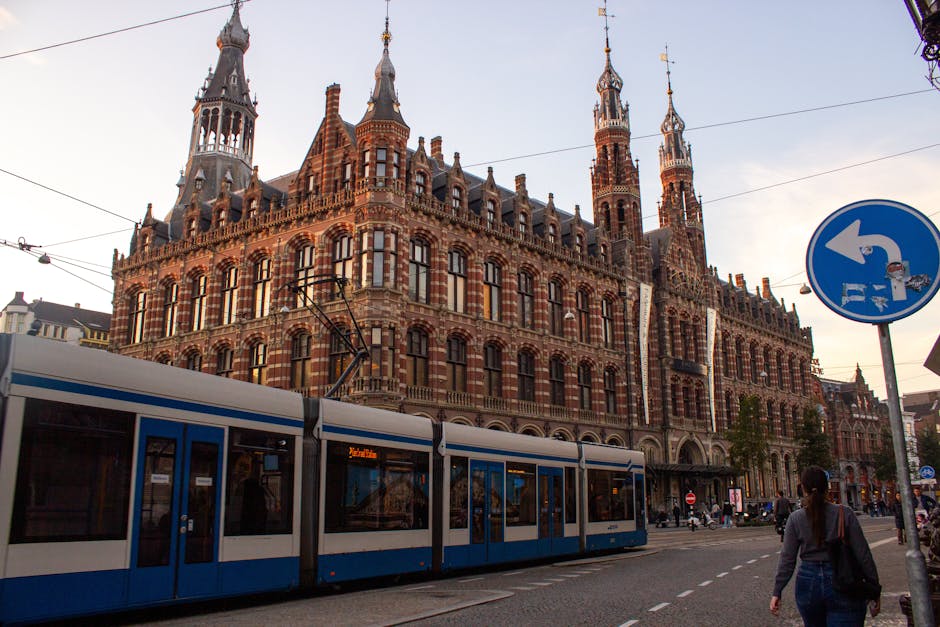
Trains in the Netherlands are run by NS and a few regional operators, and they sit slightly apart from the GVB city system, which trips up plenty of visitors. The key point is that train fares are separate from your GVB pass: a day ticket good for unlimited trams will not get you to Utrecht. The good news is that OVpay smooths over the seam, since the same contactless tap works on trains too.
- Schiphol Airport to Centraal Station: roughly 17-20 minutes, around EUR 5-6 single. Pay with OVpay or buy a paper ticket from the yellow NS machines at Schiphol Plaza.
- NS train day passes exist but are expensive and rarely worth it for a short city stay.
- Check in and check out at the NS readers, which are standalone yellow posts on the platform, or a missed checkout charges a default fare.
- The OV-chipkaart needs around EUR 20 loaded to start a train journey; OVpay has no minimum.
For day trips by rail, OVpay is almost always the path of least resistance: tap at the yellow post on the platform when you set off and again when you arrive, and the fare sorts itself out. The main thing to remember is that train readers are those freestanding posts, not gates, so it is easy to walk straight past them if you are not looking. For where the trains can actually take you in a day, see our day trips from Amsterdam guide.
Free GVB Ferries
A cheerful footnote in any ticketing discussion: the IJ ferries from behind Centraal Station to Buiksloterweg, IJplein and NDSM are completely free. No ticket, no tap, no card. They run every few minutes day and night, take about five minutes, and carry bikes. They are one of the city’s genuine free pleasures and the easiest way to reach the cafes, film museum and street art of Amsterdam Noord, so do not overthink them, just walk on board.
How to Tap In and Out

Wherever you go and whatever you pay with, the golden rule is the same: tap in at the start and tap out at the end. Forgetting the second tap is the most common and most avoidable way to lose money on Dutch transport, because the system assumes the longest possible journey and charges a default fare. Here is how it works across the modes.
- Trams & buses: tap on the reader when boarding and tap again on exit.
- Metro: tap at the gates entering the platform and again at the exit gates.
- Trains: tap at the standalone yellow NS posts on the platform, both ends of the trip.
- Always wait for the green tick and beep. A red cross means insufficient balance, the wrong card, or a session already open.
- If you forget to tap out, you can usually claim a refund online with proof of the journey.
The New OV-Pas (Replacing the OV-Chipkaart)
The system is mid-transition. The OV-Pas has been introduced as the planned successor to the OV-chipkaart: it costs around EUR 6, can live either as a physical card or as a digital card on your phone, and is fully personalised so it can carry travel discounts and subscriptions. The old plastic OV-chipkaart is being wound down over the next couple of years. For a tourist in 2026 this is mostly background noise, since OVpay remains the simplest route for a short visit, but it is worth knowing about if you visit the Netherlands regularly or are moving here, in which case the personalised pass and its discount options start to matter.
Discounts & Free Travel
A few discounts are genuinely useful for visitors, especially families. They are not always advertised at the machine, so it pays to know they exist.
- Children under 4 travel free on all GVB and NS services.
- Children aged 4-11 with a paying adult often ride free on GVB at weekends and during school holidays.
- NS Kids Vrij lets up to three children travel free on NS trains with one paying adult.
- Off-peak NS day returns carry a worthwhile discount with the right subscription, mainly relevant for longer stays.
- The free GVB ferries cost nothing for anyone.
- A group day train return can cover several people for a flat price, handy for a group day trip.
Practical Tips for Tourists
A handful of small habits will keep your fares clean and your trip smooth. Most of these are the lessons visitors learn the hard way on day one.
- Do not buy an OV-chipkaart at the airport on arrival. Use OVpay or a paper NS ticket for your first ride into town.
- Keep a backup: a cheap paper day ticket is a useful fallback if your card has a bad day.
- Stick to one wallet: switching cards mid-journey on Apple Pay or Google Wallet reads as two trips.
- Mind the boundaries: the Schiphol airport bus 397 does not accept GVB day tickets, so use the regional ticket or OVpay for that leg.
- Watch your phone battery if you pay by phone; a dead phone at an inspection counts as travelling without a valid check-in.
- Inspectors appear unannounced, and the fine for riding without a valid check-in is steep, so always confirm that green tick.
- Bikes on trains need a separate day-bike ticket unless the bike is a foldable.
If you want the rest of the practical groundwork for an Amsterdam trip, from tipping to opening hours to staying safe, our practical Amsterdam information hub covers the things that do not fit neatly into a transport guide. And once you have the ticketing sorted, getting around the rest of the city, including by bike, is well worth a look in our bike rental guide for first-time cyclists.
Schiphol Airport: Cheapest Way Into Town
Since the airport is most travellers’ first encounter with the ticketing system, here is the quick version. The cheapest and fastest option is almost always the train, paid by simply tapping your contactless card. The bus is a touch pricier but drops you nearer the museum quarter, while taxis and ride-hailing make sense mainly late at night or with a lot of luggage.
- NS train from Schiphol Plaza to Centraal: around 17-20 minutes, roughly EUR 5-6. Use OVpay or a paper ticket.
- Bus 397 (Amsterdam Airport Express): about 30 minutes to Museumplein, useful if you are staying near the Rijksmuseum.
- Taxi: roughly 25-40 minutes, around EUR 40-55 to central Amsterdam.
- Uber / Bolt: similar time, typically a little cheaper than a street taxi.
OV-Chipkaart Amsterdam: FAQ
Do I need an OV-chipkaart in Amsterdam?
No. As of 2026, OVpay (tapping a contactless bank card or phone) works on all Amsterdam public transport and on trains nationwide. The OV-chipkaart is still valid but optional, and for a short visit it is usually unnecessary. Keep it in mind only for long stays or cash top-ups.
How much does the OV-chipkaart cost?
An anonymous OV-chipkaart costs around EUR 7.50, which is effectively non-refundable for tourists, and then you load credit on top. The newer personalised OV-Pas costs around EUR 6. For most visitors, neither is needed when OVpay charges straight to a card you already carry.
Can I use OVpay for trains as well as trams?
Yes. OVpay works on NS trains nationwide and on every regional operator, as well as on Amsterdam’s trams, metro and buses. The only difference is where you tap: trains use freestanding yellow posts on the platform rather than gates, so look for those at both ends of your journey.
Is OVpay cheaper than a day ticket?
It depends on how much you ride. OVpay has a daily cap, and a 1-day GVB ticket sits just below that cap, so for a single busy day they are close. For multi-day stays with heavy use, the 48-hour or longer GVB tickets usually beat several days of capped OVpay. Light riders almost always pay less with OVpay.
Will my US or UK contactless card work?
In most cases yes. Visa, Mastercard, Maestro, V PAY and American Express all generally work. Some overseas debit cards need contactless or transit use switched on first, so if your card is declined at the reader, contact your bank. Always use the same card or wallet to check in and out of one trip.
What is the cheapest way to use Amsterdam transport for a week?
For a week of city travel, the 7-day GVB ticket is hard to beat, costing roughly EUR 41-42 for unlimited GVB rides. If your week also includes the airport plus Keukenhof or Zaanse Schans, the Amsterdam & Region Travel Ticket is the better deal because it folds those regional buses and the airport train into one price.
Final Thoughts
Amsterdam’s transport is now one of the most forgiving in Europe to pay for. For most short visits, tap your contactless card or phone and ride; for a heavy few days, grab a GVB day ticket; and save the OV-chipkaart for when you are settling in or travelling deep across the country. The readers are forgiving, the inspectors are reasonable, and the system genuinely works. Do not let the alphabet soup of card names talk you out of the simplest option, which is usually the card already in your pocket.
Keep exploring: the getting around Amsterdam hub, the public transport guide, the tram routes guide, the Schiphol transfer guide, and our Amsterdam trip planning guide.