Amsterdam is one of the easiest European capitals to get around, and most of the time the cheapest way is your own two feet. The compact centre is small enough to cross on foot in well under an hour, but when your legs give out or you need to reach Noord, De Pijp or the museum quarter in a hurry, you have a dense, well-run network of trams, metro, buses, free ferries and rentable bikes to fall back on. This guide walks you through every mode, explains exactly how to pay in 2026, and points you toward the handful of lines and tricks that do the heavy lifting for visitors.
Here is the 40-second version. Trams are your default for getting across town. The free IJ ferries behind Centraal are the best transport bargain in the city. To pay, just tap a contactless bank card or phone (OVpay) when you board and again when you step off; if you ride three or more times a day, a GVB day ticket works out cheaper. For the bigger picture and the full menu of options, including canal boats and taxis, our complete guide to getting around Amsterdam ties everything together.
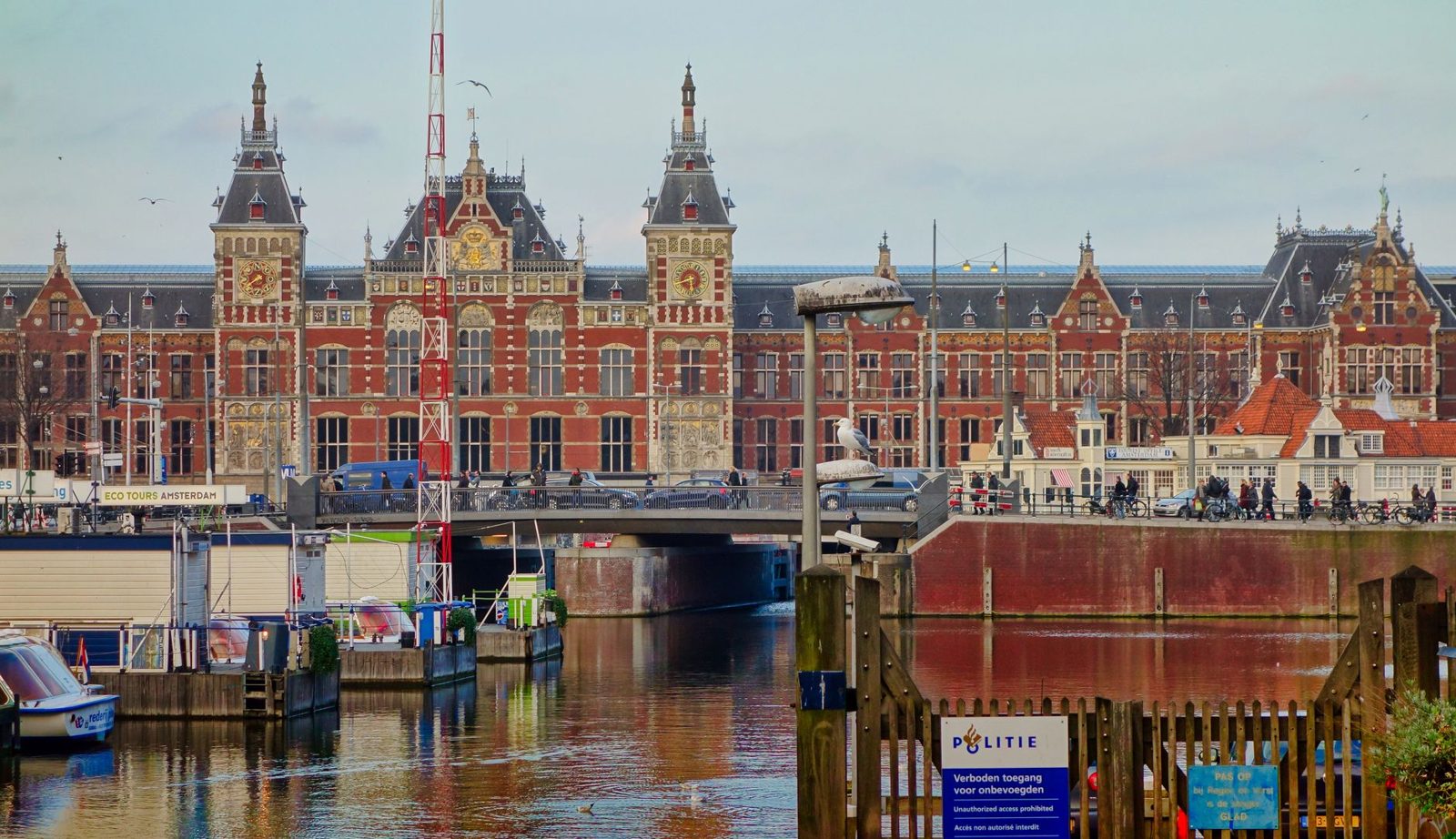
Amsterdam Transport at a Glance
Before the detail, here is how the main options stack up. Treat the prices and times as 2026 ballparks rather than gospel; fares creep up most years, so check the GVB and NS apps before you travel.
| Mode | Best for | Typical cost (2026) | Speed / notes |
|---|---|---|---|
| Walking | The canal ring and centre | Free | Centre is ~20-30 min end to end |
| Tram | Crossing town, sightseeing | ~EUR 1.50-3 per ride via OVpay | Every 5-10 min; 15 lines |
| Metro | Longer hops to outer districts | Same fare system as trams | Fast; limited central stops |
| Free IJ ferry | Reaching Amsterdam Noord | Free | 5-min crossing, runs day and night |
| Rental bike | Covering ground like a local | ~EUR 12-18 per day | Fastest door-to-door in the centre |
| Train (NS) | Schiphol and day trips | ~EUR 5-6 to/from Schiphol | 17-20 min airport to Centraal |
| Taxi / Uber | Late nights, heavy luggage | ~EUR 15-30 cross-city | Slowest in centre traffic |
Trams: Amsterdam’s Most Useful Transport for Tourists
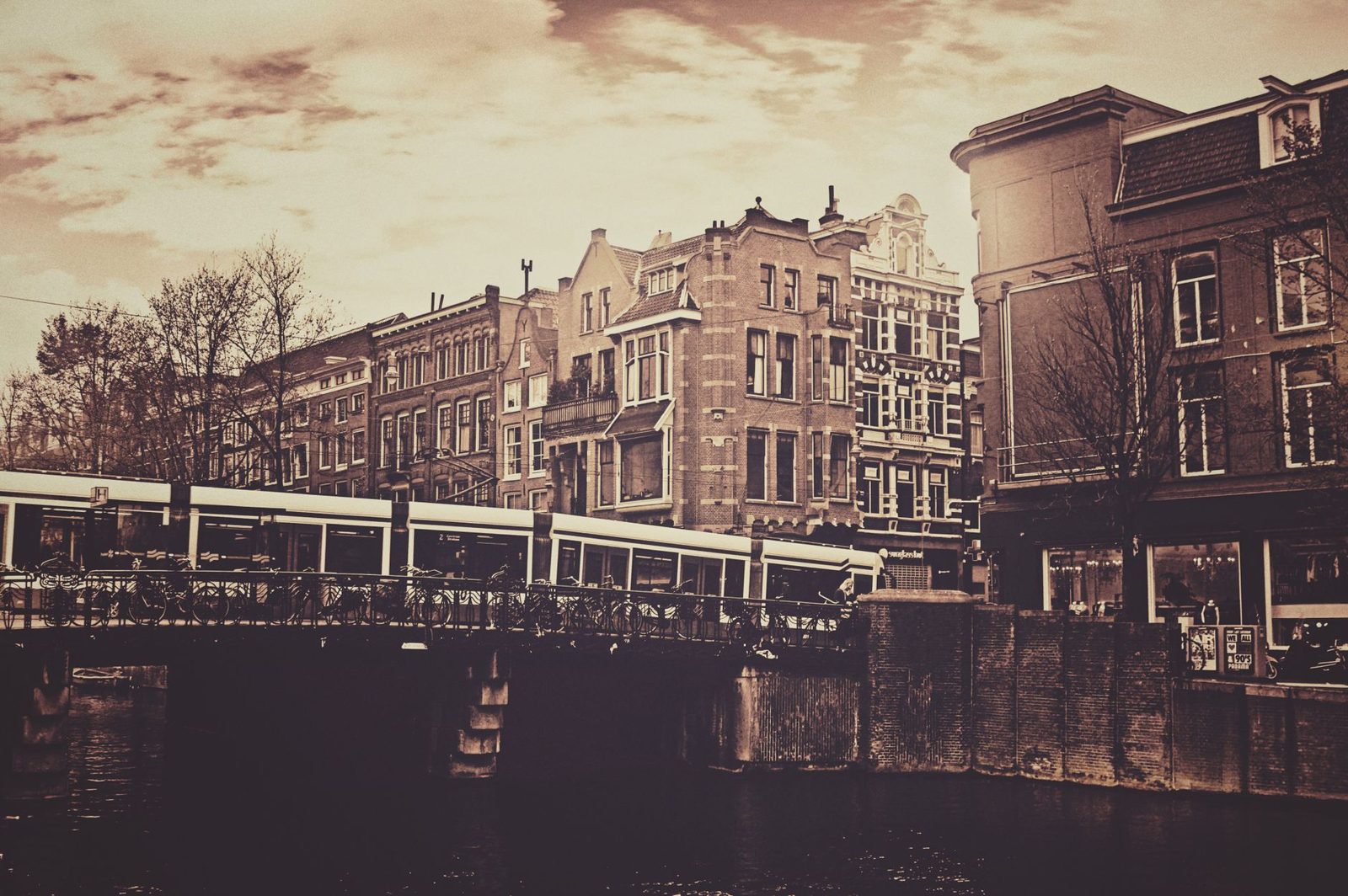
If you only learn one piece of the system, make it the trams. Operated by GVB (Gemeentelijk Vervoerbedrijf, the municipal transport company), the tram network runs 15 lines that fan out from Centraal Station and stitch together every neighbourhood a visitor is likely to want. Cars come every 5 to 10 minutes through the day, the ride is smooth, and from a window seat you get a rolling tour of canals and gabled houses for the price of a short hop. For the full line-by-line breakdown, our dedicated Amsterdam tram routes guide maps every tourist-relevant route to the attractions it serves.
Key Tram Lines for Tourists
Line 2 is the one I send first-timers to. It runs from Centraal through the canal belt to Museumplein (the Rijksmuseum and Van Gogh Museum) and on toward the Zuidas business district, and it happens to pass through the prettiest stretch of central Amsterdam on the way. Line 5 reaches the same museum cluster on a slightly different route via Leidseplein, which makes it handy if you want to combine nightlife and culture in one trip. Line 12 heads down through De Pijp past the Albert Cuyp Market, and lines 13 and 17 run west toward the Jordaan, Westermarkt (for the Anne Frank House) and the buzzing De Foodhallen.
Trams generally run from around 6:00 to 00:30 on weekdays, starting a little later on Sunday mornings, after which night buses take over. The electronic displays at every stop show the next arrivals in real time, and both the GVB app and Google Maps give reliable live routing. One small habit that saves grief: glance at the lit number on the front of the tram before you board, because several lines often share the same platform at busy interchanges.
Tram Etiquette and Boarding
Board through any door and immediately tap your card or phone against the reader; you will hear a beep and see a green tick. The single most expensive mistake tourists make is forgetting to tap out again on the way off, which triggers a flat maximum fare instead of the real distance-based price. Keep your bag in front of you on busy tourist routes, leave the priority seats near the driver for those who need them, and stand clear of the doors until passengers have stepped down. None of this is complicated, but doing it instinctively is what separates a confident rider from a flustered one.
How to Pay: Tickets, Passes, and Contactless
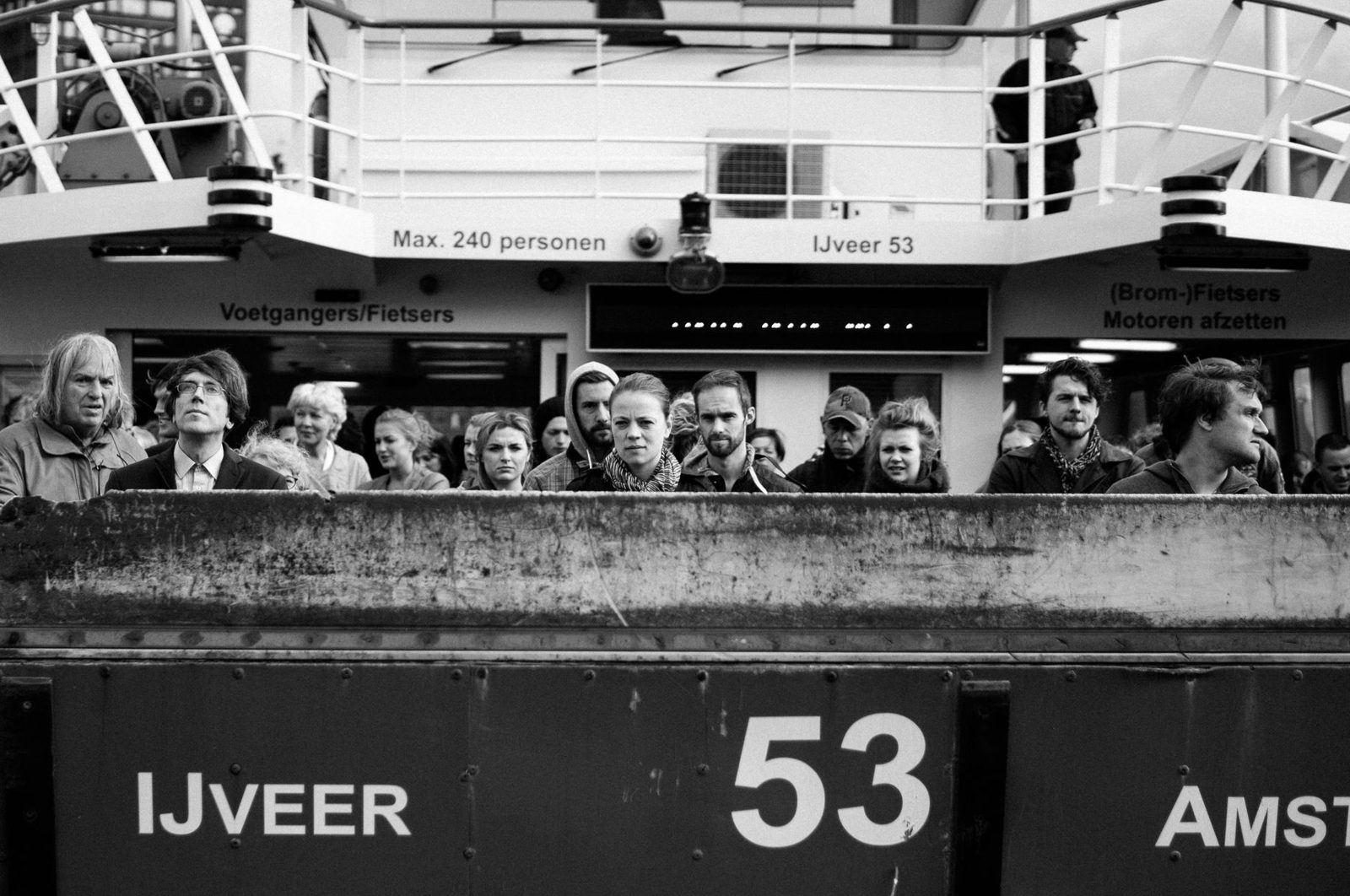
Amsterdam offers several ways to pay, and picking the right one for your trip length saves real money. The good news is that the days of hunting for the correct ticket machine are largely over. Here is what matters in 2026.
OVpay (Contactless) – Easiest for Most Visitors
For the majority of short visits, OVpay is all you need. Tap a contactless debit or credit card, or a phone with Apple Pay or Google Pay, on the reader as you board and again as you leave. You pay per trip, roughly a small boarding fee plus a per-kilometre charge, and a daily cap means you will not be punished for riding a lot in one day. The crucial detail is consistency: use the same physical card or the same phone wallet for both the tap-in and the tap-out of a single journey, because switching mid-trip reads as two separate fares. Charges usually surface on your statement within a few days, often bundled together. If you want the full picture of how contactless compares with the older smartcard, the OV-chipkaart guide for tourists breaks down every scenario.
GVB Day and Multi-Day Passes – Best for Heavy Use
If you already know you will lean on public transport, a GVB pass gives unlimited travel on all GVB trams, buses, metro and ferries. Day tickets start at around EUR 9-10 for 24 hours and scale up to roughly EUR 40-plus for a week, with each extra day costing proportionally less. The clever feature is that a pass runs for a set number of hours from your first tap rather than to midnight, so a 24-hour ticket bought at 2pm covers you until 2pm the next day. As a rough rule, if you expect three or more rides a day, a multi-day pass beats paying per trip. Children aged 4 to 11 ride on heavily reduced day tickets, and under-fours travel free.
OV-chipkaart – For Longer Stays
The yellow plastic OV-chipkaart is the rechargeable smartcard that ran Dutch transport for over a decade. An anonymous card costs around EUR 7.50 plus whatever credit you load, and you need a minimum balance to tap in. With OVpay now doing the same job without any upfront purchase, the card mainly makes sense if you are staying several weeks, prefer topping up with cash, or want a backup that is not tied to your bank card. For a few days in the city, skip it.
Amsterdam & Region Travel Ticket – Airport Included
The Amsterdam & Region Travel Ticket bundles unlimited GVB travel with regional buses and the train to and from Schiphol, in 1, 2 and 3-day versions. If you are arriving and leaving by train and plan to ride a lot in between, the maths often works in your favour, and it also covers the buses out to Keukenhof and Zaanse Schans. Buy it at Schiphol Plaza or the I amsterdam Visitor Centre by Centraal. For the cheapest airport run on its own, compare it against a plain train ticket in our Schiphol to Amsterdam transfer guide.
Metro: Fast Connections to Outer Districts
Amsterdam’s metro has five lines, and while it is less useful than the tram for pottering around the centre, it is the quickest way to cover real distance. The standout for visitors is the relatively new Noord/Zuidlijn (line 52), which links Amsterdam Noord through Centraal to Station Zuid in around 16 minutes, a journey that would crawl past 40 minutes by tram. Useful stops include Nieuwmarkt for the edge of the old centre, Waterlooplein for its flea market, Vijzelgracht near the canal belt and Rijksmuseum, De Pijp for the Albert Cuyp area, and Noord for the EYE Film Museum and the A’DAM Lookout tower.
The metro uses exactly the same fares and payment as the trams and buses, so your day pass or contactless tap carries straight over. Trains run every few minutes through the day and stretch to about every ten minutes in the evening. Every station has lifts and step-free access, which makes the metro the friendliest option if you are travelling with a buggy, a wheelchair or a heavy case.
Free Ferries: Amsterdam’s Best-Kept Transport Secret
Tucked behind Centraal Station is the city’s great transport freebie: the GVB ferries across the IJ to Amsterdam Noord. There is no ticket, no card and no tap. You simply walk on, enjoy a five-minute crossing with a full sweep of the skyline, and walk off the other side. It is genuinely one of the nicest things you can do in Amsterdam that costs nothing.
The Buiksloterweg ferry runs around the clock every six to twelve minutes and drops you a short stroll from the EYE Film Museum and A’DAM Lookout. The NDSM ferry takes a little longer but delivers you to the converted NDSM shipyard, all street art, waterfront cafes and the monthly IJ-Hallen flea market. Bicycles ride free on every crossing, which makes the ferries the natural launch point for a cycling loop into Noord’s more spread-out corners. To plan a half day on the north bank, our Amsterdam neighbourhoods guide covers what is worth your time once you land.
Cycling: Getting Around Like a Local
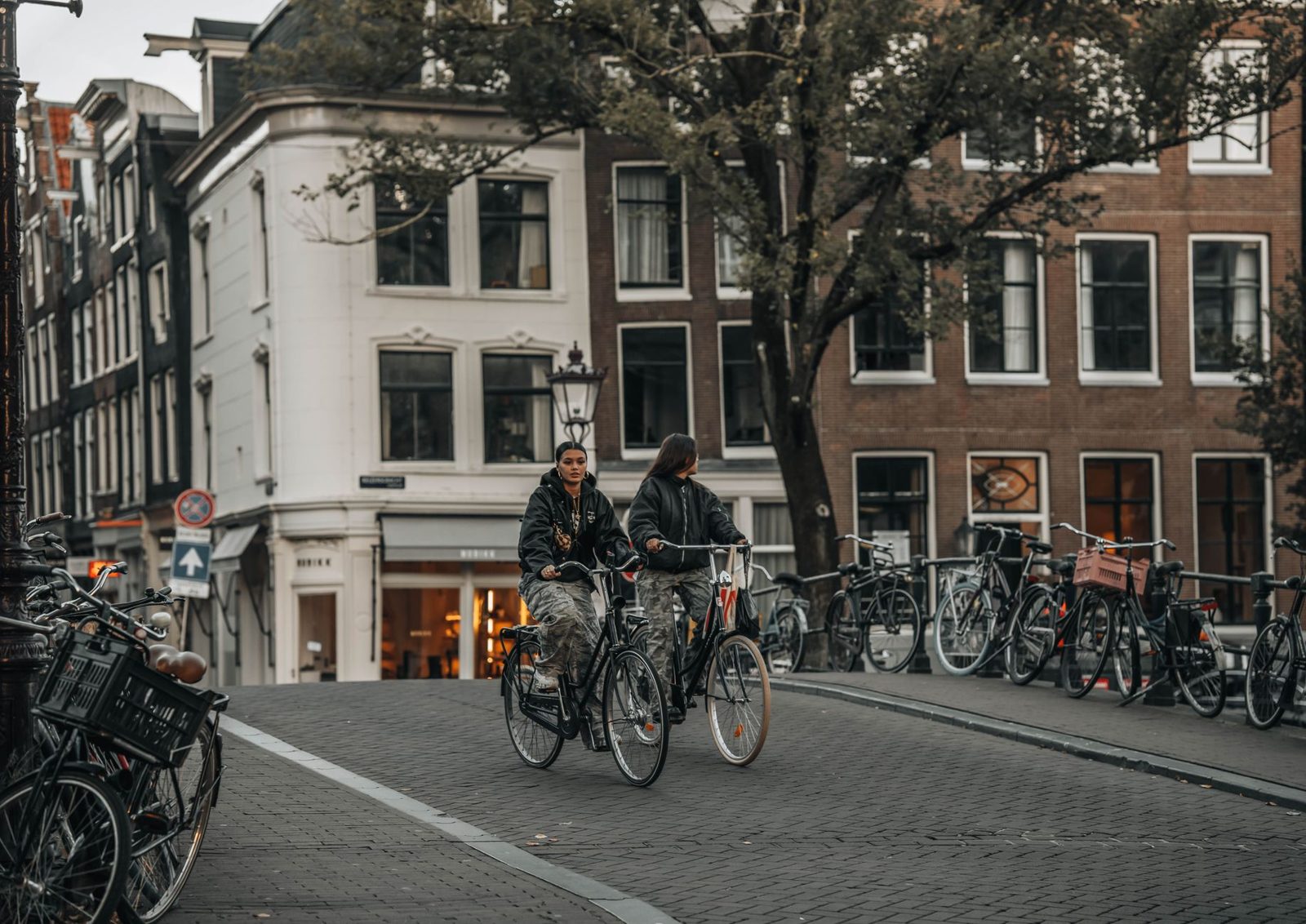
Amsterdam has more bikes than people, and on a clear day cycling is both the fastest and the most enjoyable way to move around. The whole city is laced with dedicated bike lanes (fietspaden), distances are short, and you can roll from one side of the centre to the other in roughly twenty minutes. The catch is that this is a working transport system, not a theme-park ride, and locals move quickly and expect you to be predictable.
Bike Rental Options
The established rental names such as MacBike, Yellow Bike and Black Bikes have shops near Centraal, Leidseplein and around the centre, and a standard city bike runs around EUR 12-18 a day with steep discounts for multi-day hire. Electric bikes cost more, roughly EUR 25-40 a day, and are worth it only if you plan longer rides, since the city itself is famously flat. App-based services like Donkey Republic let you grab and drop bikes around town for one-way trips. Whatever you choose, treat the lock as non-negotiable, because bike theft is the city’s most common crime. Our bike rental guide for first-time cyclists covers the best shops, beginner routes and how to avoid the classic tram-track tumble.
Essential Cycling Rules and Safety
The infrastructure is superb, but the etiquette takes a few minutes to absorb. Always ride in the marked bike lane and never on the pavement, signal your turns with an outstretched arm, and give way to trams from every direction. The honest danger most visitors underestimate is the tram rail: a wheel that drops into the groove will throw you, so cross tracks at a sharp angle, ideally close to 90 degrees, and never ride straight along them. Lights front and back are legally required after dark and the police do enforce it, and headphones are best left out. Lock the frame to something immovable even for a one-minute stop, and start somewhere gentle, a loop of Vondelpark or the paths along the Amstel, before you take on the scrum around Leidseplein.
Canal Cruises and Water Transport
Strictly speaking a canal cruise is sightseeing rather than transport, but it doubles as the best possible orientation to a city built around water. The classic 60 to 75-minute loops cost somewhere around EUR 15-20 and glide past the major canals with commentary on the Golden Age architecture, and evening cruises with a drink in hand are a deservedly popular way to end a day. For getting between waterside sights under your own steam, the hop-on hop-off canal buses stop near the Rijksmuseum, the Anne Frank House and Centraal, while small electric boats from operators like Mokumboot or Boaty let a small group skipper themselves with no licence required. If a cruise is on your list, weave it into the rest of your itinerary using our guide to things to do in Amsterdam.
Walking: Amsterdam’s Most Underrated Transport
It is worth repeating because so many visitors over-buy transport they never use: Amsterdam is small, and walking is often the right answer. Most central attractions sit within a 20 to 30-minute walk of Centraal, and the act of wandering is how you stumble on the things that make the city stick in your memory, the hidden hofjes, the odd shop window, the canal corner with nobody else on it. The whole Grachtengordel is only about three kilometres end to end, an easy two to three-hour amble with plenty of stops.
For orientation, some handy reference distances: Centraal to Dam Square is about ten minutes, Dam to the Rijksmuseum around twenty-five, Centraal to the Jordaan or the Anne Frank House roughly fifteen. The one thing to watch is the bike lane, usually a reddish-brown strip set flush with the pavement; drift into it and you will get an earful of bell, and possibly worse. Comfortable shoes with grip earn their keep on wet cobbles.
Getting To and From Schiphol Airport
Schiphol sits about 18 kilometres south-west of the centre and is superbly connected. For nearly everyone the train is the answer: direct services to Amsterdam Centraal take around 17 to 20 minutes, leave several times an hour, cost in the region of EUR 5-6, and run from a station directly beneath the terminal. You can tap a contactless card at the platform posts rather than queueing for a ticket; just remember to tap out at the other end. If your hotel is near Leidseplein or the museums, the Airport Express bus 397 drops you closer, and a taxi or Uber makes sense late at night or with a pile of luggage, at roughly EUR 30-55. For the full comparison, including night options, see our Schiphol to Amsterdam guide.
Transport Tips and Common Mistakes
Always tap in and out. It is the rule that catches everyone at least once. Whether you use contactless, a smartcard or a day pass, you tap on boarding and again on leaving, or you pay the maximum fare. Buy only from official sources, the GVB machines, the service counter at Centraal, or the GVB app, and never from someone offering a deal on the street. Plan your night moves, because after about half past midnight trams stop and the less frequent night buses take over, so a late return needs a little forethought or a taxi budget.
One more piece of arithmetic worth doing: the I amsterdam City Card bundles unlimited GVB travel with a canal cruise and entry to a long list of museums. It can be excellent value if you are a hard-charging museum-goer, but only if the included sights genuinely match your plans, and note that a couple of the big draws are not covered. Run the numbers against your shortlist before you buy. For budgeting transport into a wider plan, our Amsterdam trip planning guide puts the costs in context, and if you are tempted further afield, the day trips from Amsterdam guide shows what the trains can reach.
Frequently Asked Questions
What is the best way to get around Amsterdam for tourists?
For most visitors it is a mix of walking and the occasional tram. The centre is compact enough to cross on foot, and trams fill the longer gaps for a euro or two a ride. If you are comfortable on a bike, renting one is faster and more fun, and the free IJ ferries handle any trip to Amsterdam Noord at no cost at all.
Do I need to buy a ticket before boarding a tram?
No. The simplest approach is to tap a contactless bank card or phone (OVpay) on the reader as you board and again as you exit. There is nothing to buy in advance. If you would rather have a pass, you can buy a GVB day ticket from the driver, a machine, or the GVB app.
Are the ferries to Amsterdam Noord really free?
Yes, completely. The GVB ferries from behind Centraal Station to Buiksloterweg, IJplein and NDSM carry no charge, no ticket and no tap. They run day and night, take about five minutes, and welcome bicycles, which makes them perfect for an easy excursion across the IJ.
How much does public transport cost in Amsterdam?
Paying per trip with OVpay, a typical cross-town tram ride works out to roughly EUR 1.50-3 in 2026, with a daily cap so you never overpay. A GVB day ticket is around EUR 9-10. Children under four travel free and those aged four to eleven pay heavily reduced fares. The IJ ferries are free. Always confirm current prices in the GVB app.
Is it worth renting a bike if I am only in Amsterdam a few days?
If you have cycled in a city before and the weather cooperates, yes; a bike is the quickest way to link several neighbourhoods in a day. If you are nervous in traffic, start with a quiet loop of Vondelpark or join a guided tour before riding solo. There is no shame in sticking to trams and walking, you will not miss the essential Amsterdam by doing so.
Will my contactless card from abroad work on OVpay?
In most cases yes. Visa, Mastercard, Maestro and American Express generally work, as do Apple Pay and Google Pay. A few overseas debit cards need contactless or transit use enabled first, so if a tap is rejected, check with your bank. Always use the same card or wallet for both the tap-in and the tap-out of one journey.
The Bottom Line
Amsterdam rewards travellers who keep it simple. Walk the centre, tap a card on the tram when your feet protest, ride the ferry across to Noord just because you can, and rent a bike on the day you want to feel like you live here. Save the passes and city cards for trips where the numbers clearly add up. Do that and the city opens up quickly, with very little fuss and very little wasted money.
Keep exploring: the getting around Amsterdam hub, the OV-chipkaart and OVpay guide, the tram routes guide, the bike rental guide, and our Amsterdam trip planning guide.
Photos: Alexandre Perotto, Always Sunny Travels, Artem Yellow and Viridiana Rivera via Pexels.