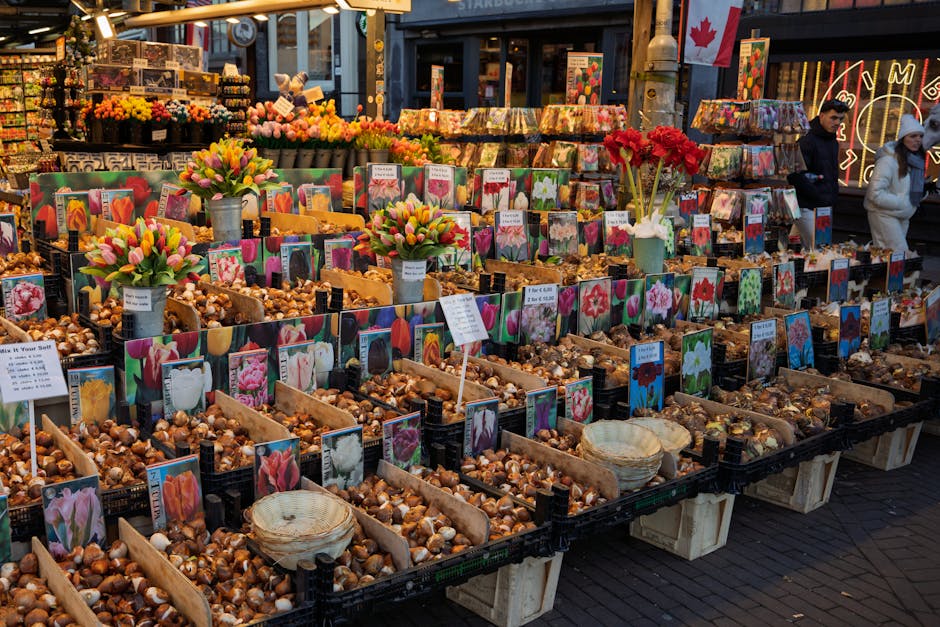
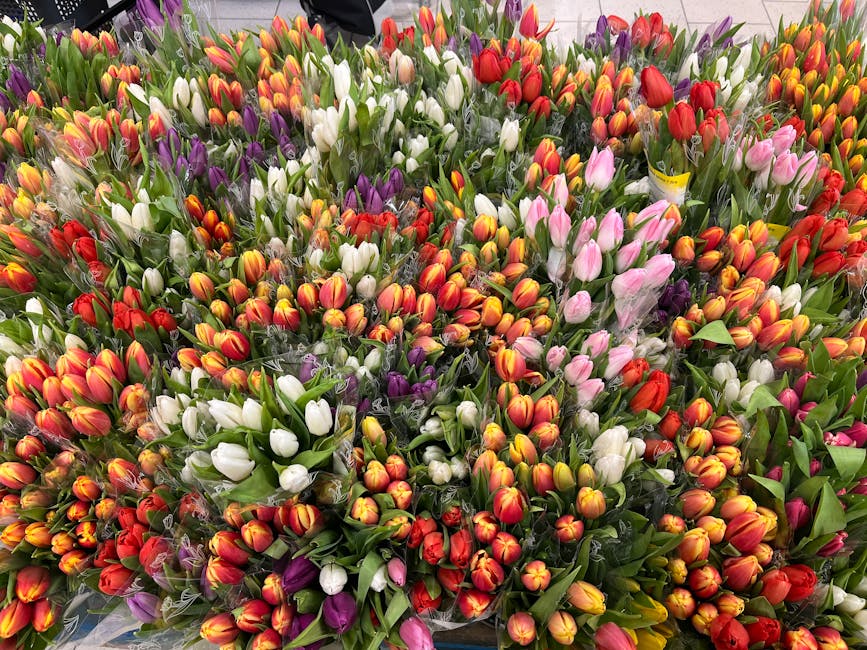
The Bloemenmarkt is Amsterdam’s floating flower market — the only one in the world — running 200 metres along the Singel canal between Muntplein and Koningsplein. Established in 1862, it’s now equal parts working market and tourist attraction: tulip bulbs, fresh flowers, garden supplies, souvenir wooden tulips, and a constant stream of visitors. This complete guide covers what to buy, what to skip, how to identify export-certified bulbs, the best alternatives, opening hours and the practical reality of one of Amsterdam’s most-photographed markets.
Is the Bloemenmarkt worth visiting? As a free, central, ten-minute photo-and-history stop between the Rijksmuseum and the Nine Streets, yes — it is the only floating flower market in the world and a pleasant slice of old Amsterdam. As a serious place to buy quality tulip bulbs, not really; the bulbs are hit-and-miss and better options exist. Buy a wooden tulip or a small certified bulb pack if you like, take your photos, and keep your expectations realistic: this is a tourist market now, and an honest look at it will serve you better than the postcard version.
Bloemenmarkt: Quick Facts
| Detail | Info |
|---|---|
| Where | Singel canal, Muntplein to Koningsplein |
| Hours | Mon–Sat ~9:00–17:30; Sun ~11:30–17:30 |
| Established | 1862 |
| Cost | Free to walk; pay for purchases |
| Time needed | 30–45 minutes |
| Best for | Photos, wooden tulips, certified bulbs |
| Getting there | Tram 2/12 to Koningsplein; near Muntplein |
Bloemenmarkt at a Glance
- Where: Singel canal between Muntplein and Koningsplein.
- Stalls: 15 floating barge-shops moored permanently to the canal.
- Open: Mon-Sat 9am-5:30pm; Sunday 11:30am-5:30pm.
- Established: 1862, making it one of the oldest markets in Amsterdam.
- Cost to visit: free (you only pay for what you buy).
- Getting there: Tram 4/14/24 to Muntplein; 5-minute walk from the Rijksmuseum.
What’s Worth Buying
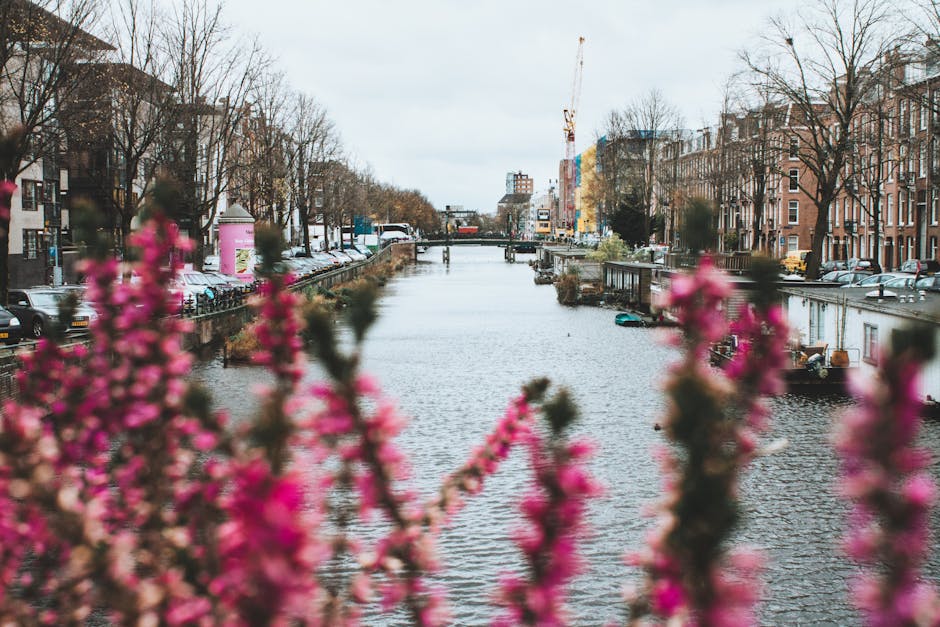
- Tulip bulbs (export-certified) — €5-15 per 10-bulb pack with the USDA/Canada/UK phytosanitary sticker. Check sealing.
- Daffodil and crocus bulbs: planted in autumn for spring bloom.
- Fresh flower bouquets: tulips, peonies, hyacinths in season. Cheaper than supermarket prices.
- Seed packets: more reliable than bulbs; certified for international shipping.
- Wooden decorative tulips: hand-painted; €5-25; durable souvenirs.
- Dutch garden tools: small, light, well-priced.
- Plant pots and terracotta: locally crafted; better selection here than Albert Cuyp.
- Cannabis seeds (decorative): sold for “collection” but be aware of import laws in your home country.
The smart buys here are the light, durable, low-risk ones. A hand-painted wooden tulip is the market most reliable souvenir — it will not wilt, will not be confiscated, and survives a suitcase without complaint. Seed packets are a sensible alternative to bulbs for international travellers, since they are usually certified for shipping and far less likely to be stopped at customs. And the fresh flowers, while you obviously cannot fly them home, are genuinely cheaper than a supermarket bunch if you are staying in an apartment and want to brighten the place up. The bulbs themselves are the gamble, which is worth understanding before you hand over your euros.
What to Skip
- Non-certified tulip bulbs sold as "ready to plant" — these will be confiscated by US, Canadian and Australian customs.
- The cheapest bulbs (under €4 a pack) — quality is often poor; many won’t bloom.
- Cheap fridge magnets and keyrings at the souvenir end — same as Damrak prices.
- "Authentic Dutch" wooden clogs from a flower-market stall — usually imported and overpriced.
- Marijuana-themed novelty items — often confiscated at airports.
The “what to skip” list matters more here than at most markets, because the Bloemenmarkt sells a lot of things that look like a good idea and turn out not to be. Uncertified bulbs sold as “ready to plant” are the classic trap for non-EU visitors — they get binned at the border. The very cheapest bulb packs rarely bloom. The generic fridge magnets, keyrings and “authentic” wooden clogs are the same imported stock you will find marked up on Damrak. And the cannabis-themed novelties can cause real trouble at customs in countries that take a dim view of them. None of this is unique to the Bloemenmarkt, but the concentration of it here is high, so shop with a slightly sceptical eye.
Buying Tulip Bulbs for Export
- Look for the phytosanitary sticker: small green/yellow label saying "Approved for export to USA / Canada / UK / EU."
- Australia and New Zealand: confiscated regardless of certification.
- EU and UK: no certificate required; any sealed bulb works.
- USA, Canada, Japan, China: require certified bulbs; declare at customs.
- Best buying season: September-November (fresh new-season stock). Bulbs sold in spring are last year’s leftovers.
- Plant in autumn: October-November for the best spring bloom.
- Storage: cool, dry, ventilated until planting.
This is the part that trips up the most visitors, so it is worth spelling out. If you live in the EU or the UK, you can take any sealed bulbs home without paperwork. If you are flying to the United States, Canada, Japan or several other countries, your bulbs must carry an official phytosanitary export certificate — a small sticker on the pack confirming they have been inspected — or customs can seize them on arrival, and you may need to declare them either way. If you are heading to Australia or New Zealand, do not bother: bulbs are confiscated regardless of certification, full stop. Rules change, so check your own country current agricultural-import guidance before you buy, and never assume a stall holder claim of “fine for export” covers your specific destination.
A Note on Quality
Bloemenmarkt bulbs have a mixed reputation. Many visitors report poor germination — bulbs not blooming, mouldy on arrival, or wrong variety. To improve your odds:
- Buy from the more established stalls at the Singel end nearer Muntplein.
- Buy in autumn when new stock arrives.
- Inspect packets carefully: avoid bags with visible damage or mould.
- Higher-priced bulbs (€10-15) have substantially better quality than €4 ones.
- For guaranteed-quality bulbs: Keukenhof shop (March-May), the Hortus Bulborum in Limmen, or order direct from a registered Dutch grower (Fluwel, Verloop).
Be realistic about quality. The Bloemenmarkt bulbs have a mixed reputation for good reason — plenty of visitors report bulbs that never bloom, arrive mouldy, or turn out to be a different variety than the picture promised. You can improve your odds by buying from the more established stalls nearer Muntplein, paying for the €10–15 packs rather than the cheapest, inspecting the bags for damage, and buying in autumn when the new-season stock is fresh. But if you genuinely want a Keukenhof-style display at home, the honest advice is to skip the market and order from a registered Dutch grower online or buy at the Keukenhof shop in spring, where the certified stock is reliable.
The History of the Floating Market
- 1862: established when fresh flowers were brought into central Amsterdam by boat from surrounding bulb fields.
- 1880s-1900s: peak as a working wholesale flower market.
- 1950s onward: floating barges moored permanently became fixed retail stalls.
- 1980s: rise of tulip-bulb souvenir trade as Amsterdam’s tourist boom took off.
- Today: 90% tourist-oriented; the actual fresh-flower trade for Amsterdam residents has largely moved to FloraHolland in Aalsmeer (the world’s largest flower auction).
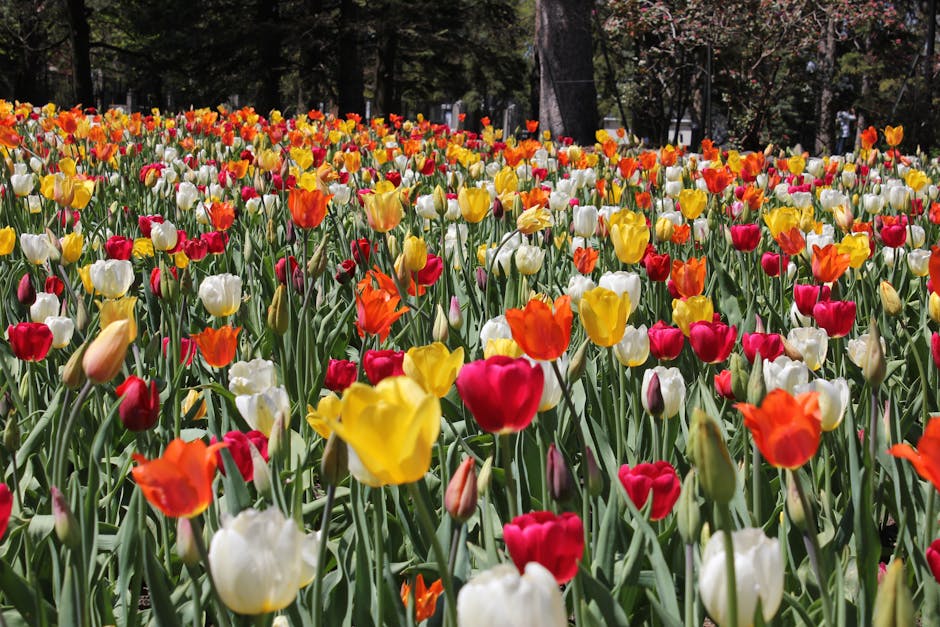
The Bloemenmarkt is genuinely old — it has floated on the Singel since 1862, back when growers rowed cut flowers into the city from the surrounding bulb fields. For decades it was a working wholesale market; today the trade has moved out to the vast Aalsmeer auction and the stalls survive mainly on tourism. Knowing that helps set expectations: you are visiting a historic spot that has become a souvenir market, not a slice of everyday Amsterdam life. It still photographs beautifully, and it sits right on the canal ring, so it slots naturally into a wander through the centre rather than being a destination in its own right.
Best Time to Visit
- Morning (9-11am): quietest, freshest stock.
- Spring (March-May): fresh tulips on display; tourist crowds.
- September-November: best bulb-buying season.
- Avoid Saturday afternoons: tour group peak.
- Friday-Sunday mornings: locals mix with tourists.
Timing makes a real difference to how the market feels. Early morning, before the tour groups arrive, is when it is quietest and the stock looks freshest — you can actually browse the barges rather than shuffle through a crowd. Spring is the obvious time to come if you want to see fresh tulips on display, though that is also peak tourist season. If your aim is buying good bulbs rather than taking photos, autumn is better, when the new-season stock arrives. Saturday afternoons are the worst of both worlds: busiest, with the picked-over feel of a market near closing. A short morning visit, ideally on a weekday, gets you the best of it.
Tulip Souvenirs Worth Considering
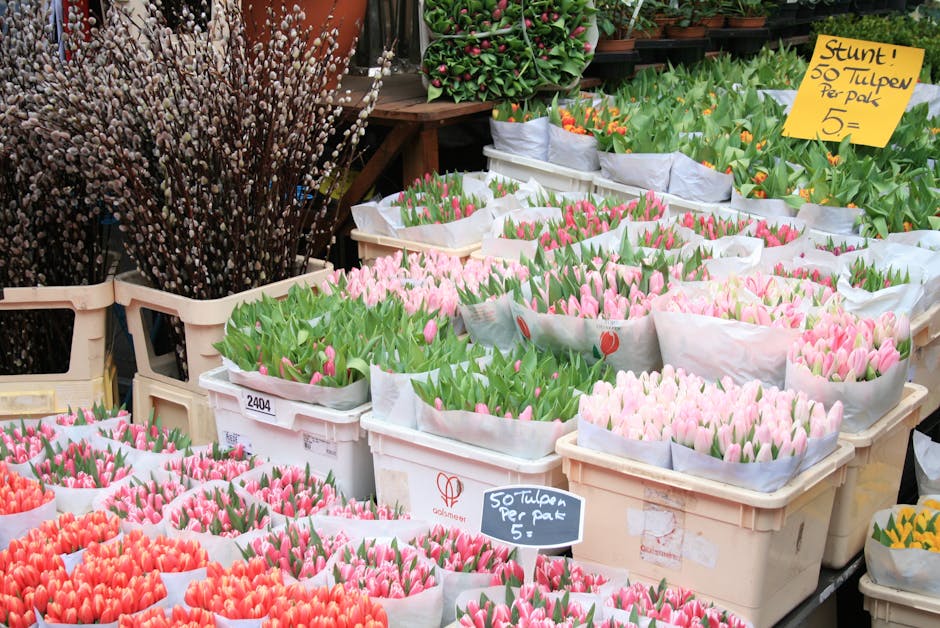
- Wooden hand-painted tulips: indestructible, light, colourful. €5-15 each.
- Tulip seeds: more reliable than bulbs for international travel.
- Delft Blue tulip vases (with hallmark): real Royal Delft pieces start €45.
- Tulip-print fabric and scarves: lightweight and packable.
- Bulb-planting tools: Dutch garden trowels with wooden handles.
- Daffodil/iris/peony bulbs: less famous but often better quality than tulips.
If you want to come home with something flower-themed that will actually last, lean towards the non-perishable options. A hand-painted wooden tulip costs a few euros, packs flat and never disappoints; tulip-print scarves and fabric are light and make good small gifts; and a real Delft Blue tulip vase — check for the Royal Delft hallmark — is a genuine keepsake rather than a souvenir. If you do want living bulbs, daffodils, irises and peonies are often a more reliable bet than tulips themselves, and crocuses are nearly foolproof. Just remember the same export rules apply to every bulb in the bag, tulip or not.
The Bigger Tulip Picture
It helps to understand where the Bloemenmarkt sits in the Dutch flower world, because it explains both its charm and its limits. The Netherlands is the centre of the global flower trade, and the real action happens well away from this canal: at the colossal FloraHolland auction in Aalsmeer, where flowers are sold by the trolley-load before dawn, and in the bulb fields of the Bollenstreek between Haarlem and Leiden, which turn into stripes of colour every spring. The Bloemenmarkt is a charming historical remnant of that world — the place where, a century ago, flowers arrived in the city by boat — rather than a working part of it today.
So if the flowers themselves are what move you, build a day around them. Keukenhof is the showpiece: seven million bulbs planted across a landscaped garden, open only from roughly mid-March to mid-May. A drive or cycle through the surrounding bulb fields in late April is arguably even better, and free. Our day trips from Amsterdam guide covers how to reach the region, and the Amsterdam in spring guide has the bloom timing. Treat the Bloemenmarkt as the appetiser — a quick, photogenic taste in the city centre — and save your real flower day for the fields.
Better Alternatives
- Albert Cuyp Market flower stalls: locals shop here; fresher and cheaper.
- Noordermarkt Saturday flowers: artisan and seasonal.
- Keukenhof shop (Mar-May): the best certified bulbs available anywhere.
- FloraHolland Aalsmeer auction (Mon-Fri 7-11am): the world’s largest flower auction, 30 minutes from Amsterdam. Visit for the wholesale spectacle.
- Hortus Bulborum (Limmen, mid-April to mid-May): a museum garden with the country’s best rare bulb varieties for sale.
- Online ordering from Dutch growers: Fluwel, Verloop, or DutchGrown — better quality, certified shipping included.
For fresh flowers specifically, locals barely use the Bloemenmarkt — they buy from the Albert Cuyp Market in De Pijp or the Saturday Noordermarkt, where the blooms are fresher, cheaper and Dutch-grown. For bulbs you actually want to plant, an online order from a registered grower lands better stock with proper certification than anything you will carry out of a market bag. And for the full tulip spectacle, nothing competes with Keukenhof in spring. The Bloemenmarkt earns its place as a quick, central, photogenic stop — just not as your main flower-shopping or bulb-buying plan.
What’s Around the Bloemenmarkt
- Muntplein with the historic Munttoren clock tower.
- Spui square with bookshops and the Begijnhof (hidden almshouse).
- Kalverstraat: the country’s busiest shopping street.
- Bijenkorf department store on Dam Square (5-min walk north).
- Rijksmuseum and Museumplein: 10-minute walk south.
- De Negen Straatjes (Nine Streets): 10-minute walk west.
- Singel 7 (5-min walk north): the narrowest house front in Amsterdam.
The market biggest advantage is its location: it is hard to think of a more central spot in Amsterdam. In the few minutes around it you have Muntplein and its clock tower, the Spui square with its bookshops and the hidden Begijnhof courtyard, the start of Kalverstraat, and an easy walk to the Rijksmuseum one way and the Nine Streets the other. That is exactly why it works best as a link in a chain rather than a stop you make a special trip for. Fold it into a morning that takes in the Begijnhof and the Nine Streets shopping, and the thirty minutes you spend among the flower barges feel well placed.
An Honest Take: Manage Your Expectations
It is worth saying plainly, because a lot of guides will not: the Bloemenmarkt is not the lush, fragrant flower paradise the name suggests. Much of what is on display now is souvenir stock — wooden tulips, fridge magnets, seed packets and bulb bags — under awnings, with fresh flowers making up a smaller share than they once did. On a busy day it can feel cramped and a little tired. That does not make it a waste of time; it makes it a ten-to-thirty-minute stop rather than the hour-long highlight some people arrive expecting. Go in with that framing and you will enjoy it for what it is: a genuinely unique floating market with real history, in the middle of the prettiest part of the city.
If your heart is set on flowers and tulips, time your whole trip rather than just your market visit. Tulip season runs roughly mid-March to mid-May, and that is when the Bloemenmarkt looks its best and when a Keukenhof day trip — the world largest bulb garden, with millions of flowers — is open and unforgettable. Our guide to Amsterdam in spring covers the bloom calendar and the other seasonal highlights, and the wider day trips from Amsterdam hub explains how to reach the bulb region.
Practical Tips
- Visit time: 30-45 minutes is plenty.
- Cards accepted at most stalls; small purchases cash-only.
- Bargaining: not customary; prices are fixed.
- Photography: completely fine.
- Storage of bulbs: keep dry and cool; don’t pack with damp clothing.
- Combine with: Begijnhof + American Book Center on Spui (3-min walk).
- Toilet: nearest is at the Bijenkorf or at the Spui Athenaeum Boekhandel (free).
A couple of final practicalities. Most stalls take cards, but keep a little cash for the smallest purchases. Prices are fixed — this is not a haggling market — and photography is completely welcome, so do not feel shy about lining up the classic shot of the barges with the canal behind. If you do buy bulbs, keep them dry and cool and do not pack them against damp clothing on the way home. And to plan how you reach this and the rest of the centre on foot or by tram, our getting around Amsterdam guide has the details.
Bloemenmarkt: FAQ
Where is the Bloemenmarkt in Amsterdam?
Along the Singel canal between Muntplein and Koningsplein, in central Amsterdam.
Is Bloemenmarkt worth visiting?
For the architecture and atmosphere yes — it’s the world’s only floating flower market. For high-quality tulip bulbs, no; better options exist elsewhere.
Can I bring tulip bulbs home from Bloemenmarkt?
EU/UK: yes, no certificate needed. US, Canada, Japan: only if bulbs have the phytosanitary export sticker. Australia/NZ: confiscated regardless.
What’s the best time to buy bulbs?
September-November when fresh new-season bulbs arrive. Spring stock is often last year’s leftovers.
How do I tell if bulbs are good quality?
Avoid the cheapest packets (under €4); look for export-certified seals; buy from established stalls at the Singel end nearer Muntplein. For guaranteed quality, order direct from a Dutch grower online.
What else can I buy at Bloemenmarkt?
Fresh flowers (cheaper than supermarkets), wooden tulip souvenirs (€5-15), Delft Blue vases, garden tools, plant pots, and seasonal seed packets.
Final Thoughts
Bloemenmarkt is one of Amsterdam’s most central, photogenic stops — visit for 30 minutes between the Rijksmuseum and the Negen Straatjes, buy a wooden tulip and maybe a small certified bulb pack, and skip the cheap mass-market bulbs in favour of better online options. As a photo-and-history stop it’s a must; as a serious bulb-buying destination it’s not the strongest choice.
Visit the Bloemenmarkt for what it genuinely is: a short, central, photogenic stop with real history, slotted between the Rijksmuseum and the Nine Streets. Buy a wooden tulip and maybe a small certified bulb pack, take your photos, and put your serious bulb-buying money into a Dutch grower online or the Keukenhof shop instead. As a thirty-minute curiosity it is a yes; as a flower-shopping destination it is a no — and knowing the difference is what makes the visit a good one.
Keep exploring
- Amsterdam shopping guide — the full hub: streets, markets and souvenirs.
- Best Amsterdam souvenirs — tulip alternatives and what actually travels home.
- Albert Cuyp Market — where locals buy fresher, cheaper flowers.
- Keukenhof day trip — the real tulip spectacle, in season.
- Amsterdam in spring — when the city and its flowers look their best.