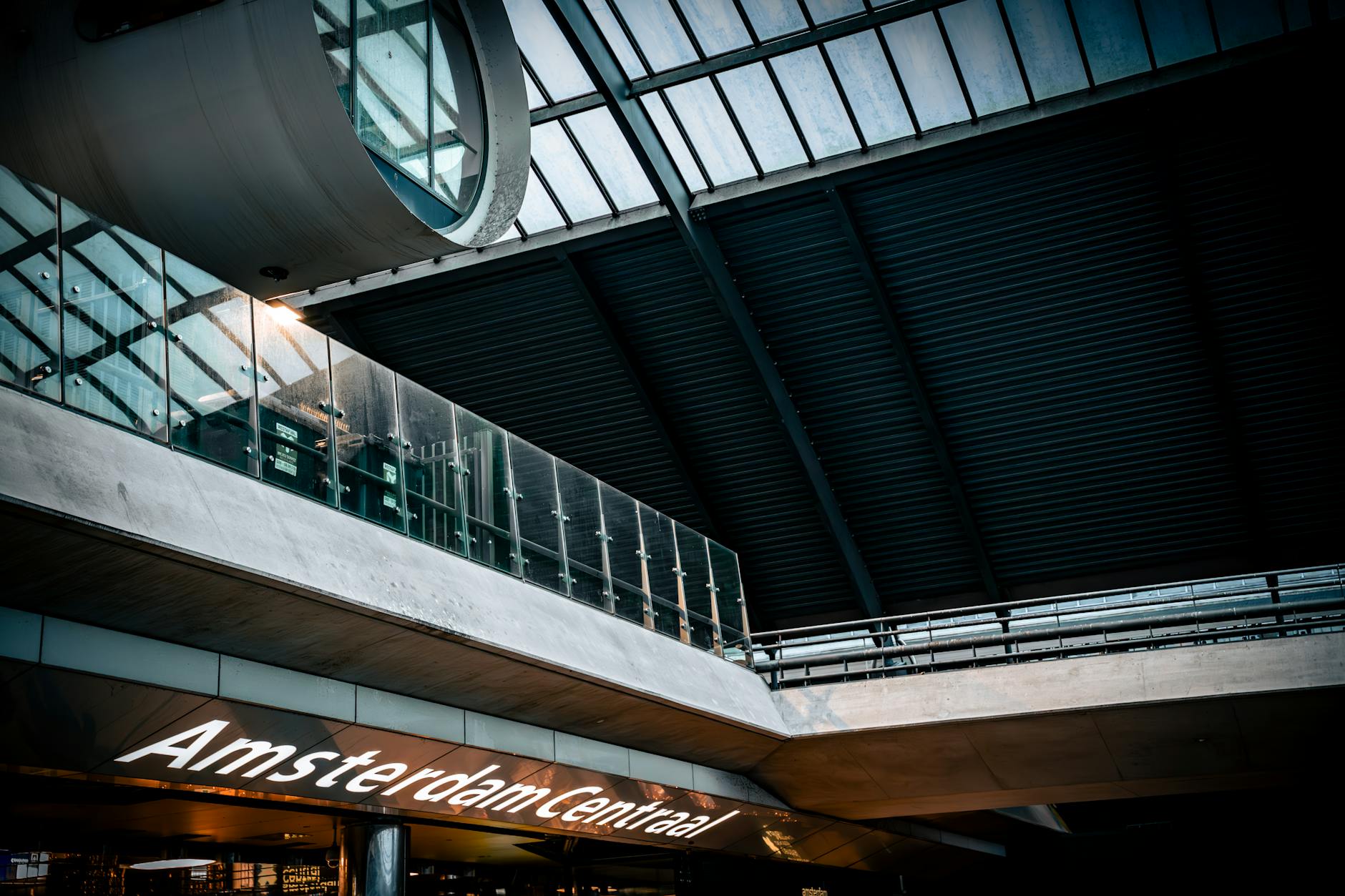
The Dutch rail network is the reason this country is so easy to travel. It is dense, frequent, punctual by international standards, and — the part that changes how you plan — priced by distance rather than by demand, so a ticket bought ninety seconds before departure costs exactly what one bought a month ago costs. This guide covers travelling the Netherlands by train: how to pay, what things cost, which passes are worth it and which are not, and the handful of rules that catch visitors out.
There is very little to optimise here, and that is the good news. No advance-purchase game, no dynamic pricing, no seat reservations on domestic services, no need to commit to a plan. You decide over breakfast that today is a Utrecht day, you tap a bank card on a post, and you go. Almost every “money-saving rail tip” written about other countries simply does not apply. What you do need to know is the tapping-out rule, the one supplement that exists, and whether a discount card is worth it for your trip — usually it is not.
| Detail | |
|---|---|
| Operator | NS (Nederlandse Spoorwegen) on the main network |
| How to pay | OVpay contactless — tap a bank card or phone in and out |
| Pricing | Distance-based and fixed. No advance-purchase advantage |
| Reservations | None on domestic trains. Just turn up |
| Intercity Direct supplement | €3.20 one way; €1.92 off-peak at the Supplement Pole |
| Dal Voordeel discount | €76.20/year on balance, or €6.35/month on NS Flex — 40% off-peak |
| OV-fiets bike hire | €4.80 per 24 hours · €13.50 for an e-bike |
| Disposable card at machines | A small card supplement — avoided entirely by using OVpay |
| Classes | First and second. Second is fine |
| Fares in 2026 | Rose about 6.5% in the last round — treat figures as indicative |
OVpay: the only thing most visitors need
Forget buying tickets. The Dutch system runs on OVpay: you tap a contactless bank card, phone or watch on the yellow post as you enter the platform, and tap the same card again on the way out. The fare is calculated for you and charged to the card. No ticket, no app, no queue, no deposit, no top-up.
This works on NS trains, on metro, tram and bus across the country, and on most regional operators. One card, everything. It is genuinely one of the better public transport payment systems anywhere and it removes almost all of the friction that makes rail travel in other countries tedious.
The one rule that matters
Tap out. If you tap in and fail to tap out, the system cannot know where you went and charges you the maximum fare for that line. This is the single most common and most expensive mistake visitors make, and it is entirely avoidable.
Two situations where people forget:
- Changing between operators at the same station. Train and city transport are separate systems. Getting off an NS train and onto a GVB tram at Amsterdam Centraal means tapping OUT of the train and IN to the tram, even though you never left the building. The posts are colour-coded by operator; look for the right one.
- Changing trains between NS and a regional operator. Same principle. If the second leg is run by Arriva, Blauwnet or another regional company, you tap out of NS and into theirs.
Use the same physical card for both taps. Tapping in with a phone and out with the card in your wallet counts as two incomplete journeys and charges you twice. Our OV-chipkaart and OVpay guide covers the mechanics in more detail, including what to do if you do forget.
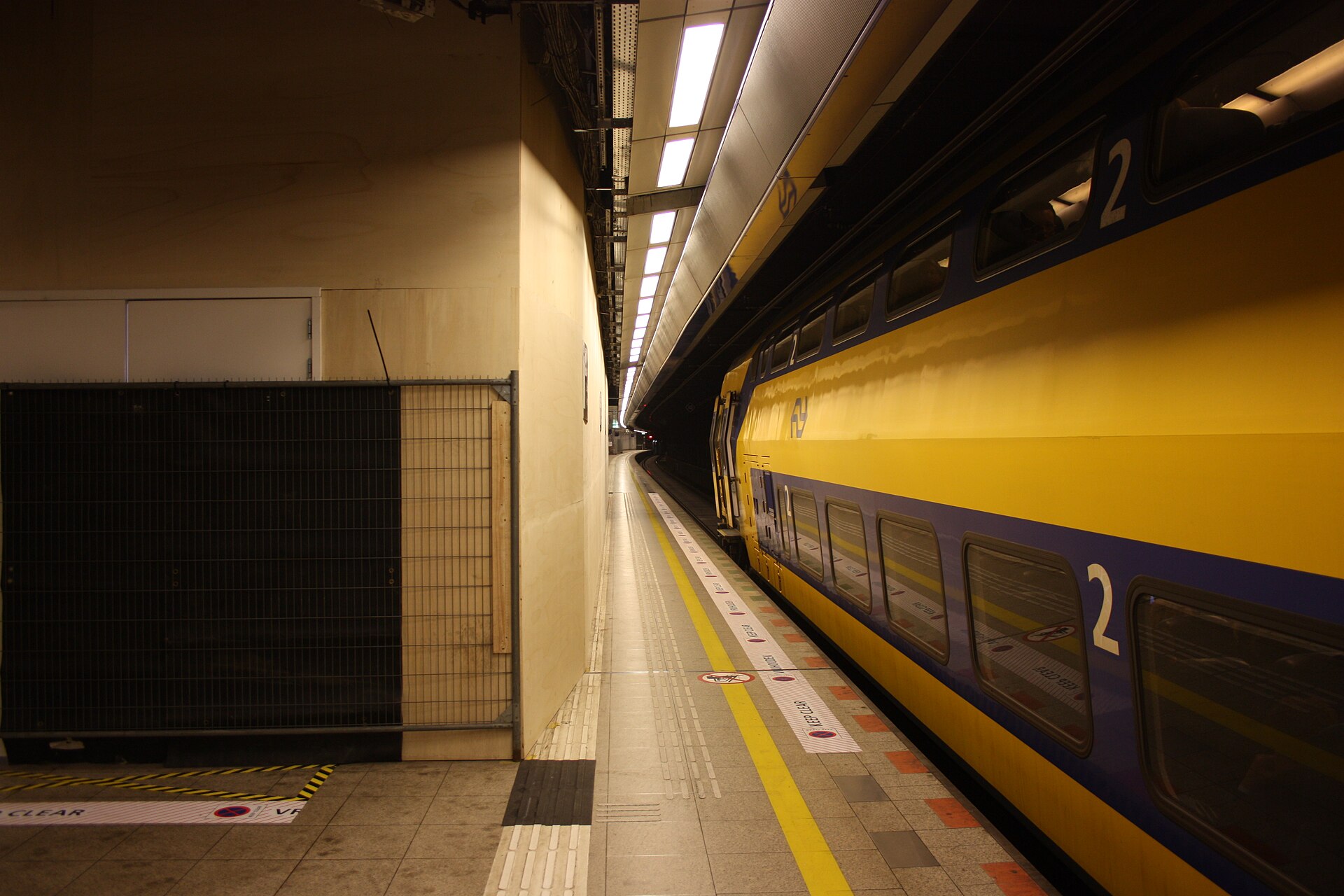
What things actually cost
Because fares are distance-based, you can estimate a journey from a map. Some real second-class singles from Amsterdam Centraal to give you the shape of it:
- Zandvoort aan Zee — about 30 minutes, roughly €6.90
- Utrecht Centraal — about 35 minutes, roughly €8–9
- Leiden — about 35 minutes
- Alkmaar — 35–40 minutes, with around 77 services a day
- Rotterdam Centraal — a direct intercity ride
- Gouda — 50–60 minutes
- Eindhoven — about 1 hour 20, roughly €25.60
- Maastricht — over two hours
From Schiphol the geography shifts usefully: Utrecht is just over 30 minutes at €11.60 second class (€20.88 first), and Leiden is only 15 to 20 minutes, which makes it one of the historic cities nearest the airport — see our Leiden travel guide and Schiphol layover guide if you have hours to fill.
Cross-country journeys cost proportionally more and take longer than the map suggests, because almost everything routes through the middle. Maastricht to Utrecht is 1 hour 58 at €29–45. Maastricht to Groningen — the two far corners — has no direct service at all: about 4 hours 29 via Utrecht, at €60–73. Plan out-and-back from the Randstad rather than trying to trace the edges.
NS raised fares by around 6.5% in the last annual round, so treat every figure here as indicative and check ns.nl on the day. Nothing you can do will change the price, which is precisely why you can leave the checking until you need it.
The one supplement: Intercity Direct
There is a single exception to the flat-fare simplicity, and it is worth knowing about because you can accidentally board it.
Intercity Direct runs on the high-speed line between Amsterdam Zuid, Schiphol, Rotterdam and Breda, and it is faster than the ordinary intercity on that corridor. It carries a supplement of €3.20 one way, on top of the normal fare, for journeys using the high-speed section.
Two things to know. First, if you buy the supplement at a Supplement Pole during off-peak hours you get 40% off, bringing it to €1.92. Second, if you have not bought it and a conductor checks, you are travelling without a valid ticket — which is a fine rather than a polite correction.
Is it worth €3.20? For Amsterdam to Rotterdam it saves a meaningful chunk of time and we would pay it. For a short hop within the corridor, take the ordinary intercity and keep the money. The departure boards mark Intercity Direct services clearly; if you are unsure, ask, because the fine is considerably more than the supplement.
Passes and discount cards: mostly not worth it
This section exists mainly to save you money by talking you out of things.
Dal Voordeel
The main NS discount product gives 40% off in off-peak hours and costs €76.20 a year on balance, or €6.35 a month on NS Flex by direct debit, cancellable after the first month. Off-peak means outside the weekday morning and late-afternoon rushes, plus all weekend.
For a resident who commutes occasionally this is excellent value. For a visitor on a week’s holiday it only makes sense if you plan a lot of off-peak travel: the monthly version breaks even at about €16 of full-price off-peak fares, and the yearly one at about €190. Otherwise, skip it.
Day tickets
NS does not publish a single national day pass at a flat price — fares are route-based, and any page quoting one number for “a Dutch rail day ticket” is describing a promotion rather than a standing product. Supermarket and drugstore chains do periodically sell discounted day tickets as promotions, and when those run they can be genuinely good value, but they are seasonal, they sell out, and they cannot be planned around from abroad.
One thing that is definitely gone: the Youth Day Pass was abolished on 1 July 2025 and replaced by a 40% off-peak discount for 12- to 17-year-olds through NS Flex Dal Voordeel. Older guides still recommend it; ignore them.
City passes and the train
The I amsterdam City Card covers city transport but not the national network. Whether a city pass works out depends entirely on how many attractions you visit, not on the rail component — our city passes compared page runs the arithmetic properly.
The short version: for a visitor, tapping OVpay and paying the fare is nearly always the right answer. The Dutch system is cheap enough and simple enough that optimising it is a poor use of your attention.
First class, second class and where to sit
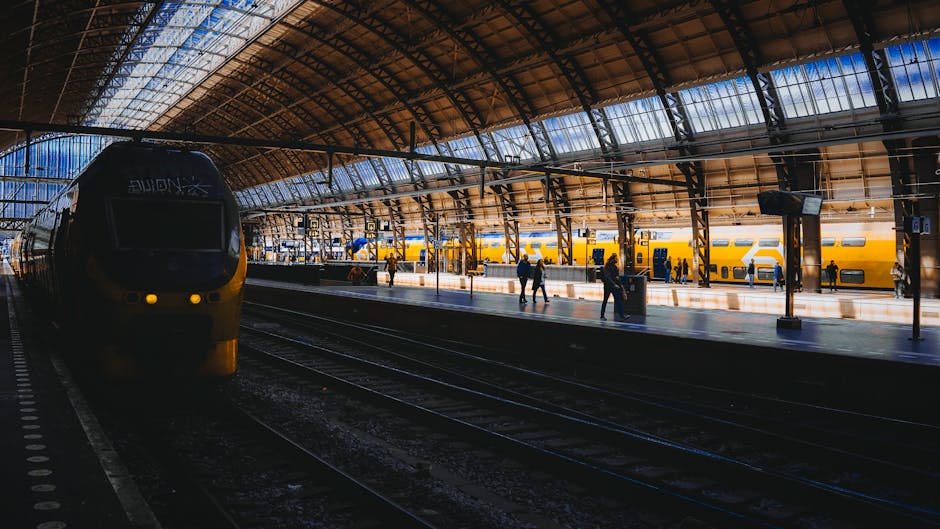
Second class is fine. Dutch second class is clean, comfortable and used by everybody, and there is no meaningful difference in the seat. First class buys you a quieter carriage with slightly more space and fewer people, at around 80% more — Schiphol to Utrecht, for instance, is €11.60 second and €20.88 first.
Our advice: travel second class and put the difference towards lunch. The one exception is a long cross-country journey in the Friday-evening peak, when first class genuinely buys you a seat rather than a corridor.
Two things worth knowing about where you sit. Most intercity trains are double-deckers, and the upper deck is consistently quieter and has better views over the polder — surprisingly few people bother with the stairs. And carriages are marked as silent (stiltecoupé) in places; that is enforced socially and firmly, so if you plan to take a call, sit elsewhere.
OV-fiets: the best thing about Dutch rail
Almost every station in the Netherlands has an OV-fiets hire point, and it is the single feature that makes Dutch rail travel better than anyone else’s. You step off a train in a strange city and, five minutes later, you are mobile in the way residents are.
It costs €4.80 per 24 hours. Keep it beyond three days and a €5 surcharge applies, taking it to €9.80 a day. An electric OV-ebike is €13.50 a day. The bikes are single-speed, upright and robust, and there are thousands of them.
The one catch for visitors: OV-fiets is set up for people with a Dutch personal OV-chipkaart or an NS account, so it is not quite as frictionless as tapping a foreign bank card on a train. Check the current requirements on ns.nl before relying on it, and have a commercial bike-hire fallback in mind — our bike rental guide covers the alternatives.
If it does work for you, it transforms places like Kinderdijk, Texel and the countryside around any small city. As a footnote on how seriously this country takes the combination: Utrecht Centraal has the largest bicycle parking facility in the world beneath it, with around 12,500 spaces.
International trains
The flat-fare logic stops at the border. Eurostar fares are demand-priced like airlines, so booking early matters there in a way it never does domestically.
- Amsterdam to Brussels — 1 hour 52 by Eurostar.
- Amsterdam to Paris — 3 hours 20, from about €35 if you book early.
- Amsterdam to London — 4 hours 19 direct.
- Booking opens around six months ahead, and the cheap fares go first.
Note that Thalys was folded into Eurostar in late 2023, so if you are looking for Thalys you will not find it — it is all Eurostar now, and older guides are wrong about the branding. German services to Berlin and Cologne run via a separate operator arrangement and are also worth booking ahead.
There is a slower alternative worth knowing: the Eurocity Direct runs between Amsterdam and Brussels in about 2 hours 8 minutes with no change and no seat reservation needed. It serves Amsterdam Zuid rather than Centraal, so check which station suits you. Our Bruges day trip guide covers that route.
Practical things that catch people out
- Buy nothing at a machine if you can help it. A disposable single at a ticket machine adds a small card supplement. OVpay avoids it.
- Check the platform number, not just the destination. Dutch stations split trains: two halves of the same service can uncouple and go to different cities. The carriage displays say which portion you are in, and the announcements are in Dutch first.
- Sprinter versus Intercity. Sprinters stop everywhere; Intercity services stop at major stations. Same fare. Always take the Intercity unless your destination is a small station.
- Sunday morning engineering works are common and replacement buses are normal. The NS app and the departure boards will tell you; a printed timetable will not.
- Bicycles need their own ticket and are not allowed at all during weekday peak hours. Folding bikes travel free.
- Dogs travel free if small enough to sit on your lap; otherwise they need a ticket.
- Announcements and signage default to Dutch, with English on international and airport services. Staff switch to English instantly if you ask.
- The trains run late but not all night. Overnight service is limited to a few corridors. For Amsterdam specifically, our night transport guide covers what runs after the last train.
Why the Dutch network works as well as it does
Worth a short digression, because it explains why the advice on this page is so unusually simple.
The Netherlands is small, flat and dense — around 18 million people in an area smaller than West Virginia — which means almost every settlement of any size sits within a few kilometres of a line. There is no equivalent of the long empty stretches that make rail expensive elsewhere. The whole network is effectively one commuter system with intercity services layered over it.
That density supports a clock-face timetable: services on a given route leave at the same minutes past the hour, all day. Once you know when your train leaves in the hour, you know it all day, which is why Dutch people rarely consult a timetable for a familiar journey and why turning up unplanned works so well.
It also supports the fare structure. Yield pricing exists to fill seats on services that would otherwise run empty; when your trains are busy all day and there is no cheap alternative competing with you, there is nothing to yield-manage. So the fare is a function of distance, and the price you see is the price everyone pays.
The system is not perfect. Punctuality is good rather than Swiss, peak-hour crowding on the Randstad corridors is real, and engineering works eat weekends with some regularity. But the combination of frequency, simplicity and the bicycle at both ends produces something genuinely unusual: a country where not renting a car is obviously the better choice, for visitors and residents alike.
Planning a trip around the network
Because there is nothing to book, the right way to plan a Dutch rail trip is to choose a base and improvise from it rather than building a fixed itinerary.
Amsterdam works as a base for everything within about an hour: Haarlem, Utrecht, Leiden, Rotterdam, Delft, The Hague, Gouda, Alkmaar and Zandvoort are all comfortable out-and-back days.
Beyond that, move. Maastricht and Groningen are two and a half hours out and deserve a night rather than a day, and the country is small enough that relocating costs you almost nothing. Our pillar on the Netherlands beyond Amsterdam sets out every destination with times and fares, and suggests three loops that use the network properly.
Keep Exploring
- The Netherlands Beyond Amsterdam
- OV-chipkaart & OVpay Guide
- Amsterdam Public Transport for Tourists
- Getting Around Amsterdam
- Schiphol Airport to Amsterdam
- Day Trips from Amsterdam
- Utrecht Travel Guide
- Bruges Day Trip
- Bike Rental in Amsterdam
- City Passes Compared
- Amsterdam Night Transport Guide
- Trip Cost & Budget Breakdown
Frequently Asked Questions
Do you need to book Dutch train tickets in advance?
No. NS fares are distance-based and fixed, so a ticket bought a minute before departure costs the same as one bought a month ahead. There are no seat reservations on domestic services. Just tap a contactless bank card or phone on the yellow post going in and coming out.
How does OVpay work on Dutch trains?
Tap a contactless bank card, phone or watch on the yellow post as you enter the platform and tap the same card again when you leave. The fare is calculated and charged automatically. It works on trains, metro, tram and bus nationwide, with no ticket, deposit or top-up needed.
What happens if you forget to tap out?
You are charged the maximum fare for that line, because the system cannot tell where you left. It is the most common and most expensive visitor mistake. Remember to tap out when changing between operators too — train to tram at the same station means tapping out of one and into the other.
What is the Intercity Direct supplement?
A €3.20 one-way charge on top of the normal fare for using the high-speed stretch between Schiphol and Rotterdam on the Intercity Direct, which runs from Amsterdam Zuid to Breda. Bought at a Supplement Pole during off-peak hours it drops 40% to €1.92. Travelling without it when a conductor checks means a fine, not a correction.
Is a Dutch rail discount card worth it for tourists?
Almost never. Dal Voordeel gives 40% off in off-peak hours for €76.20 a year or €6.35 a month, which is excellent for residents and poor value across a week’s holiday. The Youth Day Pass was abolished on 1 July 2025 — ignore older guides that recommend it.
How much does OV-fiets bike hire cost?
€4.80 per 24 hours, rising to €9.80 a day after the first three days, and €13.50 a day for an electric OV-ebike. It is available at almost every station. It is set up around Dutch OV-chipkaart and NS accounts, so check the current requirements before relying on it as a visitor.
Is first class worth it on Dutch trains?
Rarely. Second class is clean, comfortable and used by everyone, and first class costs around 80% more — Schiphol to Utrecht is €11.60 second against €20.88 first. First class buys a quieter carriage, not a better seat. The exception is a long cross-country trip in the Friday evening peak.
What is the difference between a Sprinter and an Intercity?
Sprinters stop at every station; Intercity services stop only at major ones. The fare is the same for both, so always take the Intercity unless your destination is a small station. The exception is Intercity Direct, a faster service on the high-speed line and the only domestic NS service that carries a supplement.
Photo Credits
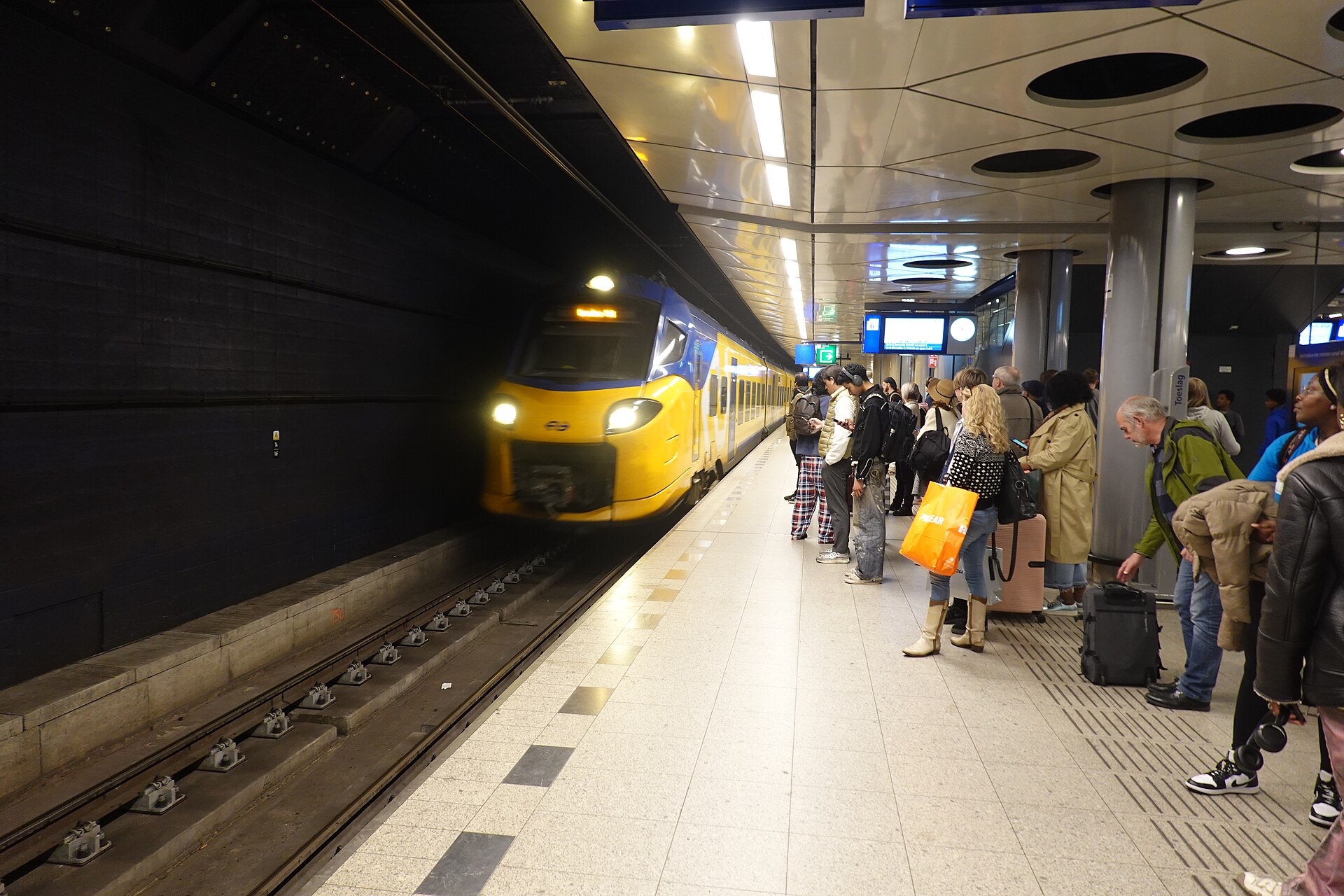
- Train arriving at Schiphol: Schiphol Airport train station 2025 4 by Smiley.toerist, CC BY-SA 4.0, via Wikimedia Commons.