This article contains advertising. Our booking links are routed through a partner that adds commission tracking automatically, so if you book through one we earn a commission from the provider, at no extra cost to you. It never affects what we recommend. Affiliate disclosure
The Heineken Experience occupies the company’s original brewery on the Stadhouderskade, a handsome 1867 building on the edge of De Pijp, and it is one of the most-visited paid attractions in Amsterdam. It is a self-guided walk through brewing history, brand history, a stable of dray horses, a motion-simulator ride that puts you inside a bottle, and a bar at the end where your ticket buys you a beer. It costs from €24.95 and takes ninety minutes to two hours.
Here is the whole review in one sentence: this brewery stopped brewing in 1988. Heineken Experience Amsterdam tickets buy you a brand museum, not a working brewery, and whether that is worth €24.95 depends entirely on which of those two things you thought you were buying. We have sent people here who loved it and people who felt fleeced, and the difference between them was never the ticket price — it was what they expected to find behind the door.
Heineken Experience at a glance
Checked September 2026 against the operator’s own site.
| Detail | 2026 information |
|---|---|
| Heineken Tour | From €24.95, includes 1 beer |
| Tour + Rooftop | €29.95, includes 2 drinks |
| VIP Tour | €65, guided, 5 premium beers plus Dutch bites |
| Opening hours | Daily 10:30–21:00, last entry 18:45 |
| Duration | 1.5–2 hours, self-guided |
| Age policy | Under 18s admitted with an adult, no alcohol served |
| Address | Stadhouderskade 78, on the edge of De Pijp |
| Still brewing? | No — production ended here in 1988 |
| Booking | Timed slots; day before is normally enough |
| I amsterdam City Card | Discounted entry for 18+, not free |
| Museumkaart | Not accepted — this is not a museum |

What you actually get for your money
The route is self-guided and runs through the old brewery over roughly ninety minutes, though the building funnels you along at a pace of its own. Broadly it breaks into five parts.
The brewing floor
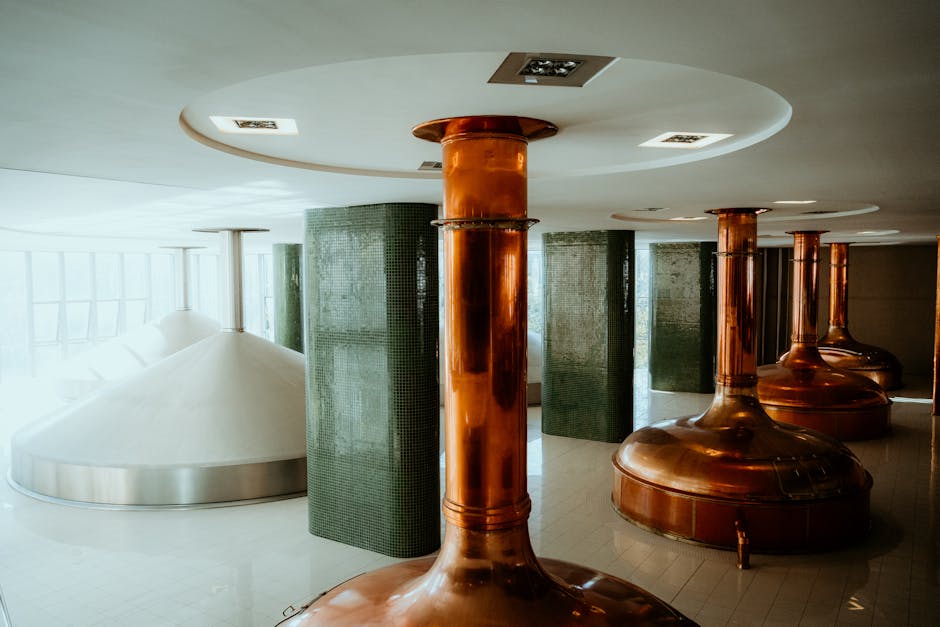
The best section, and the one that justifies the building. Enormous original copper kettles, the mash tuns, the tiled floors, and a genuinely well-made explanation of what malt, hops, water and yeast do to each other. If you have never seen industrial brewing equipment at scale, this is a good place to see it. Heineken’s A-yeast, isolated in 1886 by a student of Louis Pasteur, gets its own display and deserves it — it is the actual reason the beer tastes the same in ninety countries.
The heritage rooms
Gerard Heineken bought a brewery on the Nieuwezijds Voorburgwal in 1864 at the age of twenty-two, moved production here in 1867, and the family story runs through advertising, bottling lines and export. It is competently done corporate history. Whether it holds you depends entirely on your appetite for advertising archives, which for some visitors is genuine and for others is nil.
The Brew You ride
A motion-simulator experience in which you are, notionally, a bottle of beer being brewed, bottled and shipped. Water sprays, the floor moves, the room shakes. Children love it. Adults are split roughly down the middle between finding it good fun and finding it the moment the museum tips into theme park. It is short.
The horses and the yard
The brewery’s Shire horses are still stabled on site and still pull the dray on ceremonial occasions. They are large, calm and the most unexpectedly charming thing in the building.
The bar, and the rooftop
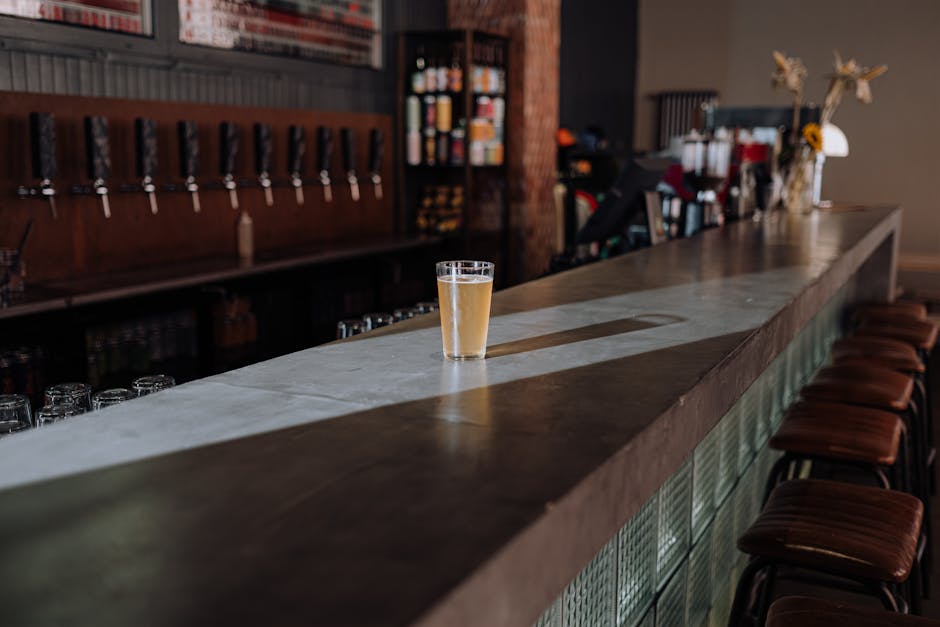
The tour ends in a modern bar where your included beer is poured, with a short demonstration of the correct pour — the two-finger head is company doctrine and they will explain why. The standard €24.95 ticket includes one beer; the €29.95 rooftop version adds a second drink and a terrace with a view over the Singelgracht that is pleasant rather than spectacular. The €65 VIP tour runs with a live guide, five premium beers and Dutch snacks, and takes closer to two and a half hours.
So is it worth it?
Our verdict, stated plainly: for most visitors, no — and for a specific and sizeable minority, yes.
Skip it if
- You came for the beer. Nothing is brewed here. If you want to drink beer made in Amsterdam this week, you want a working brewery, and there are several.
- You are on a tight budget. €24.95 buys a lot of beer in this city, and the €29.95 rooftop ticket costs more than the Anne Frank House and the Rembrandt House combined.
- You have two or three days. Ninety minutes is a meaningful chunk of a short trip, and the competition is exceptional. See our two-day itinerary for what those ninety minutes cost you elsewhere.
- You dislike being marketed to. This is a brand experience and it does not pretend otherwise. The exit is through a shop where you can have your name printed on a bottle.
Go if
- You are in a group. This is one of the few large venues in Amsterdam genuinely built for groups of eight or twelve, with no group-booking requirement and a bar at the end. Most museums cap group size; this one is designed for it. The group celebration guide covers what else works.
- It is raining and you have already done the museums. It is a warm, dry, entertaining two hours in a city where the weather can be relentless — see the weather by month guide.
- You have older children. Under-18s enter with an adult and get soft drinks. The Brew You ride and the horses carry a nine-year-old comfortably, which is more than most Amsterdam attractions manage.
- You have a real interest in industrial heritage or brand history. The building and the kettles are genuinely good, and the advertising archive is better than it has any right to be.
What we would say to a first-time visitor with three days: put this behind the Rijksmuseum, the Anne Frank House, a canal cruise and a proper walk through the Jordaan. If it still fits after that, enjoy it.

The better beer alternatives, ranked
If your actual goal is Dutch beer rather than Dutch branding, these do the job better and cost less.
- Brouwerij ‘t IJ, under the De Gooyer windmill on Funenkade. A working brewery with a taproom, no entry charge, and beers you cannot get outside the Netherlands. Tours run at set times for a few euros. This is the answer to almost everyone who is disappointed by the Heineken Experience.
- Brouwerij de Prael in the centre — a social enterprise brewery employing people with a history of mental-health difficulties, with a bar attached.
- Oedipus in Noord, reached on the free ferry, which is a brewery, taproom and beer garden in one.
- Any brown café — Café Chris, Café Hoppe, In ‘t Aepjen. A beer costs three or four euros and the room is three hundred years old.
Our craft beer and brewery guide ranks these properly, and the food and drink guide covers what to eat alongside them. Note also that a jenever tasting at Wynand Fockink, in an eighteenth-century tasting room behind Dam Square, costs a fraction of a Heineken ticket and is a far stranger and more Dutch hour.
Getting the most out of it if you do go
- Book the day before for a specific slot. It rarely sells out, but the 15:00–18:00 band on a weekend does fill.
- Go late. Last entry is 18:45 and the final slots are much quieter than the afternoon. An evening visit also means the bar at the end functions as your evening rather than an interruption to it.
- Take the rooftop upgrade rather than the VIP tour unless you are a serious enthusiast. Five euros for a second drink and a terrace is reasonable value; €65 is not, for most people.
- Do not rush the brewing floor to reach the bar. The kettles are the part you cannot see anywhere else.
- Check the City Card discount. The I amsterdam City Card gives a discount here for over-18s rather than free entry, which is a distinction worth knowing before you assume it is covered.
- Eat afterwards in De Pijp, not on the Stadhouderskade. You are two minutes from the Albert Cuyp market and some of the best cheap food in the city.
Where it sits, and what is around it
Stadhouderskade 78, on the northern edge of De Pijp and a seven-minute walk from the Rijksmuseum. Trams 1, 7 and 19 stop at Weteringcircuit or Marie Heinekenplein; the tram routes guide has the detail and the public transport guide covers fares.
This is a good location, and it is the strongest practical argument for the visit: you are within ten minutes’ walk of the Museum Quarter on one side and the Albert Cuyp market, the Sarphatipark and De Pijp’s restaurants on the other. A Heineken slot at 17:00 followed by dinner in De Pijp is a coherent evening in a way that a Heineken slot at 11:00 followed by a museum is not.
The company runs a free canal-boat transfer between the brewery and a shop near Dam Square on some tickets, which is a pleasant fifteen minutes on the water and effectively a small cruise thrown in — check whether your ticket type includes it, because it is not on all of them.
A note on what Heineken means in Amsterdam
It is worth understanding why this building matters to the city, because it changes how the visit reads. Heineken was for a century one of Amsterdam’s largest employers, and the brewery on the Stadhouderskade sat at the heart of a working-class district that had been built in the 1870s to house exactly those workers. De Pijp was a brewery neighbourhood before it was a restaurant neighbourhood.
Production moved to Zoeterwoude and Den Bosch in 1988 because the site could not expand and the canals could no longer carry the volume. What was left behind was a listed industrial building in a city that had spent thirty years demolishing exactly that kind of structure. Turning it into a visitor attraction is, in that light, a better outcome than most nineteenth-century Amsterdam factories got — the architecture walking guide has the wider story of what survived and what did not.
The green bottle, incidentally, is a piece of deliberate design history. Alfred Heineken personally drove the brand’s visual identity from the 1950s, including the tilted ‘e’ in the wordmark that is supposed to read as a smile. Whether that is fascinating or exhausting is, again, the entire question of whether you should buy a ticket.
How it compares on price with everything else in the city
The strongest argument against the Heineken Experience is not that it is bad. It is that Amsterdam is unusually well supplied with things that cost the same or less and deliver more, and the comparison is worth setting out explicitly rather than gesturing at.
At €24.95 you are paying almost exactly the same as a Rijksmuseum ticket, which buys entry to 80 rooms and 8,000 objects with no time limit until closing. You are paying €8 more than the Anne Frank House, and roughly €5 more than the Rembrandt House. You are paying more than a standard hour-long canal cruise, and more than the A’DAM Lookout observation deck, and more than the Moco Museum‘s cheapest slot. For €29.95, the rooftop ticket costs more than the Anne Frank House and the Rembrandt House put together.
None of that is disqualifying on its own. A brand museum with a bar at the end is a different product from a national collection, and comparing them purely on price is a little unfair. But it does explain why the Heineken Experience generates such polarised reactions: people arrive having spent Rijksmuseum money and having expected, in some vague way, a brewery. The full price comparison across every major venue sits in our Amsterdam attractions and tickets guide, and the wider budget picture is in the trip cost breakdown.
One genuine cost saving to know about: the price on the operator’s own site is the price. Resellers on Damrak and around Leidseplein sometimes advertise Heineken tickets as part of a bundle with a canal cruise at what looks like a discount, and the arithmetic almost never favours you once you check the individual prices. Our guide to Amsterdam scams and tourist traps covers the current versions.
Practical detail before you go
- It is genuinely self-guided. Nobody walks you round on the standard ticket, and the pace is yours. If you want a guide, that is the VIP tour at €65 and there is no middle option.
- There is a lot of standing and a fair amount of stairs. Lifts exist and the venue is broadly accessible, but the route is long and mostly on hard floors. Our accessibility guide covers how the major attractions compare.
- Bags go in lockers near the entrance. Large luggage is not admitted.
- Your included drinks are tokens handed over at the start, and they are not refundable if you do not use them, which matters if you are the designated non-drinker in a group.
- Photography is encouraged throughout, sometimes aggressively so — several sections are built around a photo opportunity, which is part of why the visit divides people.
- The shop at the exit is unavoidable, in the modern way. You can have a bottle personalised, which is either a nice souvenir or exactly the thing you came to Amsterdam to avoid. Our souvenir guide has better ideas.
- Non-drinkers are properly catered for. Soft drinks and Heineken 0.0 are available on every ticket type, so a mixed group works without anyone feeling awkward.
What to do with the rest of the day
The venue’s location is genuinely useful, and building a coherent half-day around it rescues a lot of the value. Here is the plan we would actually follow.
Take a 16:00 or 17:00 slot. Come out around 18:30 and walk south into De Pijp — five minutes puts you on the Albert Cuypstraat, ten minutes puts you in the Sarphatipark, and the neighbourhood’s restaurants run from Syrian to Surinamese to a great many good Italian places at prices the Museum Quarter cannot match. Our restaurants by budget and cheap eats guides both concentrate heavily on this quarter for good reason, and Amsterdam street food covers what to grab from the market stalls if you would rather eat standing up.
If you would rather go the other way, the Rijksmuseum gardens are seven minutes north and free, and Vondelpark is fifteen minutes west — see the parks guide. On a summer evening that is a better hour than anything else within walking distance.
What we would not do is schedule the Heineken Experience in the morning and a major museum in the afternoon. The two do not sit well together, and the brand-heavy tone of one tends to bleed into the other. Keep it as an evening thing and it works far better as part of a trip. Our three-day itinerary shows where an evening slot fits without displacing anything important.
Keep Exploring
- Amsterdam attractions and tickets: all prices and booking windows
- Craft beer and breweries in Amsterdam
- The De Pijp neighbourhood guide
- Albert Cuyp market
- Amsterdam food and drink guide
- Things to do in Amsterdam
- Free things to do in Amsterdam
Frequently asked questions
How much are Heineken Experience Amsterdam tickets?
From €24.95 for the standard self-guided tour with one beer, €29.95 for the version with rooftop access and two drinks, and €65 for the guided VIP tour with five beers and Dutch snacks.
Is beer still brewed at the Heineken Experience?
No. Brewing at the Stadhouderskade site ended in 1988, when production moved to Zoeterwoude and Den Bosch. The copper kettles you see are original but no longer in use.
How long does the Heineken Experience take?
Ninety minutes to two hours for the self-guided tour, including the bar at the end. The VIP tour runs closer to two and a half hours.
Do you need to book in advance?
Booking the day before is normally enough. It uses timed slots and rarely sells out entirely, though weekend afternoons between 15:00 and 18:00 do fill in high season.
Can children go to the Heineken Experience?
Yes, under-18s are admitted when accompanied by an adult and are served soft drinks rather than beer. The simulator ride and the stables work well for children from about eight upwards.
Is the Heineken Experience covered by the Museumkaart?
No. It is a commercial brand attraction rather than a museum, so the Museumkaart does not apply. The I amsterdam City Card gives a discount for over-18s, not free entry.
What is a better alternative for beer lovers?
Brouwerij ‘t IJ under the De Gooyer windmill: a working brewery with a taproom, free to enter, with tours for a few euros and beers you will not find abroad. Brouwerij de Prael and Oedipus in Noord are the other two we would send people to.
Is the rooftop upgrade worth it?
Yes, on balance. Five euros for a second drink plus a terrace is fair value, and the view over the Singelgracht is pleasant. The €65 VIP tour is much harder to justify unless beer is genuinely your reason for the trip.
What is the best time of day to visit?
Late. Last entry is 18:45 and the final slots are noticeably quieter than the afternoon, with the added advantage that the bar at the end becomes the start of your evening rather than an interruption to your day.
Can you visit the Heineken Experience without drinking alcohol?
Yes, easily. Soft drinks and Heineken 0.0 are available on every ticket type, and the drink tokens can be exchanged for either. Roughly half the visit — the brewing floor, the heritage rooms, the stables and the simulator — has nothing to do with drinking at all, so a non-drinker in a group is not left standing around.
Is there a free canal transfer included?
On some ticket types, yes. A shuttle boat runs between the brewery and a Heineken shop near Dam Square, and it takes about fifteen minutes on the water. It is not included on every ticket, so check the description before you assume you have it, and do not buy a separate cruise on the same day until you have.
How does it compare with the A’DAM Lookout or the Moco Museum?
Both are cheaper and both take less time. The A’DAM Lookout costs €16.50 for the best view in the city, and Moco starts under €18 for an hour of Banksy and digital art. If you are choosing one paid attraction for a rainy afternoon and beer is not the point, either of those gives you more for less.