The Netherlands is smaller than West Virginia and has better trains than almost anywhere on earth, which means the whole country is a day trip from Amsterdam if you want it to be. Maastricht, in the far south, is a long but easy train ride away. Groningen, in the far north, is much the same. Everything else is closer. This is a guide to the places to visit in Netherlands beyond the capital — what each one is actually for, how long it takes to reach, and whether it deserves a day, a night, or a polite skip.
The whole argument of this page, in one line: Amsterdam is not representative of the Netherlands. It is the most touristed, most expensive, most crowded and least typical part of a country that is quieter, cheaper and often more interesting fifty kilometres in any direction. That is not a criticism of Amsterdam — it is a very good city — but if you spend five days inside the canal ring you will go home having seen one unusually intense square kilometre of a nation that has rather a lot else going on. A single day out changes the shape of the whole trip.
Practically, this page is organised by how far you are willing to go. Everything under an hour is a comfortable half-day. Everything under two hours is a full day out and back. Beyond that, consider staying the night — the country is small enough that a two-night side trip to Maastricht or Groningen costs you almost nothing in travel time and gives you a genuinely different Netherlands.
| Destination | From Amsterdam | Go for | Day or overnight |
|---|---|---|---|
| Haarlem | 13–15 min by train | A calmer Amsterdam, the Frans Hals Museum, a real market square | Half day |
| Zaanse Schans | About 20 min | Working windmills, very busy, very photogenic | Half day |
| Utrecht | about half an hour, €9–10 | Wharf cellars, the Dom Tower, a student city with no tourist crush | Full day, easily an overnight |
| Leiden | ~35 min | Canals, the oldest Dutch university, Rembrandt’s birthplace | Half day |
| The Hague | ~50 min | The Mauritshuis, the Binnenhof, Scheveningen beach | Full day |
| Delft | ~1 hour | Vermeer, blue pottery, the prettiest small centre in the country | Half day |
| Rotterdam | ~40 min on the fast train | Architecture, the Markthal, the anti-Amsterdam | Full day or overnight |
| Keukenhof | ~1 hour with the bus | Tulips, mid-March to mid-May only | Half day, seasonal |
| Kinderdijk | ~1.5 hours via Rotterdam | 19 UNESCO windmills in a working landscape | Full day |
| Giethoorn | around 2 hours, check 9292.nl | The car-free canal village. Beautiful and overwhelmed | Full day |
| Efteling | ~1.5–2 hours | Europe’s best-kept theme park, and older than Disneyland | Full day or overnight |
| Hoge Veluwe | about 1.5 to 2 hours with a bus change | Heath, forest, free white bikes, the Kröller-Müller Museum | Full day |
| Maastricht | Longest ride south, check ns.nl | Roman walls, Burgundian food, a Netherlands that feels Belgian | Overnight |
| Groningen | about 2 hours, check ns.nl | The northern student capital | Overnight |
| Texel | train to Den Helder plus a ferry of about 20 min (check NS and TESO timetables) | Wadden island beaches, dunes, seals, cycling | Overnight minimum |
How the trains work, and why this is all so easy
Nederlandse Spoorwegen — NS — runs an intercity network that is dense, punctual by international standards, and priced by distance rather than by demand. There is no advance-purchase game to play: a ticket bought on the platform ninety seconds before departure costs the same as one bought a month ago. That single fact makes Dutch day trips uniquely low-commitment. You can decide over breakfast that today is a Utrecht day.
Amsterdam Centraal to Utrecht Centraal takes around half an hour by Intercity and a second-class single costs about €9–10. Intercity services towards Maastricht, Heerlen and Nijmegen leave frequently — the Amsterdam–Utrecht leg alone runs up to every ten minutes. Maastricht to Utrecht is 1 hour 58 minutes at €29–45. Fares rise annually, so treat every figure here as indicative and check ns.nl on the day.
Pay with OVpay contactless: tap your bank card or phone on the yellow post going in and again coming out, and the fare is calculated for you. No ticket, no queue, no deposit. Forgetting to tap out charges you a default fare, which you can claim back, and it is the only real trap. Our OV-chipkaart and OVpay guide covers the mechanics, and the wider getting around Amsterdam page handles the city end.
Two things that surprise people. First, trains are double-decker on most intercity routes and the upper deck is quieter. Second, the Netherlands is genuinely flat and genuinely cycling-mad, so almost every station has an OV-fiets bike hire point — for a few euros a day you can step off a train in a strange city and immediately be mobile in the way locals are. If you are comfortable on a bike, this is the single best travel decision available to you in this country.
The country has regions, and they are not the same
A useful mental map, because “the Netherlands” flattens some real differences.
The Randstad is the horseshoe of cities in the west — Amsterdam, Utrecht, The Hague, Rotterdam and everything between. Eight million people, the densest urban region in Europe by some measures, and where roughly everything you have heard of is. It is Protestant in history, mercantile in temperament, and it is what most visitors mean by the Netherlands.
The south — North Brabant and Limburg — is Catholic, softer-spoken, and takes food and carnival seriously in a way the Randstad does not. Maastricht and ‘s-Hertogenbosch belong here. So does Efteling, which is not a coincidence; the fairy-tale tradition it draws on is a southern one. People will tell you the Dutch are blunt and eat badly. They are describing the Randstad.
The east — Gelderland, Overijssel — is where the country stops being flat and reclaimed and becomes forest, heath and river. The Hoge Veluwe is here, as are the Hanseatic river towns of Deventer, Zwolle and Kampen, which traded with the Baltic when Amsterdam was a fishing village.
The north — Friesland, Groningen, Drenthe — is emptier, older and more separate. Friesland has its own language, legally co-official and genuinely spoken. The Wadden Islands are strung along this coast. Almost no short-trip visitor comes here, and the reward for doing so is a country that feels nothing like the postcards.
And a piece of geography that governs everything: about a quarter of the country sits below sea level, and much of the rest would flood without active management. The polders, the dykes, the pumping stations at Kinderdijk and the Delta Works in Zeeland are not heritage attractions bolted onto a landscape — they are the reason the landscape exists. Once you see that, the windmills stop being decorative and start being machinery, which is a much more interesting way to look at them. Our page on the canal ring’s UNESCO story covers the same engineering instinct at city scale.
Under an hour: the easy half-days
Haarlem
Fifteen to twenty minutes from Amsterdam Centraal, and the single best first move for anyone who finds Amsterdam too much. Haarlem is what Amsterdam looks like with the volume turned down: the same gabled houses and canals, a magnificent market square under the Grote Kerk, and residents rather than crowds. The Frans Hals Museum is genuinely excellent and rarely busy. The hofjes — hidden almshouse courtyards, most of them still lived in and quietly open to respectful visitors — are the thing to seek out.
Go on a Saturday for the market on the Grote Markt. Our Haarlem day trip guide has the detail, and the beach at Zandvoort is another ten minutes down the line if the weather is doing something unexpected.
Zaanse Schans
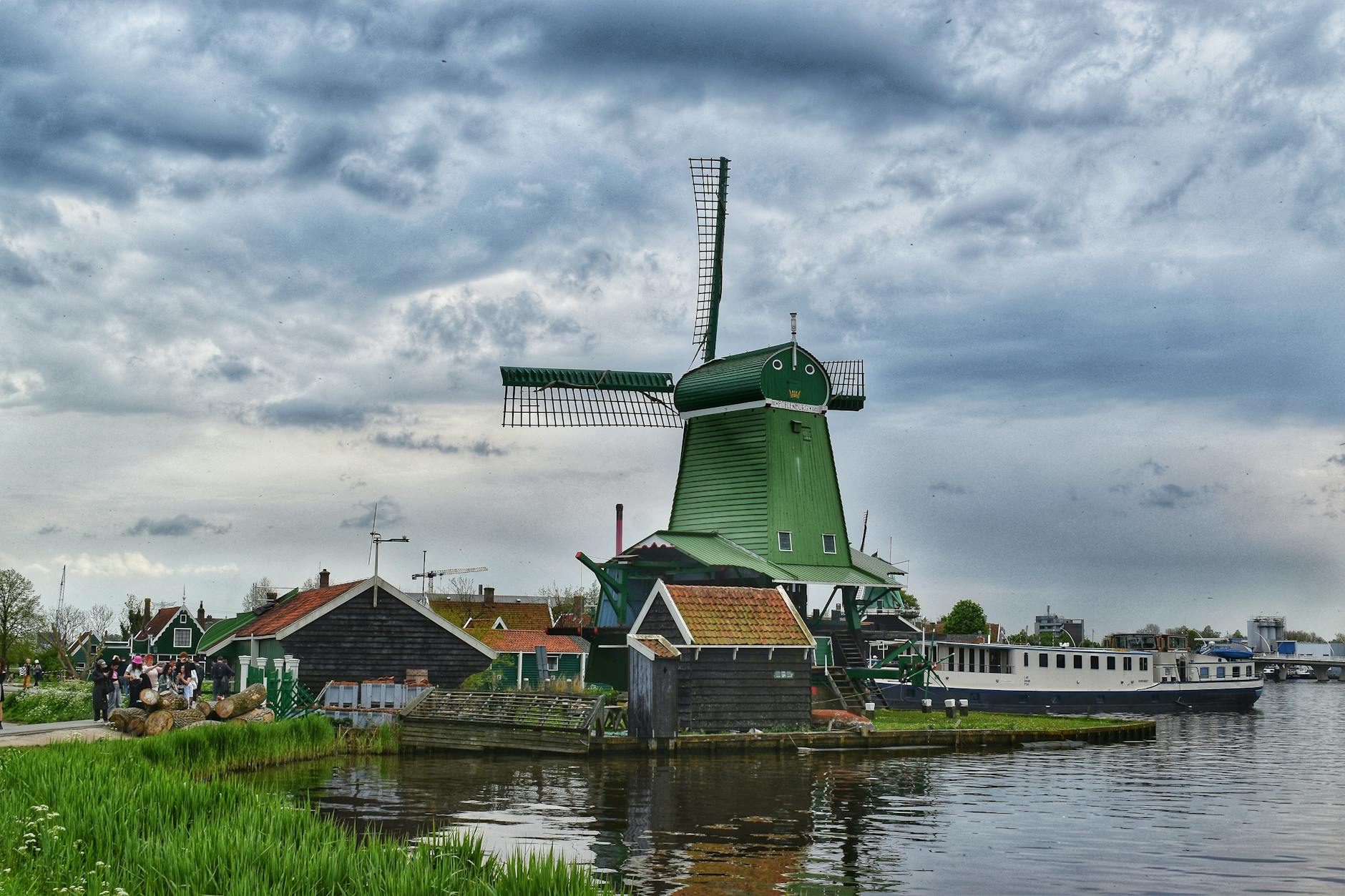
Twenty minutes north, a cluster of working windmills, wooden houses and craft workshops on the Zaan. It is beautiful and it is extremely busy — this is where every coach tour goes, and by eleven in the morning the paths are shoulder to shoulder. Go early, before 09:30, and it is a genuinely lovely place. Go at midday in July and you will be photographing other people’s heads.
The windmills are real and several are open inside, which is the part worth paying for. Our Zaanse Schans guide covers timings and what to skip. If you want windmills without the crowd, Kinderdijk is better and further; see below.
Leiden
Thirty-five minutes, and criminally underrated. Leiden has the oldest university in the Netherlands, a canal network as pretty as Amsterdam’s, a botanical garden dating to 1590, and Rembrandt was born here. It is a student town, which means good cheap food and a lack of ceremony. Almost nobody on a short Amsterdam trip goes, which is precisely the argument for going.
Utrecht
Around half an hour by Intercity and about €9–10 for a second-class single, and the strongest single recommendation on this page. Utrecht is the fourth-largest Dutch city and its old centre is arguably lovelier than Amsterdam’s, because of one architectural quirk: the canals here have wharf cellars — a lower level, at water height, cut into the quayside and now full of terraces and restaurants. You walk along the water rather than above it. Nowhere else looks like this.
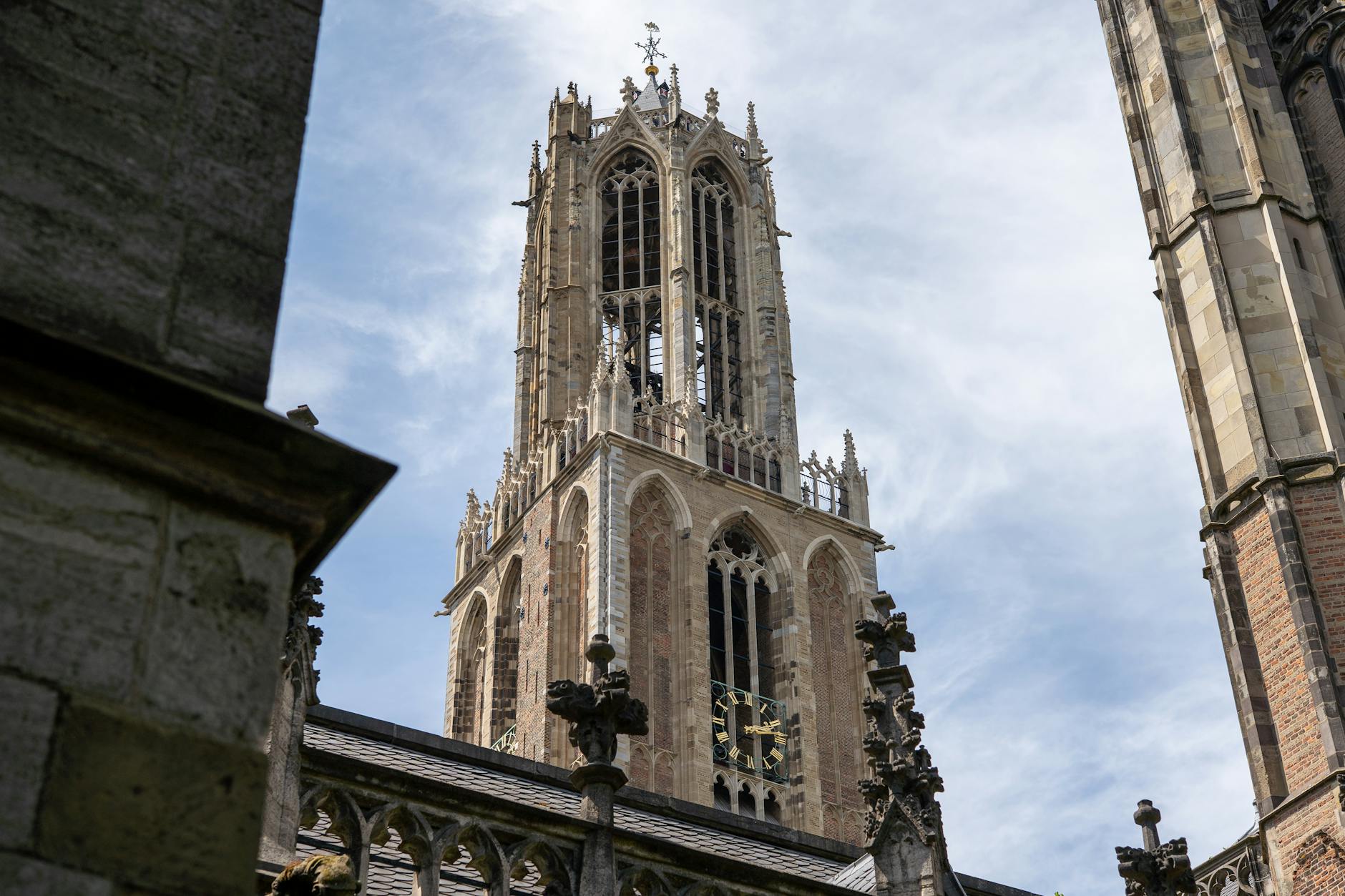
Add the Dom Tower, the tallest church tower in the country, standing separate from its cathedral because a tornado destroyed the nave in 1674 and nobody ever rebuilt it. Add a huge student population, a proper food scene and a fraction of Amsterdam’s visitor pressure. Utrecht is where a lot of people who know the Netherlands well would tell you to stay instead.
The full picture — the wharf cellars, the Dom Tower climb, the Miffy museum and where to eat — is in our Utrecht travel guide.
The Hague
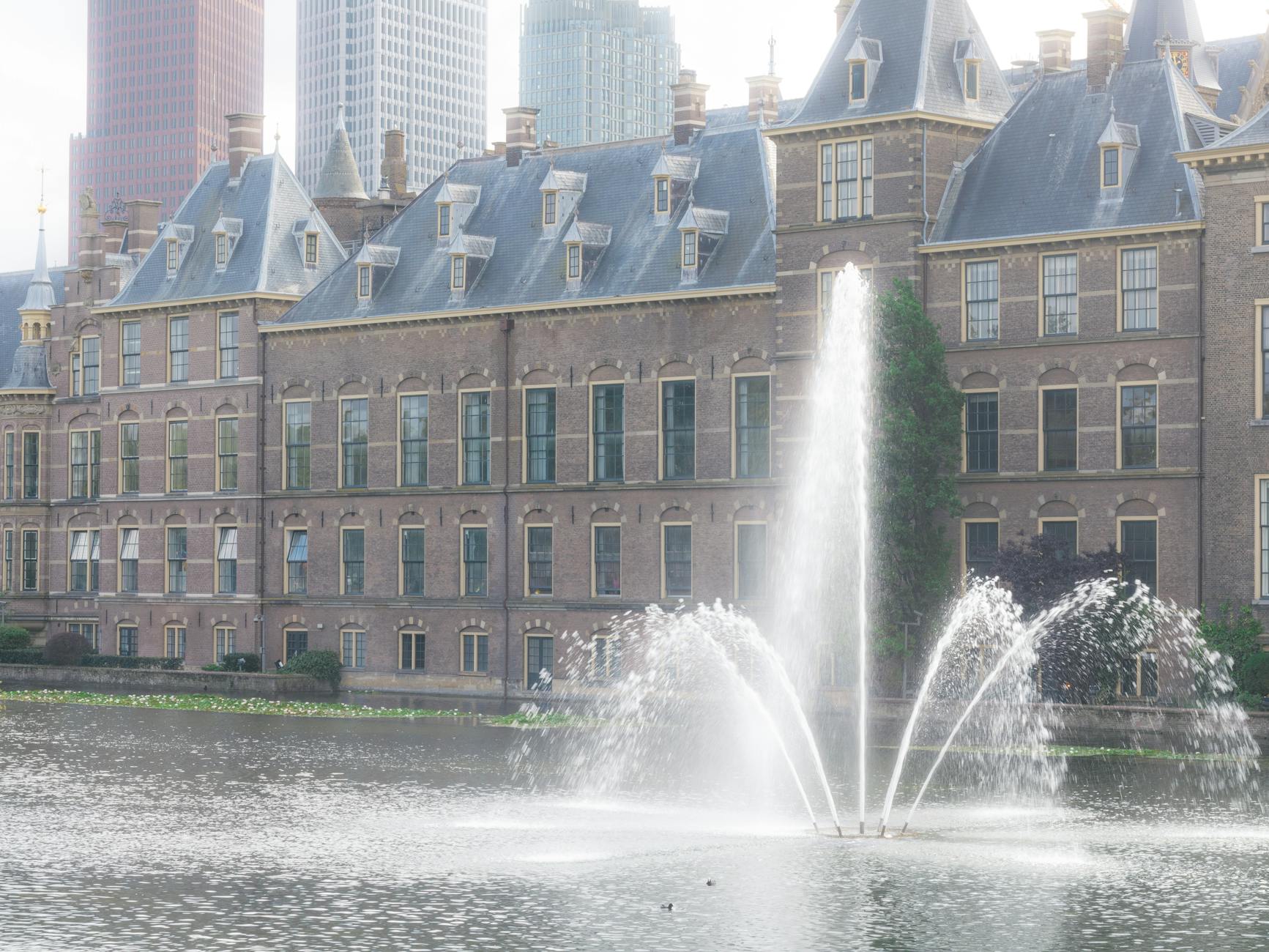
Fifty minutes, and a completely different register: this is where the government sits, where the International Court of Justice sits, and where the Dutch establishment lives. The Binnenhof parliament complex is the historic core. The Mauritshuis holds Vermeer’s Girl with a Pearl Earring and Fabritius’s Goldfinch in a small, perfectly judged building that is a far more pleasant experience than the Rijksmuseum at scale.
Then take the tram fifteen minutes to Scheveningen for a proper North Sea beach with a pier, which in summer is a genuine surprise to people who did not know the Netherlands had a coast like this. Our guide to The Hague and Scheveningen has the detail.
Delft
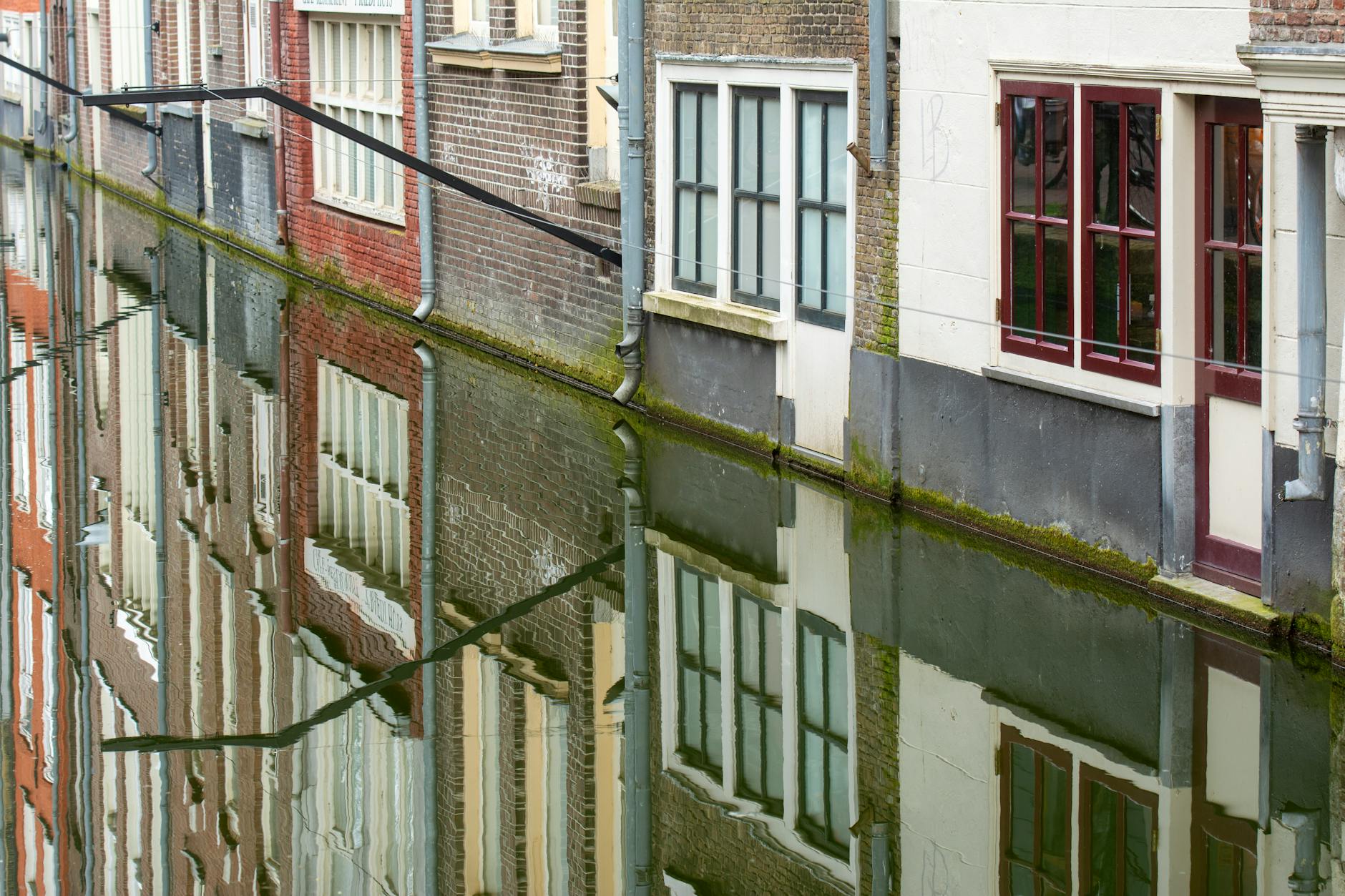
About an hour, and the most concentrated dose of picturesque in the country. A small canal-laced centre, a market square between two enormous churches, Vermeer’s town, and the home of Delftware — the blue-and-white pottery that has been made here since the seventeenth century. The Royal Delft factory still operates and can be visited.
Delft is small enough to walk in two hours and lovely enough to want four. Combine it with The Hague, which is fifteen minutes away, for a strong single day. Our Delft day trip guide covers the pottery question — including how to tell the real thing from the tourist version.
Rotterdam
Forty minutes on the fast intercity, and the most interesting contrast available. Rotterdam was flattened by bombing in May 1940 and rebuilt without nostalgia, so where every other Dutch city offers gables, Rotterdam offers a skyline. The Cube Houses, the Markthal with its painted vaulted ceiling, the Erasmus Bridge, the Depot Boijmans Van Beuningen — a mirrored bowl you can walk through to see an entire museum’s storage — and Europe’s largest port doing actual work.
It divides people, which is the point. If Amsterdam’s prettiness has started to feel like a film set, Rotterdam is the antidote. Our Rotterdam day trip guide covers what to prioritise, and if you are flying home from Rotterdam The Hague Airport, our page on Eindhoven and Rotterdam airports explains how straightforward that is.
Volendam, Marken and Waterland
North of Amsterdam, half an hour by bus, sits the Waterland — a landscape of dykes, polders and small villages that begins almost immediately once the city stops. Volendam and Marken are the two names on every tour itinerary: former fishing communities on the old Zuiderzee, one on the mainland and one a former island now reached by a causeway, both with wooden houses and both leaning fairly hard into their own picturesqueness. There is a photo studio in Volendam where you can be dressed in traditional costume, which tells you most of what you need to know about the visitor economy there.
Our verdict is mixed and worth stating plainly. Marken is the better of the two — smaller, quieter, and the walk out to the lighthouse is genuinely lovely. Volendam is busy and commercial. But the real reason to come north is the countryside between them: Zunderdorp, Ransdorp and the dyke roads are cycling country of the sort the Netherlands is famous for, and a bike tour out through Waterland costs about €44 for three and a half to four hours. Our Volendam and Marken guide covers the villages, and our bike tours page covers the better version of the same day.
Alkmaar belongs in the same category. Its cheese market runs on Friday mornings from late March to the end of September, and it is a staged historical performance rather than a working market — porters in white with lacquered hats carrying cheeses on wooden barrows. Enjoy it for what it is, which is a pageant, and do not expect commerce.
Seasonal: tulips and flowers
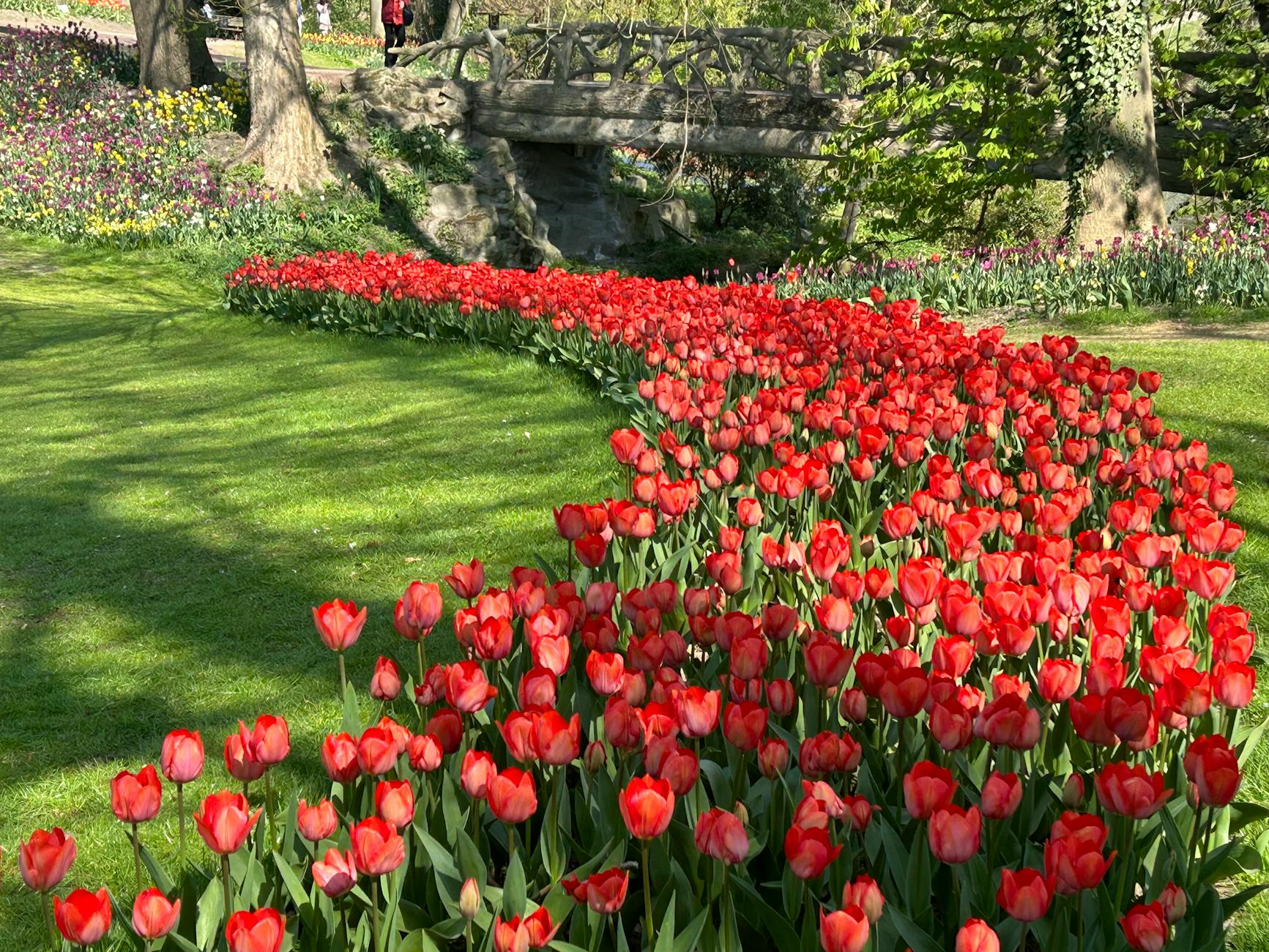
Keukenhof opens for roughly eight weeks from mid-March to mid-May and is closed the rest of the year, which is the first thing to establish before planning anything around it. Seven million bulbs, a landscaped park, and — in the surrounding Bollenstreek — the striped fields that everyone has seen photographs of. The fields are free and public; the park is not.
It is extremely busy, tickets are timed, and the whole thing is a manufactured spectacle rather than a natural one. It is also genuinely beautiful and there is nothing else like it. Go on a weekday, go early, and consider cycling through the bulb fields rather than only visiting the park — the fields are the better half. Our Keukenhof day trip guide and our page on when to visit for tulip season handle the timing, which is the hard part.
One to two hours: the full days
Kinderdijk
Nineteen eighteenth-century windmills standing in a working polder landscape, a UNESCO World Heritage Site, and a far better windmill experience than Zaanse Schans because it is a landscape rather than a display. Adult entry runs about €21, children 4–12 about €9, under-4s free, with the site open roughly 09:00 to 17:30 and longer in summer. The ticket covers the footpaths, one or two mill interiors, the pumping-station museums and the visitor centre.
Getting there takes about an hour and a half via Rotterdam, usually with a waterbus for the last leg — which is a pleasant journey in itself. Allow a full day and take a bike if you can; the site is spread out and cycling between the mills is how it is meant to be experienced.
Giethoorn
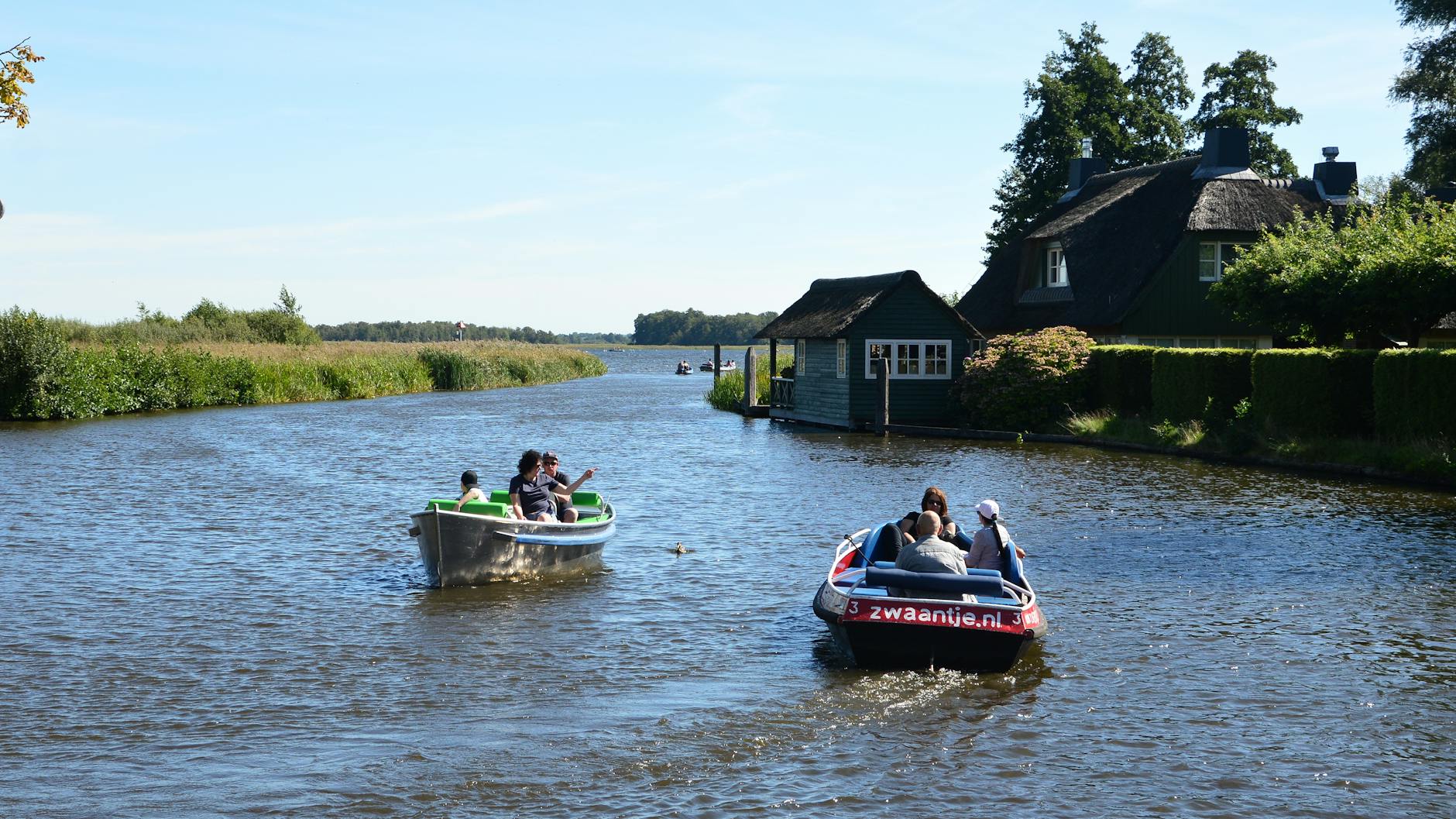
The car-free village where thatched houses sit on islands connected by footbridges and the roads are canals. It is as pretty as the photographs. It is also, in high season, so popular that the experience suffers for it: a village of about 2,800 people with a steady stream of day visitors, many arriving on coaches from Amsterdam.
Our honest advice: go, but go in shoulder season, arrive before ten or after four, and rent a whisper boat rather than joining a group tour. Off-peak it is genuinely magical. In August at midday it is a queue. Our Giethoorn day trip guide is blunt about the timings.
Efteling
The Netherlands has one of the best theme parks in the world and most foreign visitors have never heard of it. Efteling opened in 1952 — three years before Disneyland — and grew out of a fairy-tale forest rather than a film library, which gives it a strange, dark, distinctly European atmosphere that Disney parks do not have. The rides are excellent, the theming is extraordinary, and it is beloved by Dutch adults in a way that is hard to explain until you go.
It sits near Kaatsheuvel, roughly ninety minutes to two hours from Amsterdam by train and bus. It is a full day and works well as an overnight if you are travelling with children.
Tickets, the best rides, when to go and how to get there: our Efteling theme park guide.
De Hoge Veluwe and the Kröller-Müller
The strangest and best day out on this list. De Hoge Veluwe is a national park of heath, drift sand and forest — a landscape most people do not associate with the Netherlands at all — and inside it sits the Kröller-Müller Museum, which holds the second-largest Van Gogh collection in the world after the Van Gogh Museum, plus a sculpture garden among the trees.
Park entry is €13.85 per adult; a combination ticket including the museum is €27.75. You need both a park ticket and a museum ticket to see the art. The park provides free white bicycles at the entrances, which is how you are meant to get around, and using them requires no separate bicycle ticket. Cycling through pine forest to a world-class Van Gogh collection is a genuinely singular experience, and it is about ninety minutes from Amsterdam.
If Van Gogh is the reason you came to the Netherlands, this belongs on your list alongside our Van Gogh Museum guide — the two collections complement each other rather than duplicating.
‘s-Hertogenbosch (Den Bosch)
About an hour and a quarter, and worth it for the St John’s Cathedral alone — the finest Gothic building in the country, encrusted with peculiar stone figures riding the flying buttresses. Hieronymus Bosch was born and worked here, and the town runs a visitor centre devoted to him. There is also a boat trip through the Binnendieze, a river that runs partly underneath the medieval town. And the Bossche bol, a chocolate-covered cream pastry the size of a fist, which is a serious local matter.
Worth an overnight
Maastricht
A long train ride south, in a narrow strip of the Netherlands that pokes down between Belgium and Germany, and it does not feel Dutch at all. Maastricht is Roman in origin, Catholic in culture, Burgundian in its attitude to lunch, and built in stone rather than brick. There are city walls, a bookshop in a thirteenth-century Dominican church that turns up on many “world’s most beautiful bookshops” lists, and caves under the Sint-Pietersberg you can tour.
It is the best argument on this page for spending a night outside Amsterdam. The travel time makes a day trip technically possible and practically silly; two nights turns it into a proper second destination.
What to see, where to eat and how to get there: our Maastricht travel guide.
Groningen
Two hours north, and well off the usual international itinerary, which is exactly its appeal. Roughly a quarter of Groningen’s residents are students, the highest share of any Dutch city, which makes it young, cheap and busy at night in a way that has nothing to do with tourism. The Groninger Museum is a wildly coloured postmodern pile in the middle of the canal, and the Martinitoren gives you the view. It is not pretty in the Delft sense; it is alive.
Texel and the Wadden Islands
A chain of islands along the north coast separating the Wadden Sea — a UNESCO site and the largest tidal flats system in the world — from the North Sea. Texel is the largest and the easiest to reach: train to Den Helder, then a TESO ferry of about twenty minutes, with a return fare of €6.00 for a cyclist with bike. Bike hire sits beside the ferry terminal on the island side.
What you get is thirty kilometres of beach, dunes, sheep, a seal sanctuary, and a version of the Netherlands that is essentially empty. It requires an overnight to make any sense at all. Go in June or September.
Three routes, if you want more than day trips
Day trips out and back from Amsterdam are the default, and for a short visit they are right. But the country rewards a loop, and because distances are so small a loop costs almost nothing in travel time. Three that work:
The three-day south
Amsterdam to Utrecht (about half an hour), night one. Utrecht to ‘s-Hertogenbosch (a short direct Intercity ride) for the cathedral and a Bossche bol, then on to Maastricht, night two and three. Return to Amsterdam directly by train, or break at Eindhoven if you want the design and Philips story. This is the itinerary that shows you the Catholic, Burgundian south — a Netherlands most visitors never see at all.
The two-day west
Amsterdam to Haarlem, then down the coast to Leiden and The Hague, with a night in Delft or Rotterdam. Day two takes in Rotterdam and Kinderdijk before returning. Everything on this route is within an hour of everything else, so you can improvise wildly and still get home. It is the densest concentration of Dutch cities in the country.
The four-day north
Amsterdam to Giethoorn early, then on to Groningen for two nights. From Groningen, either the Wadden coast or back down via Zwolle and Deventer — the latter a beautiful Hanseatic river town almost nobody visits. This is the quietest route and the one with the fewest other tourists on it. Combine it with Texel if you have a fifth day.
In all three cases, book accommodation rather than assuming; provincial Dutch cities have far less hotel stock than Amsterdam and a conference or a festival can empty a town. Our hotel prices by month page is Amsterdam-specific, but the seasonal pattern holds nationwide, and rates outside the capital run substantially lower.
Just over the border
The Netherlands is small enough that two foreign cities are easier day trips than parts of the country itself. Bruges is a long but feasible day by train, and one of the most complete medieval city centres in Europe. Brussels is 1 hour 52 minutes by Eurostar, and Paris is 3 hours 20 from about €35 — Eurostar absorbed Thalys in late 2023, and booking opens around six months ahead. Antwerp is closer than Maastricht.
Whether any of this belongs in a short Amsterdam trip is a separate question. Our view: on a four-day trip, no — you will spend the day on trains and see a highlight reel. On a ten-day trip, absolutely, and Bruges or Antwerp is a better use of a day than a third Amsterdam museum.
How to choose, if you only have one day
- Overwhelmed by Amsterdam and want more of the same, calmer? Haarlem, twenty minutes.
- Want the single best city day out? Utrecht. The wharf cellars alone justify it.
- Want art? The Hague for the Mauritshuis, or the Hoge Veluwe for the Kröller-Müller.
- Want something that looks nothing like Amsterdam? Rotterdam.
- Want windmills? Kinderdijk if you have a full day, Zaanse Schans if you have a morning.
- Travelling with children? Efteling, without hesitation.
- Visiting between late March and mid-May? Keukenhof, and cycle the fields.
- Want a beach? Scheveningen via The Hague, or Zandvoort via Haarlem.
And one piece of advice that applies to all of them: go early. Dutch towns are at their best before the coaches arrive, and the trains at 08:00 are half empty. If you are building a longer itinerary, our five-day Amsterdam itinerary and one-week itinerary both build in days out, and our main day trips from Amsterdam page covers the shorter hops in more depth.
Places we would not send you
A guide that recommends everything is useless, so here are the honest exclusions.
Madurodam, the miniature-Netherlands park in The Hague, is charming for under-eights and a slightly odd hour for anyone else. If you have a child, go; if not, spend the time in the Mauritshuis fifteen minutes away.
Volendam in high summer, on a coach, at midday. See above — the countryside around it is the good part, and the village is at its worst exactly when the tours arrive.
Almere. An entirely new city built on reclaimed seabed from the 1970s onwards, and genuinely interesting to anyone who cares about urban planning. For everyone else it is a suburb, and there are twenty better uses of a day.
Any “windmills, cheese and clogs” combination coach tour that promises Zaanse Schans, Volendam, Marken and Edam in one day. You will spend five hours on a bus and forty minutes in each place, arriving everywhere at peak time. Two of those four destinations are twenty minutes from Amsterdam by public transport for a few euros. Do one properly instead. Our page on guided day tours from Amsterdam is honest about which organised trips genuinely add something and which are just transport with a microphone.
And a general caution about scale. It is technically possible to see four Dutch cities in a day because they are so close together. It is rarely a good idea. The pleasure of a Dutch provincial city is sitting on a terrace by a canal for an hour with no plan, and that is precisely what an over-packed itinerary removes.
Practical notes for travelling the country
- Fares are distance-based and fixed. No advance-purchase advantage, no dynamic pricing. Decide on the day.
- Tap in and tap out with OVpay on every leg, including when changing between train and local transport at the same station.
- OV-fiets bike hire at almost every station is the cheapest and best way to explore a small Dutch city.
- Nearly everything is cashless. Some smaller places are card-only rather than cash-optional. See our money and tipping guide.
- Sundays can be quiet. Shop hours vary outside Amsterdam and some open later on Sundays, so check opening times before you travel.
- The weather is the weather. Take a waterproof between September and April regardless of what the forecast says — our month-by-month weather guide is realistic about it.
- English is universal and Dutch people will switch to it instantly. Learning a few words is still appreciated; our Dutch phrases page covers the useful ones.
- The Museumkaart at €75 a year covers 500+ museums nationwide, which changes the arithmetic entirely if you are visiting several cities. Compare it against the alternatives in our city passes comparison.
Keep Exploring
- Day Trips from Amsterdam
- Haarlem Day Trip
- Rotterdam Day Trip
- The Hague & Scheveningen
- Delft Day Trip
- Giethoorn Day Trip
- Zaanse Schans Windmills
- Volendam & Marken
- Keukenhof Gardens
- Tulip Season: When to Visit
- Bruges Day Trip
- OV-chipkaart & OVpay Guide
- One Week in Amsterdam
- Five-Day Amsterdam Itinerary
- Dutch Culture, Customs & Etiquette
- Amsterdam City Passes Compared
- Weather Month by Month
- Amsterdam Trip Planning Guide
Frequently Asked Questions
What are the best places to visit in the Netherlands outside Amsterdam?
Utrecht for its wharf cellars and Dom Tower, Rotterdam for architecture, The Hague for the Mauritshuis and the beach, Delft and Haarlem for small-town beauty, Kinderdijk for windmills, and Maastricht for a completely different southern Netherlands. Efteling is the best day out for families.
How far can you travel from Amsterdam in a day?
Essentially anywhere in the country. Maastricht and Groningen — the two furthest corners — are both long train rides, so check ns.nl for the day’s times. Anything under two hours works comfortably as a day trip; beyond that an overnight makes far more sense.
Do you need to book Dutch train tickets in advance?
No. NS fares are distance-based and fixed, so a ticket costs the same bought a minute before departure as a month ahead. Just tap a contactless card or phone on the yellow post going in and coming out. Fares rise annually, so check ns.nl for current prices.
Is Utrecht better than Amsterdam?
Different rather than better, but many people who know the country well prefer it. Utrecht’s canals have wharf cellars at water level lined with terraces, the old centre is arguably prettier, and there is a fraction of the visitor pressure. It is around half an hour and about €9–10 from Amsterdam by Intercity.
Which windmills should I visit — Zaanse Schans or Kinderdijk?
Kinderdijk if you have a full day: nineteen UNESCO windmills in a working polder landscape, about €21 adult, roughly an hour and a half via Rotterdam. Zaanse Schans if you only have a morning — it is twenty minutes away but extremely crowded after about 10:00.
Is Giethoorn worth visiting?
Yes, if you go outside high season and outside the middle of the day. The car-free canal village is as beautiful as the photographs, but a village of about 2,800 people gets very busy in high season, especially in the middle of the day. Rent a whisper boat rather than joining a group tour.
What is Efteling and is it worth the trip?
Efteling is a Dutch theme park that opened in 1952 — three years before Disneyland — built around a fairy-tale forest rather than film franchises, and it is one of the best in the world. It sits about 90 minutes to two hours from Amsterdam and is an easy yes if you are travelling with children.
Can I visit the Netherlands’ national parks from Amsterdam?
Yes. De Hoge Veluwe is about 1.5 to 2 hours away with a bus change after the train: heath and forest, free white bicycles inside the park, and the Kröller-Müller Museum with its major Van Gogh collection. Park entry is €13.85 and a combined park-plus-museum ticket is €27.75.
Is the Museumkaart worth it for travelling around the Netherlands?
Often yes, if you are visiting several cities. At €75 a year for adults it covers more than 500 museums nationwide, so four or five significant museums across Utrecht, The Hague, Rotterdam and Amsterdam will clear the cost. For a two-day Amsterdam trip it usually will not.