This article contains advertising. Our booking links are routed through a partner that adds commission tracking automatically, so if you book through one we earn a commission from the provider, at no extra cost to you. It never affects what we recommend. Affiliate disclosure
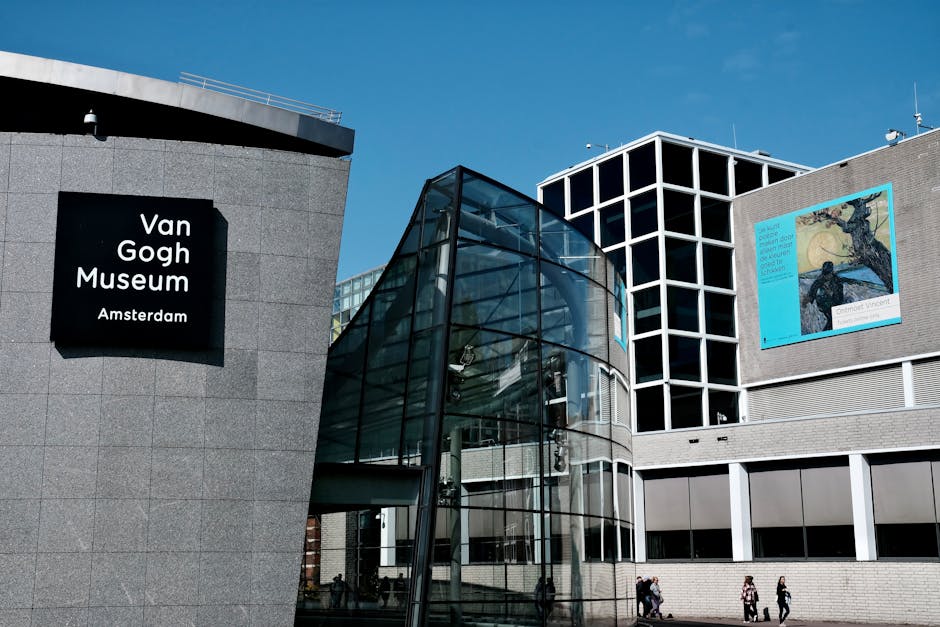
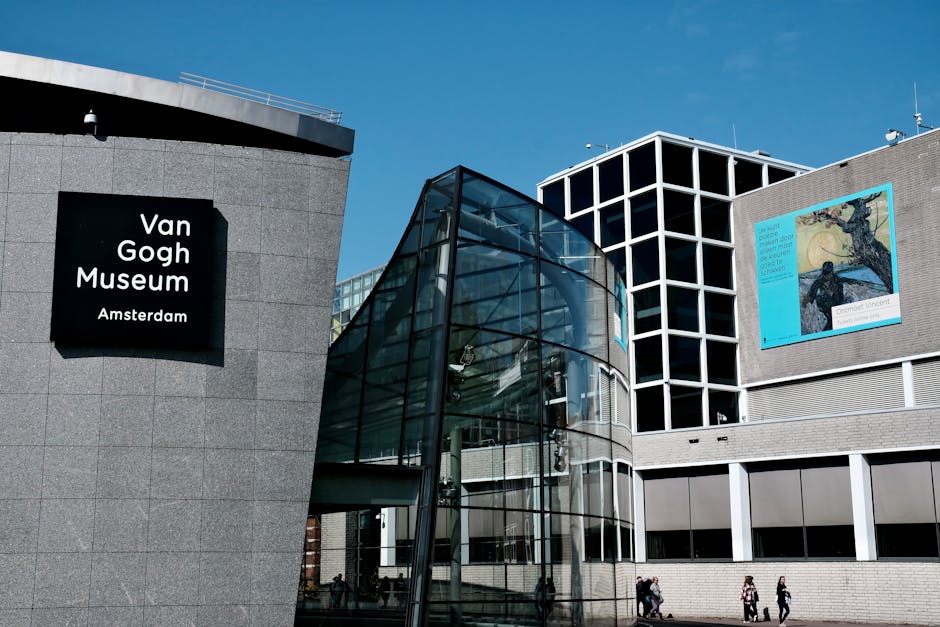
The Van Gogh Museum on Museumplein holds more than 200 paintings, 500 drawings and 700 letters by Vincent van Gogh — the largest collection of his work anywhere in the world, most of it kept together because his brother Theo’s widow refused to break it up. This guide covers what it costs, how the timed-entry system actually works, which rooms reward the time you have, and the practical detail nobody tells you until you are standing in the wrong queue.
The rule that governs everything else: Van Gogh Museum tickets are €25 for adults, free for anyone under 18, and there is no walk-up option whatsoever — every visitor needs a pre-booked slot for a specific time. That single rule causes more ruined afternoons in Amsterdam than any other. The museum is also small relative to its visitor numbers: roughly 1.6 million people a year move through a building you can cross in ninety seconds. It is a magnificent collection in a space that is permanently, structurally busy, and the difference between a good visit and a bad one is almost entirely about which hour you booked.
Van Gogh Museum tickets and opening hours at a glance
Checked September 2026 against the museum’s own site. Prices and hours change in January and around exhibition changeovers, so confirm the week you travel.
| Detail | 2026 information |
|---|---|
| Adult ticket | €25, online only |
| Under 18 | Free — but still needs a booked slot |
| Opening hours | Daily 09:00–18:00; Fridays until 21:00 |
| Winter hours | From 2 November, 09:00–17:00; Fridays until 21:00 |
| Guided tour | €7.50 extra, 50 minutes, max 12 people |
| How far ahead to book | 1–2 weeks; 3–4 for weekend mornings, April–October |
| Time needed | 2–3 hours including café and shop |
| Address | Museumplein 6, entrance on the square side |
| Payment | Cashless only — card or contactless, no cash anywhere |
| I amsterdam City Card | Not accepted since 1 June 2022 |
| Museumkaart | Accepted — still reserve a free timed slot |
How the ticket system actually works
Everything about visiting this museum flows from one fact: entry is by timed slot and there is no exception to it. There is no ticket window on Museumplein. There is no standby line. Turning up hopefully at 14:00 on a Saturday in July gets you nothing but a polite explanation and a walk back across the square.
Where to buy
Buy from the museum’s own ticket site first. It is the cheapest at €25 flat, and the inventory is the primary allocation. If your date shows as sold out there, it is worth re-checking Tiqets and GetYourGuide, which hold genuinely separate blocks of tickets released on their own schedules — they charge a small margin, typically one to three euros, but a €27 ticket that exists beats a €25 ticket that does not.
What to ignore: anything advertised as skip-the-line access. Timed entry has already abolished the queue you would be skipping. What you are being sold is the same slot at a markup, sometimes bundled with a guided walk that does not enter the building. Our Amsterdam scams guide covers the street-level version of this near Leidseplein.
How far ahead
Between November and March, a few days is usually enough and you can often book the night before. From April to October, plan on one to two weeks. Weekend morning slots — the ones everyone wants — regularly go three to four weeks out, and the Easter and Christmas holidays behave like summer. Friday evening, when the museum stays open to 21:00, is the most consistently available good slot in the entire week and the one we book ourselves.
Free entry, and what it does not exempt you from
Under-18s enter free, which makes this a cheap museum for families in a city where very little else is. A Museumkaart at €75 also covers entry. Neither exempts you from the timed-slot rule: you still reserve a specific time, you just pay nothing or use the card number. People who assume a card lets them walk in are the second-largest group turned away at the door.
The I amsterdam City Card has not covered this museum since 1 June 2022. If a comparison site tells you otherwise, it is out of date, and that single exclusion is the main argument against the card for most first-time visitors. We put both passes side by side in the Amsterdam attractions and tickets guide.
The best time to go
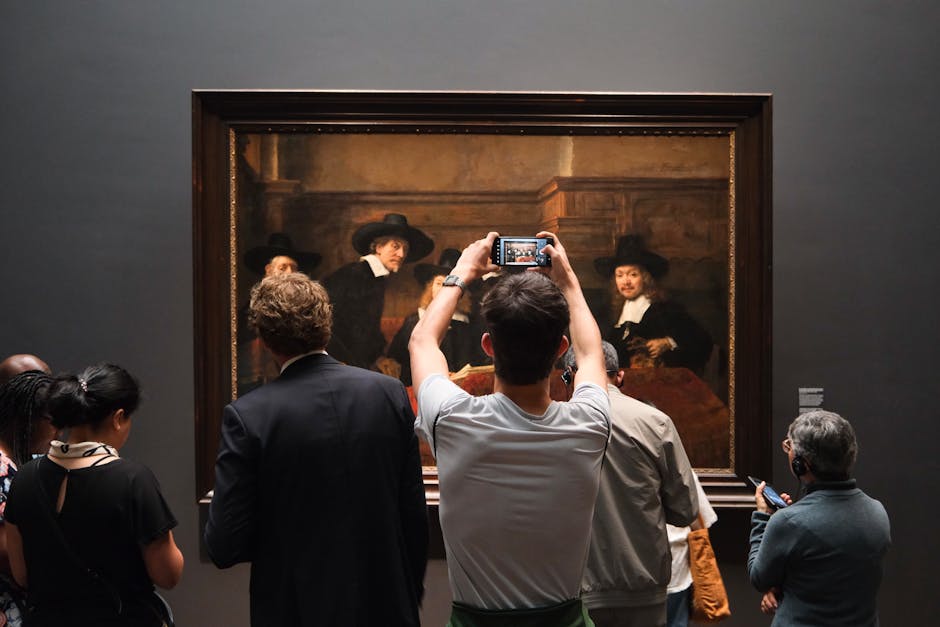
Slot choice matters more here than at any other museum in the Netherlands, because the galleries are narrow and the crowd concentrates around perhaps fifteen paintings.
- 09:00, the first slot. The best half-hour of the day by a distance. You can stand in front of the Sunflowers alone. By 10:00 the room is three deep.
- Friday after 18:00. The museum runs to 21:00 on Fridays and the last two hours are calm, dimmer and noticeably more adult. There is often live music in the atrium.
- The last slot of any day. Two hours before close is quieter than mid-morning, though you will be moved along at the end.
- Avoid 11:00–15:00 entirely if you have any choice. Coach groups, school parties and cruise passengers all land in that window.
- Avoid rainy days in high season. Amsterdam’s entire visiting population converges indoors within twenty minutes of a shower starting — see the month-by-month weather guide for what to expect.
Seasonally, February and November are the two genuinely comfortable months. July, August and the tulip weeks in April are the hardest. Winter in Amsterdam makes the case for a museum-led trip in the cold months, and it is a strong one.
What you actually see, floor by floor
The permanent collection lives in the original 1973 Rietveld building and is hung chronologically. You start at the bottom and move upwards through the life, which turns a museum visit into a biography — and makes the last rooms genuinely difficult in a way most galleries never manage.
Ground floor — the beginning
Self-portraits and an introduction to the man. Most people rush this floor to get upstairs. Do not: the wall of self-portraits, painted over four years as he taught himself by using the cheapest available model, is where the whole story is set up.
First floor — the Netherlands and Paris
The dark Nuenen years, culminating in The Potato Eaters of 1885 — brown, awkward, deliberately ugly, and the painting Van Gogh himself considered his first real work. Then Paris arrives and the palette detonates. Seeing those two rooms consecutively is the single best argument for visiting this museum rather than reading about it.
This floor also holds Sunflowers, painted in Arles in 1888 and 1889 to decorate the room he was preparing for Gauguin. Expect a permanent semicircle of people in front of it and a member of staff managing the flow.
Second floor — the workshop
Letters, pigments, technical analysis, and rotating displays about how the paintings were made and what has happened to them since. The reds in several canvases have faded from the original crimson to a pale pink, and the museum is unusually honest about showing you what you are no longer seeing. This floor is where a two-hour visit becomes a three-hour one.
Third floor — Arles, Saint-Rémy, Auvers
The last two years. The Bedroom, painted in the Yellow House. Almond Blossom, made in Saint-Rémy as a gift for Theo and Jo on the birth of their son Vincent Willem — the child who eventually gave this collection to the state. Wheatfield with Crows. The room does not need a soundtrack and does not have one.
The Kurokawa wing
The elliptical glass extension off the main hall hosts temporary exhibitions, usually two major shows a year drawing on the collection and on loans. These are ticketed within your standard admission, and they are the reason to return if you have been before. Check the museum’s what’s-on page in the month you travel.
Ten paintings worth planning your route around
- The Potato Eaters (1885) — the ambition of the pre-colour years, and a much stranger painting in person.
- Sunflowers (1889) — the version that stayed in the family, one of a series he treated as a decorating scheme.
- The Bedroom (1888) — the tilted floor is not a mistake, and the walls were originally violet.
- Almond Blossom (1890) — the most tender thing he ever painted, and the one most visitors leave with.
- Wheatfield with Crows (1890) — not, despite the story, his final painting.
- Self-Portrait with Grey Felt Hat (1887) — the Paris palette arriving in real time.
- The Yellow House (1888) — the building in Arles where the Gauguin experiment collapsed.
- Irises (1890) — painted in the asylum garden at Saint-Rémy.
- Fishing Boats on the Beach at Les Saintes-Maries (1888) — the least famous great painting in the building.
- Vase with Cornflowers and Poppies — and the surrounding room, where the letters explain what he was trying to do.
If you want the wider context of Dutch painting after this, the art lovers’ guide maps out where the rest of it lives, and the Dutch Golden Age guide covers the century Van Gogh was reacting against.
Practical rules that catch people out
- Cashless only. No cash is accepted anywhere in the building — not the café, not the shop, not the cloakroom. Card or phone.
- Bags. Anything larger than a small handbag goes in the cloakroom, which is free but slow at peak times. Large rucksacks and suitcases are not admitted at all, so plan around your check-out time if it is your last day.
- Photography is allowed without flash, tripod or selfie stick. Some temporary exhibitions ban it entirely, and this is signed at the entrance to those rooms.
- No food or drink in the galleries. The café on the ground floor of the atrium is decent and expensive, in the normal museum way.
- Arrive within your slot. A fifteen-minute grace period is usually honoured. Half an hour late on a busy afternoon is not.
- Multimedia guide costs extra and is genuinely good — the letters read aloud alongside the paintings do more than the wall text can.
Is the Van Gogh Museum worth it?
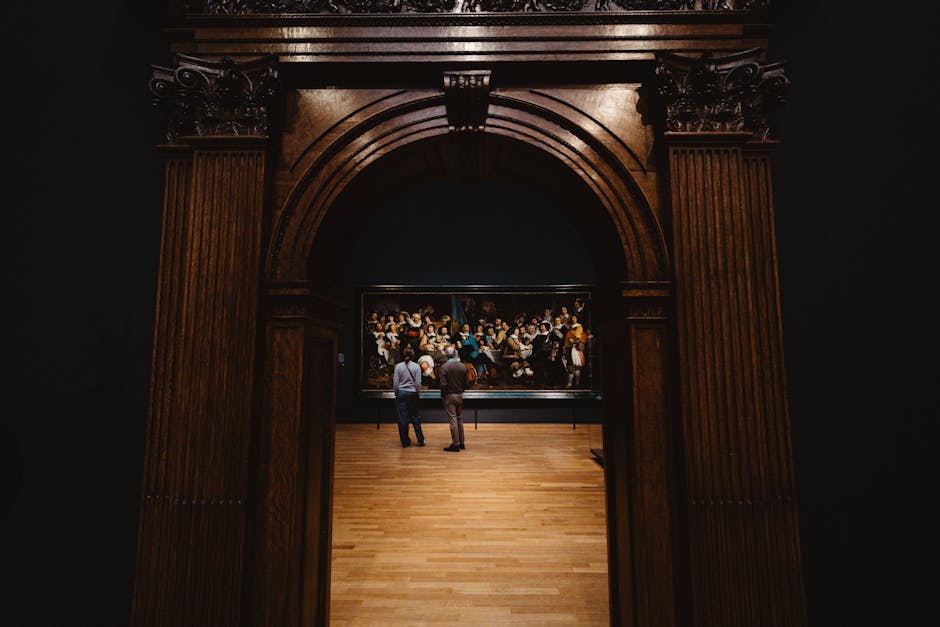
Yes, with one honest caveat. At €25 for two hours in a crowded building it is not cheap, and if you book a midday summer slot you will spend a meaningful portion of that time looking at the back of somebody’s head. We have had visits that felt like a queue with paintings on the walls.
But the collection is not replicable anywhere else. Every other museum on earth has Van Goghs in ones and twos, hung among contemporaries. Here you get the entire arc — the failure, the self-teaching, the sudden colour, the two years of extraordinary output, the end — in the order it happened, with the letters beside it. That is a different experience from seeing three good paintings in Paris or New York, and it is worth organising a day around.
The people who should skip it: anyone travelling with children under about ten, for whom a science museum or the zoo will do far more. Anyone with only one museum in them who prefers breadth, since the Rijksmuseum covers 800 years across an enormous building and is the better single choice for a first visit to the Netherlands. And anyone who can only get a 13:00 August slot, who might genuinely have a better afternoon somewhere else.
The case for the other Museumplein giant is in our Rijksmuseum guide.
With younger children, start instead with our NEMO Science Museum guide.
Getting there and what is nearby
Museumplein 6, in the Museum Quarter. Trams 2 and 12 stop at Van Baerlestraat, ninety seconds’ walk. From Centraal Station it is about fifteen minutes by tram or a forty-minute walk through the canal ring, which is a good walk in its own right. Fares and tapping are covered in the public transport guide and the tram routes guide.
Within four minutes’ walk: the Rijksmuseum, the Stedelijk and the Moco. Vondelpark begins a block west and is where to go afterwards if the weather allows — the contrast between the last room of the museum and an hour under the trees is the correct way to end this particular afternoon.
If you are pairing two museums, our Stedelijk Museum guide covers the modern collection next door.
For food, avoid the immediate square. Ten minutes south-east puts you in De Pijp, which has the best eating in this half of the city — see restaurants by budget and cheap eats.
Fitting it into your trip
One big museum per day is the sustainable rate, and two is the absolute ceiling. Pair the Van Gogh with something that is not a gallery: a canal cruise, the Albert Cuyp market, or a neighbourhood walk. Our two-day and three-day itineraries both sequence it against the Anne Frank House, which is the other fixed point most trips have to work around — see the Anne Frank House guide for that booking window, and the advance booking timeline for the order to do it all in.
On a first trip, book the Anne Frank House first because it is the hardest, then build the Van Gogh slot around it, then let everything else fall where it will. That order saves more stress than any other single piece of planning advice we give.
The short version of the life, so the rooms make sense
You do not need to arrive knowing anything. But the chronological hang means a few dates turn the museum from a wall of pictures into a story, and the story is genuinely surprising.
Vincent van Gogh was born in Zundert, in the Dutch province of North Brabant, in 1853. He worked as an art dealer, a teacher and a lay preacher among coal miners in Belgium before deciding, at twenty-seven, to become an artist. He had no training worth the name. He gave himself one, largely by copying and by painting the cheapest subjects available — peasants, boots, his own face — in a palette of brown and grey.
In 1886 he moved to Paris to live with his brother Theo, an art dealer, and encountered the Impressionists. The change in the paintings over the following two years is the most dramatic transformation on display in this building. In 1888 he went south to Arles, rented the Yellow House, and produced the work everyone knows: the sunflowers, the bedroom, the night cafés. Gauguin joined him and left after nine weeks in the crisis that cost Van Gogh part of his ear. He spent a year in the asylum at Saint-Rémy, painting the irises and the olive groves, then moved to Auvers-sur-Oise near Paris, where he died in July 1890 at thirty-seven.
The whole working career lasted ten years. Roughly 2,100 works. He sold almost nothing in his lifetime, and the story that he sold exactly one painting is a simplification rather than a myth — the museum’s own material is careful about this. Theo died six months after his brother, and it was Theo’s widow, Jo van Gogh-Bonger, who spent the rest of her life translating the letters, lending the paintings to exhibitions and refusing to sell the collection off in pieces. Without her there is no Van Gogh Museum, and arguably no Van Gogh as we understand him. Her son Vincent Willem — the baby Almond Blossom was painted for — eventually transferred the collection to a foundation, and the museum opened in 1973.
The letters, which are the other half of the collection
The museum holds roughly 700 letters, most of them written to Theo, and they are displayed in rotation because paper cannot take permanent light. They are worth the time you give them. Van Gogh wrote about what he was attempting in a given canvas, in plain language, often the same week he painted it — which is an almost unique documentary record for a painter of this stature.
He describes choosing the yellow for the Sunflowers as a decorating decision for Gauguin’s room. He explains that the tilted perspective of The Bedroom was meant to suggest rest. He worries about money in nearly every letter, because Theo was funding him entirely. If you take the multimedia guide, the readings from the letters beside the relevant paintings are the strongest thing on it, and they are the reason we recommend paying the extra.
Accessibility, facilities and the practical afternoon
The building is fully step-free from Museumplein, with lifts to every floor and accessible toilets on the ground and second floors. Wheelchairs and rollators can be borrowed free at the cloakroom, and there is no charge for a companion accompanying a visitor who needs one. This is a stark contrast with the Anne Frank House across town, and it makes the Van Gogh Museum one of the two or three most reliably accessible major attractions in the city — the accessibility guide ranks the rest.
The café sits in the glass atrium between the two buildings and does the usual museum arithmetic: good coffee, reasonable sandwiches, prices that assume you are not going anywhere. The shop is better than most, largely because the licensing programme is well managed and the print reproductions are properly made rather than posters. It is also the one museum shop in Amsterdam where the souvenir is likely to survive the flight home — our souvenir guide is more sceptical about the rest of the city’s offering.
Practical detail that matters if this is your departure day: large luggage is not admitted and the cloakroom will not take suitcases. Left-luggage facilities near Centraal Station are the answer, and the Schiphol guide covers airport storage if you would rather deal with it at the other end.
One last piece of timing advice. The final room of the permanent collection is emotionally heavy in a way people are not expecting from a day out, and the exit deposits you directly into the shop. If that transition grates — and it does for a lot of visitors — walk out onto Museumplein and into Vondelpark instead, and buy the print on the way back. It costs nothing and it makes the visit land properly.
Keep Exploring
- Amsterdam attractions and tickets: all prices and booking windows
- The complete Amsterdam museums guide
- The Museum Quarter and Oud-Zuid
- Amsterdam for art lovers
- Galleries and street art
- Things to do in Amsterdam
- Free things to do in Amsterdam
Frequently asked questions
How much are Van Gogh Museum tickets?
€25 for adults, free for anyone under 18. A guided tour adds €7.50. Tickets are sold online only, for a specific timed slot, with no ticket desk at the museum.
Can I buy tickets at the door?
No. There is no ticket window and no standby queue. Every visitor, including free under-18s and Museumkaart holders, must reserve a timed slot online in advance.
How far in advance should I book?
One to two weeks from April to October, and three to four weeks for a weekend morning. In winter a few days is usually enough, and you can often book the night before.
What if the museum is sold out on my date?
Check Tiqets and GetYourGuide, which hold separate ticket allocations released on their own schedules. Also re-check the official site the day before — cancellations return to the pool.
How long do you need at the Van Gogh Museum?
Two to three hours including the café and shop. Two hours is enough for the permanent collection at a decent pace; three lets you take in the technical rooms on the second floor properly.
Is the Van Gogh Museum included in the I amsterdam City Card?
No, and it has not been since 1 June 2022. The Museumkaart does cover it. That exclusion is the main reason the City Card fails to pay for itself on many first-time trips.
Can you take photos inside?
Yes, without flash, tripod or selfie stick, in the permanent collection. Some temporary exhibitions prohibit photography entirely and this is signed at the entrance to those rooms.
Is the Van Gogh Museum suitable for children?
Free entry under 18 makes it easy to test, and the museum runs family trails. Realistically it works from about ten upwards; younger children get more from NEMO or ARTIS.
Which is better, the Van Gogh Museum or the Rijksmuseum?
The Rijksmuseum if you only have one museum in you and want breadth, since it covers 800 years across an enormous building. The Van Gogh if you want depth on one artist, and it is the only place on earth that offers it.
Is the museum open on Mondays and public holidays?
It opens seven days a week, including most public holidays. Hours shorten to 09:00–17:00 from 2 November, with Friday evening opening to 21:00 kept year-round. Check the calendar page for the handful of exception dates each year.
Is there a Van Gogh painting anywhere else in Amsterdam?
A handful, most notably at the Stedelijk next door, which owns several works acquired long before the museum existed. The Kröller-Müller Museum in the Hoge Veluwe national park, about ninety minutes east of Amsterdam, holds the second-largest collection in the world and is far quieter — if you have seen the Museumplein version and want more, that is the trip to make.
What is the quietest month to visit?
February, followed by November and the first half of December before the Christmas crowds arrive. January is quiet too but the museum sometimes closes galleries for exhibition changeovers, so check what is actually on display before you commit to a January date.