For roughly 100 years between 1588 and 1672, the small, water-logged Dutch Republic was the richest, most powerful, most innovative society on earth. Amsterdam was its capital — a city of 200,000 people that controlled global trade from Japan to Brazil, invented the joint-stock corporation, built the world’s first stock exchange, produced Rembrandt and Vermeer, dug a 100-km network of canals through marsh land, and minted the currency every European banker wanted to be paid in. This is the Dutch Golden Age, explained in plain English: what happened, why it happened, who the key figures were, what they left behind, and exactly where in modern Amsterdam you can still see the Golden Age standing.
When Was the Dutch Golden Age?
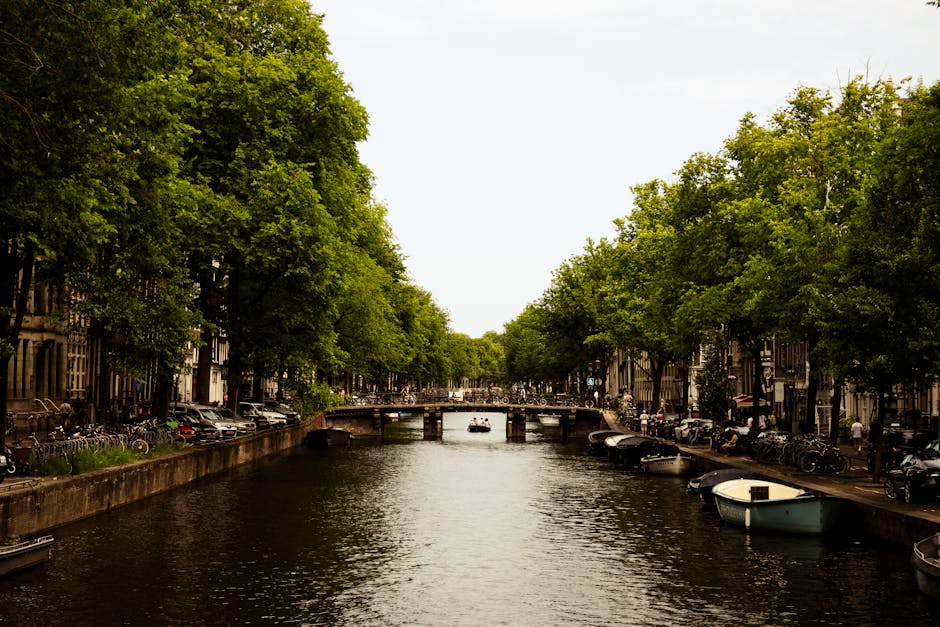
Historians dispute the exact dates, but the standard answer is 1588 to 1672, with peak prosperity from about 1620 to 1660. The endpoints map onto specific events: 1588 was the year the Dutch Republic effectively achieved de facto independence from Spain; 1672 was the Rampjaar (Disaster Year), when France, England, Münster and Cologne all attacked the Republic simultaneously and only the deliberate flooding of Holland’s farmland saved the country. Some historians extend the period to 1713 (the Peace of Utrecht) or even to 1795 (the French invasion that ended the Republic), but the cultural and economic peak is firmly 17th century.
How a Tiny Country Became a Superpower
The Dutch Republic was geographically tiny — roughly half the size of modern Netherlands, much of it below sea level — and had only about 1.5 million people. So how did it dominate the 17th century? Five reasons, in roughly causal order:
- Religious tolerance. While Catholic Spain, Lutheran Germany and Catholic France were busy persecuting religious minorities, the Dutch Republic tolerated Protestants, Jews, Anabaptists, Mennonites and even (quietly) Catholics. Persecuted populations brought money, networks and trade skills.
- The Fall of Antwerp (1585). Spanish forces sacked the southern Netherlands’ great trading capital. Tens of thousands of Antwerp’s merchants — Protestant, Jewish, Flemish — fled north to Amsterdam carrying their capital and international trading relationships.
- Independence from Spain. The 80 Years’ War (1568–1648) ended Spanish economic control over Dutch trade. The Republic could now trade with anyone, anywhere, on its own terms.
- Financial innovation. The Dutch invented modern finance — joint-stock corporations, futures markets, public bonds, modern insurance, central banking. Capital was cheaper in Amsterdam than anywhere else in Europe.
- The Baltic "Mother Trade". Less famous than the Asian spice trade, but more lucrative — the Dutch dominated the Baltic grain trade, importing wheat and timber from Poland to feed and build southern Europe.
The VOC: The World’s First Multinational
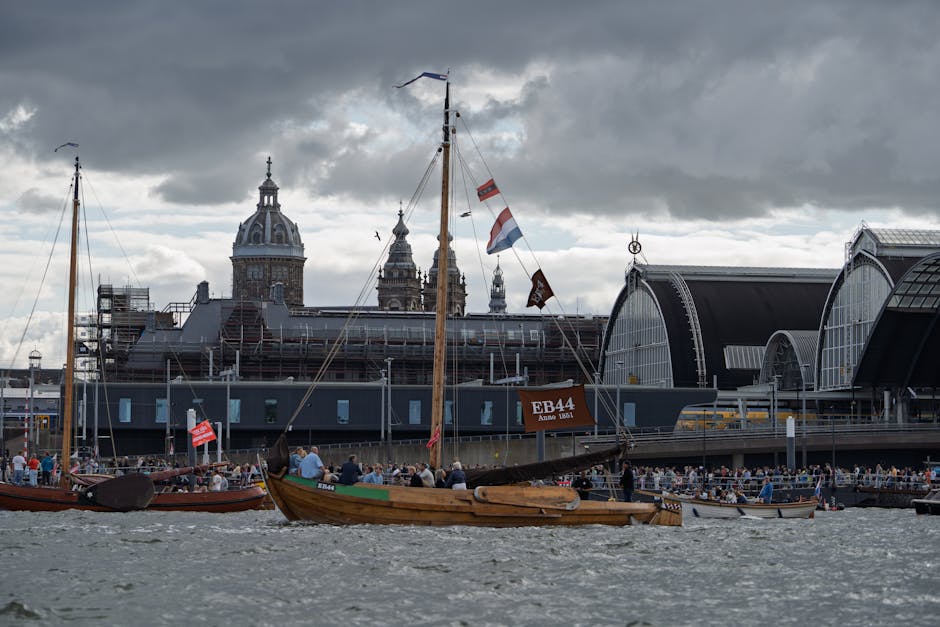
On 20 March 1602, six small Dutch trading companies merged into one: the Vereenigde Oostindische Compagnie — the United East India Company, or VOC. It was the first publicly traded joint-stock corporation in history, and for 200 years it was the largest company on earth.
- Shareholders bought transferable shares — a financial instrument that didn’t exist before. To trade them, the Amsterdam Stock Exchange was invented in the same year.
- The Dutch government granted the VOC a monopoly on all Asian trade, the right to wage war, mint currency, sign treaties and govern colonies.
- At its peak, the VOC employed 70,000 people across Asia, had 150 trading ships, 40 warships, an army of 10,000 soldiers, and outposts from Cape Town to Nagasaki.
- It controlled the spice trade — nutmeg, mace, cloves, cinnamon — and made eye-watering profits. Annual returns were often 18–25%.
- The VOC also founded major cities: Batavia (now Jakarta) in 1619, Cape Town in 1652, Nagasaki’s Dejima trading post in 1641.
- It dissolved in 1798, deeply indebted and corrupt — but two centuries of monopoly trade had already transformed Amsterdam.
The companion Dutch West India Company (WIC), founded in 1621, handled the Atlantic — sugar plantations in Brazil, the slave trade across the middle passage, and the colony of New Amsterdam (today New York), founded in 1626 and ceded to the English in 1664.
Inventing Modern Finance
The financial innovations of Golden Age Amsterdam still underpin every modern stock market and central bank. The key institutions:
- Amsterdam Stock Exchange (1602) — the world’s first. Operated initially in the open air on the Nieuwe Brug; moved into Hendrick de Keyser’s purpose-built Beurs in 1611.
- Bank of Amsterdam — Wisselbank (1609) — the world’s first central bank. It guaranteed coin quality, allowed bookkeeping transfers (a precursor of modern bank accounts), and the Bank guilder became the world’s reserve currency.
- Public bonds — provincial and city governments issued long-dated bonds that ordinary citizens could buy. Holland’s debt-to-GDP at the height of the Golden Age was higher than Britain’s during World War I — and bondholders kept getting paid.
- Futures and options markets — including the famous (and short-lived) tulip mania bubble of 1636–37, when a single tulip bulb briefly sold for the price of a canal house.
- Marine insurance — the Dutch standardised maritime insurance contracts and ran the largest underwriting market in Europe.
The Canal Belt: Engineering & Ambition
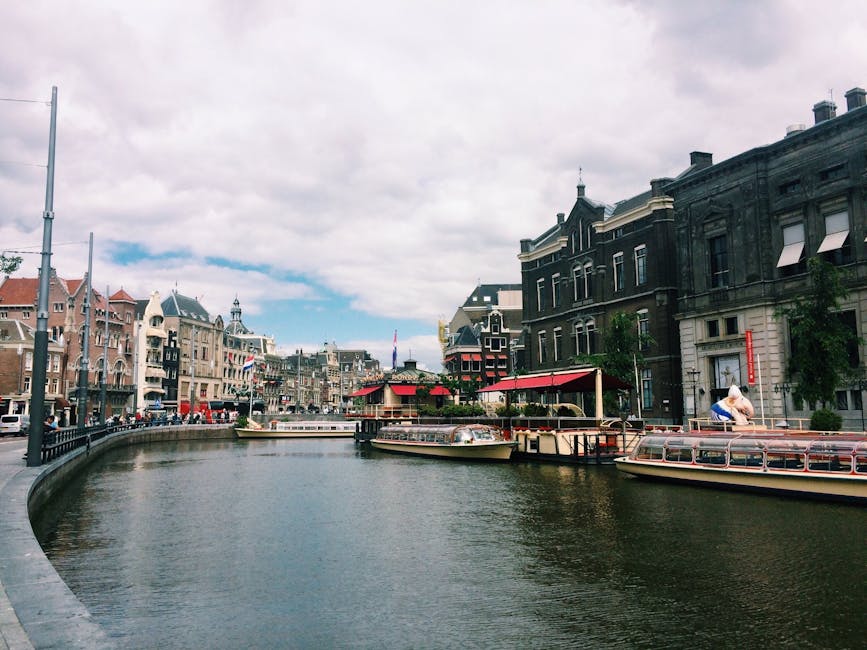
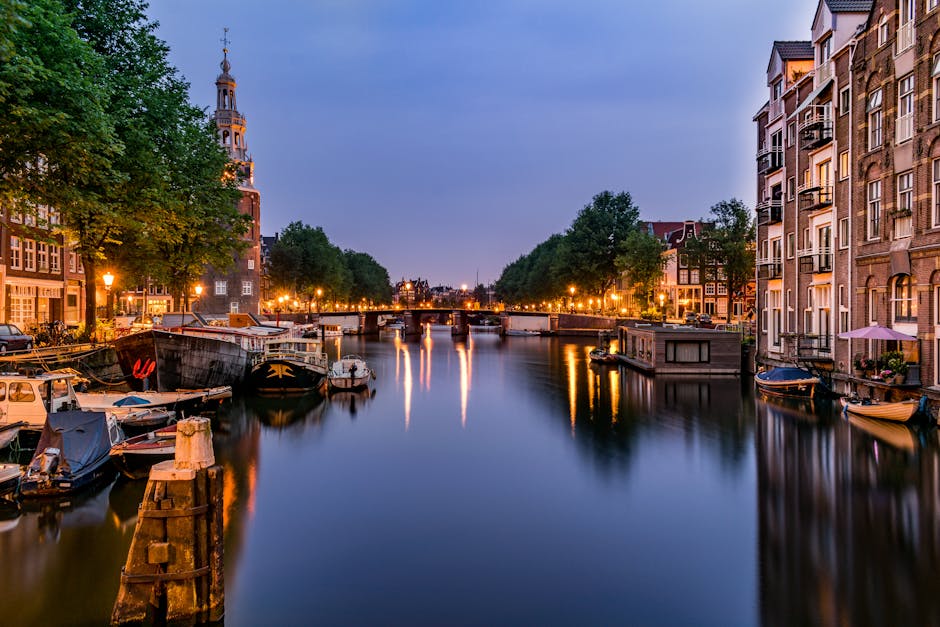
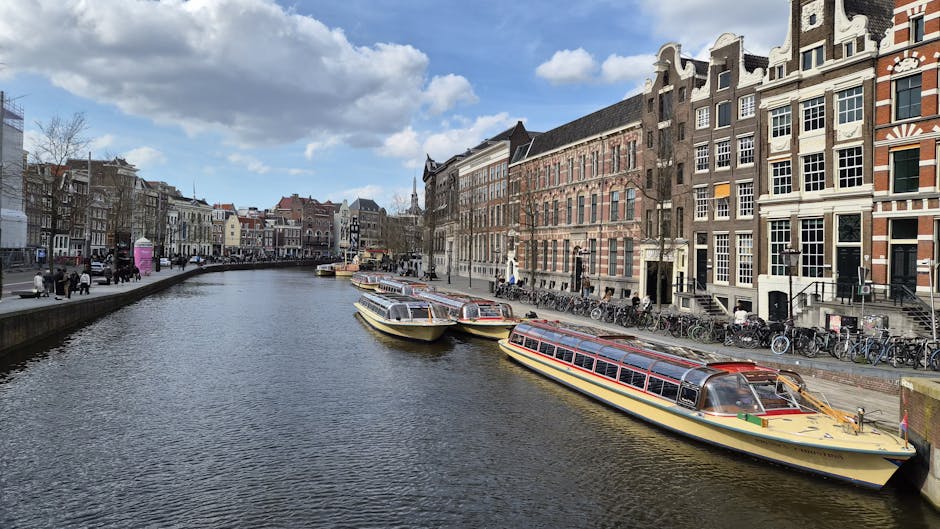
Amsterdam’s defining physical legacy of the Golden Age is the Grachtengordel — three concentric canals (Herengracht, Keizersgracht, Prinsengracht) and the smaller Singel inside them, dug between 1613 and 1660. The project was the Manhattan Project of its day: hundreds of hectares of marsh drained and stabilised, 30,000+ oak piles driven into mud to bear the new buildings, and a city-planning grid that’s still functional 400 years later.
- Engineering: the canals doubled as drainage, transport, fire protection and sewage. Houses sat on 12-metre oak piles driven through the peat to reach a stable sand layer.
- Plots: standard plot widths were 30 feet wide and 200 feet deep. Owners built tall, narrow houses up to 5 storeys with hoisting beams on the front gable to lift goods to upper-floor warehouses.
- Hierarchy: Herengracht (the "Gentlemen’s Canal") got the richest merchants. Keizersgracht (Emperor’s) the second-tier. Prinsengracht (Prince’s) the working merchants. The Jordaan, just outside, was the working-class district.
- Gables: the famous Amsterdam gable styles — step-gable, neck-gable, bell-gable — evolved over the century. Date your canal house by its gable.
- UNESCO: the canal belt was inscribed as a UNESCO World Heritage Site in 2010.
Golden Age Art: Rembrandt, Vermeer & the Genre Boom
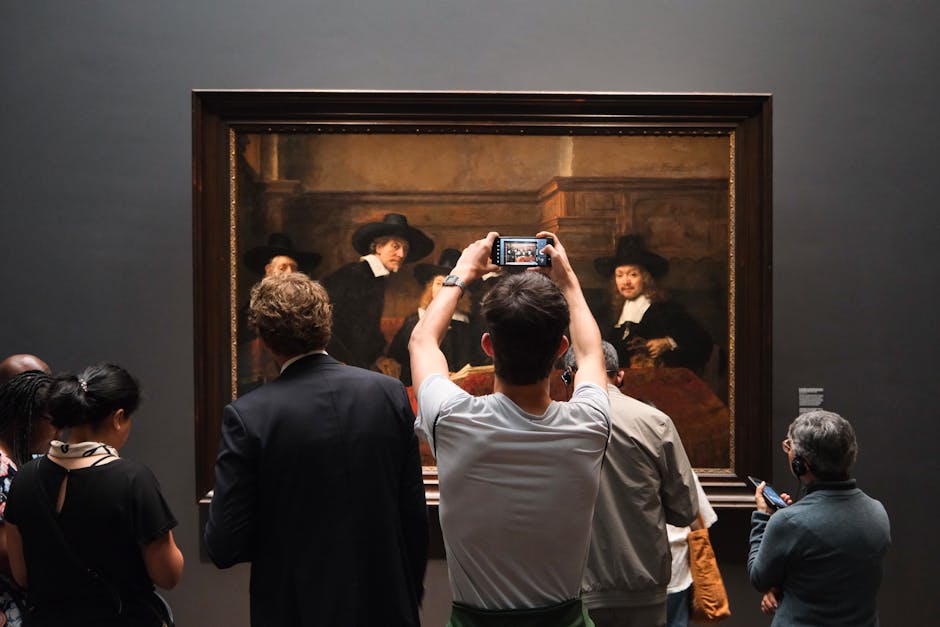
The 17th-century Netherlands produced more paintings than anywhere else in human history. By one estimate, 5 million paintings were made in the 70 years between 1620 and 1690 — roughly one for every adult Dutch person. Wealth, urbanisation, and Calvinism (which discouraged religious icons but allowed secular art) created a mass middle-class market for affordable paintings. Most homes had several.
Rembrandt van Rijn (1606–1669)
The defining painter of the era. Born in Leiden; moved to Amsterdam in 1631; spent the rest of his life here. Famous for his mastery of light, dramatic composition and unflinching portraits.
- The Night Watch (1642) — the city’s iconic masterpiece, painted for the Civic Guard hall at Singel.
- The Anatomy Lesson of Dr. Tulp (1632) — Mauritshuis, The Hague.
- The Jewish Bride (c. 1665) — Rijksmuseum.
- Self-portraits — Rembrandt painted more than 80 self-portraits across his life.
Johannes Vermeer (1632–1675)
Worked in Delft, not Amsterdam, but his works are part of the same Golden Age canon. Only 36 paintings are firmly attributed to him.
- The Milkmaid (c. 1658) — Rijksmuseum.
- Girl with a Pearl Earring (c. 1665) — Mauritshuis, The Hague.
- View of Delft (c. 1660) — Mauritshuis.
- The Little Street (c. 1658) — Rijksmuseum.
Other Major Painters
- Frans Hals (Haarlem) — portraits with extraordinary brushwork.
- Jacob van Ruisdael — landscapes that defined the genre.
- Jan Steen — chaotic, comedic genre scenes.
- Pieter Claesz — restrained vanitas still lifes.
- Hendrick Avercamp — winter scenes during the Little Ice Age.
- Willem van de Velde the Younger — maritime paintings.
- Gerard ter Borch — silk-fabric mastery, intimate interiors.
Science & the Republic of Letters
Religious tolerance and a relatively free press made the Republic the most intellectually open society in 17th-century Europe. Foreign scientists and philosophers came to print their banned books in Amsterdam.
- René Descartes — wrote "Discourse on the Method" while living in the Netherlands.
- Baruch Spinoza — Amsterdam-born philosopher, excommunicated from the Jewish community for radical ideas; ground lenses for a living.
- Christiaan Huygens — physicist; invented the pendulum clock and discovered Saturn’s rings.
- Antonie van Leeuwenhoek — Delft draper turned microscopist; discovered bacteria.
- Hugo Grotius — international law theorist; "Father of International Law".
- Caspar Barlaeus — Amsterdam’s professor of philosophy at the Athenaeum Illustre (precursor to the University of Amsterdam).
Daily Life in Golden Age Amsterdam
- Population: ~30,000 in 1570; ~100,000 in 1600; ~200,000 in 1670 — one of the fastest-growing cities in European history.
- Wealth: GDP per capita in 1650 Amsterdam was the highest in the world and remained so until London overtook it in the 18th century.
- Women: by European standards, Dutch women had unusual rights and visibility — they ran businesses, signed contracts, travelled unchaperoned, and appear constantly in Golden Age paintings.
- Diversity: Sephardic Jews from Spain/Portugal, French Huguenots, German Lutherans, Norwegian sailors, English Puritans (including the Pilgrim Fathers, who lived in Leiden before sailing to America) — all openly practising their religions.
- Diet: vastly better than most of Europe — meat, fish, butter, cheese, beer were all cheap and plentiful. The Dutch were the tallest people in Europe by 1650.
- Slavery and colonial violence: the wealth of the Republic was directly built on enslaved labour in the Caribbean and Brazilian colonies, and on the violent suppression of populations in the Spice Islands. This dark side is increasingly acknowledged in Dutch museums and public history.
Decline: The Disaster Year & Beyond
The Golden Age peaked around 1660 and tipped into decline in 1672 — the Rampjaar (Disaster Year). France under Louis XIV, England, Münster and Cologne all attacked simultaneously. Dutch armies couldn’t hold the land borders. The Republic survived only by opening the dykes and flooding farmland to create a defensive water line. The political and financial system never fully recovered. England’s Glorious Revolution in 1688 (when the Dutch stadholder William of Orange became William III of England) sealed the shift in power across the Channel.
By 1720 London had eclipsed Amsterdam as Europe’s financial capital. By 1798 the VOC had collapsed. By 1810 the Netherlands had been annexed into Napoleon’s France. The Golden Age was over.
How to See the Golden Age in Modern Amsterdam
- Rijksmuseum — the world’s most concentrated Golden Age painting collection. The Night Watch, the Milkmaid, the Threatened Swan. See our Amsterdam Museums Guide.
- Rembrandt House Museum (Jodenbreestraat 4) — the actual house Rembrandt lived in 1639–1658.
- Royal Palace on Dam — the 1655 Town Hall, called "the eighth wonder of the world" in its day.
- Westerkerk (1631) — the city’s most visible Golden Age church.
- Portuguese Synagogue (1675) — the largest surviving 17th-century synagogue in the world.
- The canal belt — walk the Herengracht, Keizersgracht and Prinsengracht. The Bartolotti House (Herengracht 170) and the Bijbels Museum (Herengracht 366) are open canal-house museums.
- Maritime Museum (Het Scheepvaartmuseum) — the VOC and Dutch sea-power era, with a full-scale VOC ship outside.
- Museum Het Grachtenhuis (Herengracht 386) — small but excellent history of the canal-belt construction.
- Hendrick de Keyser’s Beurs (Beursplein) — still standing; recently reopened as an events venue.
- Hortus Botanicus (1638) — one of the oldest botanical gardens in the world.
The Lasting Legacy
- Modern finance — every stock exchange, every multinational, every central bank has Dutch DNA.
- Modern news — Amsterdam printed the first regular newspapers in Europe.
- International law — Grotius’s writings still underpin maritime law.
- Modern liberal democracy — the Republic’s relative tolerance, federal structure and bourgeois governance influenced both the English and American revolutions.
- Words — "dollar" (from daalder), "Yankee" (probably from Jan Kees), "cookie" (from koekje), "boss" (from baas), "Santa Claus" (from Sinterklaas) all come from Dutch.
- New York City was New Amsterdam from 1626 to 1664. Brooklyn (Breukelen), Harlem, the Bowery (bouwerij), Wall Street — all Dutch.
- Capitalism’s flaws — tulip mania remains the textbook case of a speculative bubble, taught in every Econ 101 class.
A Modern Reckoning
For most of the 20th century, the Golden Age was taught in Dutch schools as a heroic story. In 2019, the Amsterdam Museum announced it would no longer use the term "Gouden Eeuw" (Golden Age) without acknowledging the slavery, colonial violence and inequality that funded it. The discussion in modern Netherlands is open and ongoing: how to honour the genuine cultural and scientific achievements while squarely acknowledging that the wealth that funded Rembrandt’s paintings came in large part from enslaved labour. The new National Holocaust Museum (opened 2024) and the Slavery Exhibition at the Rijksmuseum (2021) both reflect this shift.
Dutch Golden Age: FAQ
When did the Dutch Golden Age start and end?
Roughly 1588 to 1672, with peak prosperity 1620–1660. Some historians extend to 1713.
Why was the Dutch Republic so rich in the 17th century?
A combination of religious tolerance attracting capital, freedom from Spanish economic restrictions, the Baltic grain trade, the spice trade through the VOC, and financial innovations including the world’s first stock exchange and central bank.
What was the VOC?
The Dutch East India Company, founded 1602 — the world’s first publicly traded joint-stock corporation and for 200 years the largest commercial enterprise on earth.
Who was Rembrandt?
The defining painter of the Golden Age. Lived in Amsterdam 1631–1669; painted The Night Watch, the Anatomy Lesson of Dr. Tulp, the Jewish Bride and 80+ self-portraits.
Why did the Dutch Golden Age end?
The 1672 Rampjaar (Disaster Year) — simultaneous attacks from France, England, Münster and Cologne — broke the Republic’s military and political dominance. England gradually replaced the Netherlands as Europe’s commercial power.
What is the canal belt UNESCO listing?
UNESCO inscribed the 17th-century canal belt of Amsterdam — Herengracht, Keizersgracht, Prinsengracht and the surrounding district — as a World Heritage Site in 2010.
Was the Dutch Golden Age built on slavery?
In significant part, yes. The Dutch West India Company ran slave-trading routes to Brazil and the Caribbean, and Dutch sugar refining and tobacco trade depended on enslaved labour. Modern Dutch historiography and museums are increasingly honest about this.
Final Thoughts
The Dutch Golden Age is one of those rare moments when a small, geographically constrained society briefly outpaced everyone — and built institutions (the corporation, the stock exchange, the central bank) and art (Rembrandt, Vermeer) that still shape the modern world. Modern Amsterdam wears the period openly: every canal house, every museum, every cobble on Dam Square is part of the story. Walk the Grachtengordel, spend an afternoon at the Rijksmuseum, and you’ve already seen most of it. To get the rest, our Amsterdam History Timeline covers the full 750-year arc.
For more, see our Amsterdam Culture & History pillar, our Amsterdam Museums Guide, and our Amsterdam Neighborhoods Guide.