Amsterdam is one of the safest big cities in Europe — but no major tourist destination is scam-free. Petty cons, distraction-based pickpocketing, fake police checks, ATM skimming and rigged souvenir shops all happen, almost always to first-time visitors who don’t know the patterns. This complete guide covers the 12 most common Amsterdam scams in 2026 — what they look like, how to spot them, how to react, and which neighbourhoods see the most.
The Big Picture: How Scams Work in Amsterdam
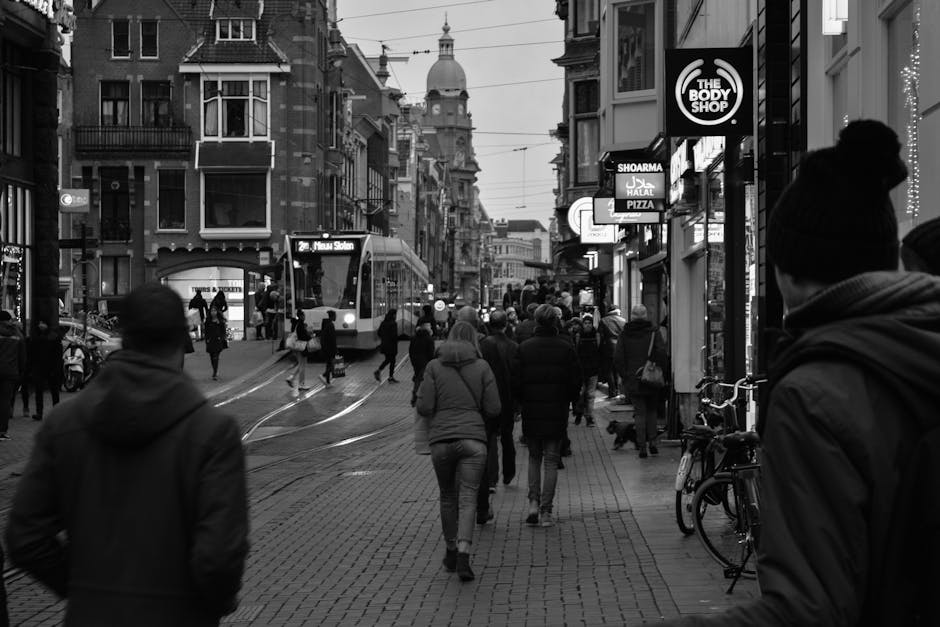
Almost all Amsterdam scams target tourists for one of three resources: cash (immediate handover), cards (ATM skimming or NFC tap), or info (passport photo to fake your identity later). The scams cluster in three locations: Centraal Station and its trams, Dam Square and Damrak, and the Red Light District after dark. A tourist who avoids confused situations in those three zones and follows a handful of simple rules will not be scammed.
Amsterdam Scams at a Glance
The cons you’re most likely to meet, where they happen, and the one move that defeats each. Skim this before your first walk into the centre.
| Scam | What it targets | Where | Your defence |
|---|---|---|---|
| Pickpocket teams | Wallet / phone | Centraal, trams 2 & 5, Dam, the Wallen | Front pockets; bag in front; check pockets after any bump |
| Fake police “money check” | Cash / cards | ATMs near Centraal and Dam | Never hand over a wallet; offer to walk to a station |
| ATM skimming | Card data | Freestanding Euronet machines | Use bank-branch ATMs; cover the PIN |
| Unmarked taxi | Cash | Schiphol, Centraal | Official TCA rank or Uber/Bolt; confirm meter |
| “Free” rose / ring / bracelet | Cash | Rijksmuseum, Damrak, Vondelpark | Don’t accept anything from strangers |
| Street drug sales | Cash (fake product) | Red Light District alleys | Buy only at licensed coffeeshops |
| Currency-exchange / DCC | Inflated rates | Damrak kiosks, card terminals | Use ATMs; always pay in euros |
1. Pickpocketing
By far the most common Amsterdam tourist crime. Pickpockets work in coordinated teams of 2-5, mostly in their 20s-40s, often well-dressed (you won’t spot them by sight). Hot zones: Centraal Station platforms, trams 2 and 5, Dam Square, Bloemenmarkt, Albert Cuyp Market, Anne Frank House queue, the Red Light District alleys, and the Leidseplein restaurant terraces.
Common pickpocket techniques
- The bump-and-lift: one person bumps into you (apologising); another lifts the wallet during the moment of distraction.
- The fake petition: a person (often a young woman or child) thrusts a clipboard at your chest asking you to sign a fake deaf-and-mute or refugee petition. Accomplices work behind you while you read.
- The stained shirt: a stranger points out something is on your shoulder/back — they offer to help, you turn, you get lifted.
- The street performer crowd: pickpockets work the densely-packed crowds gathered around buskers on Dam Square and Leidseplein.
- The tram squeeze: as the doors close, a team blocks your exit and lifts wallets/phones.
- The dropped coins: someone "accidentally" spills change; bystander helps you pick them up; accomplice lifts your bag.
How to protect yourself
- Wallet and phone only in front pockets.
- Backpack worn front-loaded in crowded zones.
- Money belt or RFID-blocking neck pouch for cards and passport.
- Carry a decoy wallet with €20 and an expired card if you’ll be in the Red Light District at night.
- Never leave phones on cafe tables — scooter snatch-and-grab is fast.
- If anyone bumps you, immediately check your pockets.
2. Fake Police
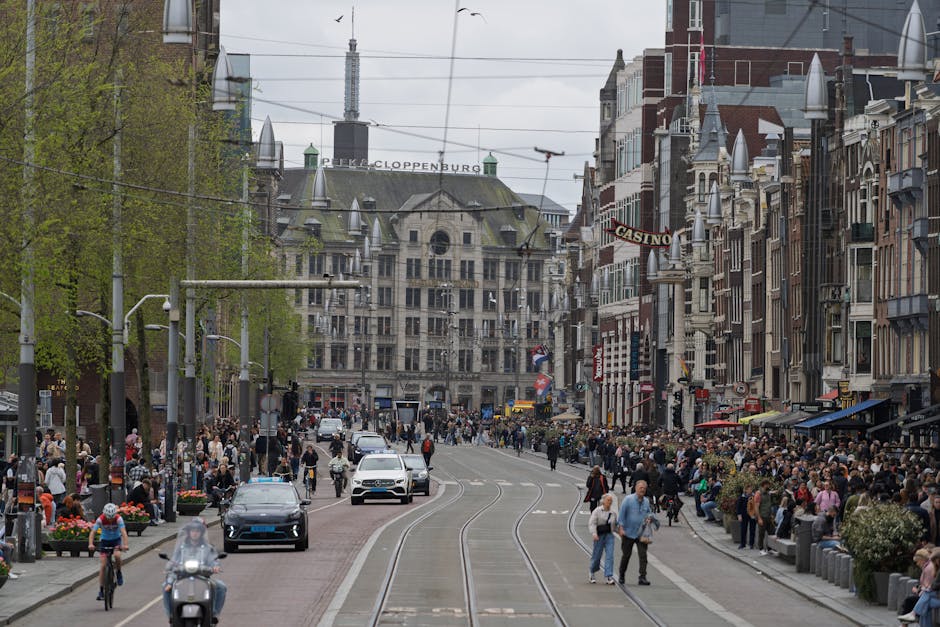
The classic Amsterdam scam. Two men in plain clothes approach you after you withdraw money from an ATM. They flash a homemade or fake police badge and claim they are investigating "counterfeit money" — they need to check your wallet to confirm your bills aren’t fakes. Once they have your wallet they remove cash and/or your card.
- Real Dutch police never check tourist wallets or ID like this.
- Real officers wear clearly marked navy-and-yellow uniforms; if plain-clothed, they have official photo ID with badge numbers and can call uniformed backup.
- If approached: don’t hand over anything. Say "I’d like to walk to the nearest police station with you" — fake cops will vanish.
- Real emergencies: dial 112. Operators speak English.
- Common locations: ATMs near Centraal Station, on Damrak, and near Dam Square.
3. ATM Skimming & Card Cloning
Card-based cons deserve their own playbook. Which ATMs to trust, why to decline dynamic currency conversion, and how the Maestro-only quirk catches tourists out are all covered in our Amsterdam money, currency and tipping guide.
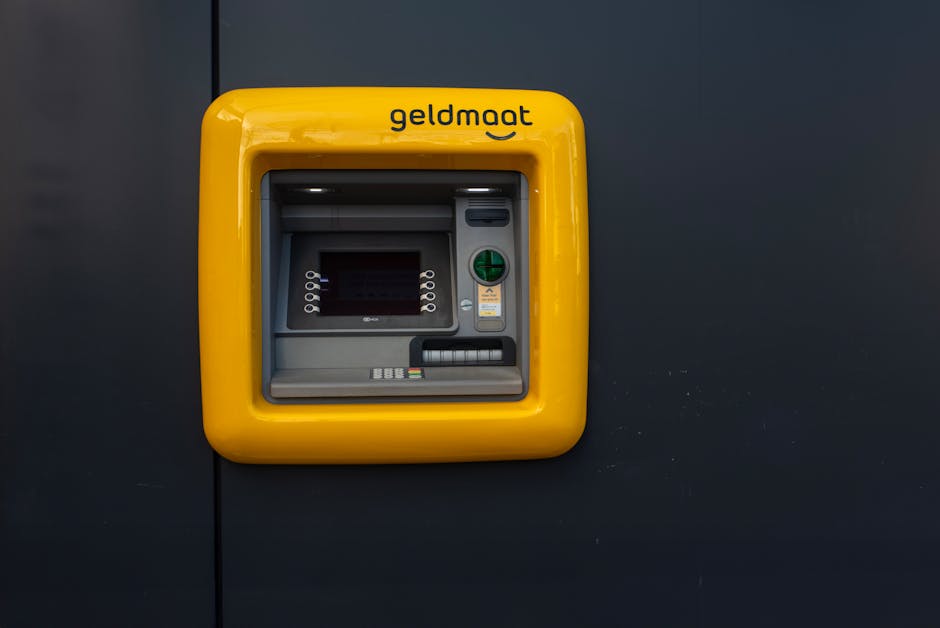
- Use ATMs inside bank branches only: De Volksbank, ING, Rabobank, ABN AMRO. Skimming inside is virtually unknown.
- Avoid free-standing "Euronet" ATMs in convenience stores and on Damrak — these are legal but have notorious bad exchange rates AND are sometimes skimmed.
- Cover your PIN with your free hand.
- Check the card slot for fake overlays: jiggle the slot before inserting; report anything loose.
- Watch for hidden cameras: small ceiling-mounted cameras photograph PIN entries.
- Use credit cards for purchases rather than debit when possible — fraud protection is stronger.
- Set spending alerts on your bank app before you travel.
4. Unmarked Taxi Scams
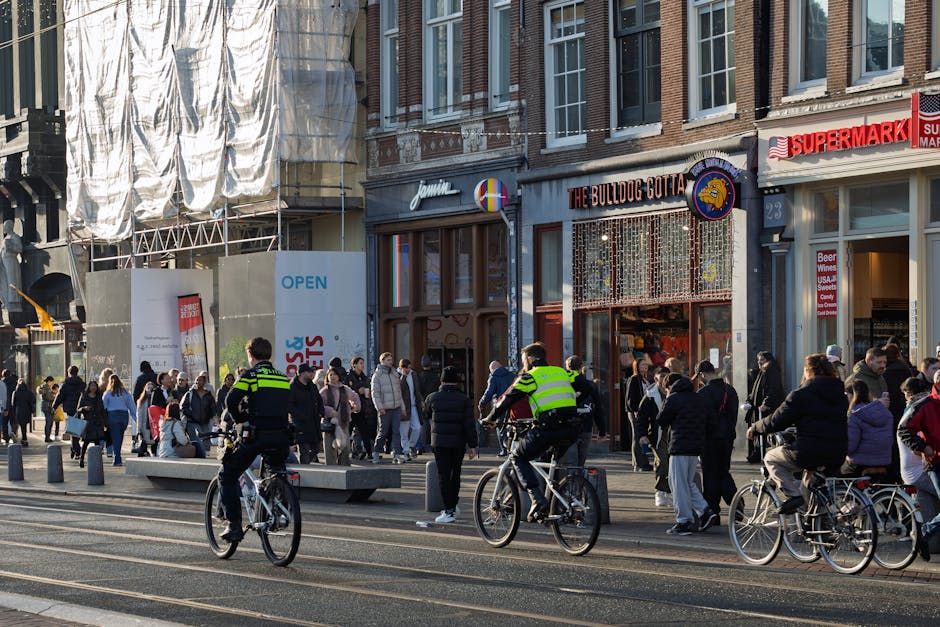
- Drivers approach tourists arriving at Schiphol Airport or Centraal Station offering rides at "fixed" prices that turn out to be 2-3x the metered fare.
- Use only the official TCA-marked rank: outside Schiphol Plaza, or in front of Centraal’s main entrance.
- Or use Uber or Bolt — both work nationwide.
- Confirm meter use before sitting down.
- Schiphol → centre: €40–€55 metered taxi, or just take the 18-minute train for €5.90.
- Never share a cab with strangers, even at airport queue.
5. The "Free" Rose, Ring or Bracelet
- A stranger offers you a rose, woven bracelet or "found" gold ring as a "gift." The moment you accept it, they aggressively demand payment.
- The "gold ring" is brass and worthless; the bracelet is woven onto your wrist, hard to remove without scissors.
- Common at the Rijksmuseum, Vondelpark, and along Damrak.
- Don’t make eye contact; don’t take anything offered by strangers on the street.
- If you accept, hand it straight back and walk away; do not engage further.
6. Drug Scams in the Red Light District
- Men loiter near the Wallen alleys offering cocaine, MDMA or magic mushrooms.
- The substance is virtually never what it’s claimed to be — usually crushed soap, lidocaine, or in worst cases dangerous synthetics.
- It might also be a police sting — you can be arrested.
- It might also be a robbery setup — you hand over cash, get something fake, return to complain, get mugged.
- Cannabis is legal at licensed coffeeshops only. Anything else, anywhere else, is a scam, a sting, or both.
7. Canal Cruise Ticket Scams
- Men with clipboards near Centraal Station and Damrak sell canal cruise "tickets" for €30-50 that should cost €18-25 at the booth.
- Sometimes the tickets are valid (just overpriced). Sometimes they’re scrap paper.
- Buy directly from the canal-cruise company booths — Stromma, Lovers, Blue Boat — or online.
- For better small-boat experiences, book Those Dam Boat Guys or Mokumboot.
8. Damrak Tourist Traps
- The 500m strip from Centraal Station to Dam Square is the city’s biggest tourist trap concentration.
- Identical souvenir shops sell the same fridge magnets, weed-themed t-shirts and mini-clogs (almost all imported from China).
- Restaurants on Damrak serve mediocre food at 50-80% above neighbourhood prices.
- Photo-with-actors: people in tulip costumes or wooden clogs offer to pose for photos, then demand €10-20 after.
- Walk 5 minutes off Damrak in any direction for better shops, food, and zero scam pressure.
9. Bike Rental Damage Claims
- Some small bike-rental shops charge tourists €30-200 for "damage" on return — scratches, bent wheels, missing parts — that were there at pickup.
- Use trusted chains: MacBike, Yellow Bike, Mike’s Bikes.
- Photograph the bike before riding from multiple angles, including underside.
- Read the rental contract carefully; never sign anything in Dutch you don’t understand.
- Always lock the bike with the supplied locks AND a frame lock through a fixed object.
10. Restaurant Bill Scams
- Some tourist-strip restaurants add "service" charges or "cover" charges of €3-5 per person.
- Dutch law: service is included by default. Anything extra must be on the menu.
- Check the bill before paying. Question anything you didn’t order.
- Avoid restaurants with no posted prices in the window.
- If overcharged, refuse to pay and threaten to call the police (real ones). The argument usually ends in your favour.
11. Currency Exchange Rip-Offs
- The currency exchange kiosks on Damrak and at Centraal offer rates 8-15% worse than ATMs.
- Always use an ATM with a no-foreign-fee card (Wise, Revolut, Chase Sapphire, etc.).
- If you must exchange, use Schiphol’s official Travelex or ING/De Volksbank branches.
- Avoid "dynamic currency conversion" at the point of sale — always choose to be charged in euros, not your home currency.
12. Apartment Rental Scams (Airbnb & Booking)
- Fake Airbnb listings demand wire transfer payment outside the platform.
- Some hosts demand €200+ "damage deposits" on arrival that they never refund.
- Amsterdam requires hosts to display a city registration number; listings without one are operating illegally.
- Always pay through the platform. Never wire-transfer to a personal account.
- Read the last 5 reviews — fake listings have only old, vague reviews or none.
- If something seems too cheap for the centre, it probably is.
What Isn’t a Scam
Some "scams" you’ll read about online aren’t actually scams:
- City tax 12.5% added at hotel checkout — legal and standard.
- 21% VAT on purchases — legal; non-EU residents can claim it back.
- €0.30 plastic bag fee at shops — legal mandate.
- Service included on restaurant bills — by Dutch law.
- Cash deposits at brown cafes (€10-20 in your name when you open a tab) — standard practice.
- "Stempelkaart" coffee cards in cafes — genuine loyalty schemes.
If You Get Scammed
- Call 112 for emergencies.
- 0900 8844 for non-emergency police.
- Tourist Police Office: Lijnbaansgracht 219. English-speaking.
- File an online police report at politie.nl.
- Call your card issuer’s international 24-hour line immediately for skimming.
- Lost passport: file police report; then contact your embassy. Most European embassies are in The Hague (40 min by train).
- Keep photocopies and digital scans of your passport, ID and credit cards in a separate location.
Travel Smart Checklist
- Cards in front pockets; passport in hotel safe.
- Decoy wallet with €20 and expired card in your back pocket.
- Photograph all key documents and save them in cloud storage.
- Set bank alerts for every transaction.
- Use only bank-branch ATMs.
- Walk a different route from the ATM after withdrawal.
- Decline anything offered by strangers on the street.
- Use only TCA-marked taxis or Uber/Bolt.
- Photograph rental bikes; read contracts carefully.
- Carry €100 in cash as backup but not visibly.
- Trust your gut: if a situation feels off, walk into a busy cafe.
Why Tourists Get Targeted (and How Not To Look Like One)
Scammers in any city read body language before they read your wallet. The people who get approached tend to share a few tells: standing still in the middle of a crowd staring at a paper map or phone, wearing a backpack on both shoulders in a dense queue, openly counting cash just after an ATM, or looking visibly lost and hesitant. None of that means you did anything wrong — but you can flip the odds by moving with a bit of purpose.
- Sort your route before you step out. Check the map at your hotel or against a wall, not in the middle of Dam Square.
- Keep one hand free and your phone away when walking through Centraal, the Wallen and along Damrak.
- Don’t repack your wallet on the street right after withdrawing cash — walk off, then sort it somewhere quiet.
- Walk like you know where you’re going, even when you don’t; duck into a cafe to regroup if needed.
- A few words of Dutch help you blend in. A confident “nee, dank je” (“no, thank you”) shuts down most street approaches faster than English does — our essential Dutch phrases guide has the rest.
Online and Pre-Trip Scams
Not every Amsterdam scam waits for you on the street — a fair few happen on your laptop weeks before you fly. These are worth knowing because they cost far more than a lifted wallet.
- Fake attraction tickets. The Anne Frank House, Van Gogh Museum and Rijksmuseum sell timed tickets only through their own official websites. Third-party sites reselling at a markup are at best overpriced and at worst selling nothing. Book direct.
- “Skip-the-line” resellers that simply buy the standard ticket you could have bought yourself, then charge double.
- Lookalike booking sites with URLs one letter off the real museum or transport operator — check the address bar carefully.
- Apartment listings demanding bank transfer outside the platform, or a large cash “deposit” on arrival. Always pay through the platform and check for a city registration number.
- Fake “tourist tax” emails after you book a hotel. Real tourist tax is paid at the property, not by clicking a link in an email.
If a Situation Turns Pushy
Most Amsterdam scams rely on a moment of social pressure — the awkwardness of refusing a “gift,” the fear of arguing with someone claiming authority, the confusion of a staged accident. Your strongest tool is simply being willing to be a little impolite. You don’t owe a street tout a conversation. A flat “no,” eye contact, and walking away ends almost every approach. If someone won’t let it go, head for the nearest busy cafe, shop or hotel lobby and ask the staff for help; scammers melt away from witnesses and cameras. For anything genuinely threatening, dial 112 — operators speak English and police presence in the centre is heavy.
It also helps to remember the bigger picture: Amsterdam is, on the whole, a remarkably safe city, and these cons are the exception rather than the rule. Our companion guide on whether Amsterdam is safe for tourists puts the risks in proportion, and if you’re choosing where to base yourself away from the busiest tourist-trap streets, our Amsterdam neighbourhoods guide is the place to start.
Arriving Without Getting Stung
Your highest-risk moment is the first hour, tired and disoriented at Schiphol or Centraal, exactly where the taxi touts and exchange kiosks wait. Skip both. The train from Schiphol to Centraal takes about 18 minutes and costs a few euros tapped with a contactless card; from there, trams and the metro use the same tap-to-pay system. Ignore anyone offering you a ride, a “special rate” exchange, or help with your bags you didn’t ask for. The full mechanics of fares, day passes and the airport transfer are in our getting around Amsterdam guide.
How to Buy the Real Thing: Official Channels
A surprising share of “scams” are really just overpaying middlemen for things you could have bought at the source. Memorise where the genuine versions live and you sidestep an entire category of rip-offs.
- Museum and attraction tickets: always the institution’s own website. The big ones release timed slots in advance and sell out — book early, direct, and screenshot your confirmation.
- Canal cruises: the operator’s own booth or website (Stromma, Lovers, Blue Boat), or a reputable small-boat outfit. Not a clipboard tout near Centraal.
- Public transport: tap a contactless card or phone via OVpay, or buy a GVB day pass at the GVB desk or a machine. There’s no need for a “tourist transport reseller.”
- Bikes: an established rental chain with a clear contract and a deposit you can see refunded. Photograph the bike before you ride.
- Cash: a bank-branch ATM, declining the home-currency conversion offer, not a Damrak exchange window.
When in doubt, the test is simple: is there an official, well-known organisation behind this, and am I buying from them directly? If the answer involves a stranger on the street, a too-good price, or a payment method you can’t reverse, slow down.
If You’ve Already Paid
Don’t write the money off before you’ve tried to recover it. If you paid by credit card and the goods or service weren’t as described — an overpriced “skip-the-line” ticket that didn’t work, a damage charge you dispute, a booking that turned out fake — you can often open a chargeback with your card issuer. Gather your evidence first: the receipt or booking confirmation, any messages, photos (this is why photographing a rental bike at pickup matters), and the police report number if you filed one. Contact your bank’s fraud or disputes line, explain what happened, and follow their process. Debit-card and cash losses are harder to claw back, which is exactly why a credit card is the safer way to pay for anything significant. Travel insurance with theft and “trip disruption” cover can fill some of the remaining gap, so keep every receipt until you’re home.
Amsterdam Scams: FAQ
How common are scams in Amsterdam?
Petty scams like pickpocketing are common in tourist zones (Centraal, Damrak, Wallen). Aggressive scams like fake police are less common but worth knowing about. Violent crime targeting tourists is rare.
Where do most Amsterdam scams happen?
Centraal Station and its trams, Dam Square and Damrak, and the Red Light District at night. Almost nowhere else.
What should I do if approached by fake police?
Don’t hand over your wallet, passport or phone. Ask to walk to the nearest police station together — fake police will leave. Call 112 if pressured.
Are Amsterdam ATMs safe?
ATMs inside bank branches (Volksbank, ING, Rabobank, ABN AMRO) are very safe. Avoid free-standing Euronet ATMs in convenience stores.
Is the Red Light District dangerous?
Not violently dangerous. It’s heavily policed. But it’s the highest-pickpocket density area in the city, and drug-scam approaches are constant. Walk through, don’t linger after midnight on weekends.
What’s the most common Amsterdam tourist scam?
Pickpocketing in crowded transit zones. Everything else is rarer.
Final Thoughts
Amsterdam scam prevention is mostly common sense. Keep your wallet in your front pocket, decline anything offered by strangers, use bank-branch ATMs, take only marked taxis, and walk a few minutes off Damrak before you eat or shop. Do those five things and you’ll join the 99% of visitors who have entirely scam-free trips.
For more, see our complete Amsterdam Safety Guide, our Practical Amsterdam Information hub, and our Amsterdam Trip Planning Guide.