One of the best things about visiting Amsterdam is how easy it is to explore the rest of the Netherlands — and even neighboring countries — on a day trip. The Dutch rail network is fast, frequent, and affordable, putting windmill villages, tulip gardens, historic cities, and seaside towns within easy reach. From the medieval charm of Bruges to the futuristic skyline of Rotterdam, from seven million tulips at Keukenhof to the car-free canals of Giethoorn, Amsterdam is the perfect base for discovering some of Europe’s most rewarding destinations.
This guide covers the best day trips from Amsterdam, with practical information on how to get there, what to see, how long to spend, and what each trip costs. Every destination is reachable by public transport, and most take less than an hour by train. For getting to and from Amsterdam itself, see our Amsterdam transport guide.
Zaanse Schans: Windmills and Traditional Dutch Life
Distance: 20 minutes by train | Best for: Families, photography, first-time visitors to the Netherlands | Time needed: 3–4 hours
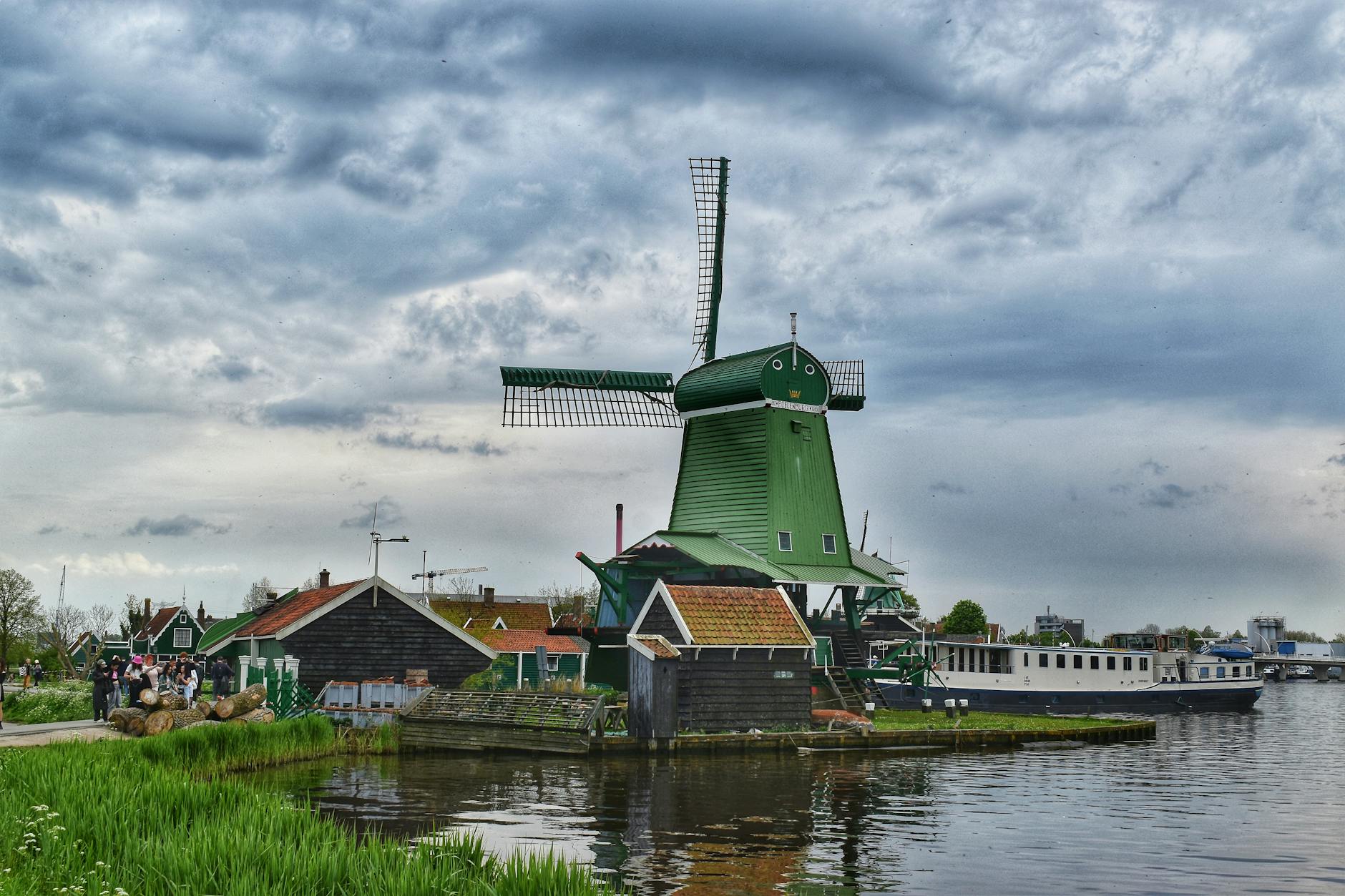
Zaanse Schans is the most popular day trip from Amsterdam and the easiest way to experience the iconic Dutch landscape of windmills, wooden houses, and green polders without venturing deep into the countryside. This open-air museum and living village sits along the banks of the Zaan River, featuring a collection of well-preserved 18th- and 19th-century buildings that were relocated here from across the Zaanstreek region.
The village is home to working windmills — you can enter several, including a sawmill, an oil mill, and a mustard mill — as well as a traditional clog-making workshop where wooden shoes are carved on a lathe in minutes, a cheese farm with free tastings, the Albert Heijn heritage museum (the first-ever location of what became the Netherlands’ largest supermarket chain), and a chocolate and biscuit factory. The outdoor areas and village streets are free to explore; individual windmill entries cost €5–6 each, or you can buy a Zaanse Schans Card (€17.50) covering all attractions.
How to get there: Take the Sprinter train from Amsterdam Centraal toward Uitgeest and get off at Zaandijk Zaanse Schans station (17 minutes, €3.90 one way). From the station, it’s a 15-minute walk to the village. Arrive early — by 10am the tour buses start filling the site, and the morning light is beautiful for photography.
Keukenhof Gardens: The World’s Greatest Tulip Display
Distance: 1 hour by bus | Best for: Spring visitors, garden lovers, photographers | Time needed: 4–5 hours | Season: Mid-March to mid-May only
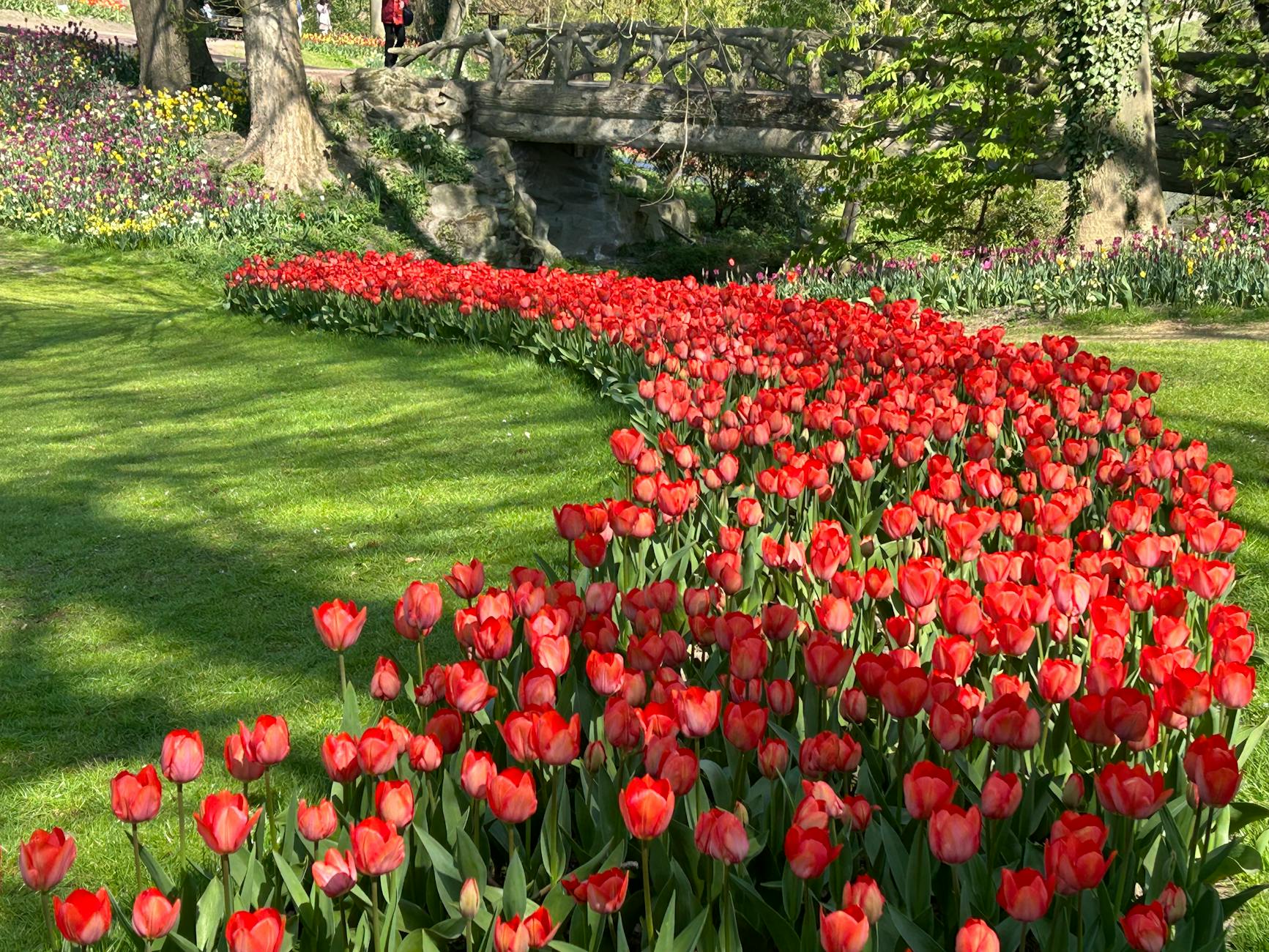
Keukenhof is a once-a-year experience that draws over a million visitors during its eight-week opening window. Set in 32 hectares of meticulously landscaped gardens near the town of Lisse, Keukenhof displays approximately seven million flower bulbs — tulips, daffodils, hyacinths, and more — in elaborate themed arrangements that change every year. It is, without exaggeration, the most spectacular flower garden in the world.
In 2026, Keukenhof is open from 19 March to 10 May. Peak bloom typically occurs in mid-to-late April, though this varies with the weather. The gardens include indoor pavilions with themed floral exhibitions, a windmill you can climb for views over the surrounding tulip fields, a hedge maze, and a petting zoo for children. The surrounding commercial flower fields (not part of Keukenhof itself) are accessible by bike — rent one near the entrance and cycle through rows of color that stretch to the horizon.
How to get there: Take the Keukenhof Express bus (line 852) directly from Schiphol Airport, or take a train to Leiden Centraal and then bus 854 to Keukenhof. Combination tickets (transport + garden entry, around €30–35) are available online and recommended to avoid queues. Book your timed entry ticket well in advance — weekends in April sell out weeks ahead. Weekday mornings are the quietest times to visit.
Haarlem: Amsterdam’s Elegant Neighbor
Distance: 19 minutes by train | Best for: Culture seekers, shoppers, those wanting a quieter Amsterdam alternative | Time needed: Half day to full day
Haarlem is the day trip that Amsterdam locals themselves recommend most. This compact, canal-laced city has much of Amsterdam’s charm — Golden Age architecture, atmospheric cafes, excellent museums — but with a fraction of the tourist crowds and a distinctly more relaxed pace. It’s so close that many visitors wonder why they didn’t just stay here instead.
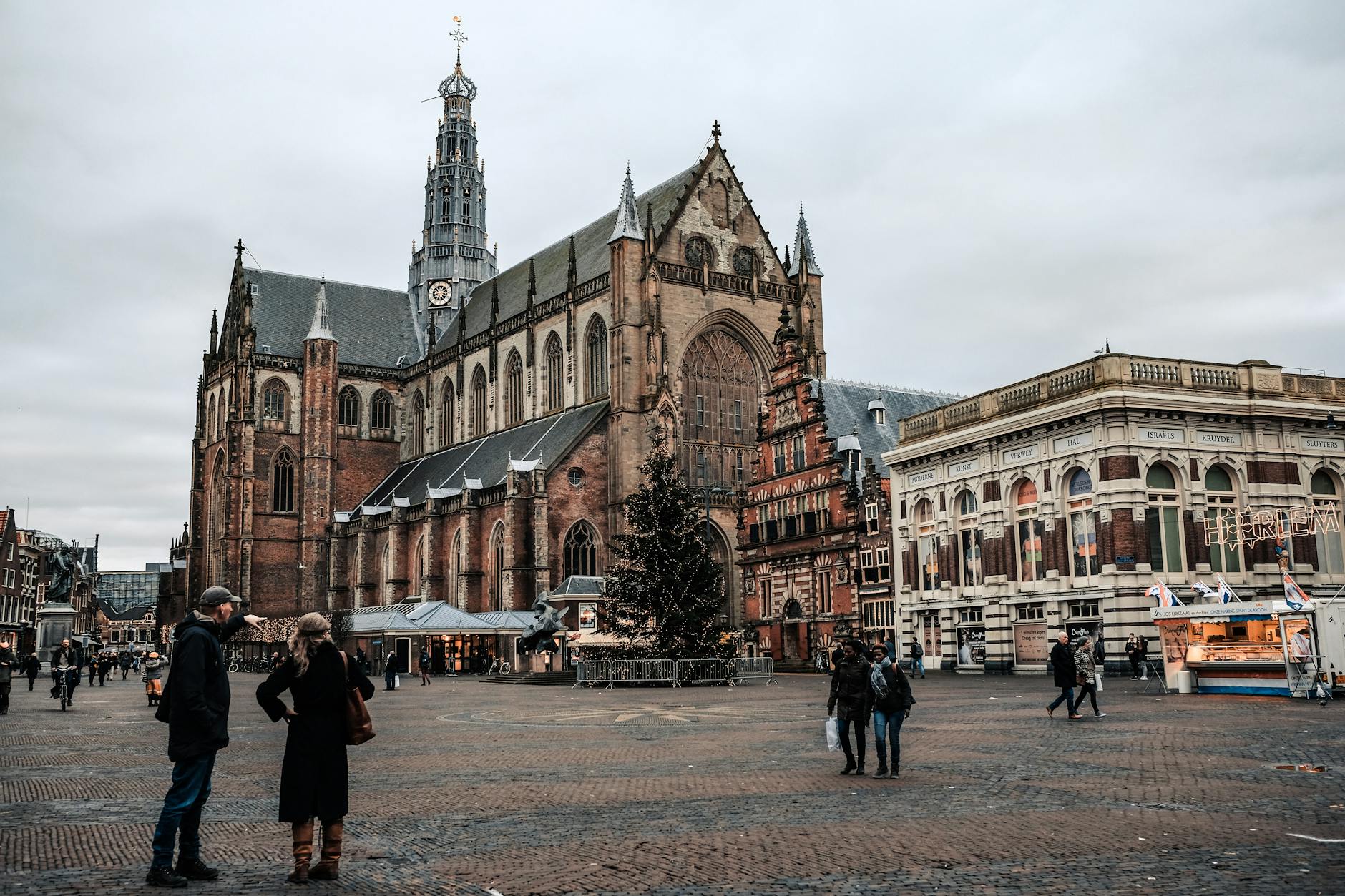
The city centers on the magnificent Grote Markt, one of the finest medieval squares in the Netherlands, dominated by the Grote Kerk (St. Bavo’s Church) and its famous Muller organ — a colossal 5,000-pipe instrument that both Handel and a 10-year-old Mozart once played. The Frans Hals Museum houses a world-class collection of Dutch Golden Age paintings in a beautiful 17th-century almshouse. Haarlem’s shopping streets — particularly Grote Houtstraat and the surrounding lanes — are lined with independent boutiques, vintage stores, and specialty food shops that rival anything in Amsterdam.
For a deeper Haarlem experience, walk the 10 minutes from the center to the Teylers Museum, the oldest museum in the Netherlands (founded 1778), which houses a fascinating collection spanning art, natural history, and scientific instruments. In spring, Haarlem is also the gateway to the flower bulb region — the area between Haarlem and Leiden lights up with commercial tulip fields from mid-April.
How to get there: Direct trains from Amsterdam Centraal every 10 minutes (19 minutes, €4.70 one way). Haarlem station itself is a stunning Art Nouveau building worth admiring on arrival.
Rotterdam: Europe’s Architectural Playground
Distance: 40 minutes by train | Best for: Architecture fans, foodies, modern art lovers | Time needed: Full day
Rotterdam is Amsterdam’s architectural opposite — where Amsterdam preserves the past, Rotterdam reinvents the future. Virtually flattened by bombing in 1940, Rotterdam rebuilt itself as a laboratory for daring modern architecture and has become one of Europe’s most visually exciting cities. The skyline is a constantly evolving collection of bold shapes, innovative materials, and experimental designs that architectural magazines can’t get enough of.
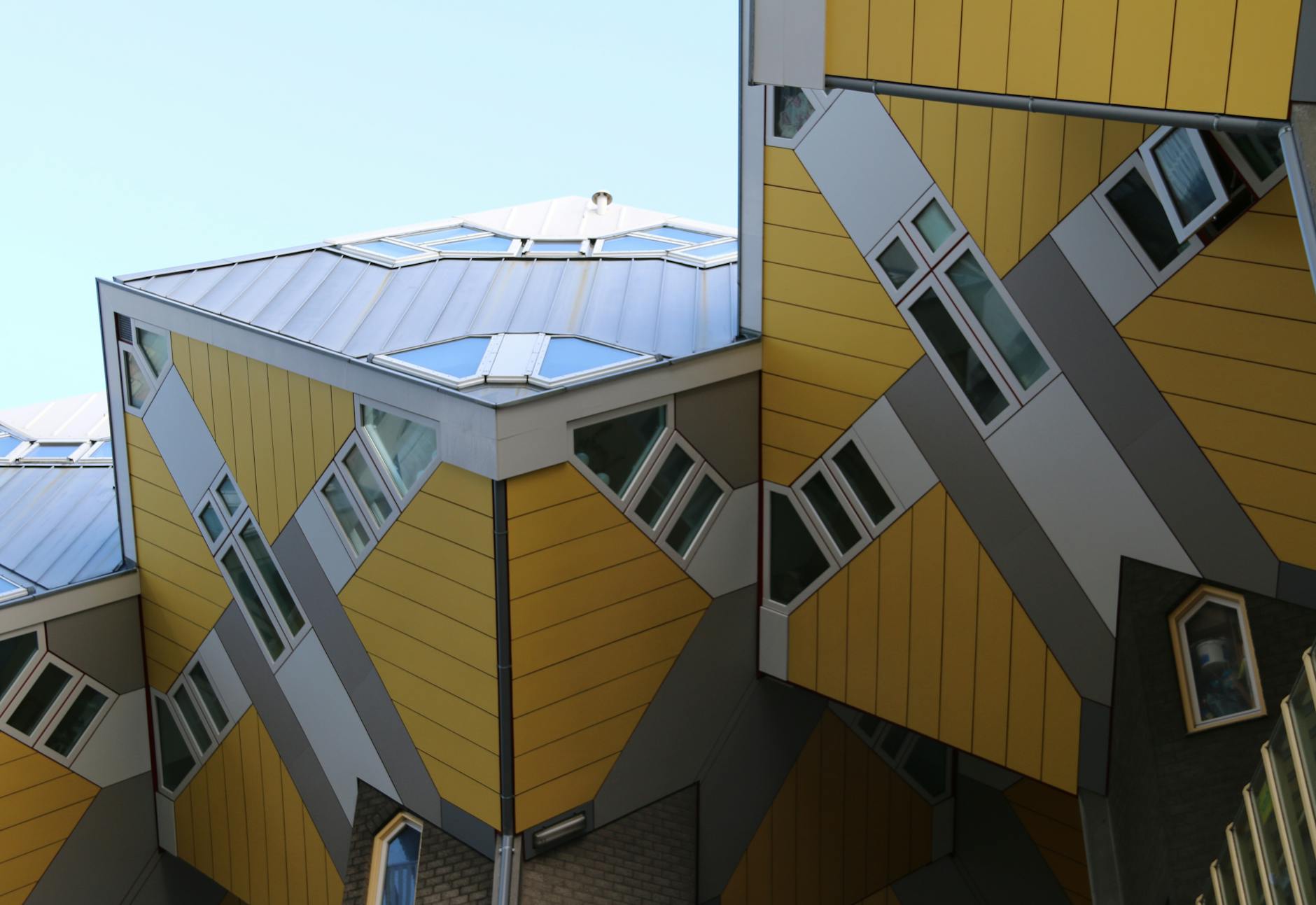
The Cube Houses (Kubuswoningen) by architect Piet Blom are Rotterdam’s most iconic structures — tilted 45 degrees and balanced on concrete pylons, they look like a forest of abstract trees. You can visit the Show Cube (€3) to see how people actually live inside. The Markthal is a horseshoe-shaped market hall with a spectacular ceiling mural covering 11,000 square meters, housing dozens of food stalls and restaurants beneath residential apartments. Depot Boijmans Van Beuningen, the world’s first publicly accessible art storage facility, is a mirrored bowl-shaped building that reflects the city around it and lets visitors see over 151,000 artworks stored behind glass.
Beyond architecture, the Fenix Food Factory in the revitalized Katendrecht docklands offers craft beer, artisan cheese, and waterfront dining in a converted warehouse. Rotterdam’s street food scene — particularly the diverse offerings along Witte de Withstraat — rivals Amsterdam’s. The Erasmus Bridge, spanning the Nieuwe Maas river, is especially dramatic at night.
How to get there: Direct Intercity trains from Amsterdam Centraal every 10 minutes (40 minutes, €17 one way). Rotterdam Centraal station is itself a dramatic piece of modern architecture — a pointed, stainless-steel roof that hints at what’s to come.
Delft: Blue Pottery and Golden Age Charm
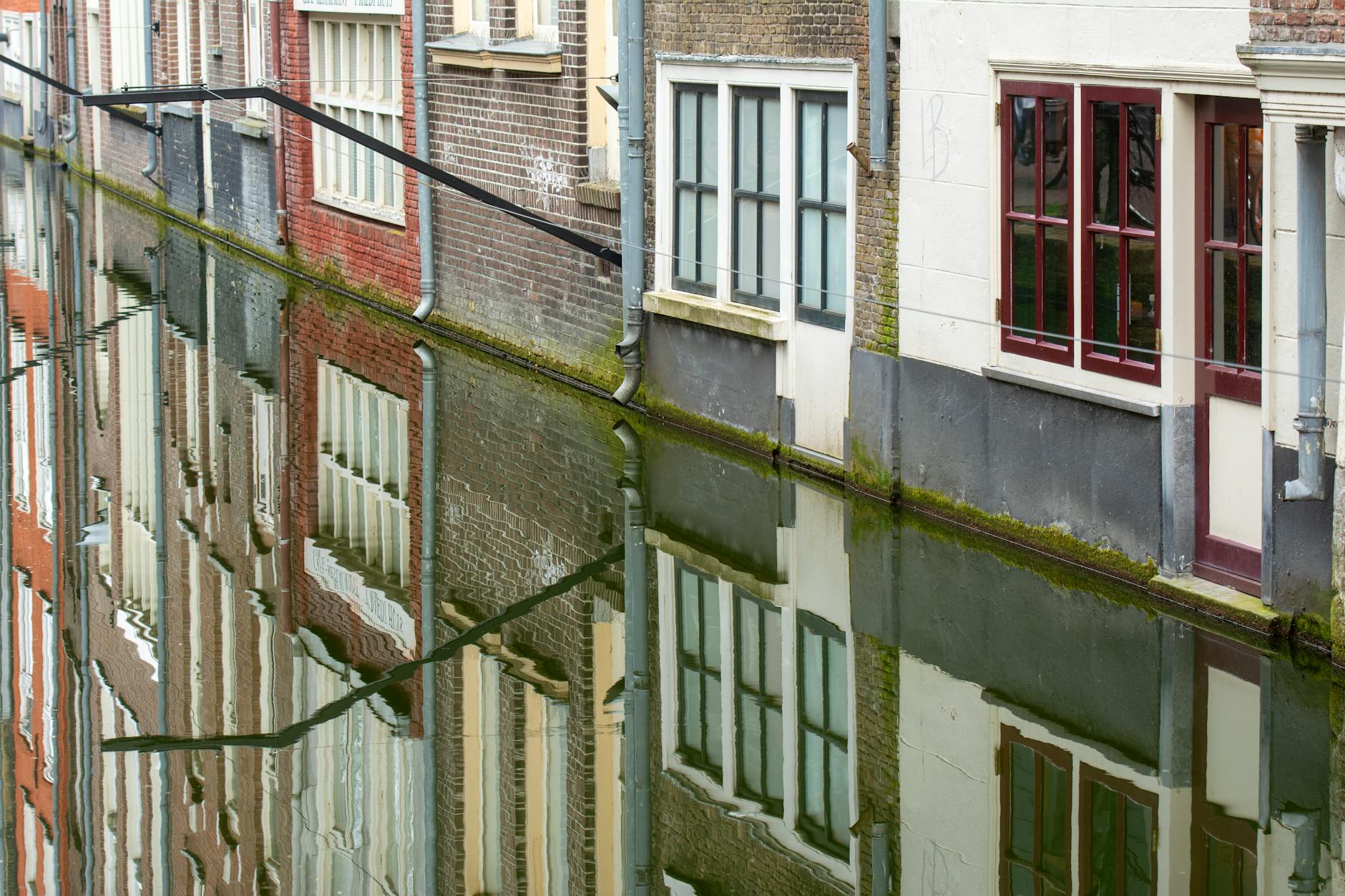
Distance: 1 hour by train | Best for: History lovers, art enthusiasts, Vermeer fans | Time needed: Half day (can combine with Rotterdam or The Hague)
Delft is one of the most photogenic small cities in the Netherlands — a perfectly preserved tapestry of tree-lined canals, Gothic and Renaissance architecture, and quiet squares that feel like they’ve barely changed since Johannes Vermeer painted them in the 17th century. It’s also the birthplace of the famous blue-and-white Delftware pottery that has become synonymous with Dutch design.
The Royal Delft (Koninklijke Porceleyne Fles) factory is the last remaining original Delftware manufacturer, operating since 1653. The factory tour shows the entire hand-painting process and includes a museum with historic pieces. The Vermeer Centrum Delft celebrates the city’s most famous son with reproductions of all 37 known Vermeer paintings, an interactive studio, and information about the artist’s life and techniques. The Nieuwe Kerk on the Markt square houses the burial vaults of the Dutch royal family and offers tower views across the city and beyond. The Oude Kerk, with its distinctive leaning tower, contains Vermeer’s tomb.
Delft is compact enough to see the highlights in a half day, making it easy to combine with Rotterdam (15 minutes by train) or The Hague (10 minutes). On Thursdays, a large market fills the Markt square with flowers, cheese, fish, and produce.
How to get there: Direct trains from Amsterdam Centraal (1 hour, €14.50 one way), or stop in Delft on the way to or from Rotterdam.
Utrecht: Canals, Cafes, and the Dom Tower
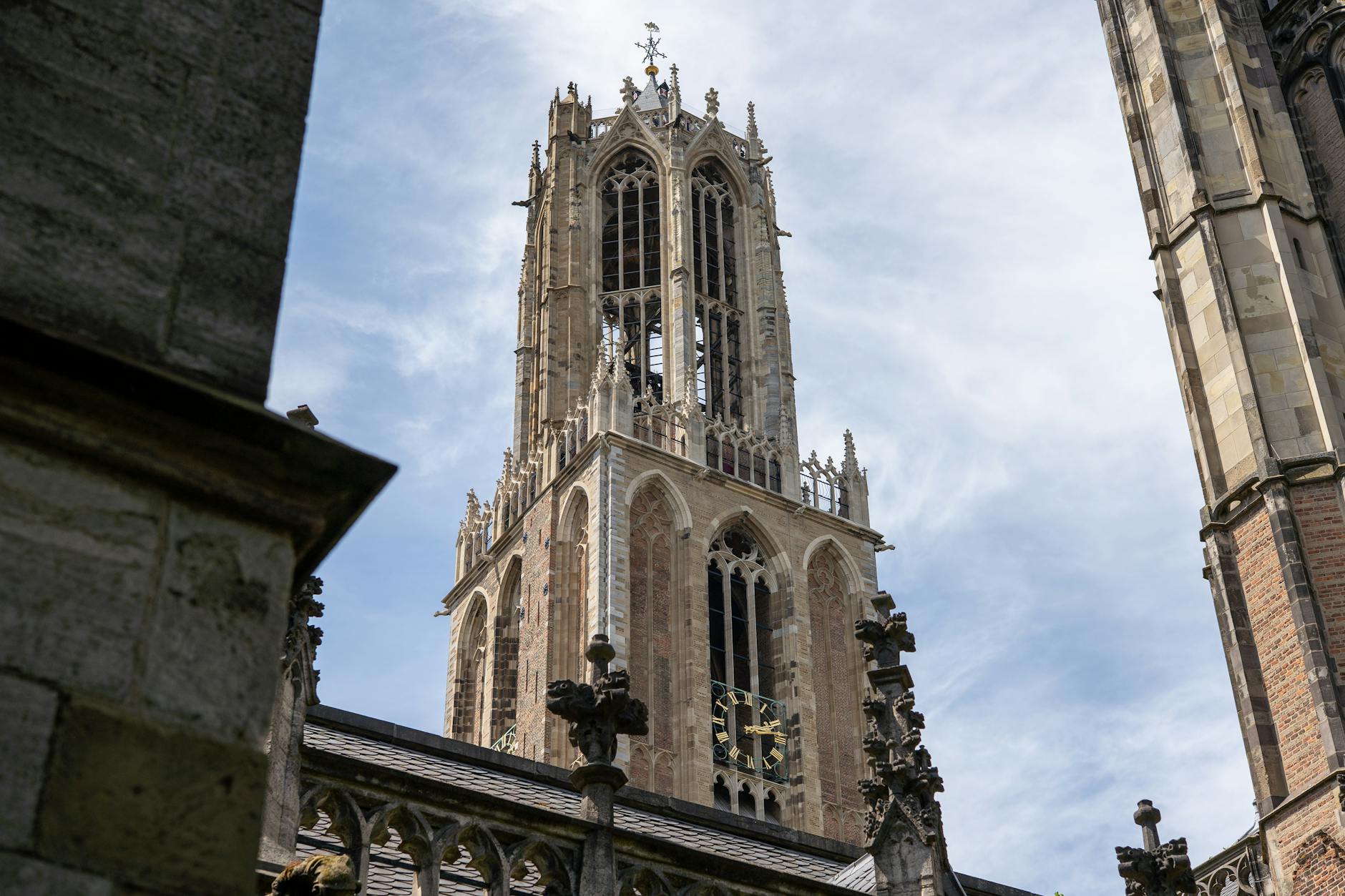
Distance: 27 minutes by train | Best for: Canal lovers, foodies, those who want Amsterdam vibes without crowds | Time needed: Half day to full day
Utrecht is the Netherlands’ best-kept secret — a city that has everything visitors love about Amsterdam (canals, historic architecture, excellent restaurants, cycling culture) but without the overtourism. The fourth-largest Dutch city is home to one of Europe’s oldest universities (founded 1636), which gives it a youthful, intellectual energy that infuses its cafes, bookshops, and cultural scene.
Utrecht’s defining feature is its sunken canals. Unlike Amsterdam’s canals, which sit at street level, Utrecht’s Oudegracht and Nieuwegracht have an extra level of wharves and cellars below the street, many of which have been converted into canal-side restaurants, bars, and terraces. Dining along the lower wharf level of the Oudegracht, with boats gliding past at eye level, is one of the most memorable dining experiences in the Netherlands.
The Dom Tower, at 112 meters the tallest church tower in the Netherlands, offers extraordinary views after climbing its 465 steps. The Museum Speelklok houses a delightful collection of self-playing musical instruments. The Railway Museum (Spoorwegmuseum) is one of Europe’s best transport museums, particularly popular with families. For contemporary art, the Centraal Museum holds works by Utrecht’s most famous artist, Gerrit Rietveld, including furniture from the nearby Rietveld Schröder House — a UNESCO World Heritage Site and masterpiece of De Stijl architecture.
How to get there: Direct Intercity trains from Amsterdam Centraal every 15 minutes (27 minutes, €8.90 one way). Utrecht Centraal station connects to the Hoog Catharijne shopping center, which leads directly into the old city.
The Hague: Politics, Art, and Beach
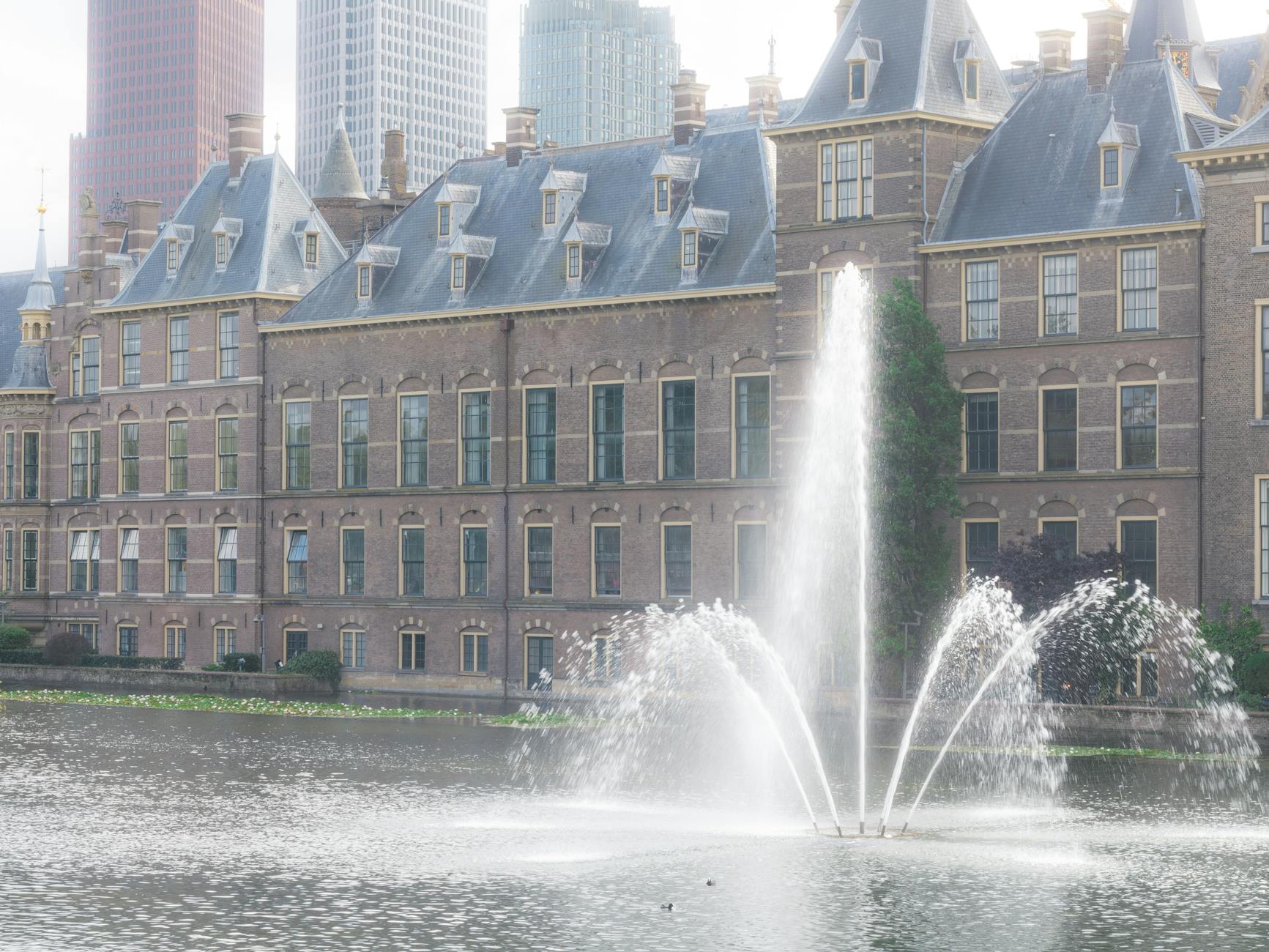
Distance: 50 minutes by train | Best for: Art lovers, history buffs, beach seekers | Time needed: Full day
The Hague (Den Haag) is the Netherlands’ seat of government and home to the royal family, the International Court of Justice, and some of the country’s finest art collections. It has a stately, cosmopolitan atmosphere distinctly different from Amsterdam — think wide boulevards, grand embassy buildings, and an air of international diplomacy.
The Mauritshuis museum is the must-visit attraction — a compact royal gallery housing Vermeer’s Girl with a Pearl Earring, Rembrandt’s The Anatomy Lesson of Dr. Nicolaes Tulp, and other Dutch Golden Age masterpieces in an intimate, uncrowded setting that makes the Rijksmuseum look like a shopping mall. The Binnenhof, the medieval complex that serves as the Dutch parliament, sits on a reflective lake in the city center and is one of the most atmospheric government buildings in Europe (note: major renovations may restrict access — check before visiting).
What makes The Hague unique among Dutch cities is Scheveningen — a full-scale beach resort on the North Sea coast, accessible by tram from the city center in 20 minutes. The wide sandy beach, pier with Ferris wheel, seafood restaurants, and surf culture feel like an entirely different country from the canals and cobblestones of Amsterdam. Madurodam, a miniature park with scale models of famous Dutch landmarks, is a hit with families. The Escher in Het Paleis museum, dedicated to the mind-bending work of M.C. Escher, is housed in a former royal palace.
How to get there: Direct Intercity trains from Amsterdam Centraal (50 minutes, €13 one way). For Scheveningen beach, take tram 1 or 9 from The Hague Centraal station.
Giethoorn: The Venice of the Netherlands
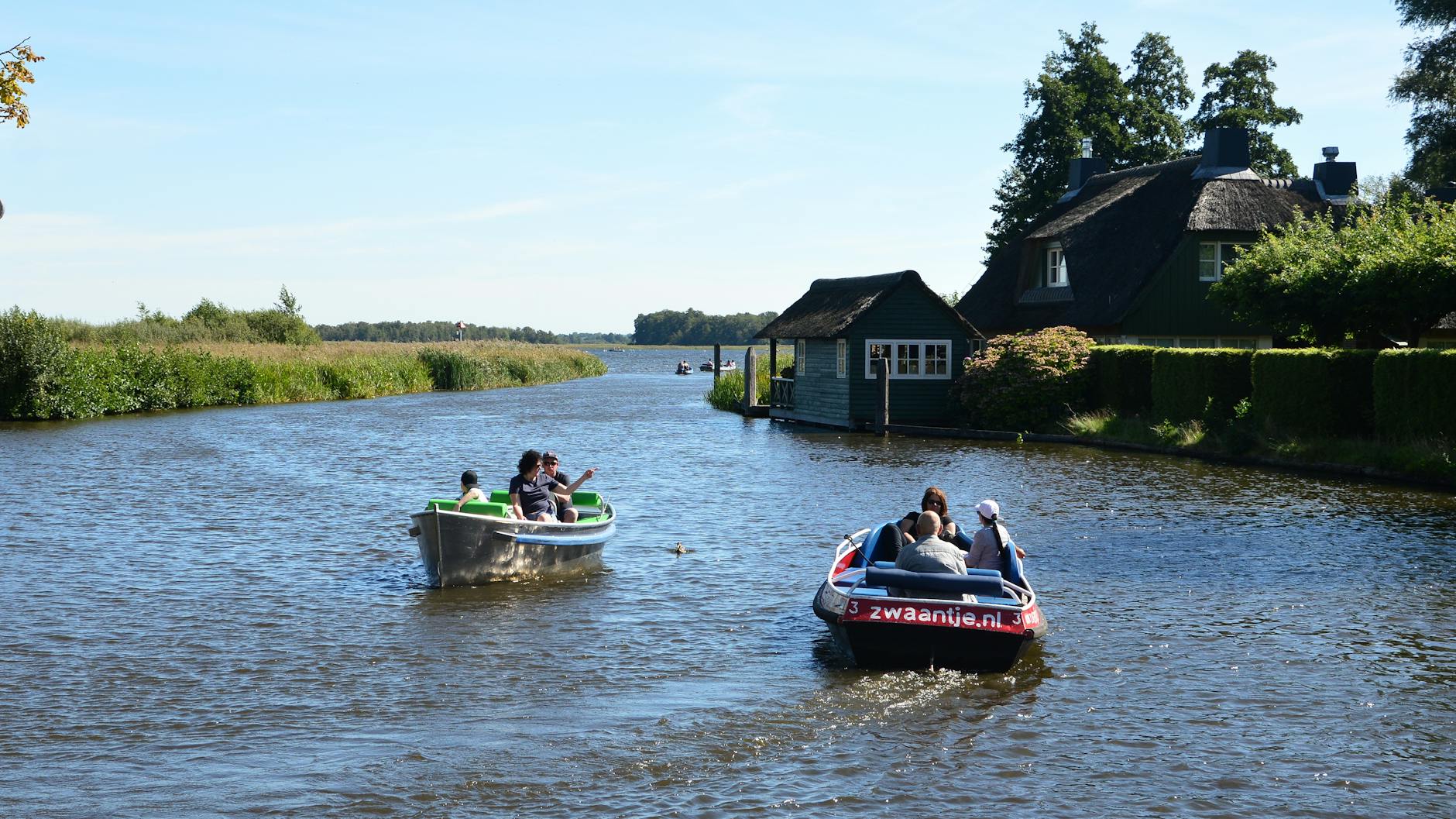
Distance: 2 hours by train + bus | Best for: Peace and quiet, photographers, boat lovers | Time needed: Full day
Giethoorn is a storybook village that feels almost too picturesque to be real. Known as the “Venice of the Netherlands” (or “Venice of the North”), this small village in the province of Overijssel has no car roads in its historic center — instead, thatched-roof farmhouses sit on small islands connected by over 180 wooden footbridges, with peaceful canals serving as the main thoroughfares.
The best way to experience Giethoorn is by whisper boat — quiet electric boats that you can rent and pilot yourself through the canals (no experience needed; they’re very easy to operate). Rental costs approximately €25–35 per hour for a 4–6 person boat. Alternatively, guided canal tours in larger boats cost €8–10 per person. Beyond the canals, Giethoorn offers cycling paths through the surrounding Weerribben-Wieden National Park, one of the largest peatland nature reserves in northwestern Europe.
A word of honesty: Giethoorn has become extremely popular, particularly with international tour groups. On summer weekends, the canals can feel congested and the village loses some of its tranquil charm. Visit on a weekday in spring or early autumn for the best experience, and arrive early before the tour buses.
How to get there: Take the Intercity train from Amsterdam Centraal to Steenwijk (approximately 1 hour 45 minutes, with one change at Amersfoort or Zwolle), then bus 70 to Giethoorn (15 minutes). The journey is longer than most day trips on this list but the destination justifies it.
Volendam, Marken, and Edam: Traditional Dutch Waterland
Distance: 30 minutes by bus | Best for: Families, cheese lovers, traditional Dutch culture | Time needed: Half day to full day
The Waterland villages north of Amsterdam offer a glimpse of traditional Dutch fishing culture that has largely vanished elsewhere. These three villages can be combined into a single day trip that loops through the countryside and along the shores of the former Zuiderzee.
Volendam is the most touristy of the three but earns its popularity with a colorful harbor front, traditional Dutch costume photo studios, a smoked eel industry that dates back centuries, and the Volendam Cheese Factory where you can watch cheese being made and sample the results for free. Marken, a former island connected to the mainland by a causeway in 1957, is quieter and more atmospheric — its distinctive green-painted wooden houses, tiny harbor, and working lighthouse feel genuinely preserved rather than staged. A small ferry (the Marken Express, €10 return) connects Volendam and Marken across the water.
Edam — yes, the cheese is named after this town — is the most authentically Dutch of the three. Its small, canal-threaded center has barely changed in centuries. The famous Edam Cheese Market takes place on Wednesday mornings from July through August, where cheese is traditionally weighed and traded in a centuries-old ceremony at Jan van Nieuwenhuizenplein. Even outside market season, Edam is worth visiting for its peaceful atmosphere and the Edam Museum, housed in a merchant’s house with a floating cellar.
How to get there: Buses 310, 312, 314, 316 depart from Amsterdam Centraal (north side) every 15 minutes and reach Volendam in 30 minutes (€5 one way). A Waterland day ticket (€13.50) provides unlimited bus travel in the region, making it easy to hop between all three villages.
Leiden: University City and Rembrandt’s Birthplace
Distance: 35 minutes by train | Best for: Museum lovers, history enthusiasts, travelers avoiding crowds | Time needed: Half day to full day
Leiden is one of the Netherlands’ most underrated cities — a university town with stunning Golden Age architecture, world-class museums, and an academic atmosphere that makes it feel like a more intimate, intellectual version of Amsterdam. It’s also where Rembrandt was born in 1606 and where the Pilgrim Fathers lived before sailing to America.
The National Museum of Antiquities (Rijksmuseum van Oudheden) houses an extraordinary collection that includes a complete Egyptian temple. The Naturalis Biodiversity Center, reopened after major renovation, is one of Europe’s finest natural history museums and particularly popular with families. The Hortus Botanicus Leiden, founded in 1590, is one of the oldest botanical gardens in the world and the place where the first tulips in the Netherlands were cultivated — making it a pilgrimage site for flower lovers.
Leiden’s canal-side streets are lined with cafes and bookshops, and the city is dotted with poetry inscribed on building walls — an art project called “Wall Poems” that features verses in their original languages from around the world. In spring, Leiden is also the closest city to the tulip fields between Lisse and Haarlem.
How to get there: Direct trains from Amsterdam Centraal every 15 minutes (35 minutes, €10.20 one way).
Bruges, Belgium: A Medieval Fairy Tale
Distance: 2 hours 45 minutes by train | Best for: Medieval architecture, chocolate, beer, photography | Time needed: Full day (long but rewarding)
Bruges (Brugge) is a stretch as a day trip — nearly three hours each way by train — but if you have a free day and the inclination, it’s one of Europe’s most perfectly preserved medieval cities. The entire historic center is a UNESCO World Heritage Site, with cobblestone streets, Gothic churches, and gabled merchant houses reflected in tranquil canals.
The Markt (Market Square), dominated by the 83-meter Belfry tower (366 steps to the top for panoramic views), is one of the most photographed squares in Europe. The Church of Our Lady houses Michelangelo’s Madonna and Child — his only sculpture to leave Italy during his lifetime. A canal boat tour (30 minutes, around €12) provides the best overview of the city’s architecture from water level. Bruges is also Belgium’s chocolate capital — over 50 chocolatiers operate in the city center, and a chocolate tasting tour is practically mandatory. Belgian beer enthusiasts should not miss the De Halve Maan Brewery, the last active brewery in the historic center, which offers tours and tastings.
How to get there: Take the Thalys or Intercity train from Amsterdam to Brussels (1h50), then change for a local train to Bruges (1 hour). Alternatively, FlixBus runs direct coaches from Amsterdam to Bruges (3–3.5 hours, from €15 one way). Book train tickets in advance for the best prices — early Thalys fares can be as low as €29 each way.
Zandvoort: Amsterdam’s Nearest Beach
Distance: 30 minutes by train | Best for: Beach lovers, families, summer visitors | Time needed: Half day to full day
When the sun comes out and you want sand between your toes, Zandvoort aan Zee is Amsterdam’s go-to beach. A wide North Sea beach stretches for several kilometers, backed by dunes and lined with beach clubs (strandjutters) that serve food, drinks, and loungers from spring through autumn. The beach has distinct sections — quieter family areas, livelier sections with music and bars, and even a nudist beach — so there’s a spot for everyone.
Zandvoort is also home to Circuit Zandvoort, which hosts the Dutch Formula 1 Grand Prix. The town itself is small and low-key, with a pleasant pedestrian center offering fish restaurants and ice cream shops. The Zuid-Kennemerland National Park, accessible from the north end of the beach, offers dune hiking trails through protected landscapes where you might spot highland cattle, deer, and foxes.
How to get there: Direct trains from Amsterdam Centraal (30 minutes, €6.20 one way). The station is a 5-minute walk from the beach. On sunny summer weekends, trains run extra services but still fill up — go early or visit on a weekday.
Quick Reference: Comparing Day Trips from Amsterdam
Here’s a quick guide to help you choose which day trips to prioritize based on your interests and available time:
Shortest trips (under 30 minutes): Haarlem (19 min), Zaanse Schans (20 min), Utrecht (27 min), Zandvoort (30 min). These work well as half-day excursions and can even be squeezed into a busy Amsterdam itinerary. See our Amsterdam trip planning guide for sample itineraries.
Medium trips (30–60 minutes): Leiden (35 min), Rotterdam (40 min), The Hague (50 min), Delft (60 min). These deserve a full half day to a full day. Delft, Rotterdam, and The Hague are close enough to combine two in a single day trip.
Longer trips (over 1 hour): Keukenhof (1 hour by bus, spring only), Giethoorn (2 hours), Bruges (2h45 by train). These are full-day commitments that reward early starts.
Best for families: Zaanse Schans (windmills and clogs), Volendam/Marken (harbors and boats), Zandvoort (beach), Madurodam in The Hague (miniature Netherlands).
Best for culture and art: The Hague (Mauritshuis), Delft (Vermeer), Haarlem (Frans Hals Museum), Rotterdam (Depot Boijmans Van Beuningen).
Best for photography: Keukenhof (spring tulips), Giethoorn (canals and thatched roofs), Kinderdijk windmills (via Rotterdam), Bruges (medieval architecture).
Practical Tips for Day Trips from Amsterdam
Train travel: Dutch trains operated by NS (Nederlandse Spoorwegen) are frequent, reliable, and reasonably priced. You can buy tickets at station machines, through the NS app, or tap your contactless bank card using OVpay. For multiple day trips, consider a Holland Travel Ticket (€46, unlimited travel for one day across all Dutch trains, trams, buses, and metros) — it pays for itself if you take two medium-distance trains.
Timing: Most attractions and museums open at 9 or 10am. For popular destinations (Zaanse Schans, Keukenhof, Giethoorn), arriving at opening time significantly improves the experience — crowds build through the day and are heaviest between 11am and 3pm. Combining destinations: Several trips pair naturally — Delft + Rotterdam + The Hague are all on the same train line. Volendam + Marken + Edam can be done in a loop. Haarlem + Zandvoort are adjacent (15-minute train between them).
Avoid Sundays: Many shops and some attractions in smaller Dutch cities have limited Sunday hours or are closed entirely. Plan shopping-focused trips for weekdays or Saturdays. Weather planning: Outdoor destinations (Keukenhof, Zandvoort, Giethoorn) are weather-dependent. Save indoor-focused trips (Rotterdam, The Hague, Utrecht museums) for rainy days. Check Buienradar (the Dutch rain radar app) before deciding.
Frequently Asked Questions About Day Trips from Amsterdam
What is the best day trip from Amsterdam for first-time visitors?
Zaanse Schans is the most popular first-time day trip because it’s close (20 minutes), easy to reach, and delivers the quintessential Dutch windmill experience. For a more substantial day out, Haarlem offers a complete city experience in under 20 minutes by train.
Can I visit multiple cities in one day trip?
Yes, several destinations pair well together. The most popular combinations are Delft + The Hague (10 minutes apart by train), Delft + Rotterdam (15 minutes), Volendam + Marken + Edam (all connected by bus), and Haarlem + Zandvoort beach (15 minutes). Start early and plan your route in advance using the NS app.
Do I need to rent a car for day trips?
No. Every destination in this guide is accessible by public transport. Dutch trains are fast, frequent, and run on time. A car actually adds hassle — parking in Dutch cities is expensive and difficult, and many destinations (Giethoorn, Zaanse Schans village, Bruges city center) are pedestrian-oriented. The only case for a car is if you want to explore rural areas beyond the train network.
When is the best time to visit Keukenhof?
Peak tulip bloom at Keukenhof typically occurs in mid-to-late April, though it varies with the weather each year. Weekday mornings are the quietest times. The 2026 season runs from 19 March to 10 May. Book timed entry tickets well in advance — weekends in April sell out weeks ahead.
Are day trips from Amsterdam expensive?
Train fares are moderate — most destinations cost €4–17 one way. The biggest expense is usually attraction entry fees. A typical day trip budget (transport + one or two attractions + lunch) runs €30–60 per person. The Holland Travel Ticket (€46 for unlimited daily travel) is good value if you’re visiting a destination more than 30 minutes away.