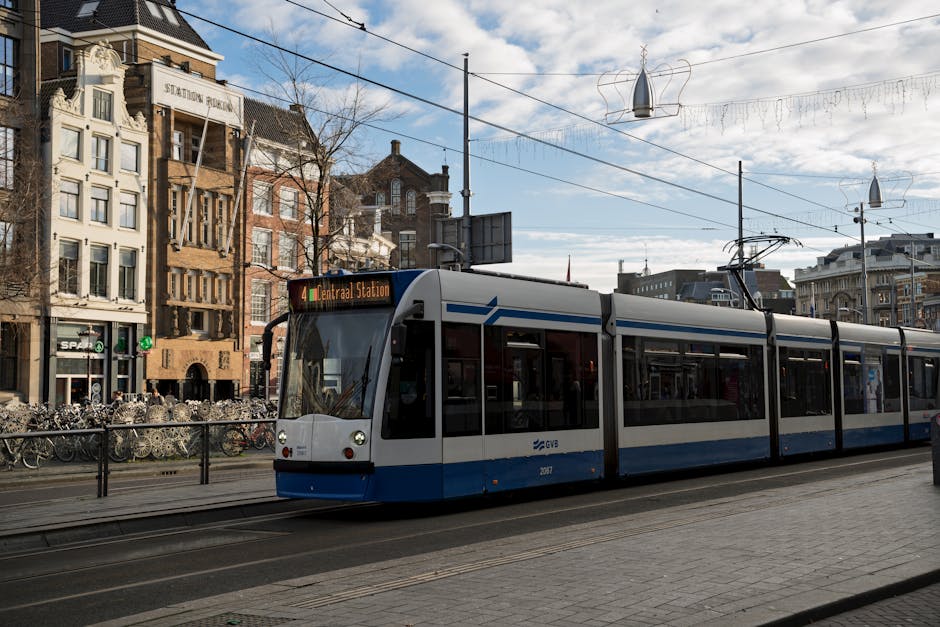
The Amsterdam tram network is one of the easiest and most pleasant ways to get around the city: 15 lines, hundreds of stops, and a frequency that means you rarely wait more than five to ten minutes in daylight hours. This complete guide covers every tourist-relevant line, the best routes to specific attractions, how to pay with OVpay, where to find the right tram at Centraal, and the small unwritten rules of Amsterdam tram-riding that quietly confuse almost every first-time visitor.
The 40-second version: tram 2 is the single best sightseeing line, running from Centraal past Dam Square to the Rijksmuseum, the Van Gogh Museum and Vondelpark. To ride, tap a contactless bank card or phone on the reader as you board and again as you step off. Trams run from roughly 6am to half past midnight, after which night buses take over. Everything else here is detail and local know-how. Treat fares and times as 2026 estimates and check the GVB app for live information.
The Amsterdam Tram at a Glance
Before the line-by-line detail, here is the shape of the system. The network is run by GVB, the city’s transport company, and it is dense, frequent and reliable, with Centraal Station as the hub almost every visitor route passes through.
| Feature | Detail (2026) |
|---|---|
| Operator | GVB (municipal transport company) |
| Lines | 15 numbered routes |
| Frequency | Every 5-10 min in the day |
| Hours | ~6am to 12.30am; night buses 1-5am |
| Single fare | ~EUR 3.40 (1-hour validity) |
| Day ticket | ~EUR 9.50 (24h) |
| How to pay | OVpay, OV-chipkaart or paper ticket |
| Main hub | Centraal Station |
If you want the tram set in the context of the metro, buses and ferries, our Amsterdam public transport guide covers the whole network, while the OV-chipkaart and OVpay guide explains the ticketing in full. This page zooms in on the trams themselves.
One thing worth saying up front: in central Amsterdam the tram is often more useful than the metro precisely because it stays above ground. You get a continuous, street-level view of the canals, the bridges and the gabled houses as you ride, which turns an ordinary A-to-B trip into a low-effort sightseeing tour. The trams are also remarkably frequent, so unlike many cities you can treat them almost like an on-demand service, turning up at a stop and rarely waiting more than a few minutes. That combination, scenery plus frequency, is why so many visitors end up using the tram far more than they expected.
The Best Tram Lines for Tourists
You do not need to memorise all 15 lines. A handful do almost all the heavy lifting for visitors, and knowing just these will get you to the great majority of Amsterdam’s sights. Here they are, in rough order of usefulness.
Tram 2 – The Museum Quarter Line
If you ride only one tram in Amsterdam, make it this one. Line 2 runs from Centraal through Dam Square and Spui to the Rijksmuseum and Van Gogh Museum, then on past Vondelpark toward the leafy Old South. It also happens to thread through the prettiest part of the central canals, so the journey itself is half the appeal. Useful stops include Dam, Spui, Rijksmuseum and Van Baerlestraat for Vondelpark.
Tram 5 – Museumplein and the South
Line 5 reaches the same museum cluster on a slightly different path that takes in Leidseplein, which makes it the smart choice if you want to combine the nightlife square and the galleries in a single trip. It carries on south past the Concertgebouw toward Amstelveen. Spui, Leidseplein and Museumplein are the stops you will want.
Trams 13 and 17 – Anne Frank and the Jordaan
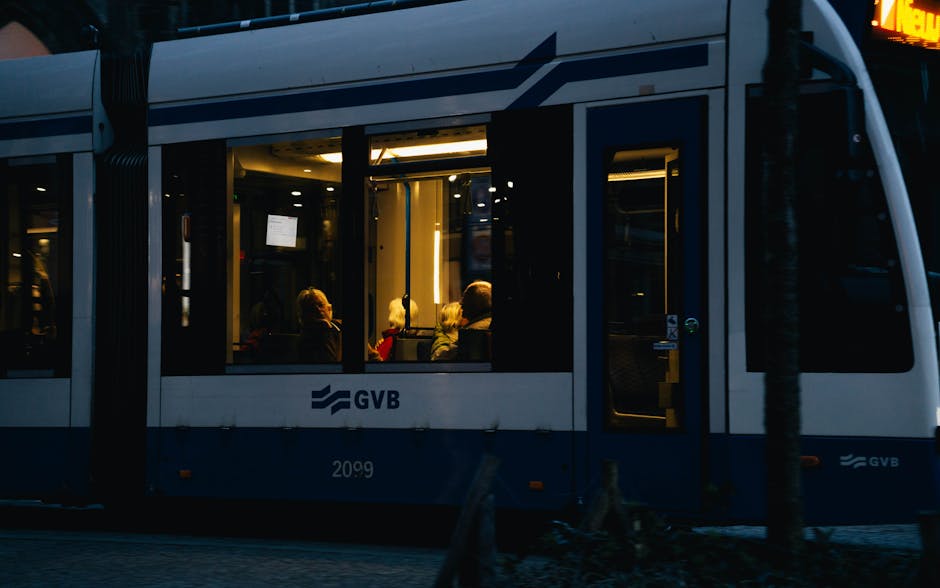
Both lines stop at Westermarkt, the stop for the Anne Frank House and the Westerkerk, and both cut through the handsome canals and narrow streets of the Jordaan. Line 17 carries on to the Bilderdijkstraat area for De Foodhallen, the popular indoor food market, which makes it a neat two-for-one if you are pairing sightseeing with lunch. Expect queues at the Anne Frank House regardless of how you arrive, so book your timed entry well ahead.
Tram 4 – De Pijp and the Albert Cuyp
Line 4 runs from Centraal via Rembrandtplein down to De Pijp, the lively neighbourhood that holds the Albert Cuyp street market and a tangle of good-value restaurants, before continuing to the RAI. Get off around Albert Cuypstraat for the market, or at Stadhouderskade for the Heineken Experience. This is your line for an afternoon of eating and browsing south of the centre.
Tram 14 – The Plantage and the East
Line 14 crosses the city east-west and is the handiest route to the green, museum-rich Plantage district: ARTIS, the historic zoo, the Hortus Botanicus, the Dutch Resistance Museum and the Tropenmuseum all sit along or near it. The Artis and Tropenmuseum stops are the ones to remember. It is an easy, uncrowded ride into a part of town many visitors overlook.
Catching Trams at Centraal Station
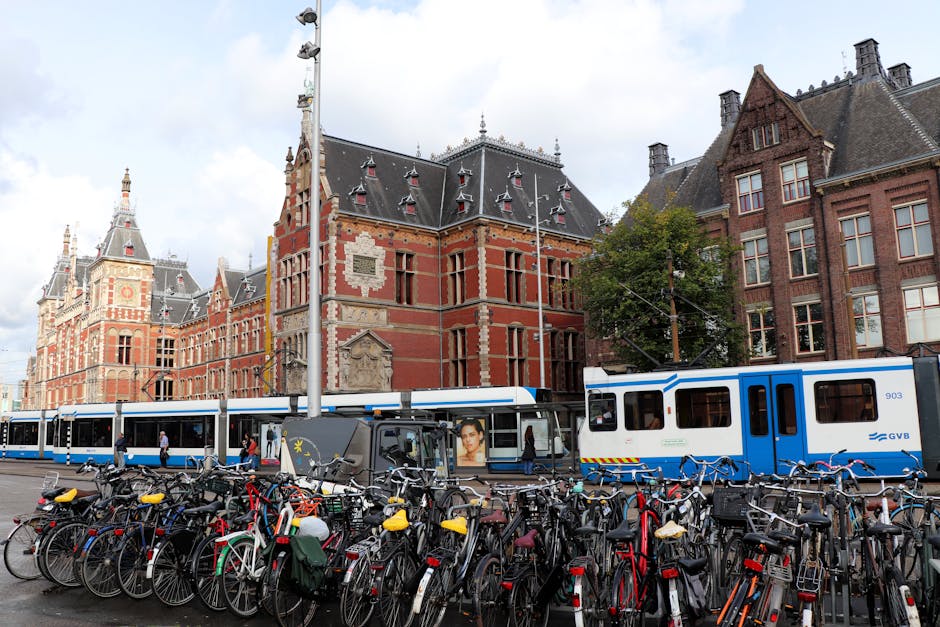
Centraal is the heart of the tram network, and getting your bearings here takes the stress out of everything that follows. The tram platforms sit directly in front of the station’s grand main entrance, on Stationsplein, so you step out of the station and they are right there.
- The platforms are on Stationsplein, immediately in front of the main entrance.
- Platform numbers are clearly marked on the platforms and on overhead signs.
- Major tourist routes including trams 2, 4, 5, 13, 14 and 17 all start here.
- A real-time departure board on Stationsplein shows the next trams.
- The I amsterdam Visitor Centre nearby hands out free GVB transit maps.
- Check the lit display before boarding, because several lines often share one platform.
The one habit that prevents a wrong turn is glancing at the line number lit on the front of the tram and on the platform display before you hop on. At a busy hub like Centraal, two different lines can pull into the same stop within a minute of each other, and they head in very different directions.
It also helps to know that the tram stops wrap around the front and sides of the station forecourt, so the platform you need may be a short walk from where you exit. The overhead signs point the way, and the displays count down the minutes to each departure, so even at your first attempt you can find the right tram in under a minute or two. If you arrive by train and are continuing by tram, you do not leave the transport system at all, you simply walk out the front doors and you are at the stops.
Tickets and Payment
Paying for the tram is genuinely simple in 2026, and for most visitors it comes down to tapping a contactless card. The other options exist mainly for heavy users and longer stays.
- OVpay: tap your contactless bank card or phone on the reader as you board and again as you exit. A daily cap protects heavy users from overpaying.
- Single ticket from the driver: around EUR 3.40, valid for an hour.
- GVB day and multi-day tickets: from roughly EUR 9.50 for 24 hours, with longer passes cheaper per day.
- OV-chipkaart: the refillable plastic card still works but is largely superseded by OVpay.
- Amsterdam & Region Travel Ticket: useful if you are also doing the airport plus regional sights.
- Children under 4 ride free; those aged 4-11 often ride free with an adult at weekends and in school holidays.
The cardinal rule, true of every Dutch transport mode, is to tap both in and out. Forget the tap-out and you are charged a flat maximum fare instead of the real, distance-based price, which is the most common way tourists overpay. For the full ticketing picture, including which pass suits which trip, see our OV-chipkaart and OVpay guide.
On value: there is no need to overthink which option is cheapest. For a short stay where you ride a few times a day, OVpay almost always works out best, since the daily cap quietly protects you on busy days and you pay nothing extra on quiet ones. A day or multi-day GVB ticket only pulls ahead if you are riding constantly, and even then the difference is modest. Whatever you choose, buy tickets only from official sources, the driver, a GVB machine, the GVB app or the visitor centre, and never from someone offering a deal at a stop.
How to Ride a Tram, Step by Step
If you have never used the system, the sequence is quick to learn and the same on every line. Walk through it once in your head and you will board your first tram like a regular.
- Check the line number on the sign at the front of the tram.
- Board through any door, since they all open.
- Tap your card on the reader just inside, even on the way in.
- Find a seat or hold a strap, because the ride is smooth but braking can be sudden.
- Press the stop button a little before your stop; there are buttons on every pole.
- Tap your card again as you exit. This is the step tourists miss most, and skipping it triggers the flat maximum fare.
Unwritten Rules of Tram Etiquette
Amsterdam trams run on a quiet, efficient etiquette that keeps everything moving. None of it is posted on a sign, but locals follow it instinctively, and a little awareness makes you a welcome fellow passenger rather than an obstacle.
- Stand back from the doors until passengers have stepped off.
- Keep the aisle clear: bags off your shoulders and on the floor in busy stretches.
- Give up priority seats to elderly and disabled passengers, as locals do.
- Keep your voice down: loud conversation stands out here.
- No smoking or vaping inside the tram.
- Bikes are not allowed on trams, except foldables.
- Do not lunge for a closing door; wait for the next tram, which is rarely far behind.
Which Tram for Which Attraction
Rather than puzzle over the map each time, here is a cheat sheet matching the city’s headline sights to the line that serves them best. Pair this with our things to do in Amsterdam guide to build a day that flows logically from stop to stop.
A small planning trick saves a lot of backtracking: because so many lines fan out from Centraal, it is often quicker to group sights by which tram serves them rather than by how close they look on a map. A morning on the tram-2 corridor covers the big museums and Vondelpark; an afternoon on the tram-4 corridor covers De Pijp, the Albert Cuyp and the Heineken Experience. Chaining your day around one or two lines, rather than zig-zagging across the network, keeps transfers to a minimum and leaves more time for the places themselves.
- Anne Frank House: tram 13 or 17 to Westermarkt.
- Rijksmuseum, Van Gogh, Stedelijk: tram 2 or 5 to Rijksmuseum.
- Vondelpark: tram 2 to Van Baerlestraat.
- Albert Cuyp Market: tram 4 to Albert Cuypstraat.
- Heineken Experience: tram 4 to Stadhouderskade.
- Leidseplein: trams 1, 2 and 5.
- Dam Square: trams 2 and others via Dam.
- De Foodhallen: tram 17 toward Bilderdijkstraat.
- ARTIS Zoo and the Plantage: tram 14 to Artis.
- Maritime Museum and NEMO: tram 14 toward the eastern docklands.
After the Last Tram
Trams do not run all night, which catches out visitors heading home after a late dinner or a night out. The system does keep moving, just on buses, so a little planning saves you an unexpected walk or an expensive cab.
- The last trams run around half past midnight.
- Night buses take over from roughly 1am to 5am, running about hourly.
- A night fare costs a little more than a daytime single.
- OVpay works on night buses too, so the same tap applies.
- Plan your route home before you head out, or budget for a taxi or ride-hailing app.
Accessibility on the Trams
The fleet has modernised hugely in recent years, and the newer trams are genuinely accessible, though a few older cars remain. If step-free travel matters to you, it is worth knowing which is which.
- Newer trams are fully low-floor, with a designated wheelchair space and wide doors marked on the middle of the tram.
- A few older cars still have entrance steps.
- Audio and visual announcements call every stop.
- Most central stops have raised platforms for level boarding.
- Boarding is independent, so allow a little extra time if you need it.
For detailed, city-wide accessibility information, including step-free routes and which attractions are easiest to reach, see our Amsterdam accessibility guide.
Tram or Metro? And How They Fit Together
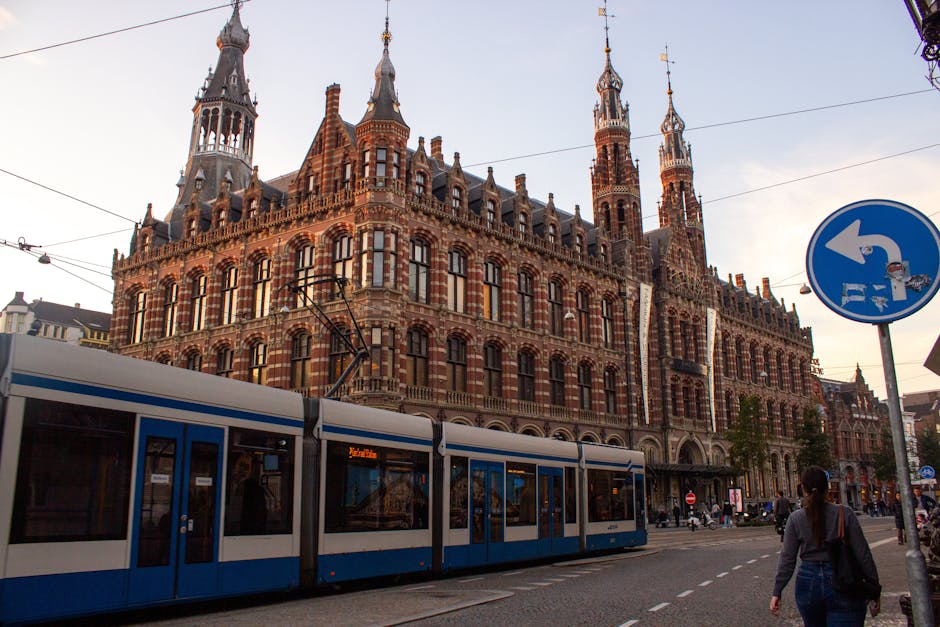
Visitors often ask whether they should bother with the metro. For central sightseeing the answer is usually no, the tram is better, but the two complement each other neatly once you understand the division of labour. The table makes the choice quick.
| Tram | Metro | |
|---|---|---|
| Best for | Central sightseeing | Longer cross-city hops |
| Stops | Frequent, on most streets | Fewer, further apart |
| Views | Excellent street-level | Mostly underground |
| Payment | OVpay | OVpay (same fare system) |
In practice you will ride the tram for nearly everything inside the centre and reach for the metro only when you need to cover real distance fast, such as a quick hop out to the south or to Noord. The good news is that the same contactless tap works on both, plus the buses and the free IJ ferries, so you never have to think about switching tickets. The ferries are worth a special mention as the city’s best transport freebie; combine them with a bike and you have the perfect day, as our bike rental guide explains.
Practical Tram Tips
A few final pointers round out everything above. These are the small things that turn competent tram use into effortless tram use, the stuff regulars do without thinking.
- Use a journey planner: 9292.nl, Google Maps and Apple Maps all give reliable real-time tram routing in English.
- Grab a free pocket map at the Centraal information desk.
- Avoid the rush hours of roughly 8-9am and 5-6pm, when trams pack out.
- Watch your belongings at busy Centraal-area stops and on the most popular tourist lines.
- Mind the tracks on foot: never cross tram rails while looking at your phone.
- Hold a rail when standing, since braking can be abrupt.
That last point about crossing tracks applies whether you are on foot or on a bike. Pedestrians stepping into the tram lane while staring at a map are a daily sight, and trams cannot swerve or stop quickly. Look both ways, treat the rails like a road, and you will be fine. With the trams sorted, the rest of getting around the city, from the airport run to a day out by train, falls into place; our Amsterdam trip planning guide ties it together, and the Schiphol to Amsterdam guide covers your arrival.
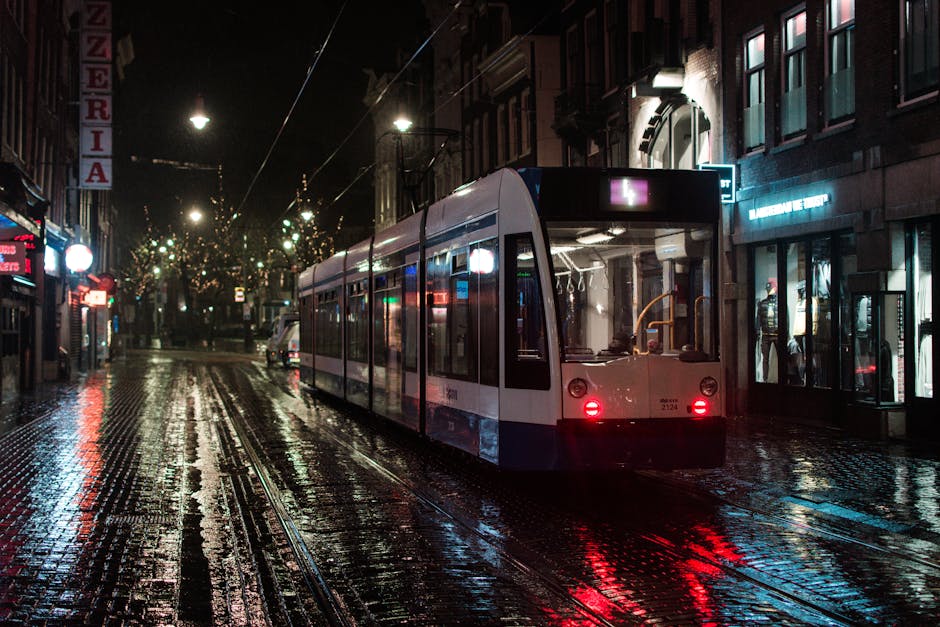
It is worth appreciating, too, that the tram is part of the texture of Amsterdam, not just a way to skip a walk. The network has rolled through these streets in one form or another for well over a century, and the modern low-floor cars glide over canal bridges that have carried trams for generations. Riding one at dusk, watching the lit-up bridges slide past the window, is a small pleasure in its own right, and a reminder that in this city the journey really can be part of the sightseeing rather than an interruption to it.
Amsterdam Tram: FAQ
How much does an Amsterdam tram ticket cost?
A single ticket from the driver is around EUR 3.40 and is valid for an hour, while a 1-day GVB ticket is roughly EUR 9.50. Paying per ride with OVpay is usually cheaper for light use and is capped daily so you never overpay. Confirm current fares in the GVB app.
Can I pay with a credit card on the tram?
Yes. Tap a contactless Visa, Mastercard, Maestro or American Express, or a phone with Apple Pay or Google Pay, using the OVpay system. Tap on as you board and again as you exit, and use the same card or wallet for both taps of a single journey.
What is the best tram for tourists?
Tram 2 is the standout. It links Centraal, Dam Square, Spui, the Rijksmuseum, the Van Gogh Museum and Vondelpark, covering most first-time essentials in one scenic ride. Tram 5 is a close second and adds Leidseplein to the mix.
Do Amsterdam trams run all night?
No. The last trams run around half past midnight, after which night buses take over until roughly 5am, running about hourly. OVpay works on the night buses, so plan a late return in advance or budget for a taxi if the bus timing does not suit.
How often do trams come?
Every five to ten minutes during the day on the main lines, dropping to roughly every twelve to fifteen minutes in the late evening and on Sundays. You rarely wait long, and real-time boards at the stops and apps like 9292 show the next arrivals.
Where do I get a tram map?
Free at the I amsterdam Visitor Centre near Centraal, or download one from the GVB website. For live, door-to-door routing, 9292.nl, Google Maps and Apple Maps all work well in English and account for any service changes.
Final Thoughts
The tram is the easiest part of getting around Amsterdam. Tap your contactless card on the way in, press the stop button before your stop, and tap out on the way off; do that and tram 2 alone covers most of what a first-time visitor wants to see. Glance at the line number before boarding, mind the rails on foot, and you will move around the city like you have lived here for years.
Keep exploring: the getting around Amsterdam hub, the public transport guide, the OV-chipkaart and OVpay guide, the bike rental guide, and our things to do in Amsterdam guide.