Dutch culture and etiquette rewards travellers who understand it: the Dutch are famously direct, egalitarian, environmentally minded, and bicycle-obsessed. Knowing what’s polite (and what’s rude) makes a real difference to how friendly your interactions feel. This guide explains Dutch directness, greetings, tipping in Amsterdam, dining manners, cycling etiquette, gift-giving, things to avoid, and the small cultural quirks that catch tourists off guard.
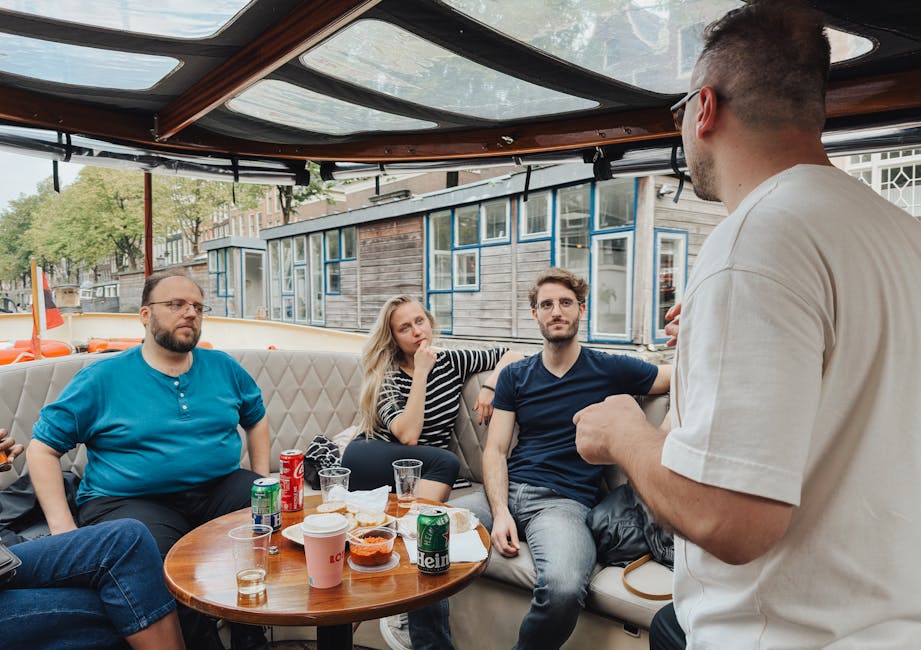
The Big Picture: Five Dutch Values
- Directness: The Dutch say what they mean. No small talk padding, no hidden meanings. Visitors sometimes mistake this for rudeness — it isn’t.
- Egalitarianism: The Dutch don’t believe in hierarchy. Waiters, CEOs, and royalty all use first names. Showing off wealth is frowned upon.
- Punctuality: Be on time. 5 minutes late requires an apology. 15 minutes late requires a phone call.
- Frugality: The Dutch are proud of being careful with money. Going Dutch (splitting the bill) is normal — even on dates.
- Tolerance & pragmatism: A long tradition of religious and social tolerance. The Dutch "live and let live" — but they expect you to do the same.
Greetings & First Meetings

- First meeting: Firm handshake, eye contact, state your first name. "Hi, I’m James." — they reply "Hi James, I’m Lara." Adopt this introduction style everywhere.
- Friends & family: Three air kisses on alternating cheeks (left-right-left). Men shake hands with each other; women kiss women and men.
- Tourists meeting strangers: A friendly "Hallo" or "Goedendag" (good day) is plenty. Don’t worry about kisses.
- Eye contact: Important. Avoiding it suggests dishonesty or shyness.
- Personal space: Dutch prefer about an arm’s-length distance. Don’t stand too close.
Understanding Dutch Directness
The Dutch reputation for bluntness is real and beloved by the Dutch themselves. A few examples:
- A Dutch friend may tell you your outfit looks bad. They’re being helpful.
- A waiter may ask why you only ordered a starter. It’s not pressure to spend; just curiosity.
- If you ask "Do you like my haircut?", expect a real answer.
- Negative feedback at work is given matter-of-factly, without the British/American softening ("just a small suggestion…").
Reciprocate: Dutch people respect honesty. If you’d prefer not to do something, say so plainly — they’ll respect it.
Tipping in Amsterdam
- Restaurants & cafés: 5-10% for good service. Round up to the nearest €5 or €10 is normal.
- Taxis & Uber: Round up to the nearest euro. 5-10% for excellent service.
- Hotel housekeeping: €1-2 per night, optional.
- Bell staff: €1-2 per bag.
- Bars: Not expected. Round up if you like.
- Tour guides: €5-10 per person on a free walking tour; €10-20 on private tours.
- Hairdressers, masseurs, etc.: 5-10% if service was great.
Important: Service is included in all prices by Dutch law — staff get a minimum wage and don’t depend on tips. Don’t over-tip; large tips can make people uncomfortable. Cash tipping is preferred (you can ask the card machine for "no tip" and add cash separately). For more on money matters, see our Amsterdam money guide.
Dining Etiquette

At a Restaurant
- Wait to be seated — don’t just sit down in a busy restaurant.
- Splitting the bill is normal. Ask for "apart" (separate cheques) or just split equally.
- Tap water is not free — order "a carafe of water" (kraanwater) and you may or may not be charged €1-2.
- Dutch meals are unhurried — staff won’t rush you out. Conversely, you may need to wave for the bill ("de rekening alstublieft").
- The "continental" way of holding cutlery: fork in left hand, knife in right; don’t switch.
- Place knife and fork side by side on your plate when finished.
At a Dutch Home
- Always bring a small gift: flowers, wine, or chocolates (€10-20 range).
- Arrive on time — 5 minutes early is normal.
- Take off your shoes if everyone else has; the host will tell you.
- Wait until the host says "Eet smakelijk" (enjoy your meal) before eating.
- Don’t take a tour of the house — wait to be shown.
- Hosts may serve coffee with one biscuit alongside (this is folklore, not a stereotype) — accept gratefully.
- Visits typically last 2-3 hours. Don’t outstay your welcome.
Coffee & Cake ("Koffietijd")
Dutch culture has a sacred 10am and 4pm coffee break. Cafés and meetings stop for coffee with a small cake (apple cake, tompouce, stroopwafel). Don’t skip if you’re offered.
Cycling Etiquette
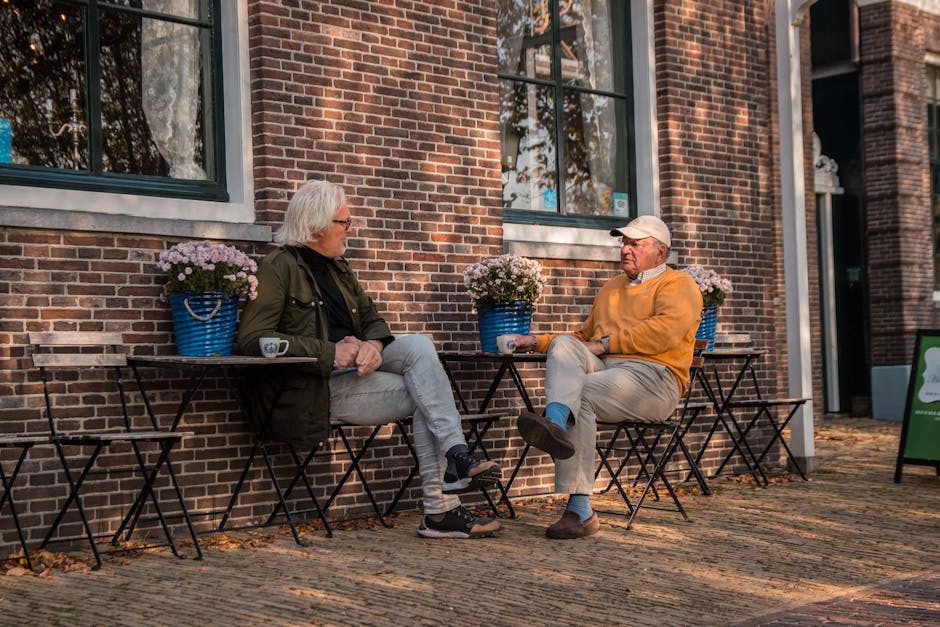
- If you’re a pedestrian: never stand or walk in the bike lane (the red-coloured strip). It’s the most common tourist mistake and a daily source of frustration for locals.
- If you’re cycling: keep right, signal turns with your arm, use hand signals before pulling over, no phone or earphones, bell to warn pedestrians.
- Lights: front white, rear red. Mandatory at dusk; fines if caught without.
- Drink & ride: blood alcohol limit is 0.5‰ — same as driving. Police give large fines.
- Lock your bike: two locks (frame lock + a chain or U-lock through the wheel). Theft is endemic.
- Right of way: cyclists have it over pedestrians; cars yield to cyclists at most intersections.
For more on cycling, see our bike rental guide.
Language & Conversation
- Almost everyone in Amsterdam speaks excellent English. You don’t need Dutch to get by.
- Still, a few words go a long way: Hallo (hello), Dank je wel (thanks), Alsjeblieft (please/here you go), Tot ziens (goodbye), Eet smakelijk (enjoy your meal), Proost (cheers).
- Don’t ask "Do you speak English?" — assume they do. Start in English with a polite "Hi, sorry — ".
- Conversation topics that work: travel, food, sports (especially football, cycling), Dutch design.
- Conversation topics to handle carefully: money/income, politics (Wilders, immigration), drugs/coffeeshops (tourists tend to ask too much).
Public Behaviour
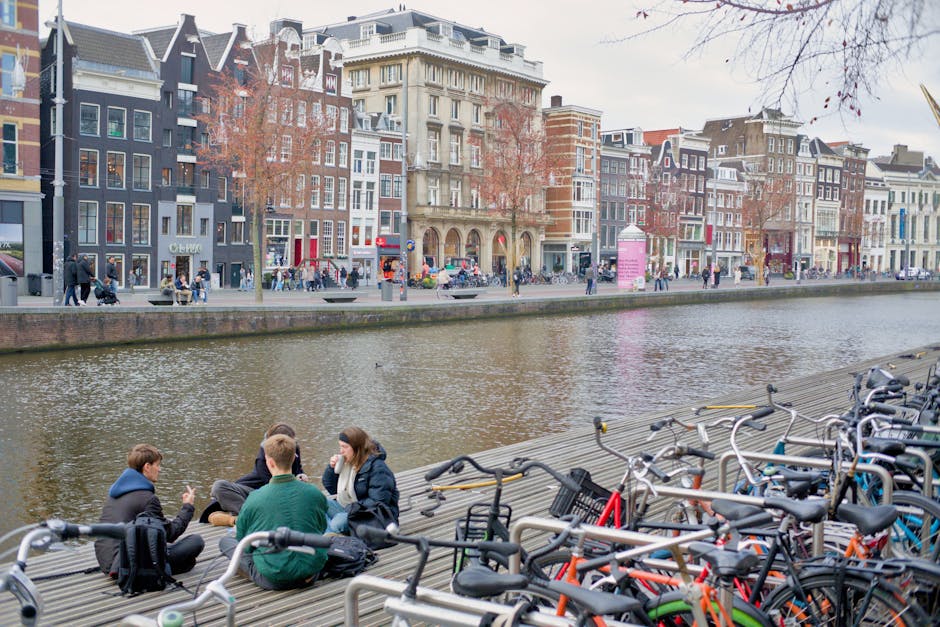
- Volume: indoor and outdoor voices are low. Loud English-speaking groups are immediately identifiable as tourists.
- Queueing: orderly. Don’t push.
- Public transport: silent or quiet. Don’t take phone calls without lowering your voice. Offer seats to elderly, pregnant, disabled. Standing on the right of escalators, walking on the left.
- Smoking: not on terraces (since 2020). Outside is fine.
- Cannabis in public: legal in coffeeshops; tolerated but not encouraged on the street. Police can fine for blatant public smoking — particularly in the Red Light District since 2023.
- Public drinking: officially not allowed in most of the city centre. Limited to terraces, your hotel, and home.
- Urinating: a public order offence with large fines. Use the cone-shaped urinals (krullen) at night or a café.
- Photography: never photograph people in the Red Light District; the windows have signs forbidding it, and locals will react angrily.
Shopping & Business Hours
- Shops: typically 10:00-18:00 Tuesday-Saturday; many shops close on Mondays until 12:00 or 13:00. Sunday hours generally 12:00-17:00.
- Bars: 12:00 to 1:00 (Sun-Thu) or 3:00 (Fri-Sat).
- Restaurants: lunch 12:00-14:00, dinner 18:00-22:00.
- Coffeeshops: typically 10:00-23:00; some open earlier or later.
- Banks: branches rare; most done online.
- Holidays: shops closed on Easter Sunday/Monday, King’s Day (27 April), Liberation Day (5 May), Whit Sunday/Monday, Christmas Day & Boxing Day, New Year’s Day.
Gifts & Hosting
- What to bring as a guest: flowers (always odd number, never chrysanthemums — funeral flower), wine, chocolates, a delicacy from your country.
- Birthday culture: in the Netherlands, the birthday person hosts and brings cake to work. Visitors should congratulate the birthday person and all their family members ("Gefeliciteerd met je broer" — congratulations on your brother).
- Thank-you notes: text or message the host the day after.
Religion & Customs
- The Netherlands is one of the most secular countries in the world. Religion plays a small role in daily life.
- The Bible Belt (a strip from Zeeland through Veluwe) is conservative Protestant; Amsterdam is the opposite end.
- Religious holidays remain national holidays but most Dutch people treat them as days off rather than observances.
- Show respect at churches and synagogues — dress modestly, remove hats indoors.
Things to Avoid
- Walking in the bike lane — the cardinal tourist sin.
- Calling Amsterdam "Holland" — Holland is two of the country’s 12 provinces (North & South Holland). The country is the Netherlands. (Although the Dutch themselves use Holland casually, especially in marketing.)
- Asking about coffeeshops in front of children or in conservative neighbourhoods.
- Photographing sex workers in the Red Light District.
- Public drunkenness — especially in residential neighbourhoods at night.
- Bringing up WWII without context — many Dutch families have direct losses; tread thoughtfully.
- Tipping excessively — over 15% feels patronising.
- Being late without warning.
- Treating service staff as servants — Dutch egalitarianism extends to everyone.
- Loud religious or political proselytising.
Dutch Traditions to Know
- Sinterklaas (5 December): the Dutch Christmas, with Sint and his helpers giving gifts to children. Pre-dates Santa Claus.
- King’s Day (27 April): national holiday, orange everywhere. See our King’s Day guide.
- Sint Maarten (11 November): kids carry lanterns door-to-door singing for candy.
- Carnival: huge in the south (Brabant, Limburg); Amsterdam barely notices.
- Koffietijd: the 10am and 4pm coffee break with a single biscuit.
- Saying "you": Jij/je (informal) is standard; u (formal) is for elders and strangers in formal settings.
- Apple cake (appeltaart) and apple pie: serious cultural objects. Try at Winkel 43 in the Jordaan.
Business & Formal Etiquette
- Punctuality is mandatory. Arrive on time, never early.
- Dress is smart-casual; flashy attire reads as ostentation.
- Use first names from the first meeting (unless dealing with banking, law, or government — then surnames).
- Decisions are made by consensus (polderen) — meetings are long but everyone is heard.
- Don’t oversell — Dutch buyers find puffery distrustful.
- Drinking at lunch is uncommon; coffee culture is strong.
Frequently Asked Questions
Are the Dutch rude or just direct?
Direct. They tell the truth without softening it, which can feel sharp at first. They’re not trying to offend — they’re trying to be efficient and honest.
Do I need to learn Dutch?
No. Amsterdam locals speak excellent English. Learning "dank je wel" (thanks) and "alsjeblieft" (please) earns goodwill.
How much should I tip in Amsterdam?
5-10% in restaurants. Round up taxis and bars. Not expected for service that’s just adequate.
Is it OK to call the country Holland?
Among friends, yes. The official name is the Netherlands, but the government’s own tourism agency has used "Holland" for decades.
Can I smoke cannabis in the street?
Possession of up to 5g is decriminalised, but smoking in public is officially not allowed, especially in the Red Light District (since 2023). Consume in your hotel or a coffeeshop.
What’s the Dutch view on photography in public?
Fine for general scenes. Don’t photograph individuals (especially sex workers) without permission. Houseboats are private homes — no point-blank photography.
Is Amsterdam safe at night for tourists?
Yes, very. Standard precautions apply. See our safety guide.
Final Thoughts
Dutch culture rewards a little study before you arrive. The Dutch are friendly, witty, and welcoming — but they’re allergic to pretension, exaggeration, and disrespect for their orderly public spaces. A polite greeting, an open mind to their directness, and basic awareness of the bike lane will earn you genuine warmth from locals and a far richer Amsterdam experience.
For more, see our Culture & History pillar, our Practical Information pillar, and our Dutch language basics guide.