Gay Amsterdam is one of the most welcoming, historic, and easy-to-navigate LGBTQ+ destinations in the world. The Netherlands was the first country to legalise same-sex marriage (2001), Amsterdam built the world’s first gay memorial (the Homomonument, 1987), and the city’s main gay street — Reguliersdwarsstraat — has been the heart of Dutch LGBTQ+ nightlife since the 1970s. This complete guide covers the best gay bars and clubs, neighbourhoods, gay-friendly hotels, history and monuments, the famous Pride Canal Parade, and practical tips for LGBTQ+ travellers.

Why Amsterdam for LGBTQ+ Travel
Amsterdam consistently ranks among the world’s most LGBTQ+ friendly cities, and not just because of its bars. The legal and social framework is exceptional: same-sex marriage since 2001 (the world’s first), full adoption and parenting rights, robust anti-discrimination laws, and an openly progressive culture that dates back to the 1810s when the Napoleonic Code decriminalised homosexuality in the Netherlands. Almost every hotel, restaurant, and venue in Amsterdam is gay-friendly by default — visible affection on the streets is normal, harassment is rare, and the city has held an annual Pride since 1996.
A Brief LGBTQ+ History of Amsterdam
- 1811: The Napoleonic Code, brought in during French occupation, decriminalises homosexuality in the Netherlands — among the earliest in the world.
- 1927: Café ‘t Mandje opens on Zeedijk — the oldest surviving LGBTQ+ bar in Europe, founded by lesbian motorcyclist Bet van Beeren.
- 1946: COC Nederland founded — the world’s longest-continuously-operating LGBTQ+ rights organisation.
- 1970s-1980s: Reguliersdwarsstraat develops into Amsterdam’s main gay strip.
- 1987: The Homomonument unveiled near Westerkerk — the world’s first monument to LGBTQ+ victims of WW2 persecution.
- 1996: First Amsterdam Pride, with the now-iconic Canal Parade.
- 1998: Netherlands recognises registered partnerships for same-sex couples.
- 1 April 2001: Netherlands becomes the first country in the world to legalise same-sex marriage. Mayor Job Cohen performs four ceremonies at midnight in the Amsterdam stadhuis.
- 2014: Transgender rights expanded — surgery and sterilisation removed as requirements for legal gender change.
- 2021: Netherlands marks 20 years of legal same-sex marriage; gender-neutral options on passports.
- 2026: Amsterdam marks 25 years of marriage equality with a special edition of Amsterdam Pride and major exhibitions across the city.
Amsterdam’s Gay Neighbourhoods
Reguliersdwarsstraat (The Canal Belt)
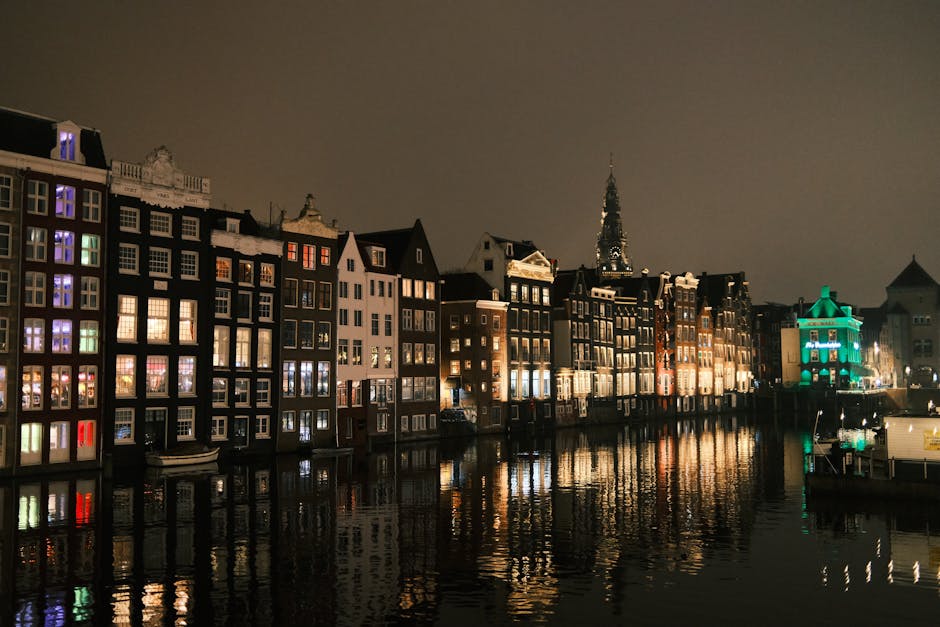
Amsterdam’s main gay strip. A 250-metre stretch between Rembrandtplein and Koningsplein, packed with gay bars, clubs, and restaurants. Most of the city’s iconic gay nightlife is here: Café Montmartre, SoHo, Taboo, Prik (just around the corner), Club NYX. The street comes alive Thursday to Sunday from 22:00 onwards and runs until 3-4am.
Warmoesstraat & Zeedijk (Old Centre)
The cruisier, leather-and-bears scene is concentrated around Warmoesstraat at the edge of the Red Light District. Bars like Eagle, Argos (Europe’s oldest leather bar), Cuckoo’s Nest, and the Web. Also home to Café ‘t Mandje on Zeedijk — Europe’s oldest surviving LGBTQ+ bar (1927).
Kerkstraat (Canal Belt)
Quieter but still significant: home to Spijker Bar, the Other Side, and the Amsterdam Bear Bar. A more relaxed alternative to the Reguliersdwarsstraat crowds.
The Jordaan & Westerstraat

Not a dedicated gay area, but one of Amsterdam’s most LGBTQ+-friendly residential neighbourhoods. Brown cafés, neighbourhood bars, and a relaxed welcoming atmosphere. Home to the Homomonument near Westerkerk and the Pink Point information kiosk (the world’s first permanent LGBTQ+ information centre). See our Jordaan neighbourhood guide.
Best Gay Bars & Clubs in Amsterdam
Café ‘t Mandje (Zeedijk)
Europe’s oldest LGBTQ+ bar. Opened 1927 by Bet van Beeren — a Dutch lesbian motorcyclist and folk hero. The interior is the original 1920s decor, preserved as a living museum: cluttered with old photos, neckties cut from male customers’ shirts (a Bet van Beeren tradition), and decades of memorabilia. Tiny, atmospheric, friendly. Mixed crowd. Go for the history and the cocktails.
Café Montmartre (Reguliersdwarsstraat)
Voted "Most Popular Gay Bar in the Netherlands" year after year. Camp Dutch sing-along vibes, drag queens belting Eurovision hits, friendly prices, kitschy decor. Great place to start the night around 22:00.
SoHo (Reguliersdwarsstraat)
The biggest crowd on the strip. Two floors, DJs, mixed gay and straight crowd, lively from 23:00 onwards.
Club NYX (Reguliersdwarsstraat 42)
The main late-night dance club. Three floors of different music (house, pop, hip-hop). Mixed LGBTQ+ crowd. Open until 4-5am Friday and Saturday.
Prik (Spuistraat)
Quirky cocktail bar serving Prosecco on tap and inventive cocktails. Mixed friendly crowd, polite door, opens 16:00.
Eagle Amsterdam (Warmoesstraat)
Iconic leather/cruise bar. Dress code (leather, uniform, sport gear), darker downstairs area, gay men only. Open late.
Other Notable Venues
- Taboo (Reguliersdwarsstraat) — cheerful, mainstream gay bar.
- Spijker Bar (Kerkstraat) — popular cruise bar with pool table.
- The Other Side (Kerkstraat) — gay-friendly coffeeshop (cannabis).
- Argos (Warmoesstraat) — Europe’s oldest leather bar (1969).
- Lellebel (Utrechtsestraat) — Amsterdam’s only dedicated drag bar.
- Café Saarein (Elandsstraat, Jordaan) — historic lesbian bar (1978).
- Vivelavie (Amstelstraat) — lesbian/queer bar near Rembrandtplein.
The Homomonument & Pink Point
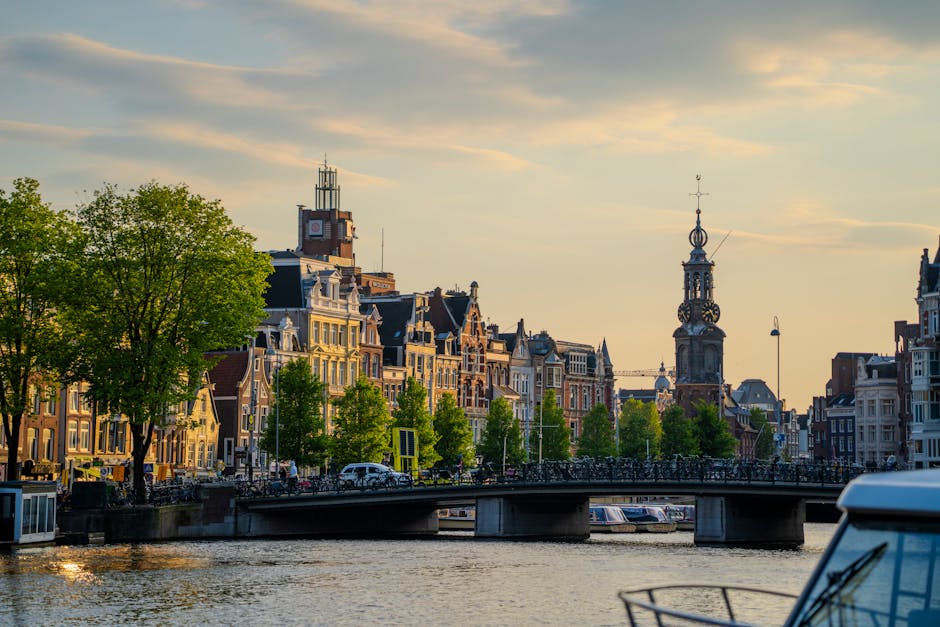
The Homomonument sits on Westermarkt next to Westerkerk, just steps from the Anne Frank House. Designed by Karin Daan and unveiled in 1987, it is three pink granite triangles set into the pavement and onto the Keizersgracht canal — referencing the pink triangle that Nazi concentration camps forced LGBTQ+ prisoners to wear. The monument commemorates LGBTQ+ people persecuted in WW2 and all times since, and is the meeting point for the city’s LGBTQ+ community on days of celebration and mourning.
The adjacent Pink Point kiosk is the world’s first permanent LGBTQ+ tourist information centre. Stop in for maps of the gay scene, event flyers, books, souvenirs, and friendly local advice.
Amsterdam Pride & the Canal Parade
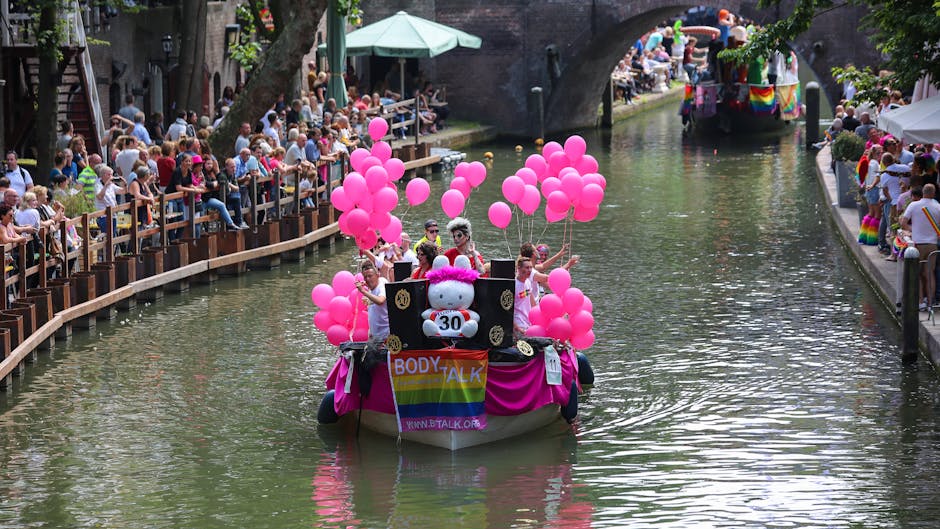
Amsterdam Pride is the city’s biggest annual festival, running for nine days in late July and early August. The highlight is the Canal Parade — the only Pride parade in the world held entirely on water. 80 themed boats float down the Prinsengracht canal carrying community groups, activists, embassies, companies, drag queens, dancers, and political messages. Half a million spectators line the canals to cheer them on. The parade typically runs from 12:30 to 18:00 on the first Saturday of August.
Pride Week Highlights
- Opening night — community celebration at Vondelpark or the Westermarkt.
- Pride Walk — first Saturday’s daytime political march from Vondelpark to Dam Square.
- Canal Parade — first Saturday of August, 12:30 onwards.
- Drag Olympics — Saturday afternoon on Westermarkt.
- Pride Park — daytime concerts, talks, drag shows.
- Closing party — Sunday night at Reguliersdwarsstraat & Rembrandtplein, open-air stages.
For best viewing of the Canal Parade: Prinsengracht between Westerkerk and the Magere Brug. Restaurants and bars along the canal sell tickets to reserved waterside spots — book months ahead. Free public viewing along Prinsengracht and Amstel is possible but extremely crowded; arrive by 11:00 for a decent spot.
Amsterdam Pride 2027 dates: Saturday 24 July – Sunday 1 August 2027 (provisional). Canal Parade on Saturday 31 July. Confirm closer to the date on the official Amsterdam Pride site.
Other LGBTQ+ Events in Amsterdam
- Roze Filmdagen (Pink Film Days) — March; Europe’s longest-running LGBTQ+ film festival.
- King’s Day — Reguliersdwarsstraat hosts a major street party every 27 April.
- Pride Walk & Liberation Day — 5 May; the LGBTQ+ community always has a strong presence.
- Milkshake Festival — late July, Westerpark; queer-friendly inclusive electronic music festival.
- FunHouse / Rapido / Hardchurch / Of Moaning — recurring large-scale gay dance events at NDSM-Werf, Paradiso, and other venues.
- Transgender Remembrance Day — 20 November, Homomonument vigil.
- World AIDS Day — 1 December; ceremonies at the Homomonument.
Gay-Friendly & Gay Hotels in Amsterdam
By Dutch law, all hotels in Amsterdam must serve all guests equally — every property is functionally gay-friendly. But several hotels are particularly known for catering to LGBTQ+ travellers:
- Amistad Hotel (Kerkstraat) — small gay-owned boutique hotel in the Canal Belt, walking distance to Reguliersdwarsstraat.
- Andaz Amsterdam Prinsengracht — luxury 5-star, openly LGBTQ+-welcoming with frequent Pride partnerships.
- Hotel CC — gay-friendly hotel right on the Canal Belt.
- The Dylan (Keizersgracht) — luxury 5-star with a long-standing “Proudly Welcome” LGBTQ+ programme.
- Pulitzer Amsterdam — heritage luxury hotel on Prinsengracht, prime Pride viewing.
- citizenM Amsterdam — affordable, contemporary, LGBTQ+ supportive across multiple locations.
For the wider hotel picture, see our where to stay in Amsterdam pillar.
Gay & Gay-Friendly Restaurants
- Downtown (Reguliersdwarsstraat) — long-standing gay-owned café/restaurant; brunch institution.
- Garlic Queen (Reguliersdwarsstraat) — campy, garlic-themed, dependable bistro food.
- Café Reibach (Brouwersgracht) — gay-friendly café for breakfast and lunch in the Jordaan.
- Bocca Reguliersdwarsstraat — speciality coffee on the strip, daytime LGBTQ+ hub.
- Restaurant Greetje (Peperstraat) — gay-friendly modern Dutch cuisine; a destination dinner.
For more food, see our Amsterdam food & drink guide.
Saunas & Adult Venues
Amsterdam has several long-established gay saunas — among the cleanest and best-regulated in Europe:
- Sauna Nieuwezijds — large central sauna with steam rooms, dry sauna, dark room, and bar.
- Boys Club 21 — popular cruising sauna near Spuistraat.
- Thermos Sauna — closed in 2018 after 40 years; mentioned for historical reference.
Practical Tips for LGBTQ+ Travellers

- Public affection is normal and unremarkable in Amsterdam. Holding hands and kissing on the street are common everywhere in the centre.
- Outside the centre: most of the Netherlands is similarly tolerant, but a small number of outer suburbs (Amsterdam Nieuw-West, parts of Zaanstad) have seen occasional incidents. Stick to areas with active street life if you have any concern.
- Police: Amsterdam Police have a dedicated LGBTQ+ liaison officer (Roze in Blauw — "Pink in Blue"). Report any incidents on +31 900 8844.
- HIV / sexual health: PrEP available; GGD Amsterdam runs free anonymous testing on Nieuwe Achtergracht 100. Walk-in hours are limited — book online ahead.
- Visiting King’s Day / Pride: book accommodation 6 months ahead. Prices double during Pride week.
- Trans & non-binary travellers: gender-neutral toilets are common; staff are generally informed and respectful; legal protection is robust.
- Marriage tourism: same-sex couples cannot get legally married in Amsterdam without Dutch residency, but symbolic ceremonies are widely available.
LGBTQ+ Day Trips from Amsterdam
- Utrecht — small, friendly LGBTQ+ scene around the canals; 30 minutes by train.
- The Hague — historic gay bars and Madurodam; 50 minutes by train.
- Rotterdam — contemporary, less touristy gay scene; 40 minutes by train.
- Haarlem — small but welcoming; 20 minutes by train.
See our day trips from Amsterdam guide for more.
Frequently Asked Questions
Is Amsterdam safe for LGBTQ+ travellers?
Yes — among the safest cities in the world for LGBTQ+ visitors. Public affection is unremarkable, harassment is rare, and the legal/social environment has been LGBTQ+ affirming for decades.
Where is the gay area of Amsterdam?
The main gay street is Reguliersdwarsstraat in the Canal Belt. Secondary clusters: Warmoesstraat / Zeedijk (cruise / leather scene), Kerkstraat (mixed), and Jordaan (residential / lesbian).
When is Amsterdam Pride?
Late July to early August. Canal Parade is always on the first Saturday of August.
What’s the gay-friendliest neighbourhood to stay in?
The Canal Belt (Grachtengordel) is best — walking distance to Reguliersdwarsstraat, the Homomonument, and most gay venues. The Jordaan and De Pijp are also excellent residential options.
Are there lesbian bars in Amsterdam?
Yes — Café Saarein (Elandsstraat), Vivelavie (Amstelstraat), and several queer mixed venues. The lesbian scene is smaller than the male gay scene but well-established.
Can same-sex couples marry in Amsterdam as tourists?
Legally only Dutch residents can marry in the Netherlands, but symbolic same-sex ceremonies are widely available — many couples come specifically for these in the city where marriage equality began.
Final Thoughts
Amsterdam was a pioneer of LGBTQ+ rights and remains one of the world’s most welcoming destinations for queer travellers. Whether you come for the historic bars, the Canal Parade, the Homomonument, or simply to walk hand-in-hand through one of the most beautiful cities in Europe without a second thought, the experience is one of comfort and celebration. Visit any time of year, but plan for Pride week (late July – early August) if you want the full LGBTQ+ Amsterdam experience.
For more, see our Amsterdam for Every Traveler pillar, our neighbourhoods guide, and our Amsterdam events calendar.