Amsterdam visa requirements depend entirely on your passport. Citizens of EU/EEA countries need nothing more than ID. Citizens of about 60 visa-exempt countries (USA, UK, Canada, Australia, Japan, etc.) currently need only a valid passport, but from late 2026 will additionally need ETIAS authorisation (€20, online, valid 3 years). Citizens of all other countries need a Schengen Type C visa applied for in advance at a Dutch embassy or consulate. This guide explains exactly what every type of traveller needs, the application process, fees, processing times, and 2026 ETIAS changes.
Quick Check: Do You Need a Visa for Amsterdam?
- EU / EEA / Swiss citizens: No visa needed, no ETIAS needed. Free movement under EU rules. Travel with a passport or valid national ID card.
- UK citizens: No visa for short visits up to 90 days. Will need ETIAS from late 2026.
- US, Canadian, Australian, NZ, Japanese, South Korean citizens: No visa for short visits up to 90 days. Will need ETIAS from late 2026.
- Visa-exempt nationals (full list below): Same — no visa, but ETIAS required from late 2026.
- All other passport holders: A Schengen Type C visa is required and must be applied for in advance.
- Stays over 90 days: Everyone (including visa-exempt and UK/US passport holders) needs a long-stay national visa (MVV) or residence permit.
Understanding the Schengen Area
The Netherlands is part of the Schengen Area — a borderless zone of 29 European countries that share a single visa policy. A Schengen visa issued by any member state lets you travel freely across all 29 countries, and the "90 days in any 180-day period" limit applies to your combined time across the whole zone, not just the Netherlands.
The 29 Schengen Countries (2026)
Austria, Belgium, Bulgaria, Croatia, Czech Republic, Denmark, Estonia, Finland, France, Germany, Greece, Hungary, Iceland, Italy, Latvia, Liechtenstein, Lithuania, Luxembourg, Malta, Netherlands, Norway, Poland, Portugal, Romania, Slovakia, Slovenia, Spain, Sweden, Switzerland.
Not in Schengen: Ireland and Cyprus (EU members but not Schengen), and the UK (left the EU and was never in Schengen). UK citizens are visa-exempt for short visits but will still need ETIAS from late 2026.
Visa-Exempt Countries (No Visa Needed for <90 Days)
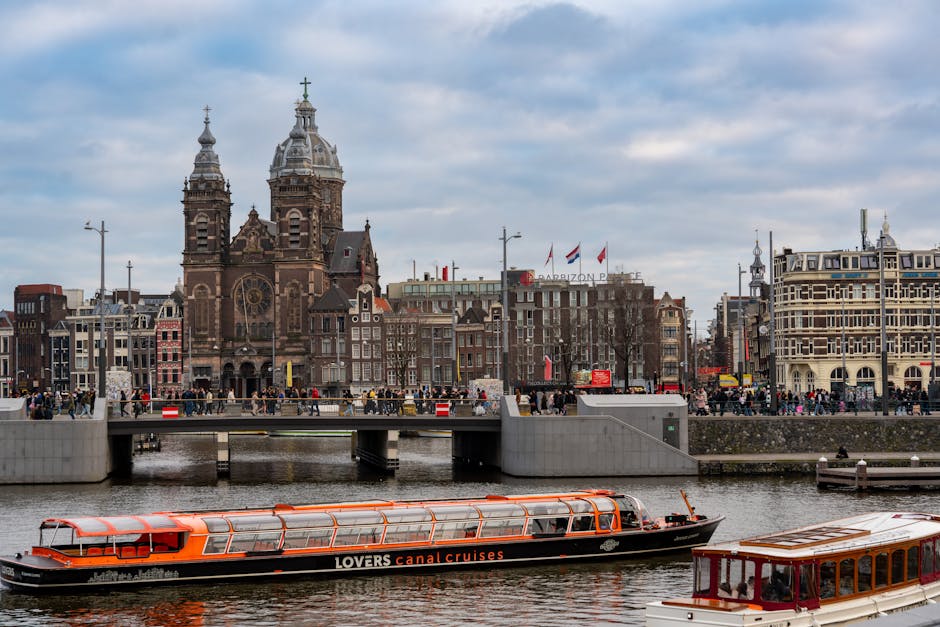
Citizens of these countries can enter the Netherlands for up to 90 days within any 180-day period without a visa. From late 2026, you’ll still need to apply for ETIAS authorisation online before travelling, but no visa is required:
Albania, Antigua and Barbuda, Argentina, Australia, Bahamas, Barbados, Bosnia and Herzegovina, Brazil, Brunei Darussalam, Canada, Chile, Colombia, Costa Rica, Dominica, El Salvador, Georgia, Grenada, Guatemala, Honduras, Hong Kong (HKSAR passport), Israel, Japan, Kiribati, Macao, Malaysia, Marshall Islands, Mauritius, Mexico, Micronesia, Moldova, Montenegro, New Zealand, Nicaragua, North Macedonia, Palau, Panama, Paraguay, Peru, Saint Kitts and Nevis, Saint Lucia, Saint Vincent and the Grenadines, Samoa, Serbia, Seychelles, Singapore, Solomon Islands, South Korea, Taiwan, Timor-Leste, Tonga, Trinidad and Tobago, Tuvalu, Ukraine (biometric passport), United Arab Emirates, United Kingdom, United States of America, Uruguay, Vanuatu (currently suspended), Venezuela.
Always check before flying: The visa-exempt list changes occasionally. Confirm your nationality is current on the official Netherlands embassy site before booking.
ETIAS: New Requirement from Late 2026

The European Travel Information and Authorisation System (ETIAS) is the EU’s new pre-travel authorisation, similar to the US ESTA. It is scheduled to launch in the last quarter of 2026 — after that date, every visa-exempt traveller (US, UK, Canadian, Australian, etc.) will need an approved ETIAS before boarding their flight to Amsterdam.
ETIAS at a Glance
- Who needs it: All visa-exempt non-EU travellers aged 18-70.
- Who doesn’t: EU/EEA/Swiss citizens, anyone holding a Schengen visa already, under-18s and over-70s (free authorisation still needed).
- Cost: €20 (free for under-18 and over-70).
- Validity: 3 years or until your passport expires, whichever is sooner.
- Stay limit: 90 days in any 180-day period across the entire Schengen Area.
- Application: Online or via the official mobile app, takes about 10 minutes.
- Processing time: Most approvals issued within minutes. In some cases, up to 30 days for manual review. Apply at least 96 hours before travel.
- How to apply: Through the official ETIAS website only. Beware of third-party scam sites charging inflated fees.
Information You’ll Need to Apply
- Biometric passport (one with a digital chip).
- Personal information: name, address, date of birth, place of birth.
- Travel details: first country of intended entry.
- Background questions: criminal history, deportation history, conflict zone travel.
- Education and current occupation.
- Payment by card.
When ETIAS Becomes Mandatory
As of May 2026, ETIAS is not yet active. The EU has scheduled its launch for late 2026, with an initial transitional period during which travel without ETIAS will still be allowed for the first 6 months. Once the system is fully mandatory (currently projected for spring 2027), airlines will be required to check ETIAS status at boarding. Until then, visa-exempt travellers need only a valid passport. Always check the official ETIAS site for the latest launch date before your trip.
Schengen Type C Visa (For Everyone Else)
If your nationality is not on the visa-exempt list above, you’ll need to apply for a Schengen Type C visa (short-stay) before travelling. The visa allows stays of up to 90 days in any 180-day period across the entire Schengen Area.
Where to Apply
Apply at the Dutch embassy or consulate in your country of residence — or, where Netherlands has outsourced visa services, at a VFS Global or TLS Contact centre. If you plan to visit multiple Schengen countries, apply at the embassy of the country where you’ll spend the most time. If equal time, apply at the country of first entry.
Required Documents
- Valid passport (issued within last 10 years, valid 3+ months beyond intended departure date, 2+ blank pages).
- Completed visa application form.
- Two recent (less than 6 months old) biometric passport photos.
- Round-trip flight reservation (do not buy tickets — use a reservation).
- Hotel bookings or invitation letter for entire stay.
- Travel itinerary (day-by-day plan helpful but not required).
- Travel medical insurance: minimum €30,000 coverage, valid in all Schengen countries, including repatriation and pandemic coverage.
- Proof of funds: bank statements (last 3-6 months). Netherlands requires evidence of at least €55 per day for the entire trip; €75/day is recommended.
- Proof of employment / school enrolment / pension.
- Proof of legal residence in the country where you’re applying.
- Application fee receipt.
Visa Fees
- Adults (12+): €90 (raised from €80 in mid-2024).
- Children 6-11: €45.
- Children under 6: Free.
- Plus possible VFS / TLS service fee (~€20-40) if outsourced.
- Some countries have bilateral agreements that reduce or waive fees.
Processing Time
- Standard: 15 calendar days.
- Peak season (May-August): up to 45 days.
- If interview required or extra documents needed: up to 60 days.
- The Dutch government advises applying at least 45 days before travel.
- You can apply up to 6 months before your intended trip.
Schengen Visa Application Steps
- Step 1: Check whether you need a visa (above lists).
- Step 2: Identify the right embassy or VFS centre for your residence.
- Step 3: Book an appointment online — slots fill up fast in summer, book 6-8 weeks ahead.
- Step 4: Gather all required documents (originals + copies). Translate non-English/Dutch documents.
- Step 5: Attend the appointment. Submit biometrics (fingerprints, photo). Pay fee.
- Step 6: Wait for processing.
- Step 7: Collect passport with visa sticker, or have it returned by courier.
Arriving at Schiphol: What to Expect
At Amsterdam Schiphol (or any Dutch border point), border officers may ask to see:
- Valid passport.
- Visa (if you have one) or ETIAS (once required).
- Return flight ticket.
- Hotel reservation or invitation letter.
- Proof of funds (cash, credit card statements).
- Travel insurance certificate.
The officer may also ask basic questions: where you’re staying, how long, purpose of trip, etc. Answer honestly and concisely. Most travellers are waved through in seconds. Have all paperwork easily reachable in a folder or your phone.
e-Gates (Privium / EU/EEA Citizens)
EU/EEA/Swiss citizens can use Privium-style e-gates with biometric passports. From late 2025, the new Entry/Exit System (EES) replaces passport stamps with biometric registration for non-EU citizens — first entry under EES will take longer as your data is recorded, but subsequent entries will be faster via e-gates.
The Entry/Exit System (EES)
Separately from ETIAS, the EU launched the Entry/Exit System (EES) in late 2025. EES replaces manual passport stamping for non-EU short-stay visitors with a biometric digital register that tracks entries and exits across the entire Schengen Area. First-time use takes a few extra minutes at the border (fingerprint scan and facial photo). After that, your data is on file for 3 years and subsequent crossings are faster.
EES applies whether you’re visa-exempt or have a Schengen visa. It is in addition to (not a replacement for) ETIAS.
Staying Longer Than 90 Days
For stays over 90 days you’ll need an MVV (long-stay national visa / authorisation for temporary stay) or a residence permit. Common categories:
- Work permit / Highly Skilled Migrant: tied to a Dutch employer.
- Study visa: for enrolment at a Dutch university or college.
- Family reunion: spouse or family of a Dutch citizen / resident.
- Self-employed / Start-up visa: for entrepreneurs.
- Working Holiday Programme: for citizens of select countries (Australia, Canada, NZ, etc.).
Long-stay visas are processed by the IND (Immigratie- en Naturalisatiedienst). Allow 3-6 months. Check IND’s official site for category-specific requirements.
Cruise Passengers & Airport Transit
- Airport transit at Schiphol: most nationalities can transit airside (Schengen-Schengen or non-Schengen-non-Schengen) without a transit visa. Citizens of about 12 countries (Afghanistan, Bangladesh, DRC, Eritrea, Ethiopia, Ghana, Iran, Iraq, Nigeria, Pakistan, Somalia, Sri Lanka) need an Airport Transit Visa (ATV) even for airside transit.
- Cruise stops in Amsterdam: visa-exempt nationals can disembark for the day with passport and ETIAS (when active). Visa-required nationals need a Schengen visa even for a single day.
Common Visa Mistakes to Avoid
- Overstaying the 90 days: This is across the whole Schengen Area, not just Netherlands. Visiting France for 60 days then Netherlands for 40 days = overstay. Use the official EU short-stay calculator.
- Passport expiring within 3 months: You’ll be turned away at the gate.
- Wrong Schengen embassy: You must apply at the country where you’ll spend the most time.
- Buying flights before visa approval: Use a reservation only — refundable bookings are acceptable.
- Insurance gap: Insurance must cover the entire trip and all Schengen countries.
- Underestimating funds: Plan for at least €55-75 per day per person.
- Using third-party ETIAS sites: Once ETIAS launches, use only the official EU site. Many lookalike scam sites charge inflated fees.
Frequently Asked Questions
Do US citizens need a visa for Amsterdam?
No — US citizens can visit visa-free for up to 90 days. From late 2026, US citizens will need ETIAS authorisation (€20, online, 3-year validity).
Do UK citizens need a visa for Amsterdam after Brexit?
No — UK citizens are visa-exempt for short visits. From late 2026, UK citizens will need ETIAS like other non-EU visa-exempt nationals.
How long can I stay in Amsterdam without a visa?
Up to 90 days within any 180-day period across the entire Schengen Area. The 180-day window rolls — use the EU’s official short-stay visa calculator to check.
Is ETIAS active yet?
Not as of May 2026. Launch is scheduled for the last quarter of 2026. Until then, visa-exempt travellers need only a valid passport.
How much does a Schengen visa cost?
€90 for adults, €45 for children 6-11, free for under 6. Plus possible service centre fees.
How long does Schengen visa processing take?
Officially 15 calendar days. In peak season (May-August), 45 days. Always apply at least 6 weeks before travel.
Can I extend my 90-day stay?
Extensions are rare and only granted in exceptional circumstances (medical emergency, force majeure). For longer stays, apply for the appropriate long-stay visa or residence permit before you arrive.
Do children need their own visa?
Yes — every traveller needs their own passport, visa (if applicable) and ETIAS (when active). Children under 6 are visa-fee-free; under 18s are ETIAS-fee-free.
What insurance do I need?
For a Schengen visa: minimum €30,000 coverage, all Schengen states, includes repatriation. AXA, Allianz, World Nomads and similar all offer Schengen-compliant policies. For visa-exempt travellers, insurance is strongly recommended but not legally required.
Final Thoughts
For most international visitors, getting to Amsterdam is straightforward — citizens of about 90 countries can visit visa-free or with simple online authorisation. The main 2026 change is the upcoming launch of ETIAS for visa-exempt nationals, but it’s still a quick online form, not a complex application. For visa-required nationals, allow 6-8 weeks for the full Schengen Type C visa process and apply through your nearest Dutch embassy or VFS centre.
For more on planning your visit, see our Practical Amsterdam Information pillar, our trip planning guide, and our Schiphol airport to Amsterdam guide.